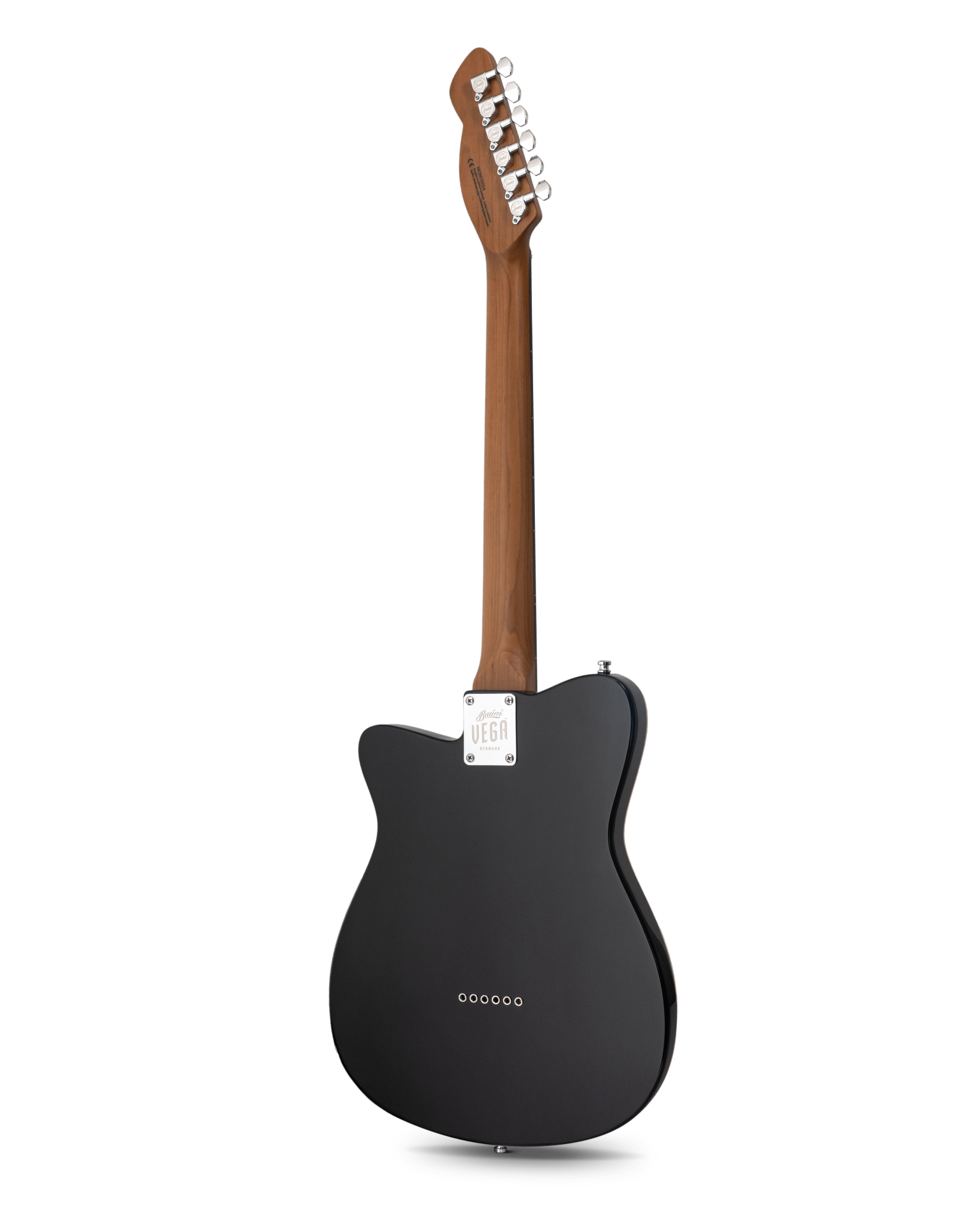
What defines a T-type electric guitar
A T-type electric guitar is a solid body electric guitar built around a specific set of design elements that first appeared in 1950 and defined the single-cut solid body format for every guitar that followed. A single-cut solid body with a flat lower bout and no upper cutaway. Two single coil pickups arranged in bridge and neck positions. A bridge plate anchored directly to the body rather than through a chambered bridge assembly. A metal control plate with volume, tone and three-way switch. Those characteristics together define what the electric guitar industry now calls a T-type or T-style platform.
The T-type format has stayed relevant for over seven decades because it produces a tonal signature that no other electric guitar body type replicates. Bright, focused high end. Articulate midrange without the warmth of humbucker construction or the resonance of semi-hollow instruments. A percussive attack profile that comes from the bridge-anchored construction and the position of the bridge pickup close to the string anchor point. That tonal character has defined country, blues, rock, punk, alternative rock and modern rock playing across seven decades of recorded music.
The Telecaster reference
Any honest discussion of T-type electric guitars has to acknowledge the format's origin. The T-style platform was introduced by Fender in 1950 as the Broadcaster, renamed to Telecaster in 1951, and became the first commercially successful solid body electric guitar. Every T-type guitar built since then references that original design. The single-cut solid body outline, the bridge plate assembly, the two single coil pickup arrangement, the metal control plate, the 25.5" scale length. These are Telecaster-derived conventions that T-type guitars inherit.
That does not mean every T-type guitar is a Telecaster copy. Modern T-type electric guitars interpret the platform through different body woods, different pickup voicings, different bridge hardware and different construction approaches. The format is the starting point. What each builder does with it defines whether the result is a reissue, a copy or a genuinely modern interpretation.
The Baum T-type interpretation
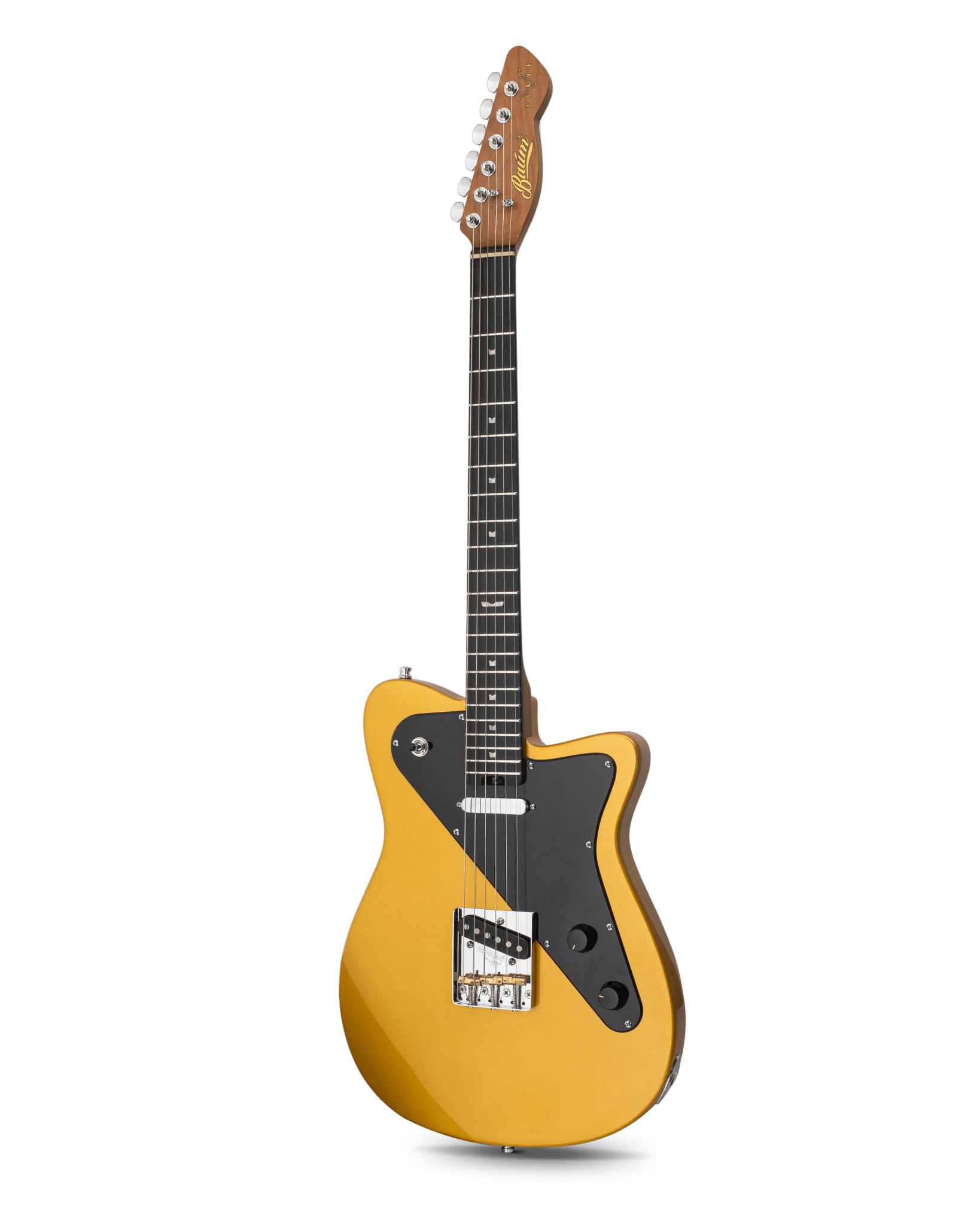
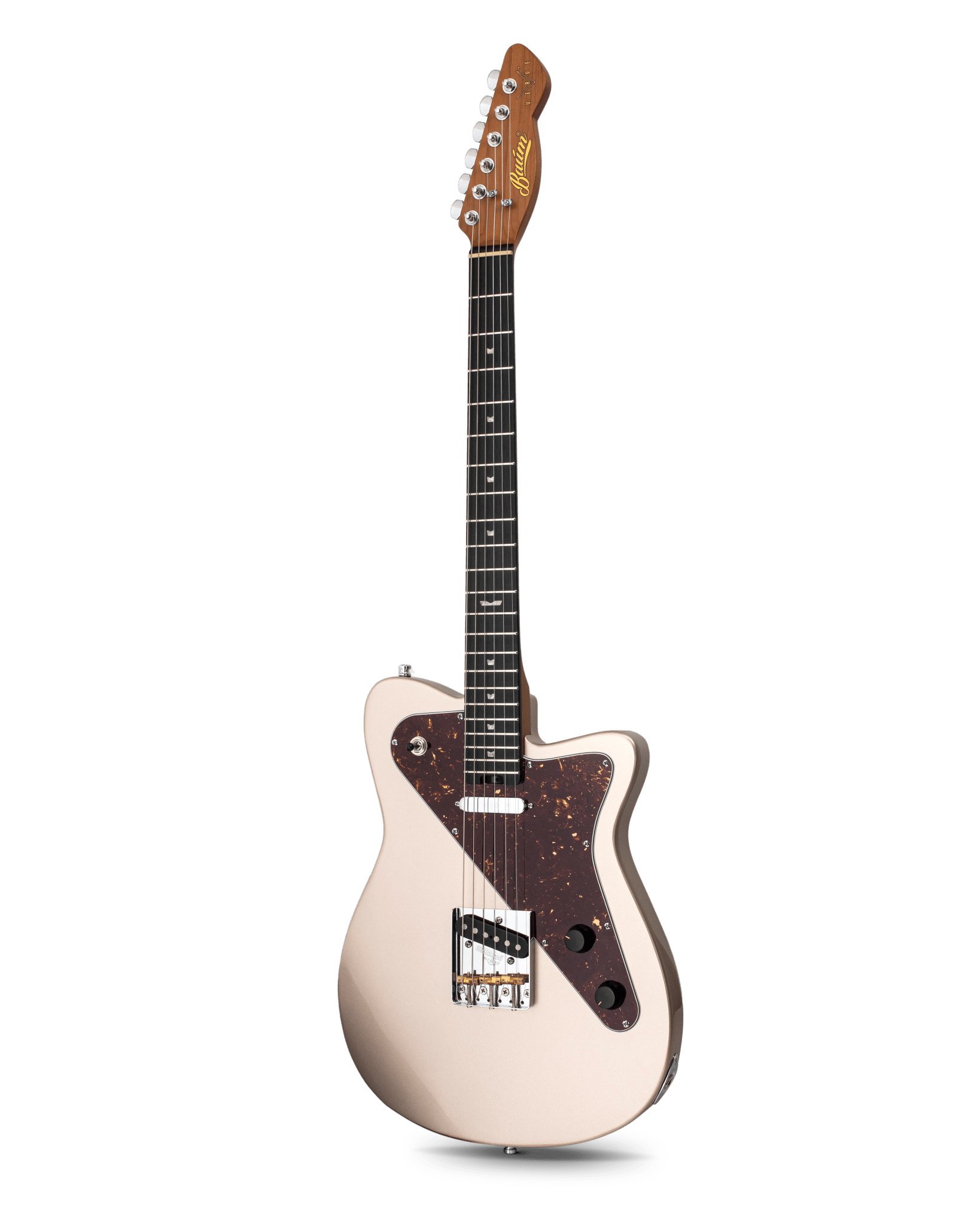
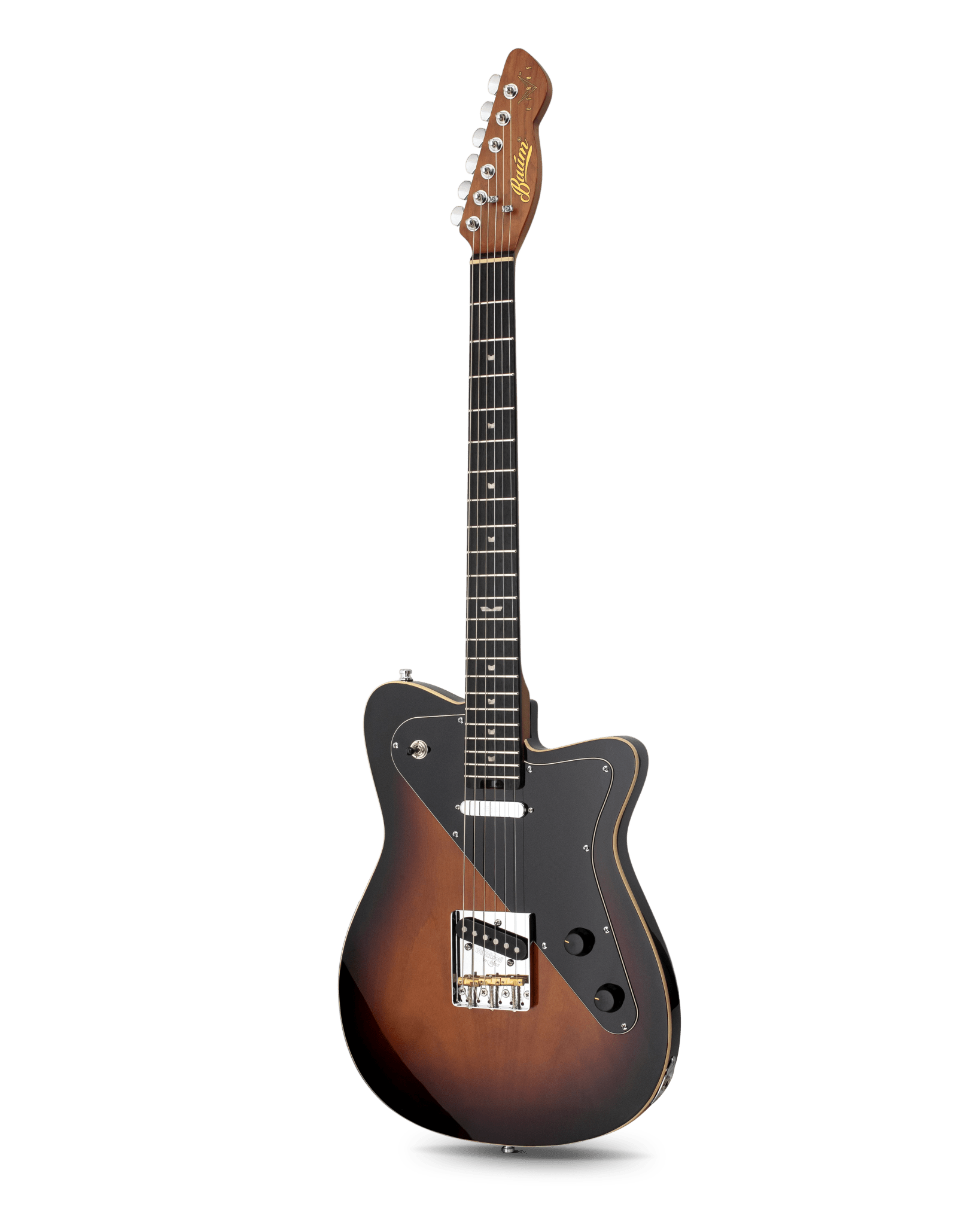
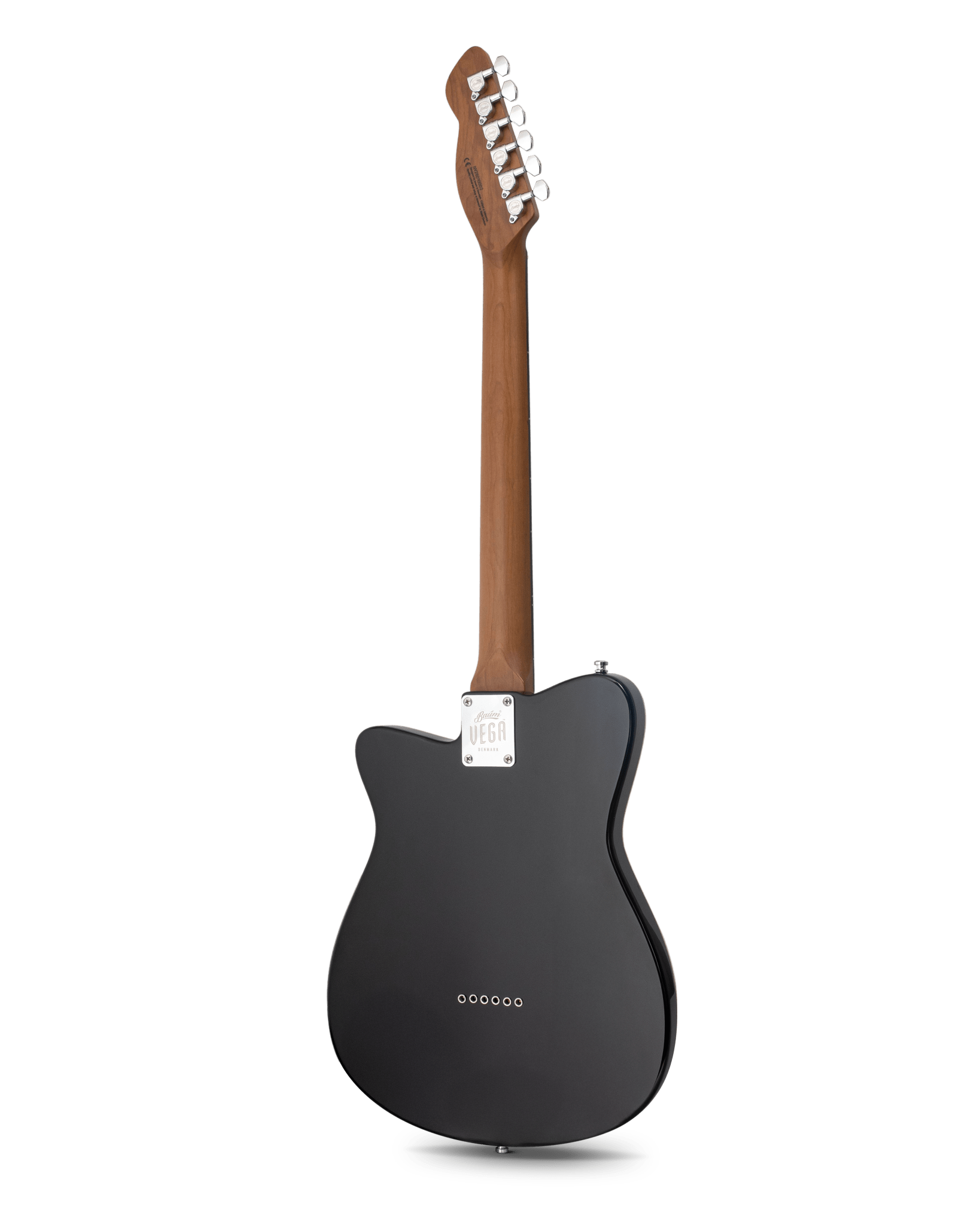
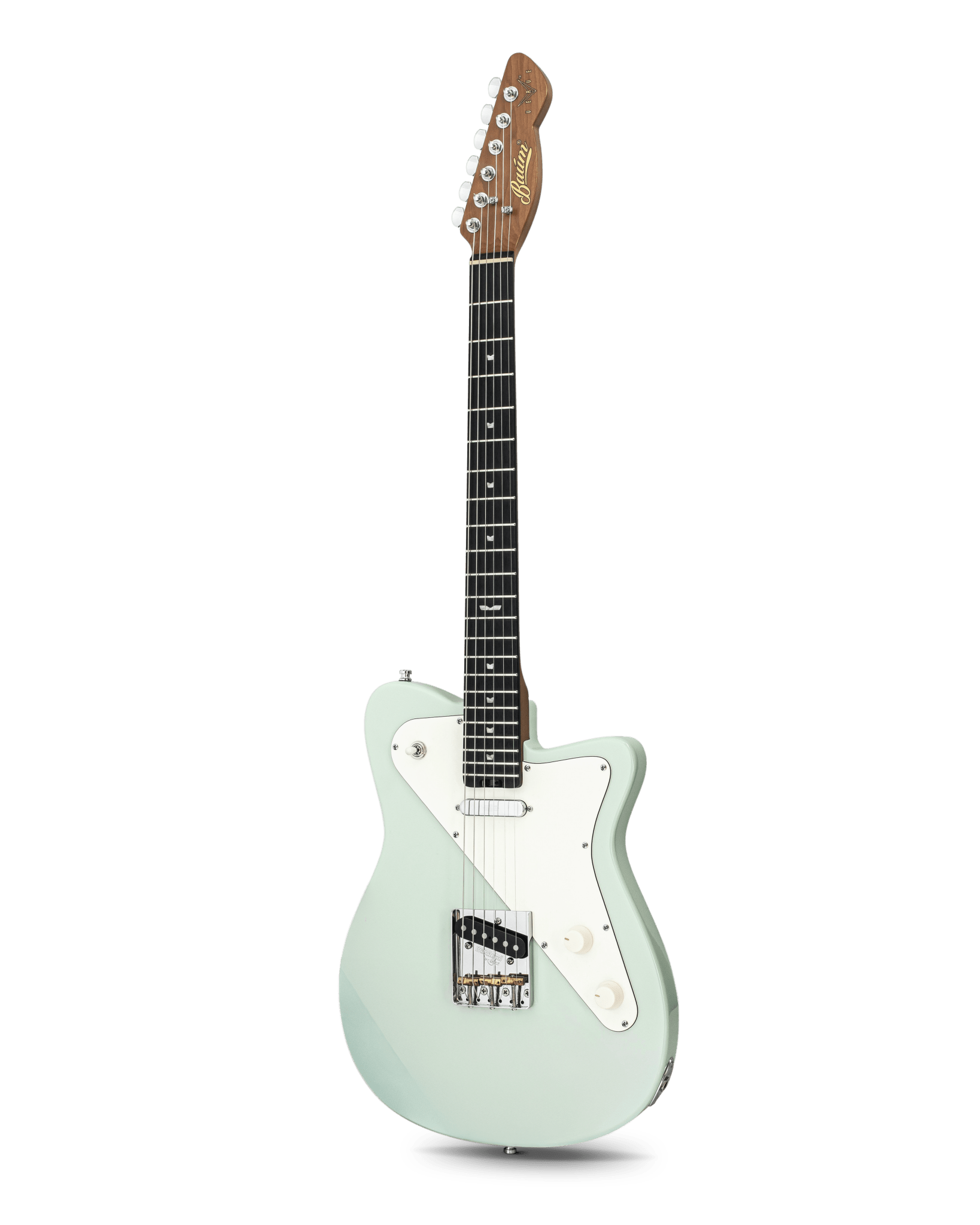
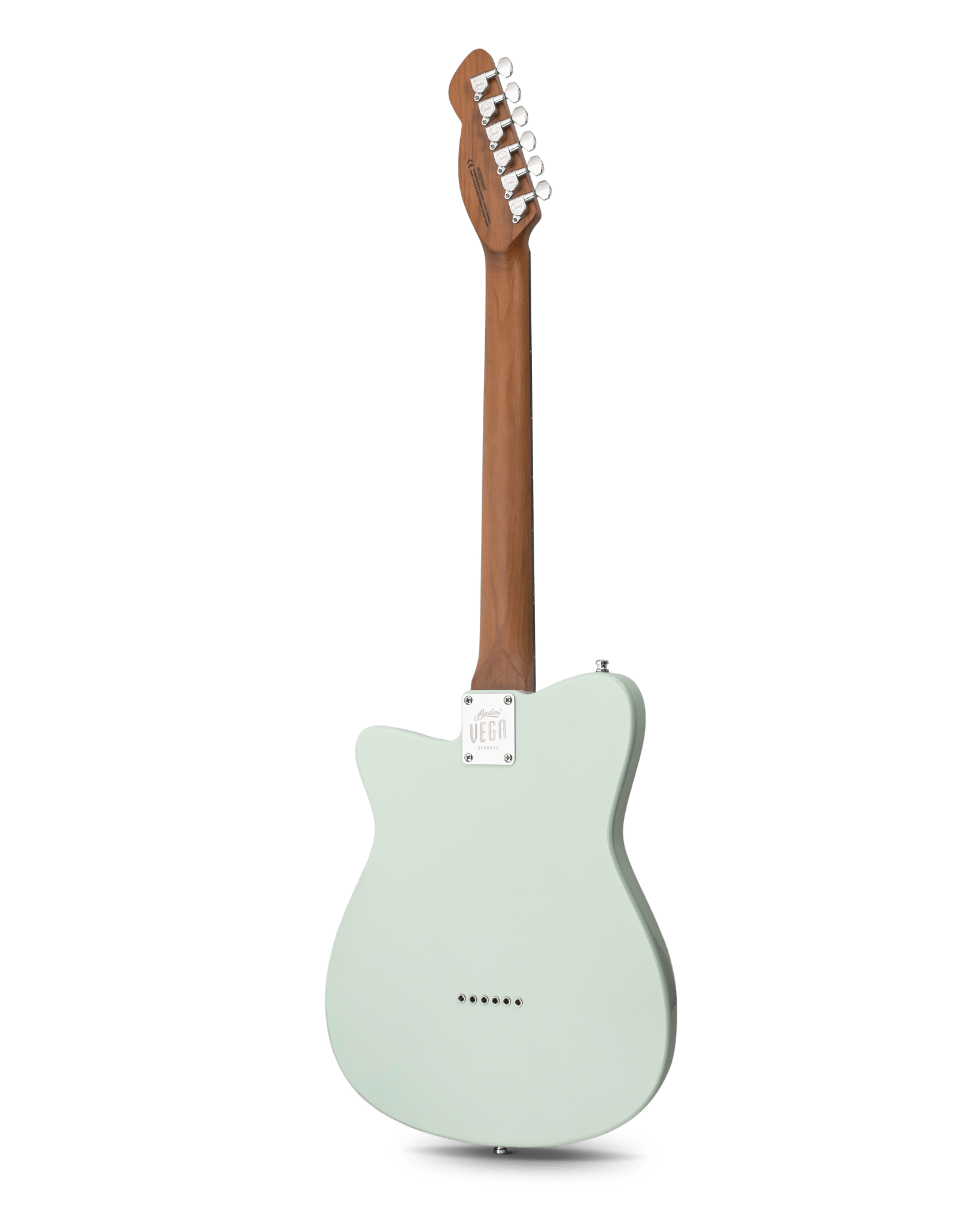
Baum builds one T-type electric guitar, the Verve, and the model departs from vintage Telecaster reference in specific and honest ways. This is not a T-style reissue and it is not a vintage-focused interpretation of the format. It is a modern T-type electric guitar built for players who want drive-friendly tone rather than classic clean Tele character.
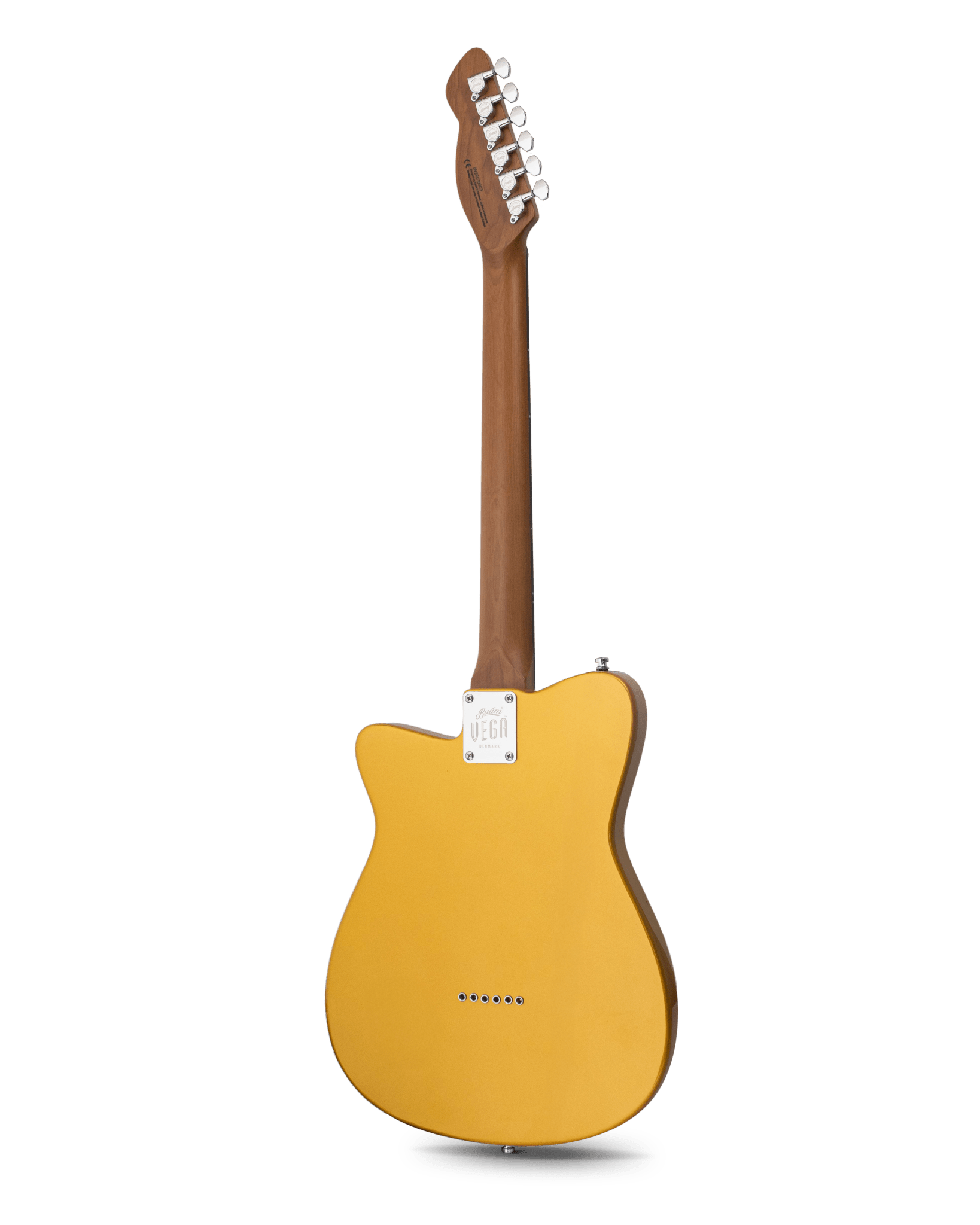
The body construction combines a lightweight mahogany core with an ash veneer top. Ash is the traditional wood for vintage T-style guitars because of its bright, resonant character. Mahogany is the wood Baum builds on across the wider lineup because it produces a warmer, more resonant tonal foundation than ash and pairs better with the drive-forward playing the Verve is voiced for. The ash veneer references the T-style visual tradition while the mahogany construction underneath produces a fundamentally different tonal signature. The result looks recognisable to anyone who has played a Tele but sounds like a modern guitar rather than a vintage instrument.
The Goldsound® Skylark™ single coils are voiced for the specific tonal territory the Verve occupies. The bridge pickup produces the clear, articulate presence that defines T-style bridge tone, but with more high-end clarity than vintage voicings and a slightly scooped midrange that handles drive pedals and cranked amp gain better than traditional T-style single coils. The neck pickup delivers dark, mellow clean tone at low volumes and moves into nearly P-90 territory when pushed with gain. Independent reviewers have described the overall voicing as "hi-fi" T-style character, and the description fits.
The Wilkinson® WTB bridge with compensated brass saddles is a deliberate hardware choice. Verve is the only Baum electric guitar with third-party bridge hardware, and the reason is honest. Wilkinson WTB is the industry standard for T-style intonation, and there is no functional reason to replace something that already does the job better than most proprietary alternatives. Compensated brass saddles are how T-style guitars achieve accurate intonation across all six strings, and Wilkinson is the most respected manufacturer of that hardware specifically.
Baum Performer Tuners at 18:1 gear ratio handle the fine adjustments. Strap locks come standard. A deluxe gig bag is included rather than sold separately. These are gigging guitar details that matter once you take the instrument out of the music store and into the rehearsal room or onto the stage.
Best T-style guitars are voiced for a purpose
The best T-style guitars are the ones voiced for a specific playing context rather than the ones that try to cover every T-type tonal option at once. Vintage T-style reissues suit players who want classic clean country, blues and rock and roll tones. Modern T-type electric guitars like the Verve suit players who want the T-style platform for blues-rock, alternative rock, punk, grunge and modern rock playing where drive is the primary tonal territory.
Players looking for classic clean Tele tones may find the Verve's Skylark™ voicing too modern for their needs without pickup modifications, and Baum says so openly. The Verve is not the right T-type guitar for players who want to reproduce vintage Fender clean tones. It is the right T-type guitar for players who want a modern take on the T-style format built for drive.
That honest positioning is what separates a builder who serves specific players well from a builder who claims to serve everyone equally.
T-type or S-type
T-type and S-type electric guitars are often grouped together as Fender-derived single coil platforms, but the two formats produce meaningfully different results. The T-type format uses two single coils, a single-cut solid body, a bridge-anchored construction and a brighter, more focused tonal signature. The S-type format uses three single coils, a double-cut contoured body, a tremolo system and a more versatile tonal range that covers more genres on a single instrument.
For players choosing between the two Baum single coil platforms, the Celestor covers S-type territory with Goldsound® Sonar single coils and TrueTone™ tremolo system. The Verve covers T-type territory with the modern drive-friendly Skylark™ voicing. Both are solid body electric guitars built on the same Baum construction platform underneath. What differs is the format they interpret and the tonal direction each is optimised for.
Choosing a T-type electric guitar
T-type guitars work best for players who value focused, direct tonal character over versatility, and who want the specific tonal signature that only a T-style bridge-anchored construction can produce. Players focused on blues-rock, alternative rock, punk, grunge or modern rock playing benefit from what the Verve's drive-voiced Skylark™ pickups do with overdriven amp tone. Players focused on country, classic rock and roll or clean traditional Tele tones will find vintage-focused T-type guitars a better match.
The Verve sits within the broader Baum electric guitar lineup as the T-type entry, and within Baum's solid body electric guitar selection as one of the solid body models across four body formats.
45 days through your own amp and pedals
T-type electric guitars reveal their character through the interaction between the instrument, the amp and the drive pedals you actually use. The Verve is specifically voiced for how it behaves under overdrive, distortion and cranked amp gain, which means testing it in a music store under clean amp conditions does not tell you what the guitar actually does. Baum doesn't sell through retailers, so every T-type electric guitar ships direct from Denmark, set up by hand in Aarhus, and comes with 45 days to test it through your own rig.