What defines an S-type electric guitar
An S-type electric guitar is a solid body electric guitar built around a specific set of design elements that first appeared in 1954 and have defined one of the most-copied electric guitar formats in history. A double-cut contoured solid body. Three single coil pickups arranged in neck, middle and bridge positions. A synchronized tremolo system anchored to the body. A bolt-on or set-neck construction with a 25.5" scale length. Those characteristics together define what the electric guitar industry now calls an S-type or S-style platform.
The format's staying power comes from its versatility. S-type guitars cover clean funk, country picking, blues rhythm, blues-rock lead, classic rock, modern indie textures and clean jazz comping without changing instrument. That range is a product of three single coils in different pickup positions producing three distinct tonal characters, combined with a tremolo system that opens expressive vibrato and pitch bending techniques. Few electric guitar body types offer the same breadth on a single platform.
The Stratocaster reference
Any honest discussion of S-type electric guitars has to acknowledge the format's origin. The S-style platform was introduced by Fender in 1954 as the Stratocaster, and every S-type guitar built since then references that original design in one way or another. The three single coils, the double-cut contoured body, the six-point tremolo bridge, the 25.5" scale, the volume plus two tone control layout. These are Stratocaster-derived conventions that S-type guitars inherit.
That does not mean every S-type guitar is a Stratocaster copy. Modern S-type electric guitars interpret the platform through different body woods, different pickup voicings, different tremolo systems and different construction philosophies. The format is the starting point. What each builder does with it defines whether the result is a reissue, a copy or a genuinely modern interpretation.
The Baum S-type interpretation
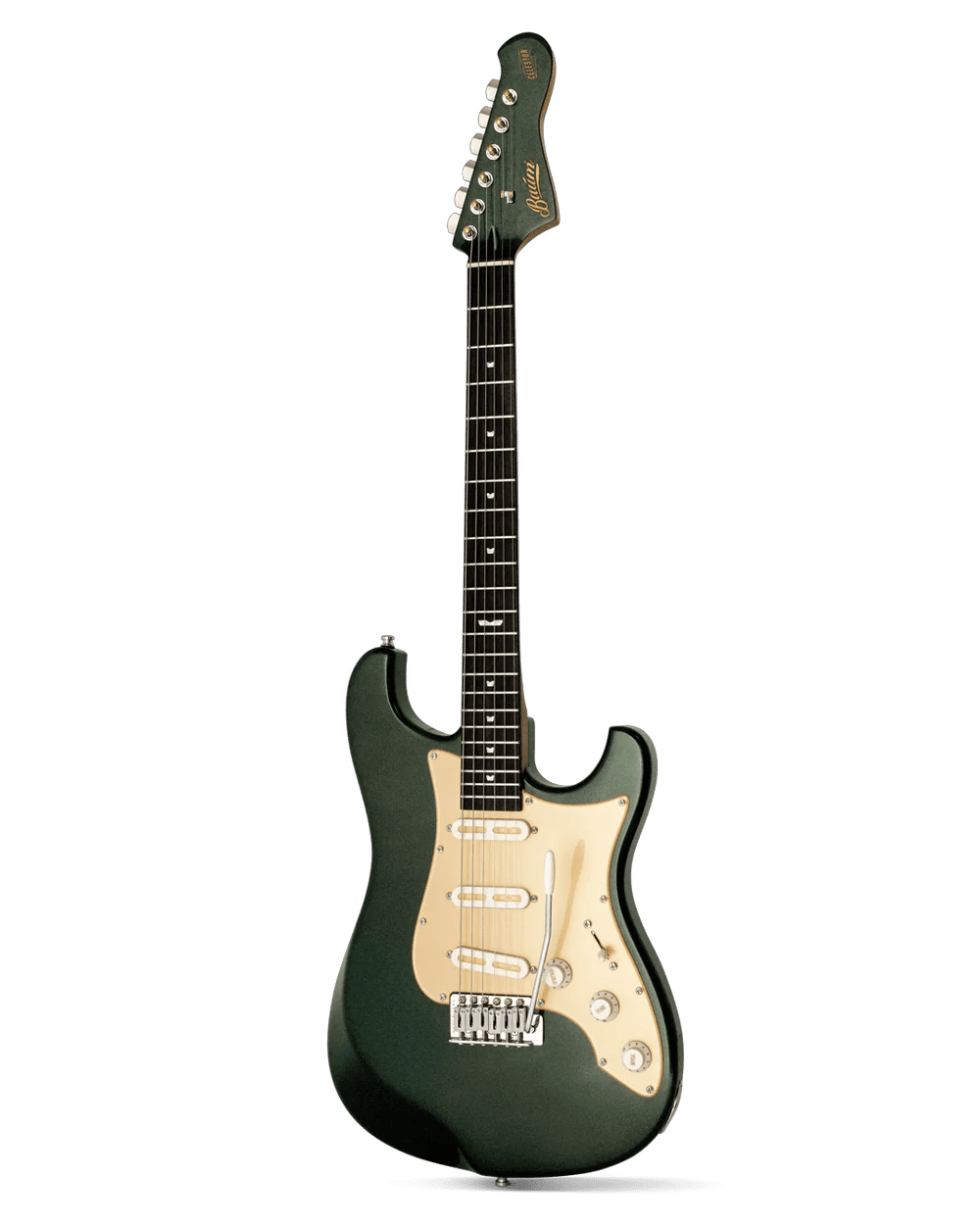
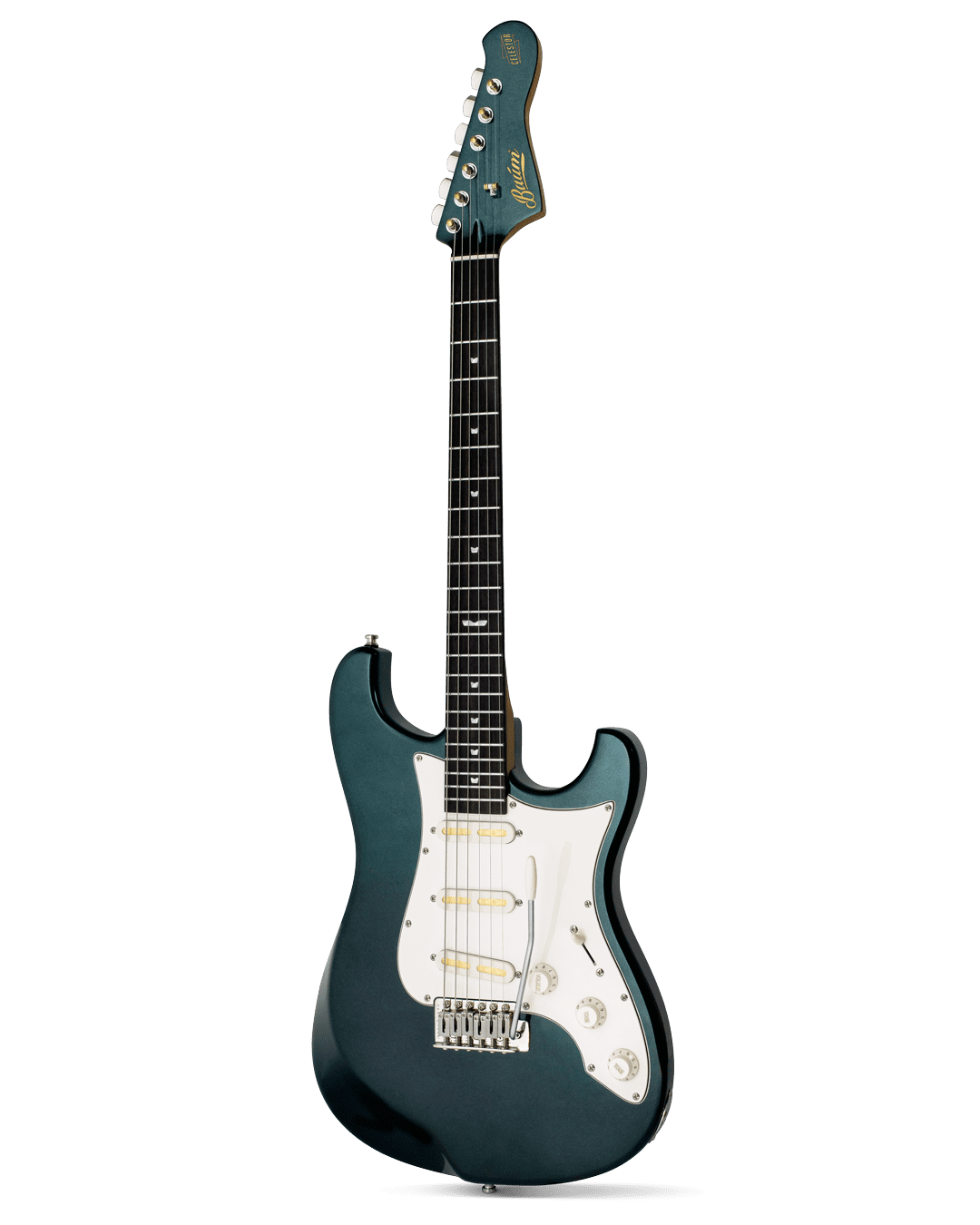
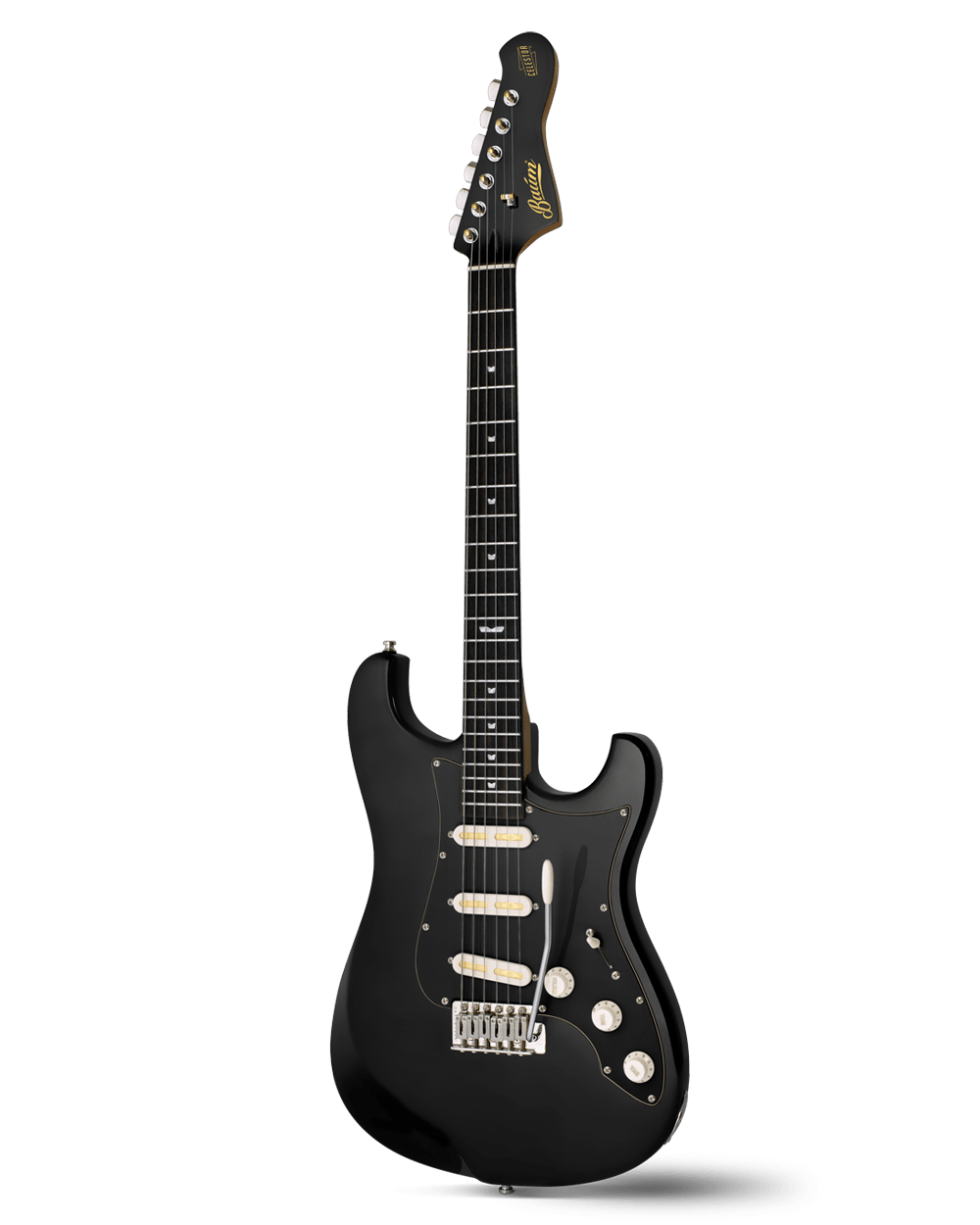
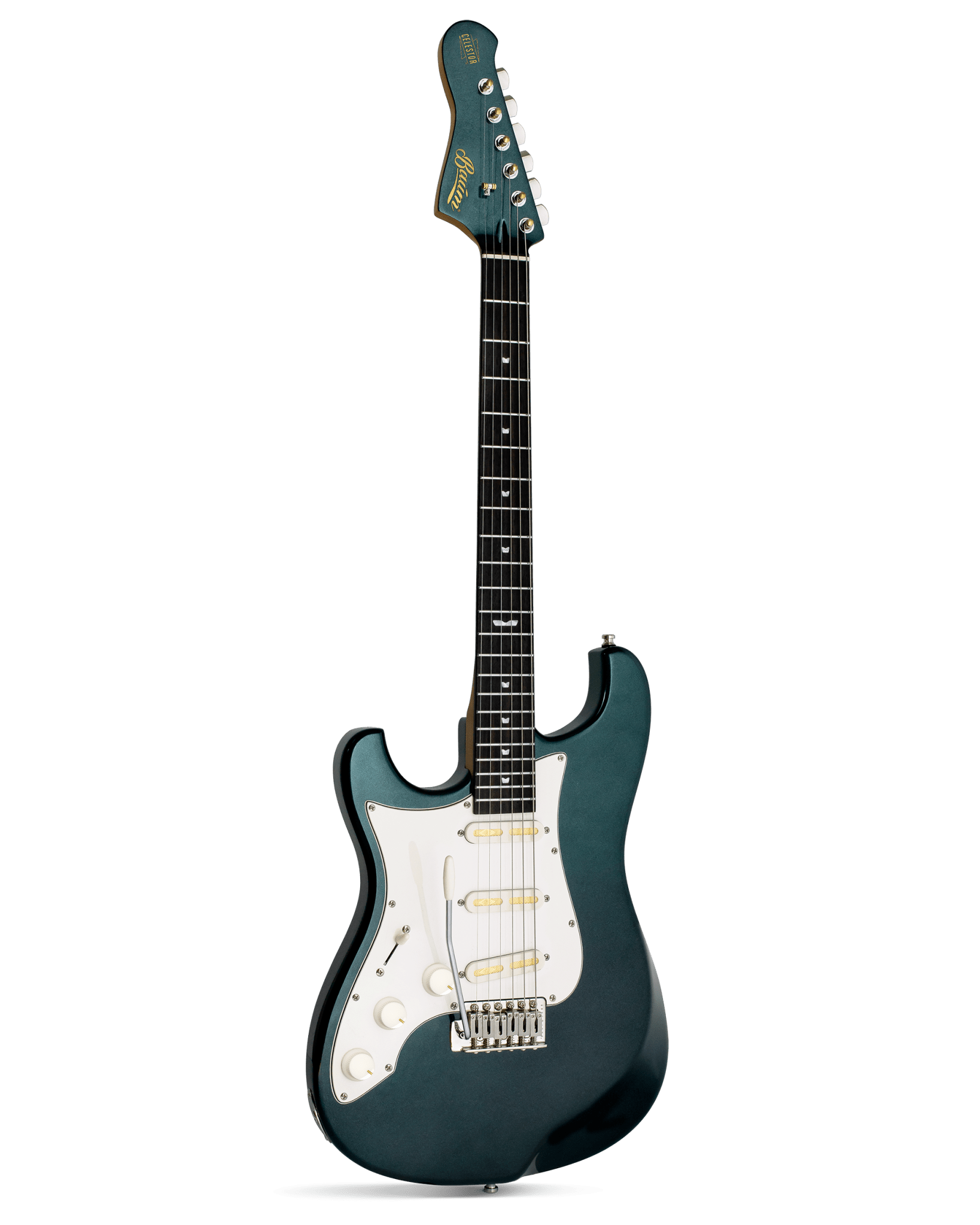
Baum builds one S-type electric guitar, the Celestor, and every construction decision on that model departs from vintage Stratocaster reference in specific, deliberate ways.
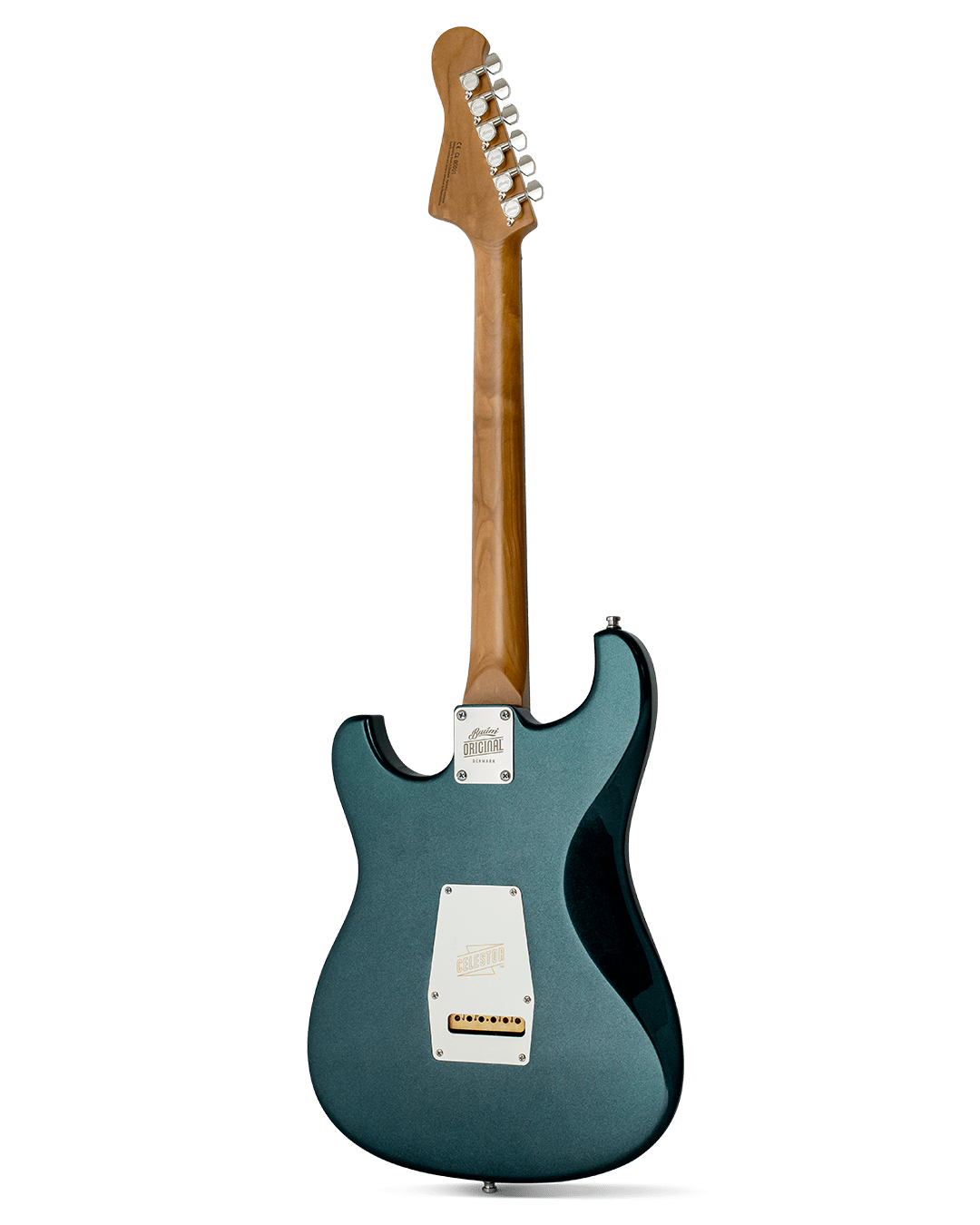
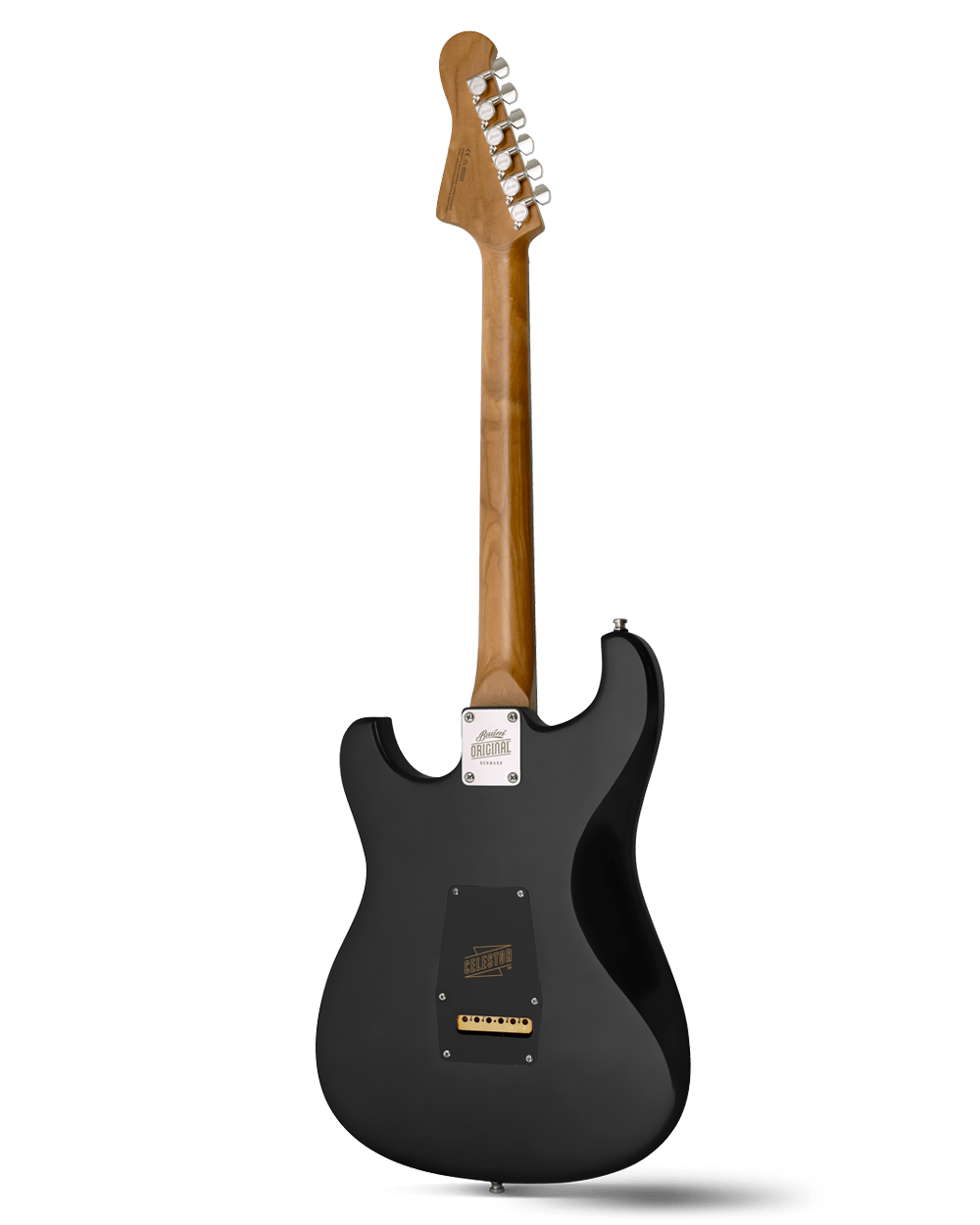
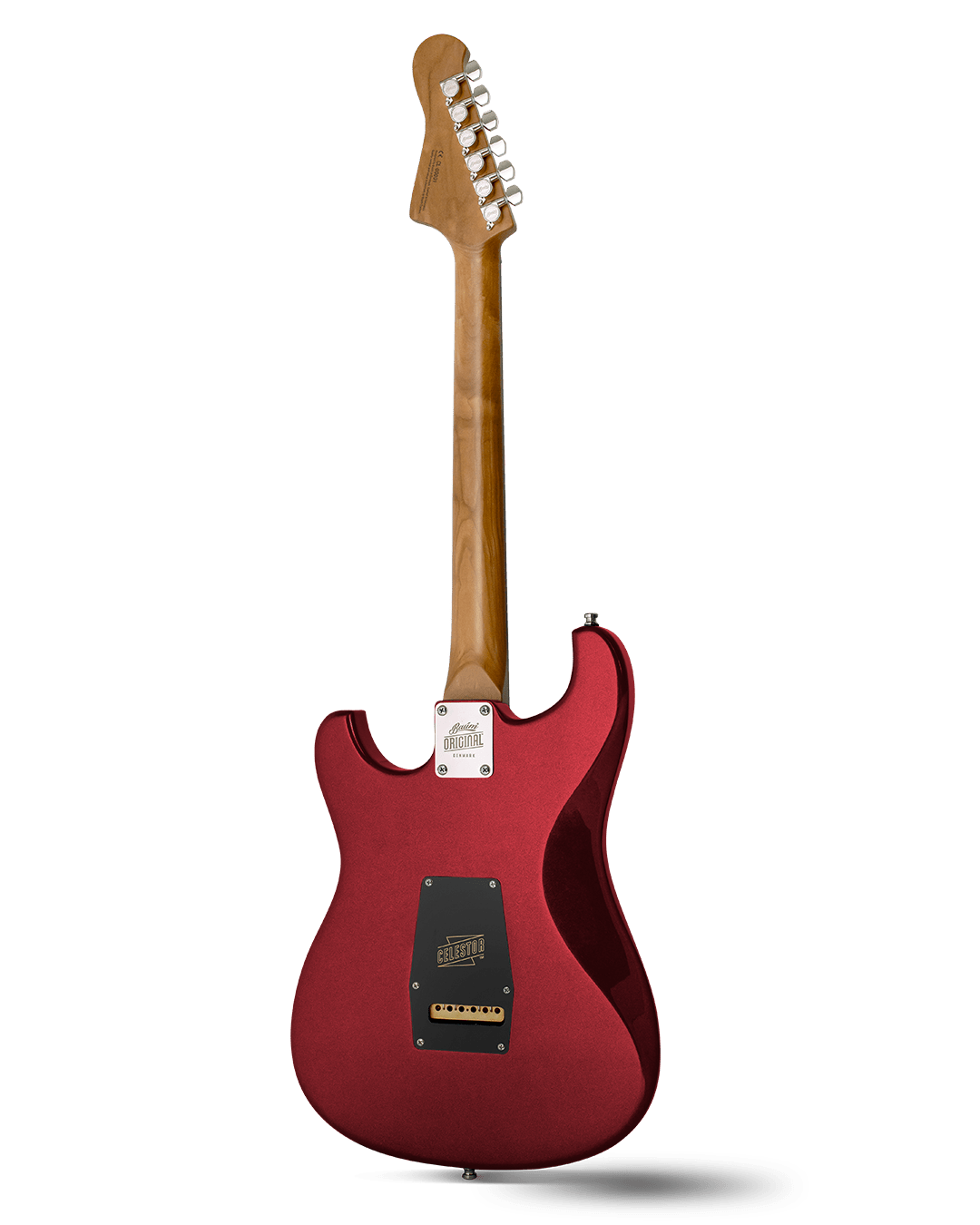
The body is 36mm mahogany rather than the 45mm ash or alder that defines vintage S-style construction. The thinner mahogany profile transmits string vibration more efficiently, produces a warmer, more resonant tonal foundation than traditional S-type body woods, and keeps the weight manageable. The roasted maple neck is dimensionally stable across temperature and humidity changes, which matters more on an S-type platform than on most electric guitar body types because the single coil pickups amplify every construction variable directly.
The Goldsound® Sonar single coils are voiced for clarity in the high end and articulate, defined mids. They sit in classic single coil territory without the brittleness that cheaper single coil pickups produce at higher volumes. What separates the Celestor from a standard S-style guitar is the extended pickup wiring. Most production S-type electric guitars use a five-way switch that limits which pickup combinations a player can actually access. The Celestor adds neck plus bridge wiring options that most S-type guitars do not offer out of the box, opening pickup combinations beyond conventional switching positions.
The TrueTone™ 6-point tremolo system addresses the historical S-type tuning stability problem. Vintage-style S-style tremolos are prone to tuning drift because the knife-edge pivot design produces friction under sustained vibrato use. The TrueTone™ system uses a modernised knife-edge pivot design that returns to pitch accurately after aggressive whammy bar work, dive bombs and subtle vibrato alike. Combined with Baum Precision Tuners at 21:1 gear ratio, the Celestor handles tremolo use across a full set without the drift that has defined budget S-type guitars for decades.
S-type or T-type
S-type and T-type electric guitars are often grouped together as single coil platforms, but the two formats produce meaningfully different results. The T-type format uses two single coils, a single-cut solid body, a bridge-anchored construction and a brighter, more focused tonal signature associated with country, blues and rock playing. The S-type format uses three single coils, a double-cut contoured body, a tremolo system and a more versatile tonal range that covers more genres on a single instrument.
For players choosing between the two Baum single coil platforms, the Verve covers T-type territory with a modern approach voiced for drive rather than vintage cleans. The Celestor covers S-type territory with the extended wiring and TrueTone™ tremolo system. Both are solid body electric guitars built on the same Baum construction platform underneath. What differs is the format they interpret.
Choosing an S-type electric guitar
S-type guitars work best for players who value tonal versatility on a single instrument and who use tremolo systems as part of their playing rather than as a decorative feature. Players who spend significant time on lead work benefit from the range that three single coils and a functioning tremolo system provide. Players who focus on rhythm chord work benefit from the different pickup positions and extended wiring options. Players who work across multiple genres benefit from not having to switch instruments to match tonal contexts.
The Celestor delivers on those requirements while adding the construction refinements that come from ten years of Baum's approach to electric guitar body types. It sits within the broader Baum electric guitar lineup as the single S-type entry, and within Baum's solid body electric guitar selection as one of the seven solid body models across four body formats.
45 days through your own amp and pedals
S-type electric guitars reveal their character through the interaction between the instrument, the amp and the room. The extended pickup wiring on the Celestor produces tonal combinations that only make sense once you have spent real time exploring them in your own signal chain. Baum doesn't sell through retailers, so every S-type electric guitar ships direct from Denmark, set up by hand in Aarhus, and comes with a 45-day home trial.