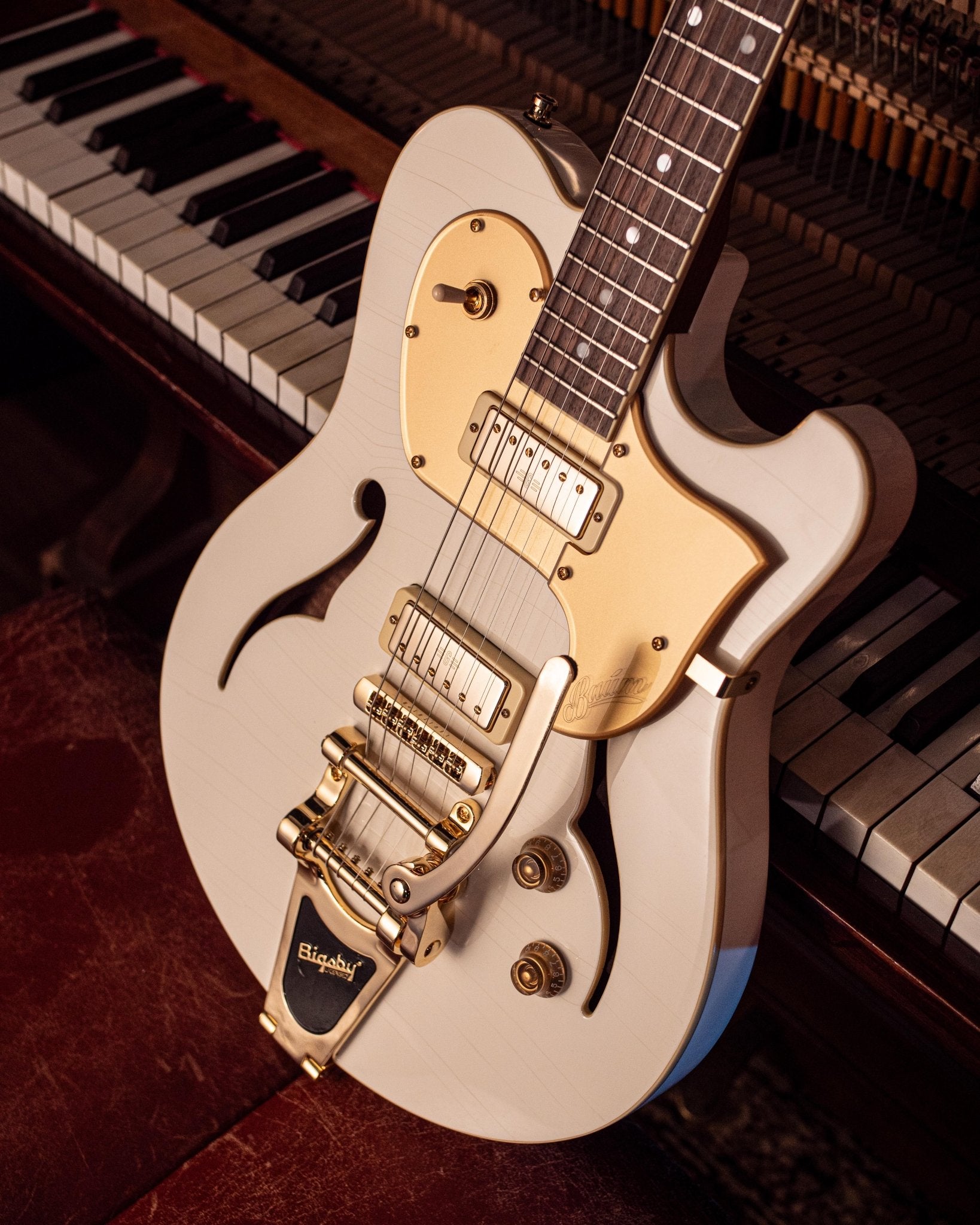
What defines a semi-hollow electric guitar
A semi-hollow electric guitar sits between two other construction categories. It is not a solid body, and it is not a fully hollow instrument. The construction combines chambered wings on either side of the body with a solid center block that runs down the middle underneath the pickups. That combination is what gives semi-hollow electric guitars their specific character and separates them from both alternatives.
The chambered wings produce natural acoustic resonance. Air moves inside the body when the strings vibrate, adding harmonic complexity and a three-dimensional response that solid body electric guitars cannot produce. The solid center block provides structural stability for the pickups and bridge, and more importantly, it reduces the feedback problems that limit fully hollow instruments at stage volumes. Center block construction is what makes semi-hollow guitars playable in high-gain contexts where a hollow body would howl uncontrollably.
The format was popularised in the late 1950s by ES-style archtops and has been a cornerstone of jazz, blues, blues-rock, alternative rock and indie playing ever since. Semi-hollow electric guitars sound different from solid bodies not because one is better than the other, but because the chambered construction is part of the tonal signature rather than a byproduct of build choice.
Semi-hollow guitar vs solid body
The comparison between a semi-hollow guitar and a solid body electric guitar comes down to what the body itself contributes to the tone. On a solid body, the body wood affects sustain and attack but produces no acoustic resonance of its own. Everything you hear is a product of the pickups amplifying string vibration filtered through the density of the wood. On a semi-hollow, the chambered wings add air movement and natural resonance to that signal, producing more harmonic complexity but also less pure sustain.
Solid body electric guitars produce more sustain because the string energy has nowhere to dissipate into air movement. Semi-hollow guitars produce more complex overtones and a more dynamic response, but the notes decay faster because some of the string energy is absorbed by the chambered construction. Neither is objectively better. Solid body electric guitars suit players who want focused, direct tone with maximum sustain. Semi-hollow guitars suit players who want natural resonance and harmonic depth.
Feedback behaviour also differs. Solid bodies handle high-gain amplification without feedback issues. Semi-hollows are more prone to feedback at high volumes and near amps, though the center block reduces this substantially compared to fully hollow guitars. For a full comparison of the solid body category, the Baum solid body electric guitar selection covers the alternative direction across seven models.
Semi-hollow guitar vs hollow
Semi-hollow electric guitars are often confused with hollow body guitars, but the two are meaningfully different constructions. A fully hollow guitar has no center block. The entire body is a chambered cavity, which produces maximum acoustic resonance but also creates significant feedback problems at anything above quiet stage volumes. Fully hollow guitars are typically associated with jazz and traditional country playing, where the tone benefits from the acoustic complexity and the playing context stays at controlled volumes.
Semi-hollow guitars add the solid center block underneath the pickups and bridge, which solves most of the feedback problems while retaining a significant portion of the acoustic resonance. The tradeoff is less pure hollow-body character in exchange for practical usability at higher volumes. For modern amplified playing across most genres, semi-hollow construction is the more versatile format. For traditional jazz where feedback is not a concern and maximum acoustic complexity matters, hollow bodies remain the specialist choice.
Sustain vs resonance on a semi-hollow platform
The most common misunderstanding about semi-hollow electric guitars is that they produce less sustain than solid bodies, and that this represents a limitation. It is more accurate to describe the difference as a tradeoff between two different tonal qualities.
Sustain is how long a note continues to ring after being struck. Solid body electric guitars maximise sustain because there is no acoustic cavity to absorb string energy. Resonance is how the instrument's construction interacts with the string vibration to add harmonic complexity, sympathetic vibration and three-dimensional character to the tone. Semi-hollow electric guitars trade some sustain for more resonance.
For players working in genres where sustain is the primary tonal requirement, solid body is the answer. For players working in genres where the interaction between instrument and note produces the character they want, semi-hollow is the answer. Both are legitimate approaches to electric guitar design. The choice depends on what the music actually needs.
Baum's semi-hollow electric guitars
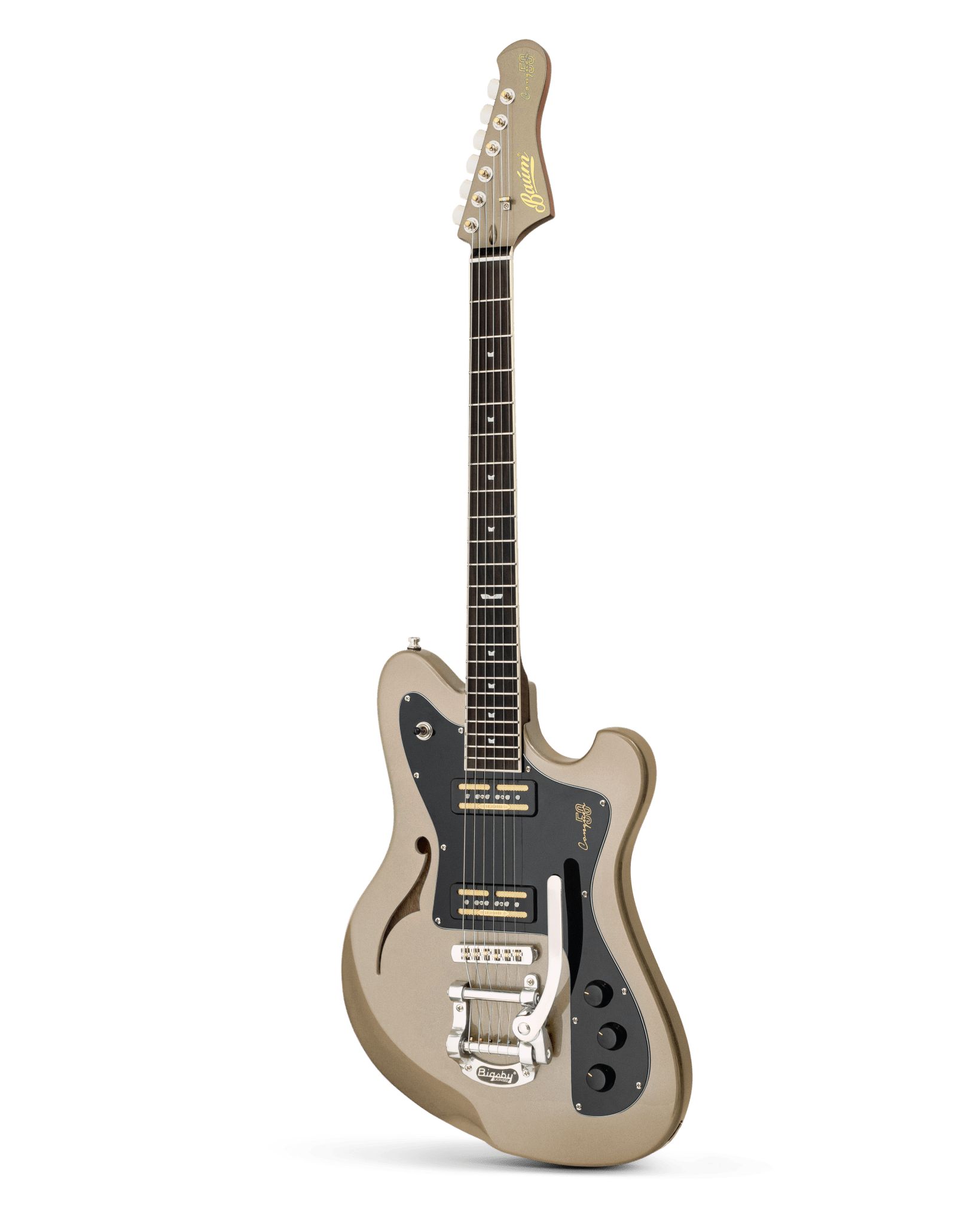
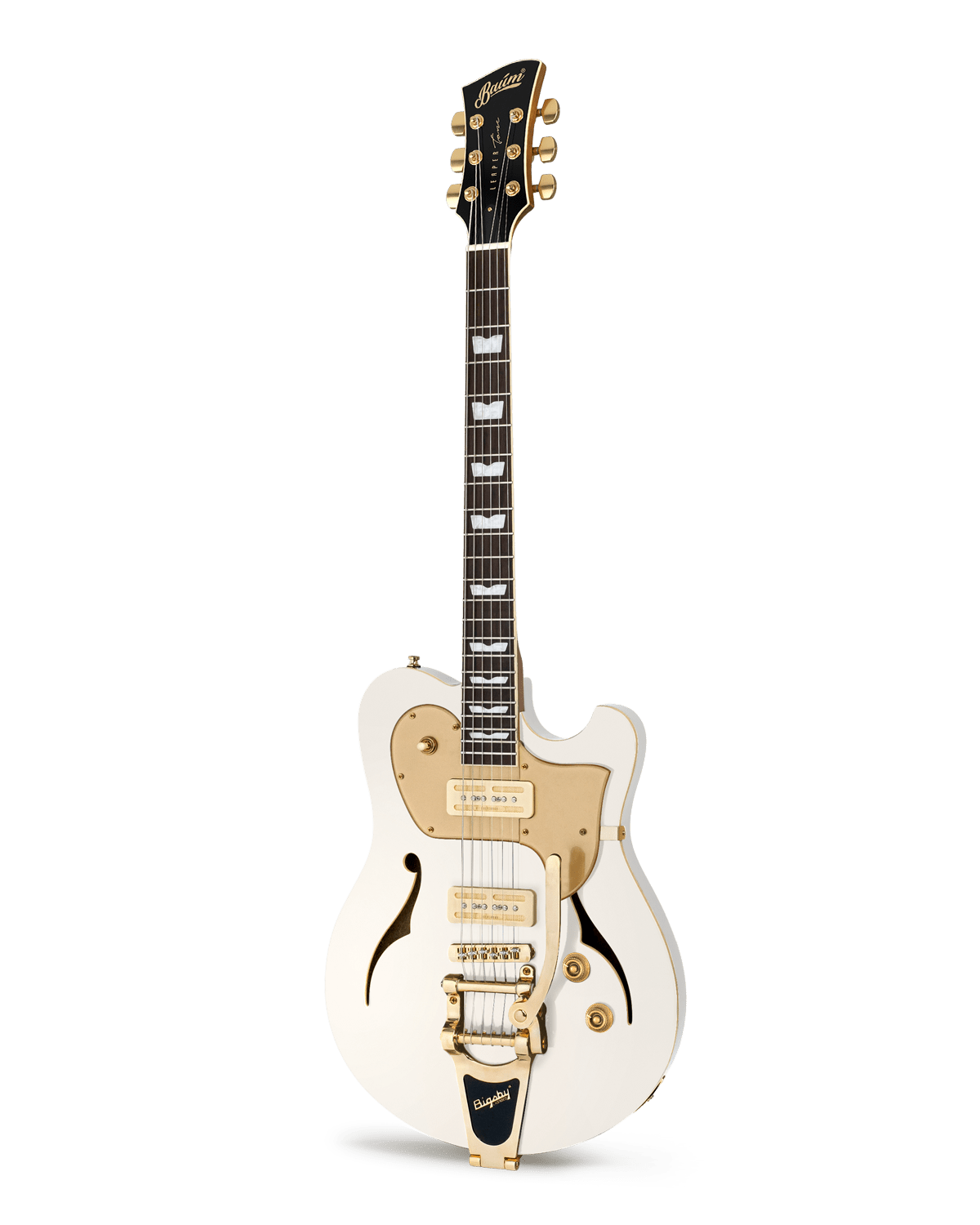
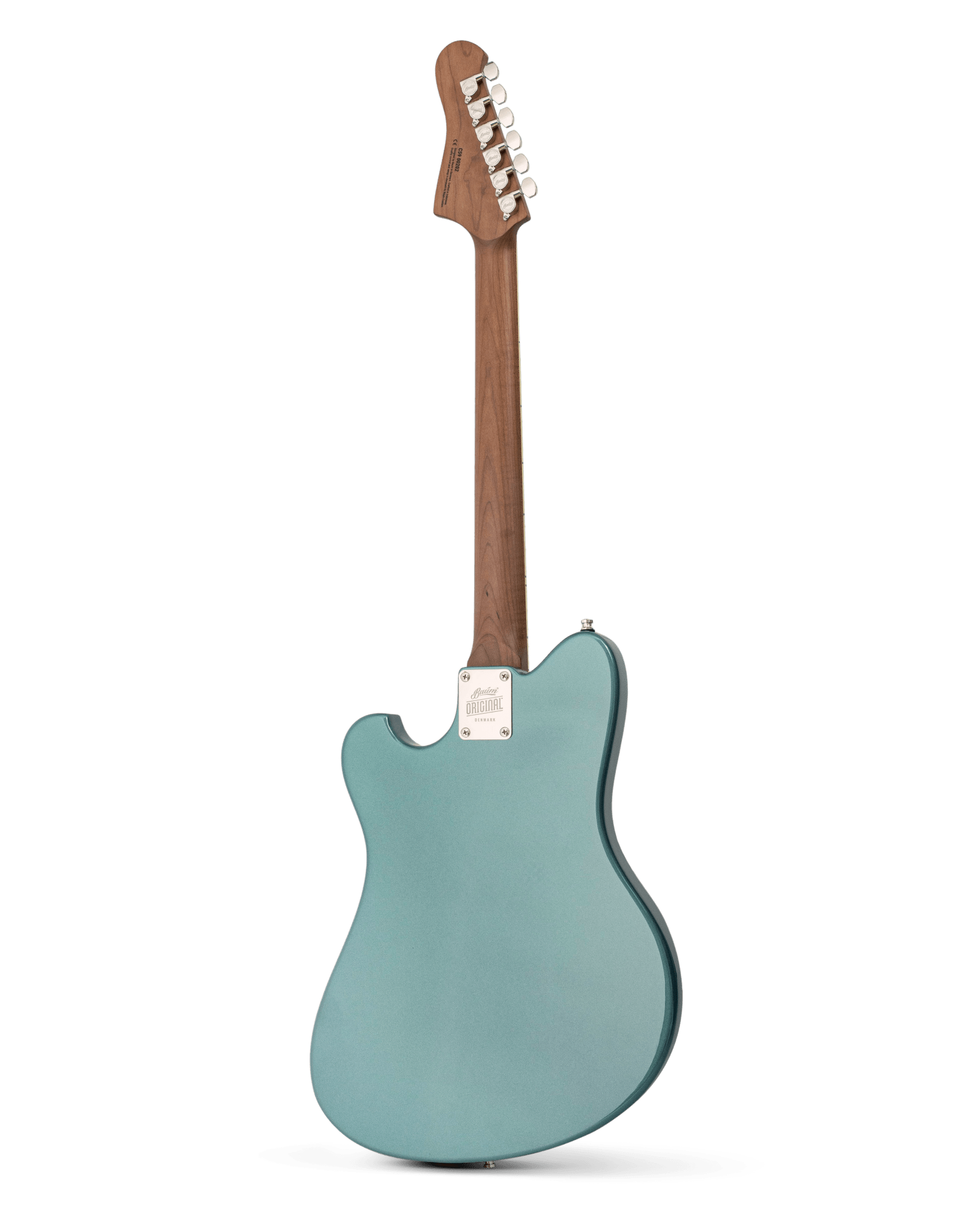
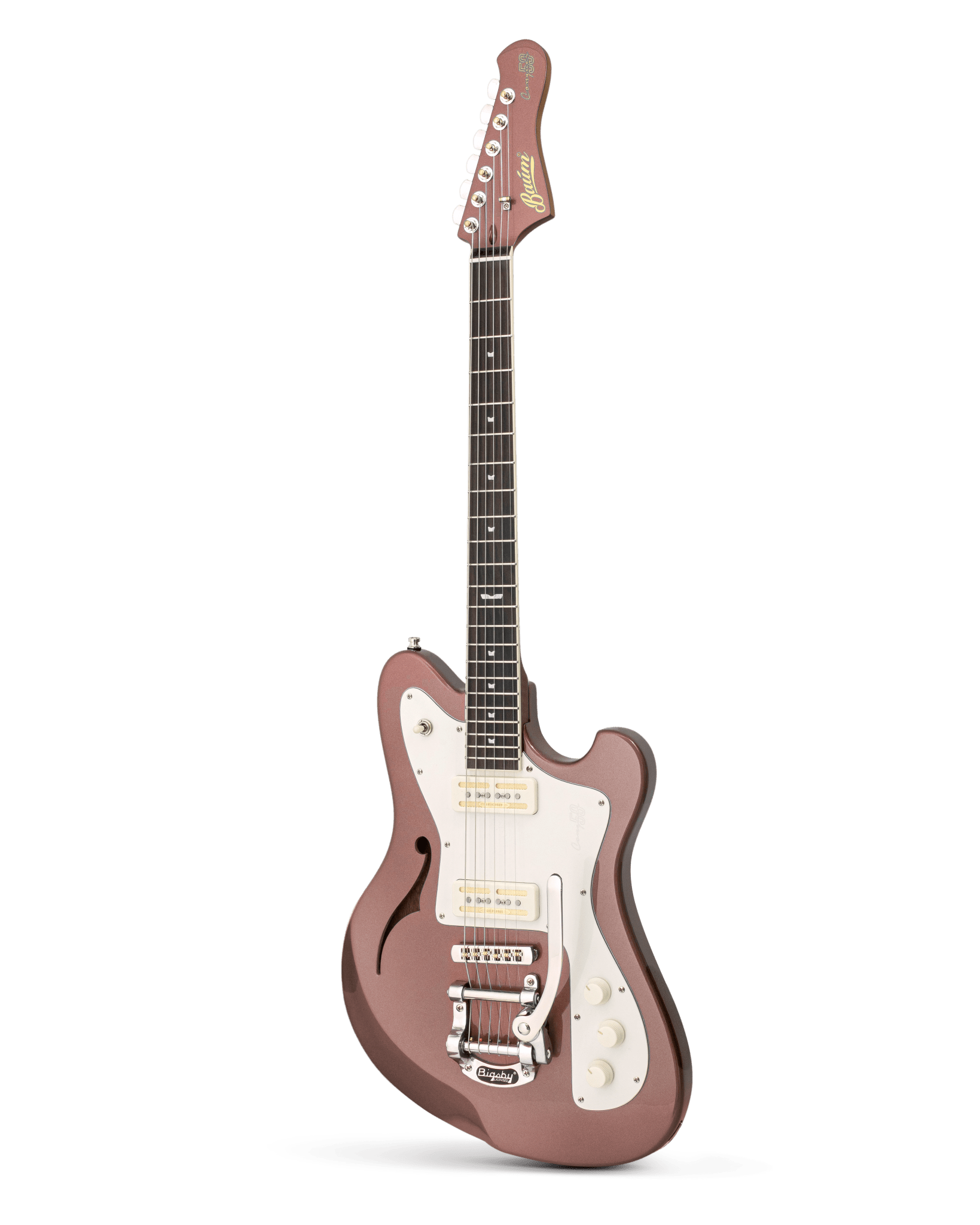
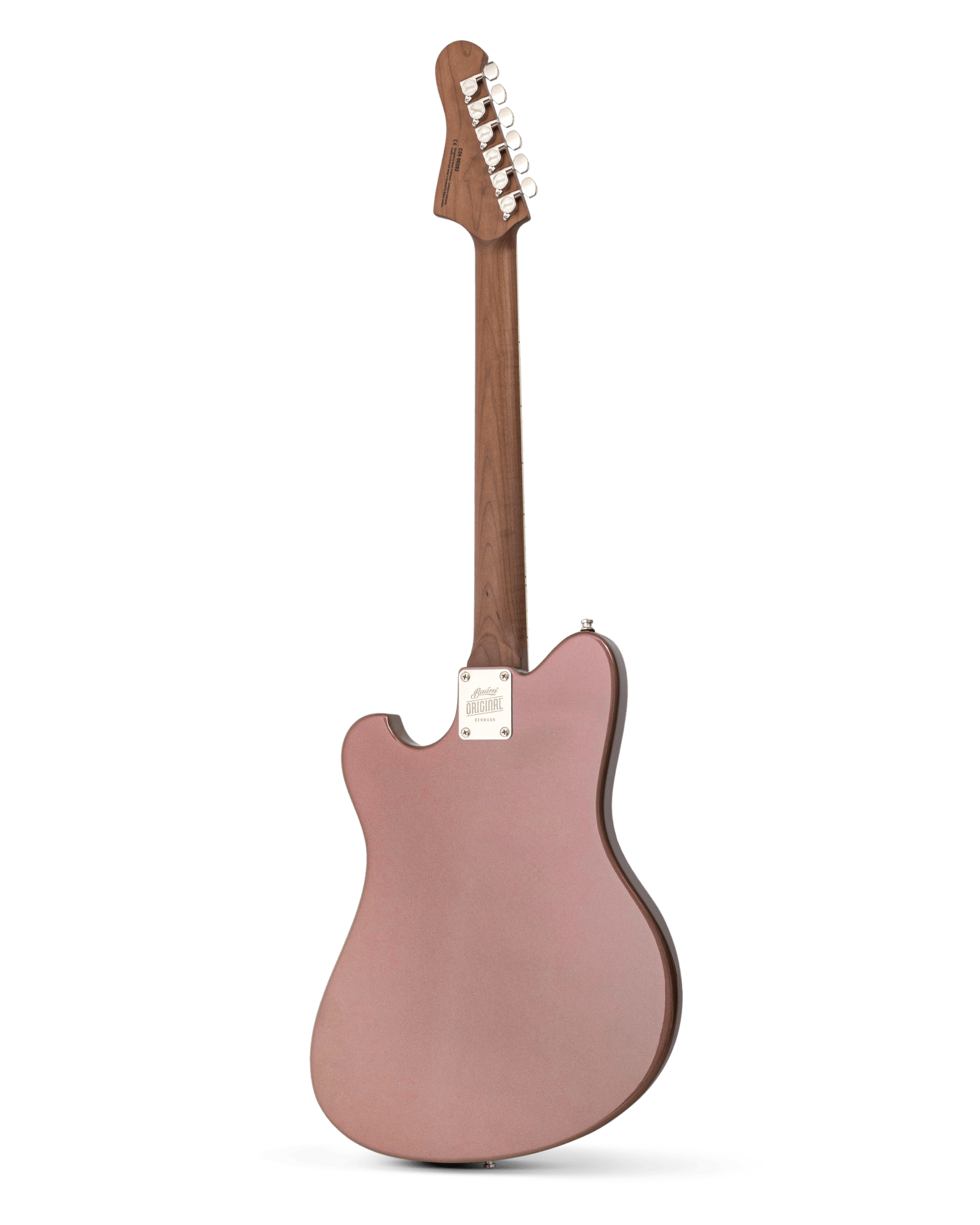
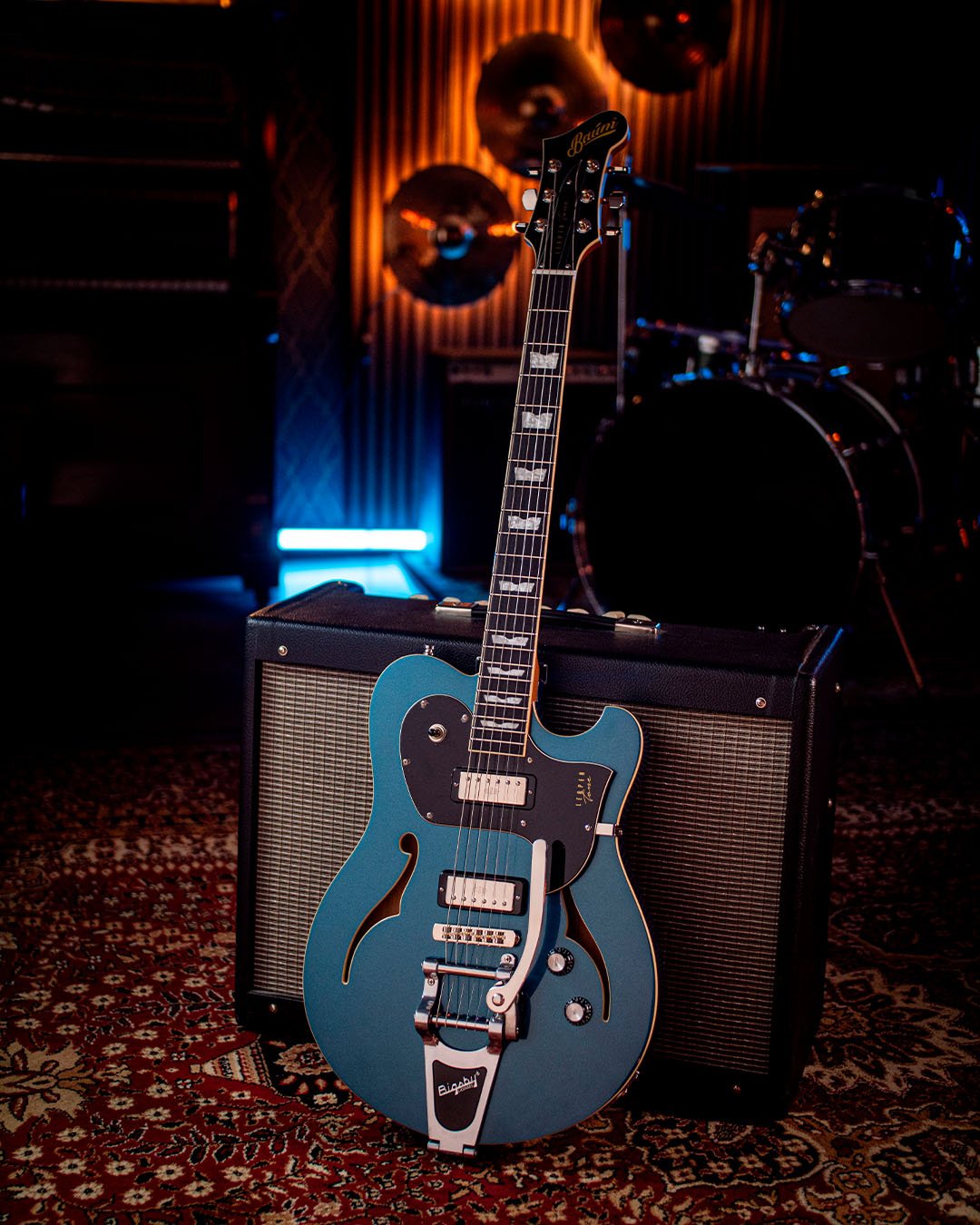
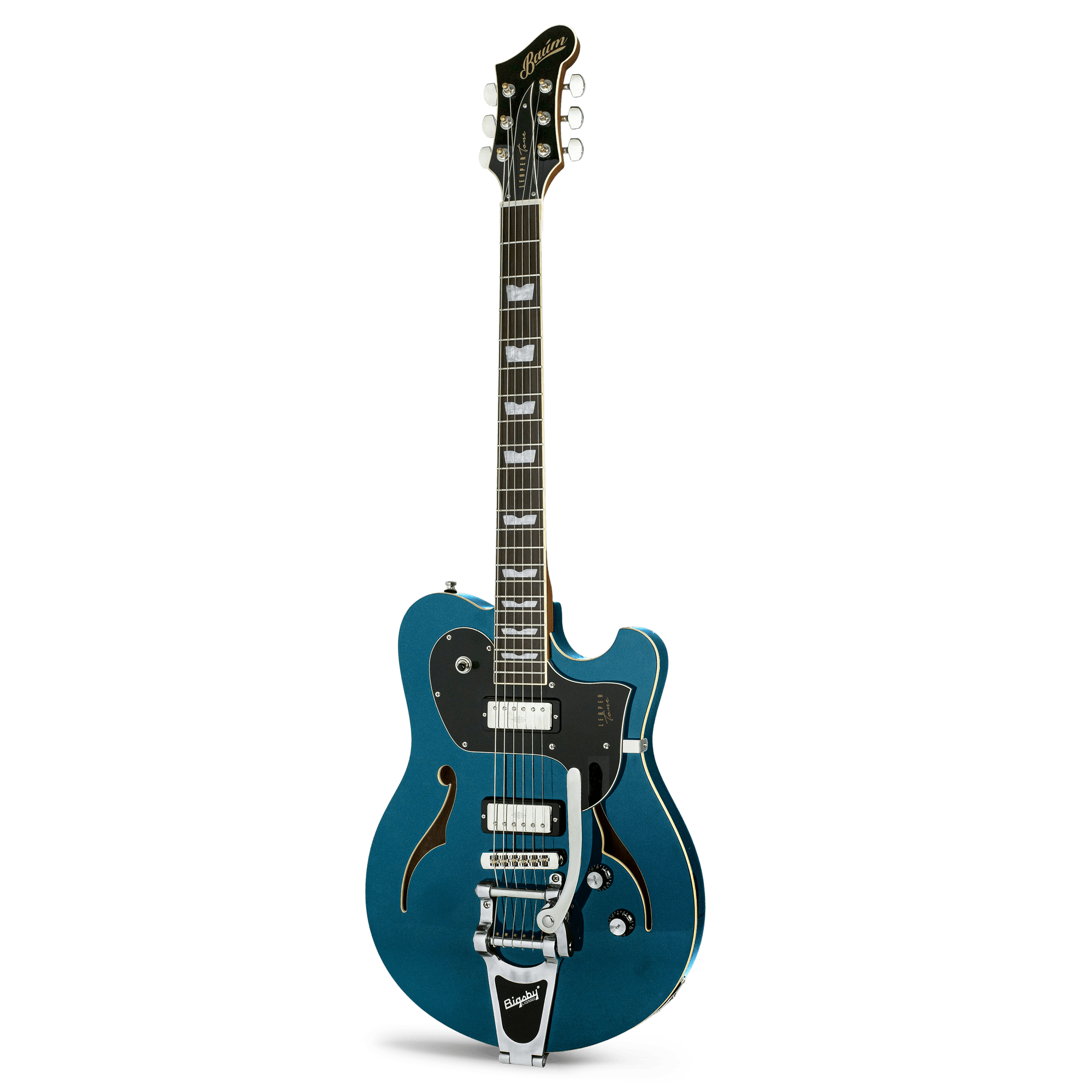
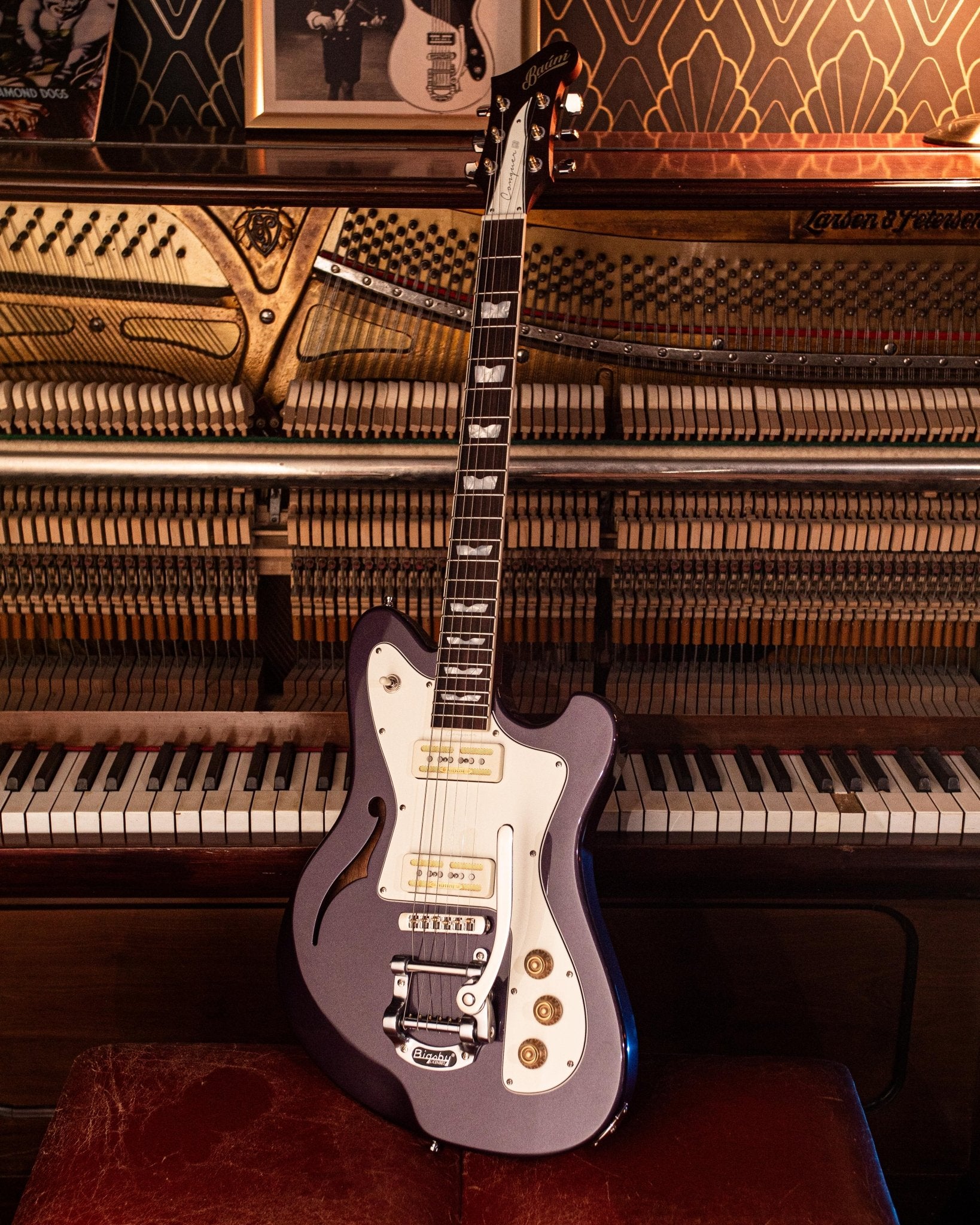
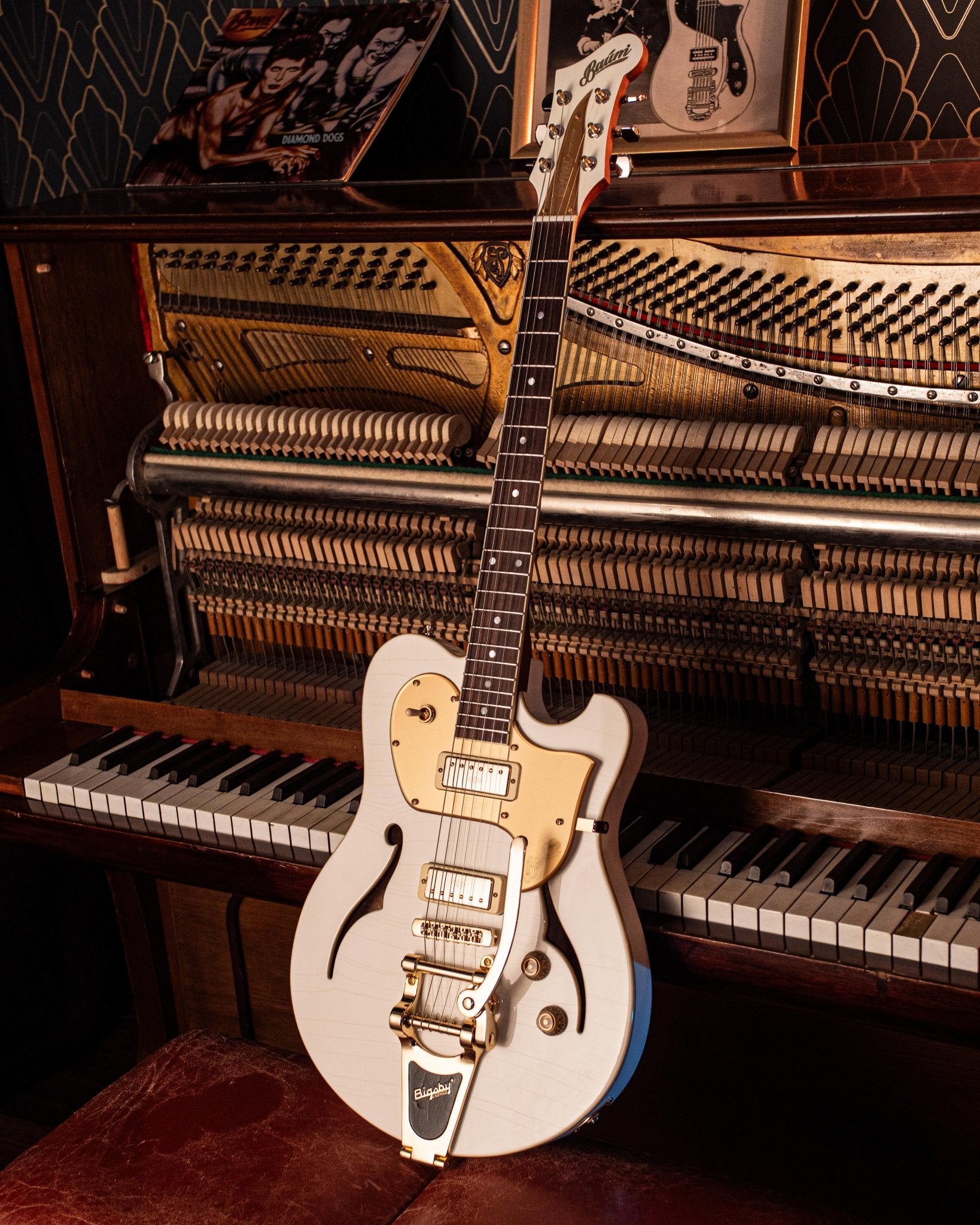
Baum builds two semi-hollow electric guitars, each occupying distinct territory within the format. Both use mahogany bodies with maple tops, roasted maple necks and Bigsby vibrato systems, but the pickup voicing, body shape and overall tonal direction differ significantly.
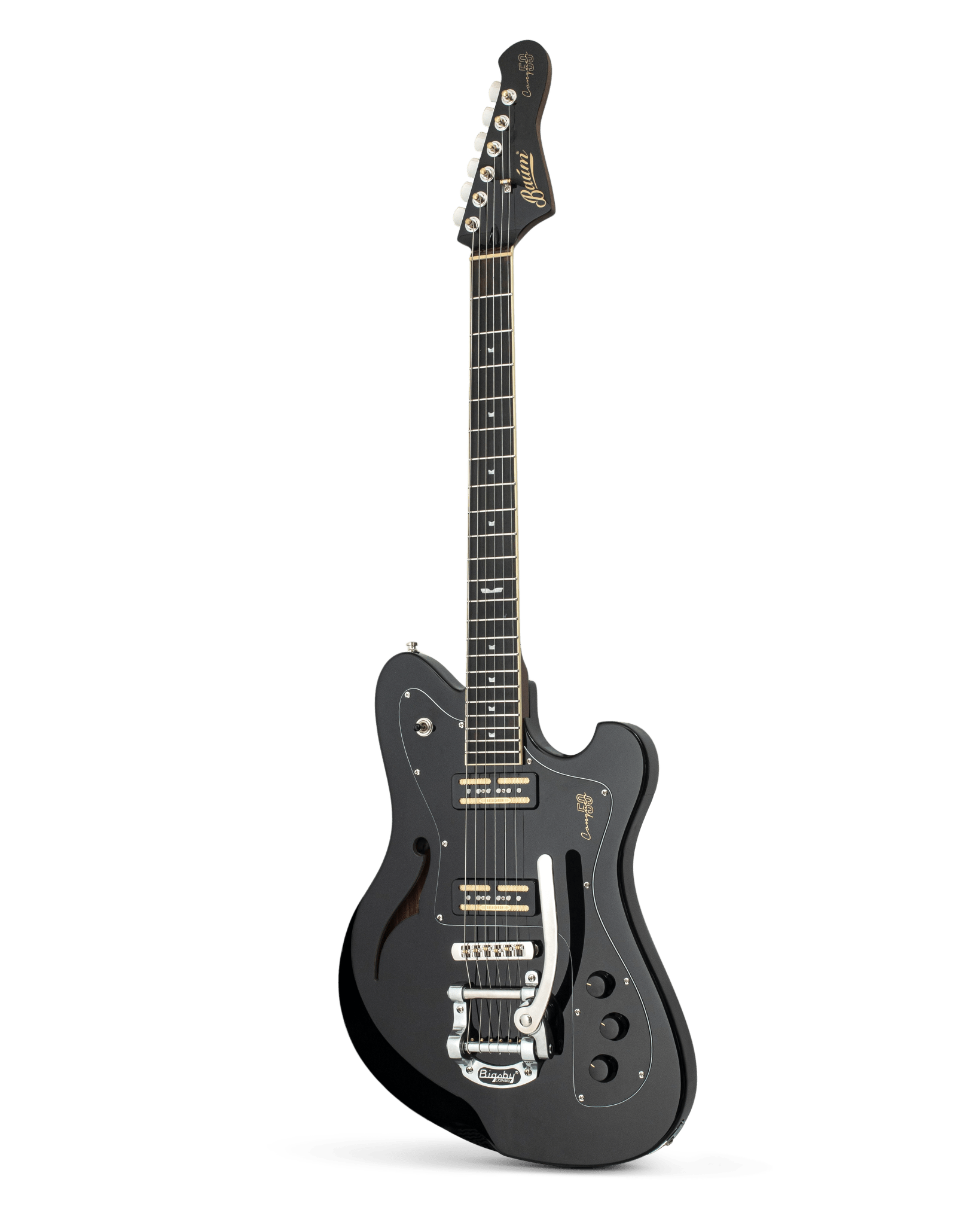
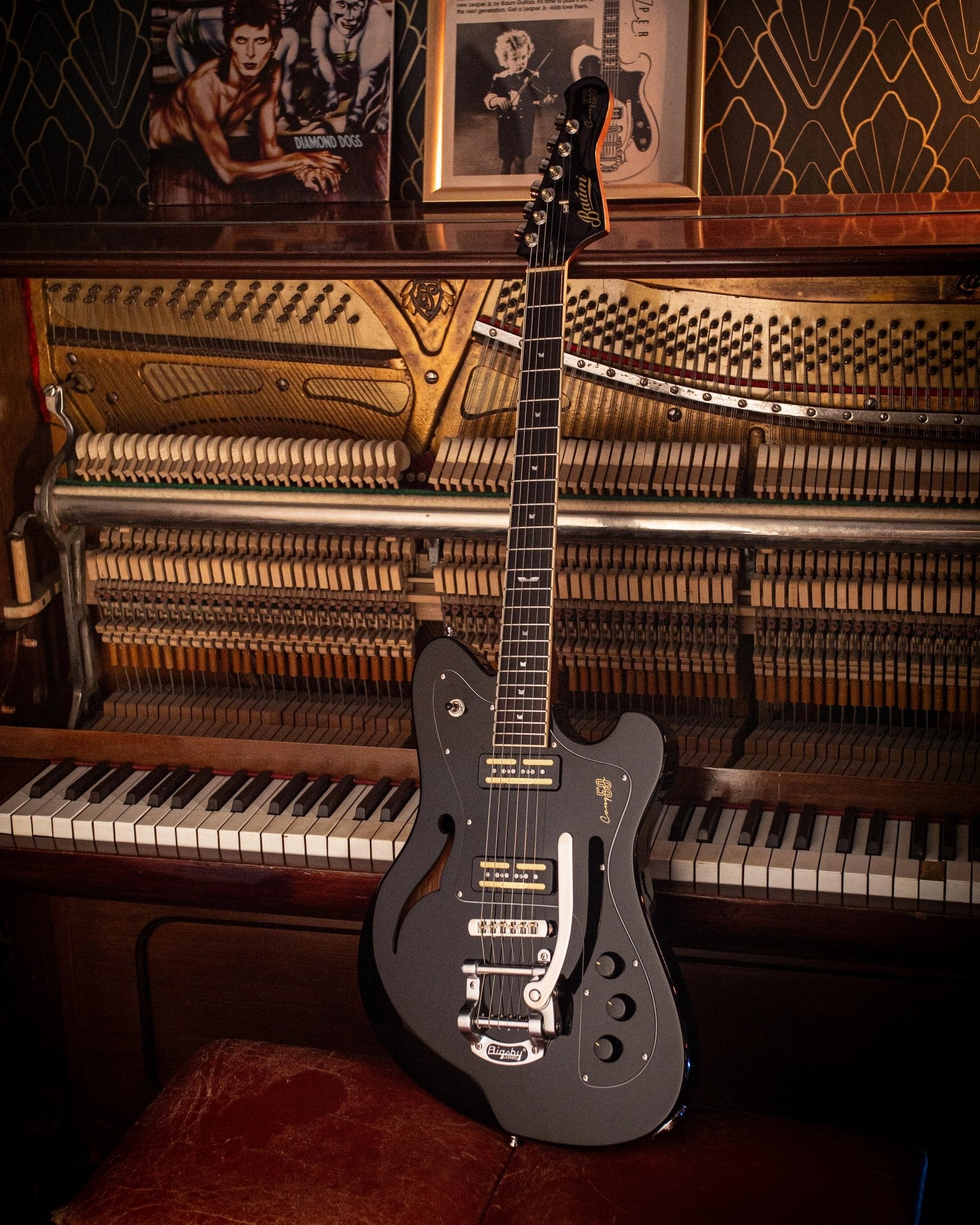
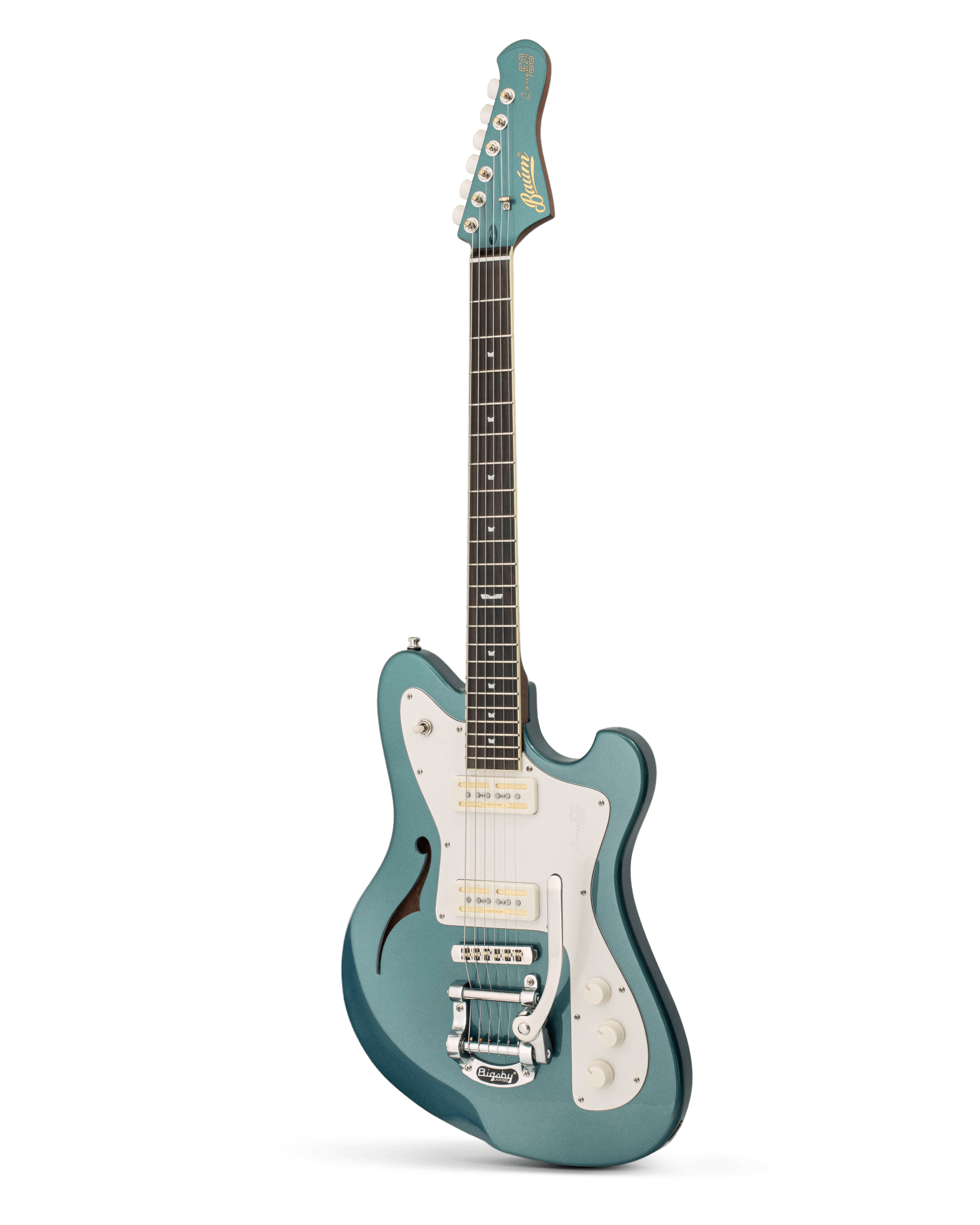
The Conquer 59 is a semi-hollow offset electric guitar with Bigsby B50 vibrato and Goldsound® Jabmaster single coils. It bridges the offset and semi-hollow universes in a way few modern electric guitars attempt. The offset body shape gives it a playing balance and visual identity that solid body semi-hollows do not have, and the single coil voicing produces jangle, sparkle and warm midrange character that covers tonal territory associated with both 1950s jazz recordings and 1990s indie and alternative rock.
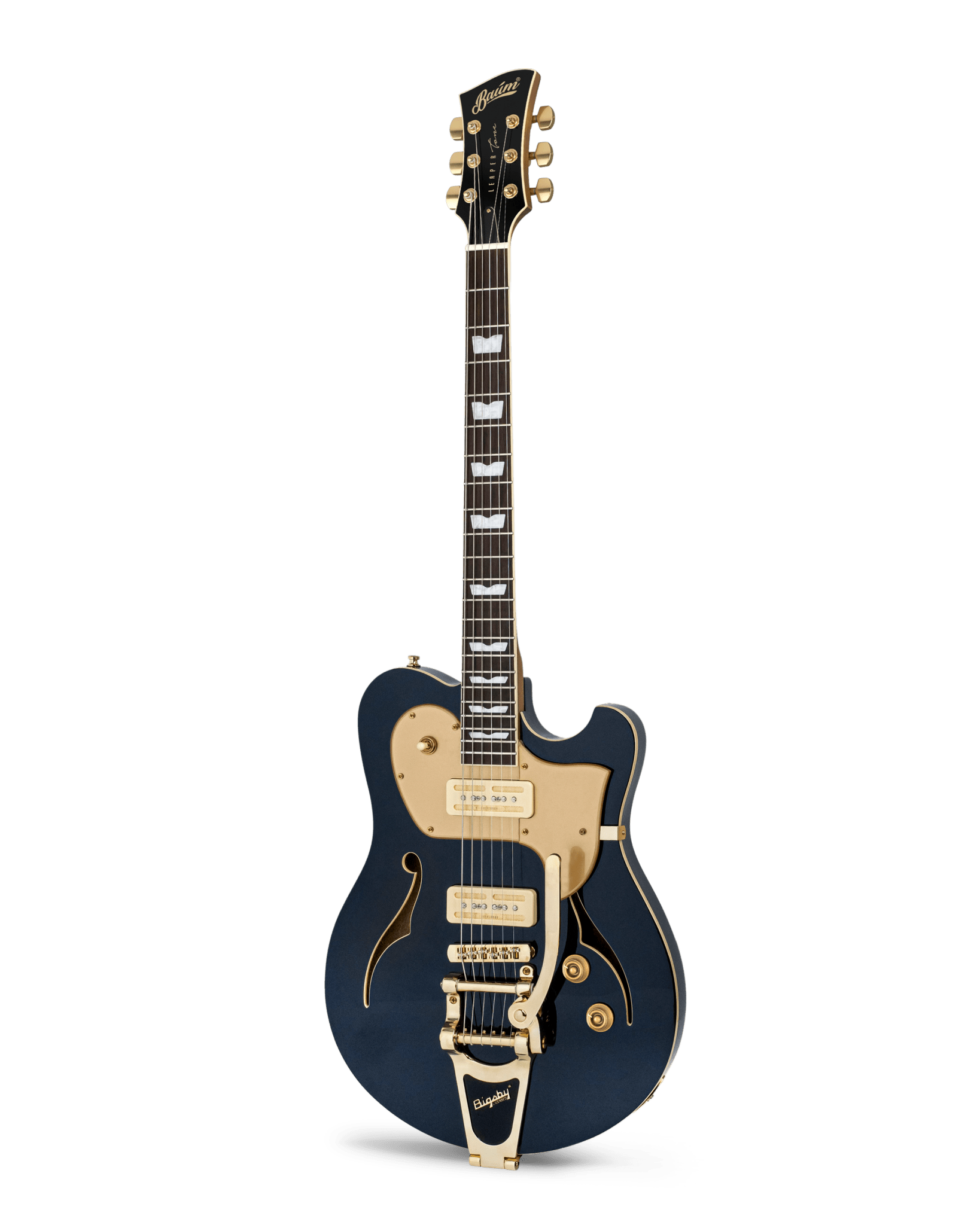
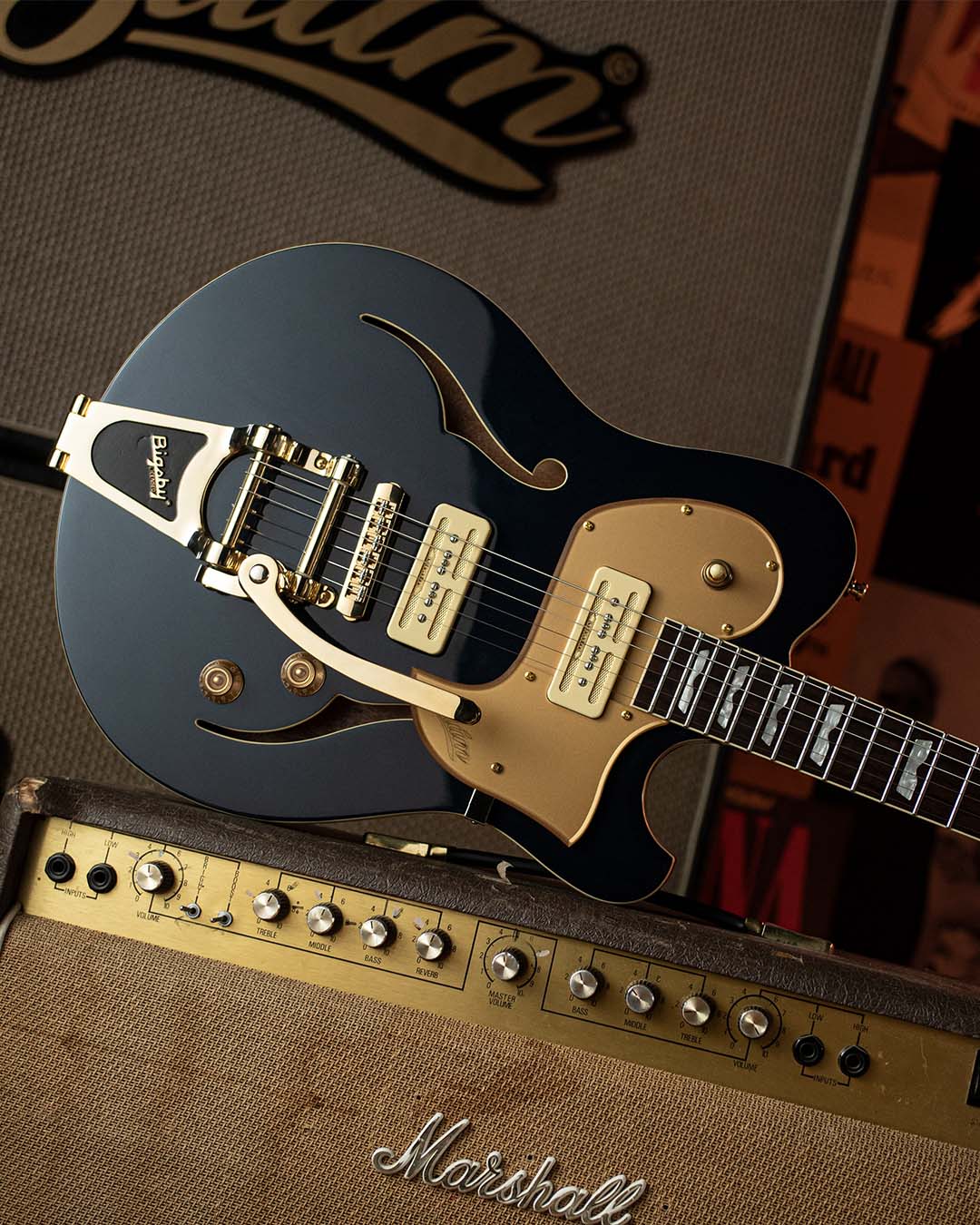
The Leaper Tone is the traditional semi-hollow that started Baum in 2015. Built around Goldsound® Rewind '52 P-90 pickups and Bigsby B70 vibrato, it commits to one tonal direction with vintage P-90 voicing on a semi-hollow platform. The result is the guitar that Baum's construction philosophy was originally developed on, refined across a decade of production. Every technical decision that now defines Baum's approach across the wider lineup was first proven on the Leaper Tone.
Two models covering distinct semi-hollow territories, both built on the same construction platform, both shipping with Bigsby vibrato as standard hardware.
Choosing between the best semi-hollow guitars
The choice between Baum's two semi-hollow electric guitars comes down to body shape, pickup voicing and tonal preference. The Conquer 59 offers the semi-hollow format in an offset body shape with single coil clarity, which suits players who want jangle and sparkle over midrange warmth. The Leaper Tone offers the traditional semi-hollow shape with P-90 pickups, which suits players who want vintage P-90 attitude and midrange growl over the more articulate single coil response.
Both models sit at the top of what Baum builds. They represent nearly a decade of construction refinement on the semi-hollow platform, and both are set up by hand in Aarhus before shipping. For players considering the broader lineup, the Baum electric guitar catalogue spans nine models across five body styles including the two semi-hollow instruments, offering direct comparison against solid body, offset, S-type and T-type alternatives.
45 days home trial with a Baum semi-hollow guitar
Semi-hollow electric guitars reveal their character through the interaction between the instrument and the room. Amp choice, playing volume, effects setup and room acoustics all shape what you hear from a semi-hollow in ways that matter less on a solid body. The best way to test whether a Baum semi-hollow fits your playing is to spend real time with it in the environment where you actually play. Baum doesn't sell through retailers, so every semi-hollow electric guitar ships direct from Denmark, set up by hand in Aarhus, and comes with a 45-day home trial.