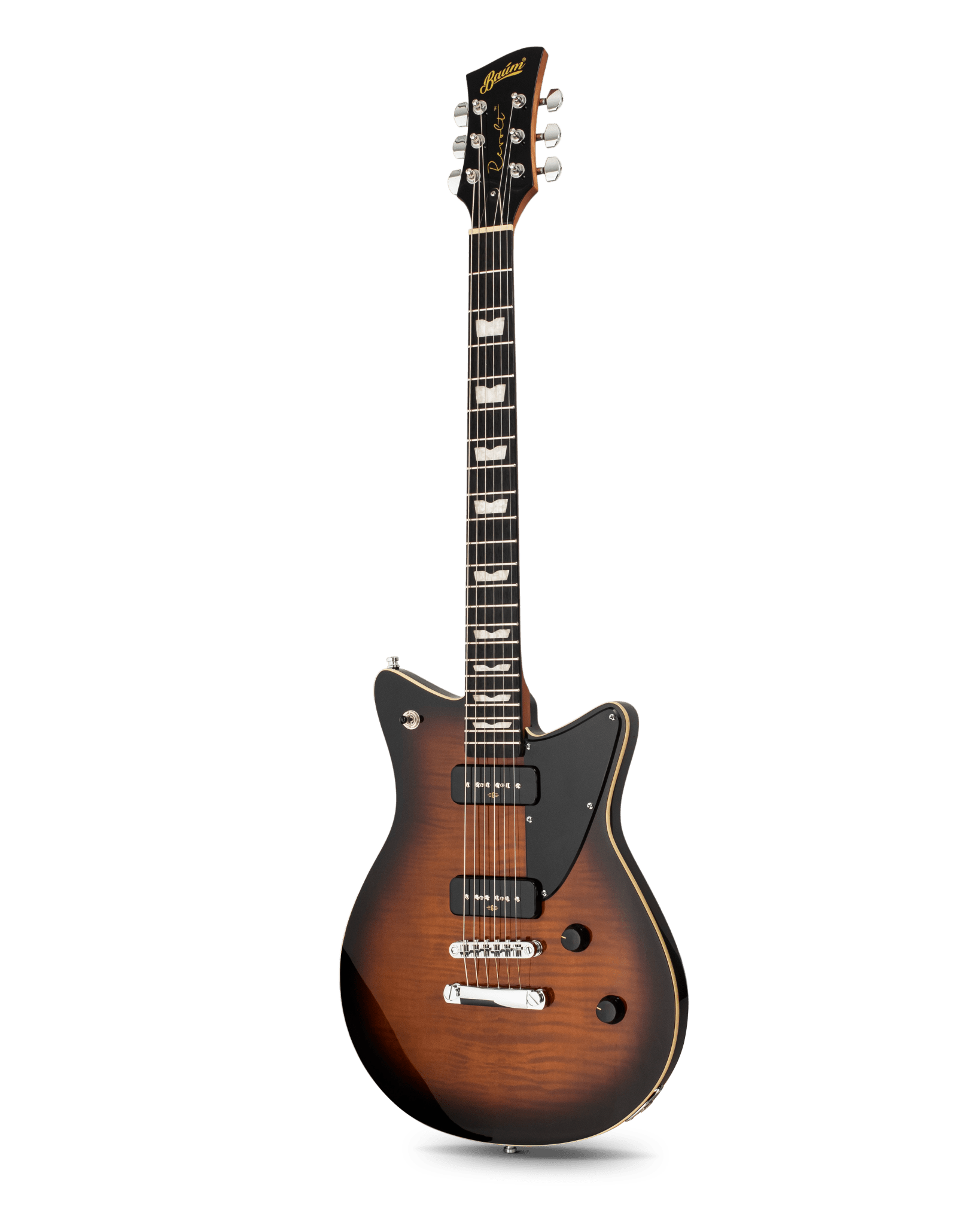
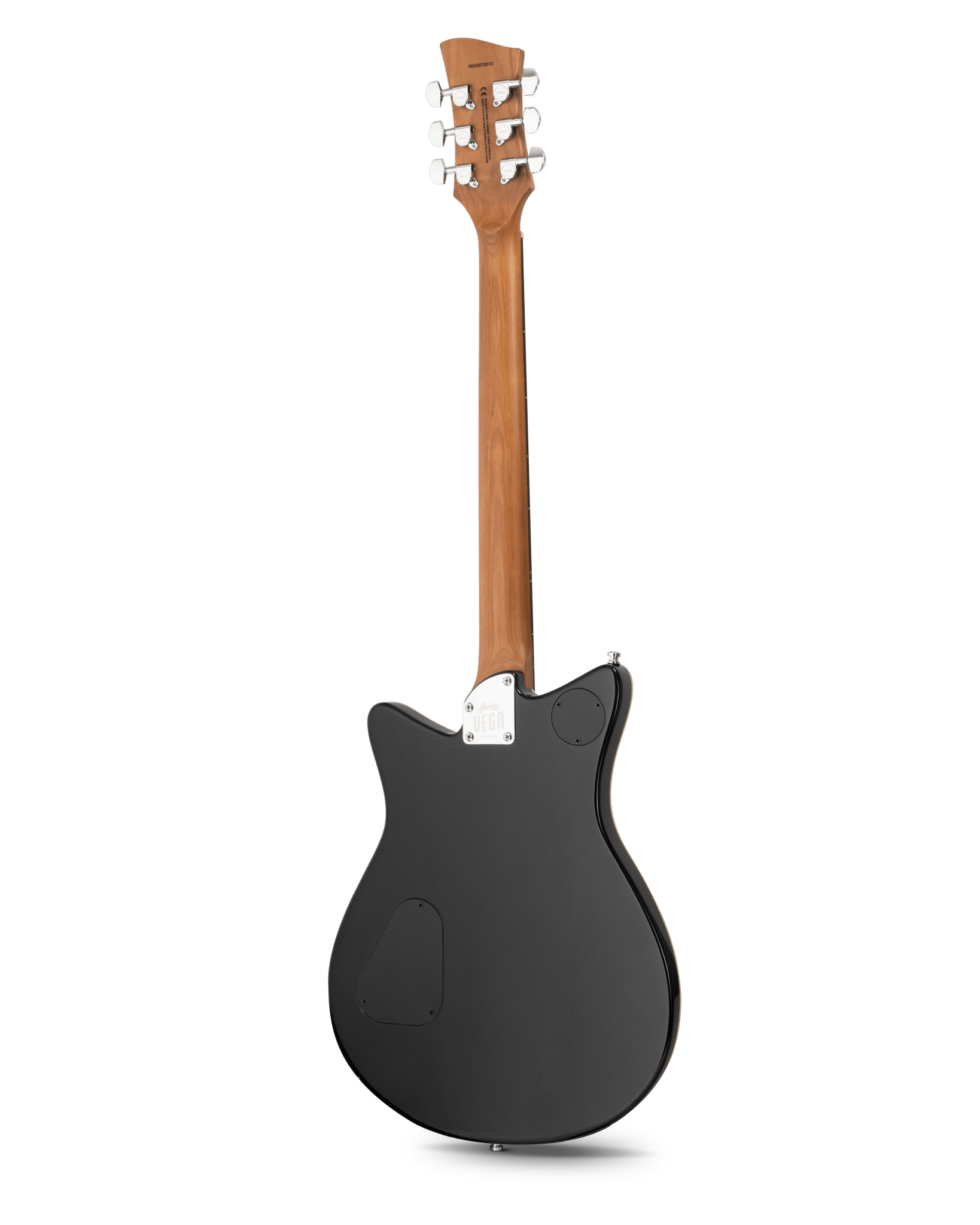
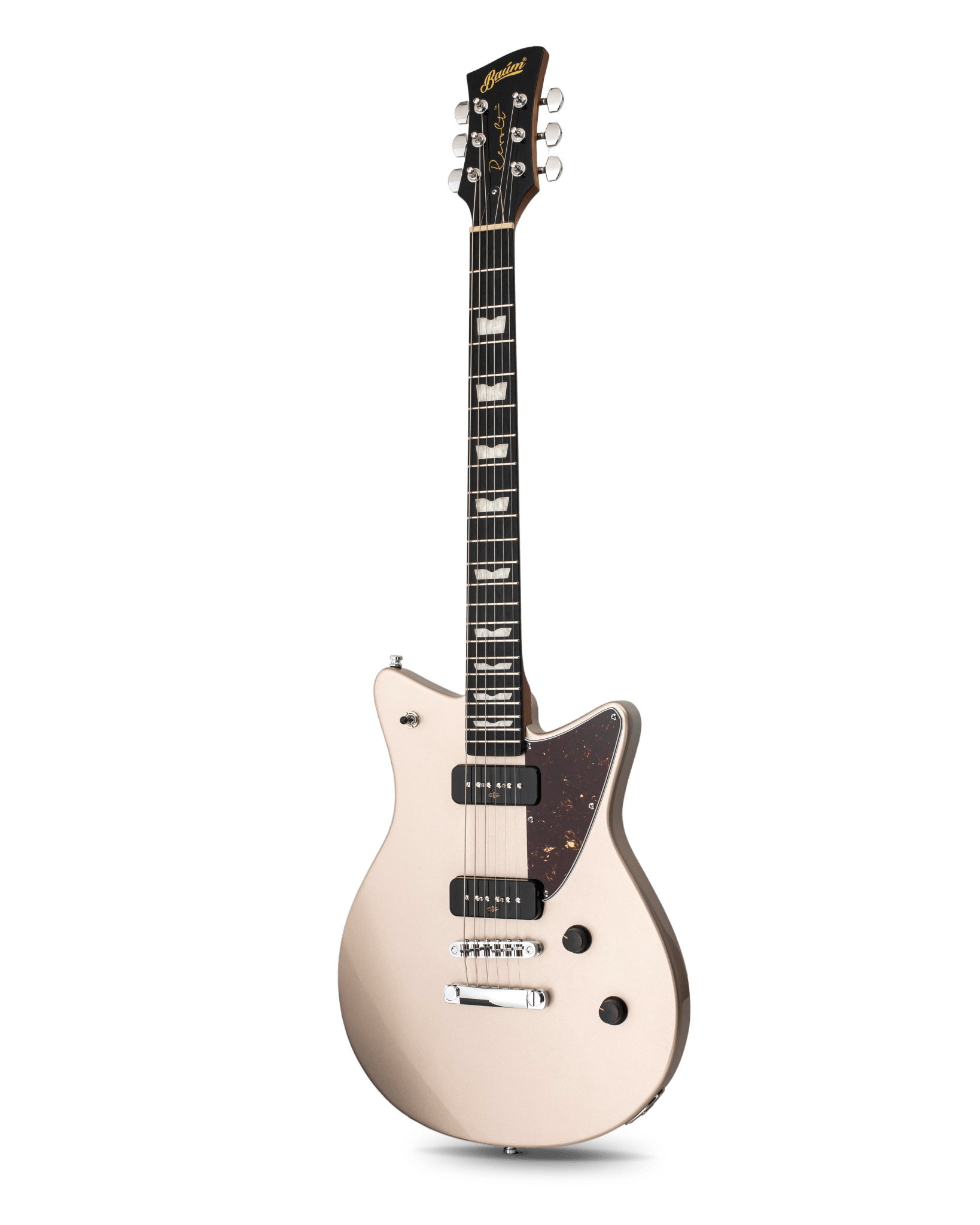
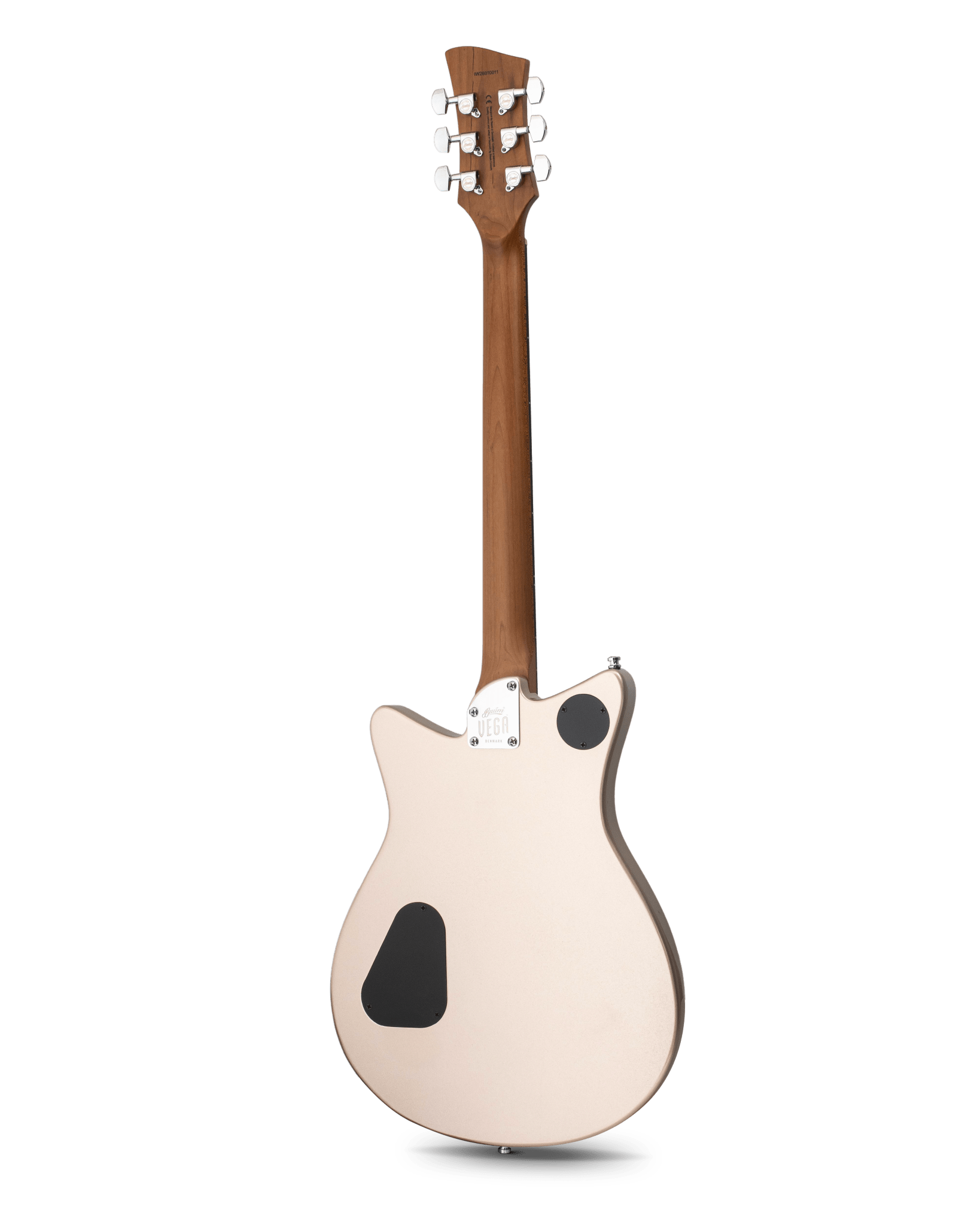
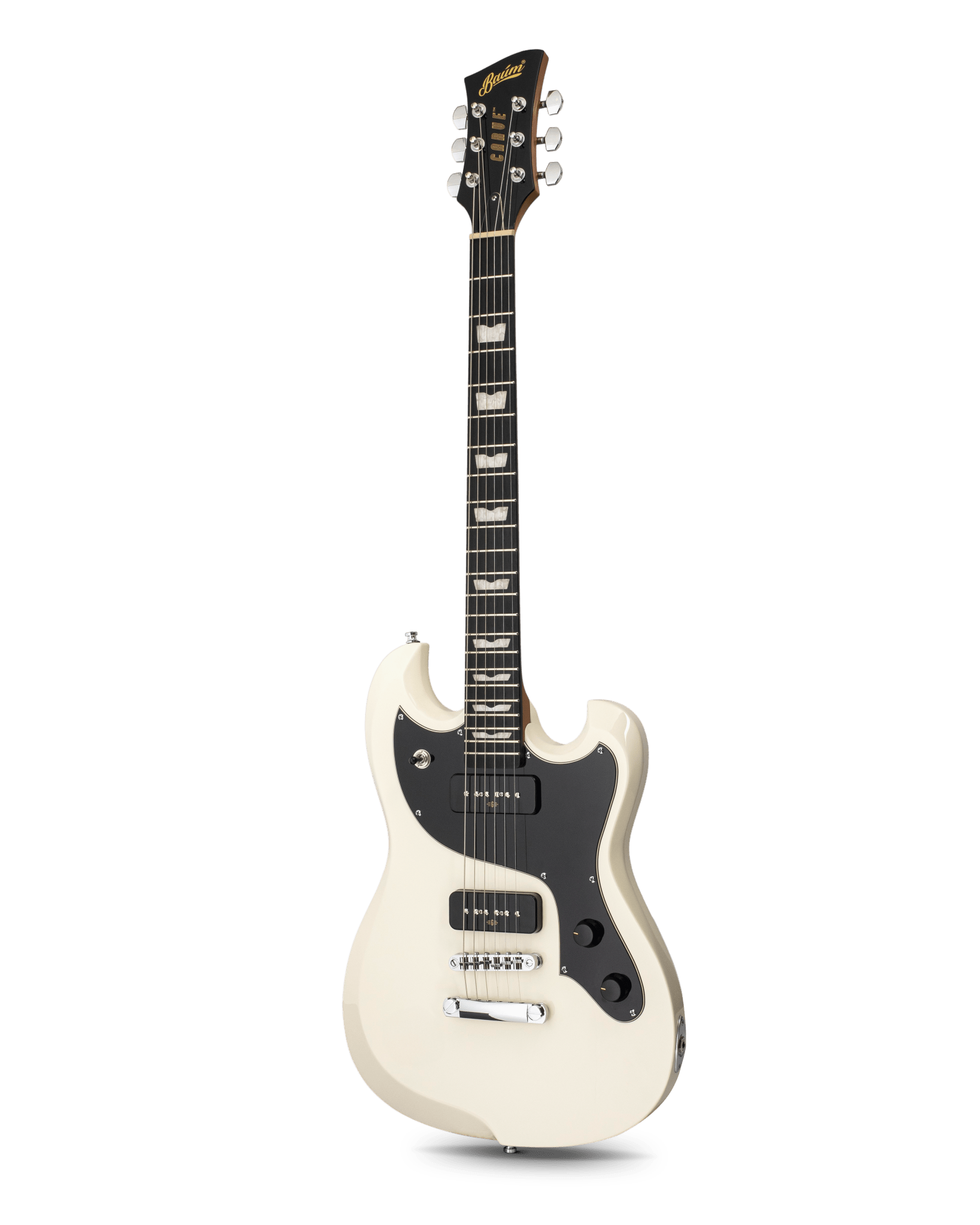
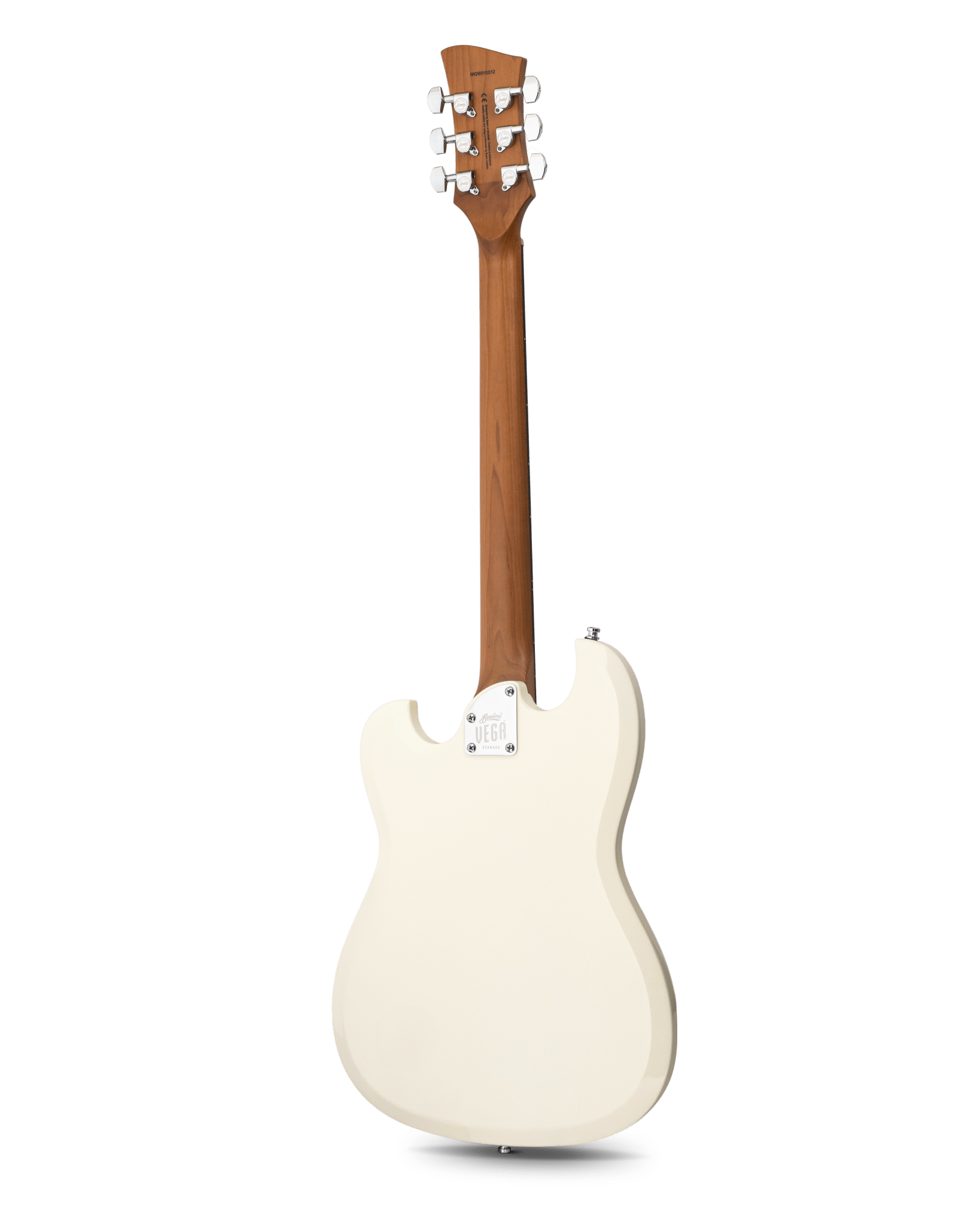
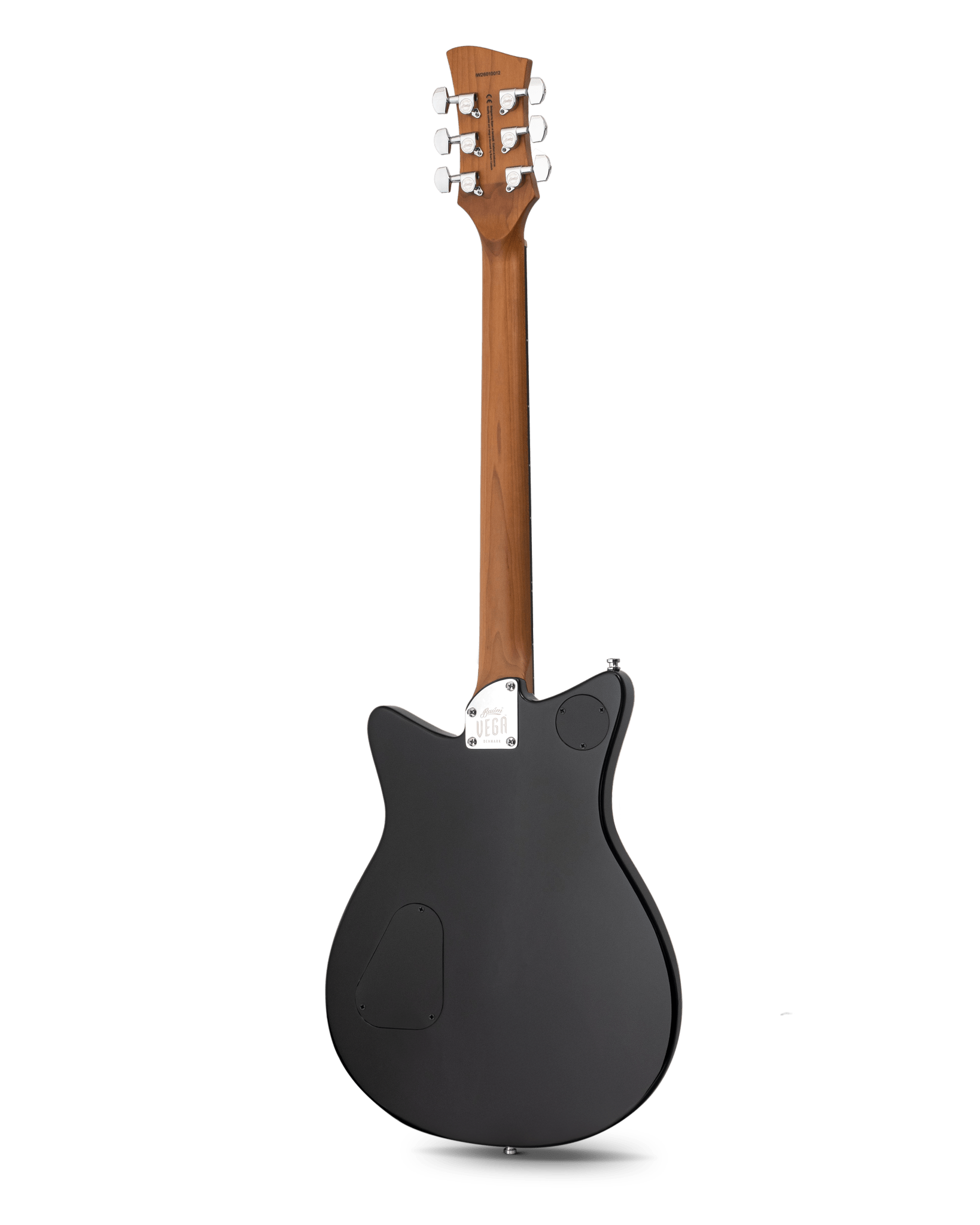
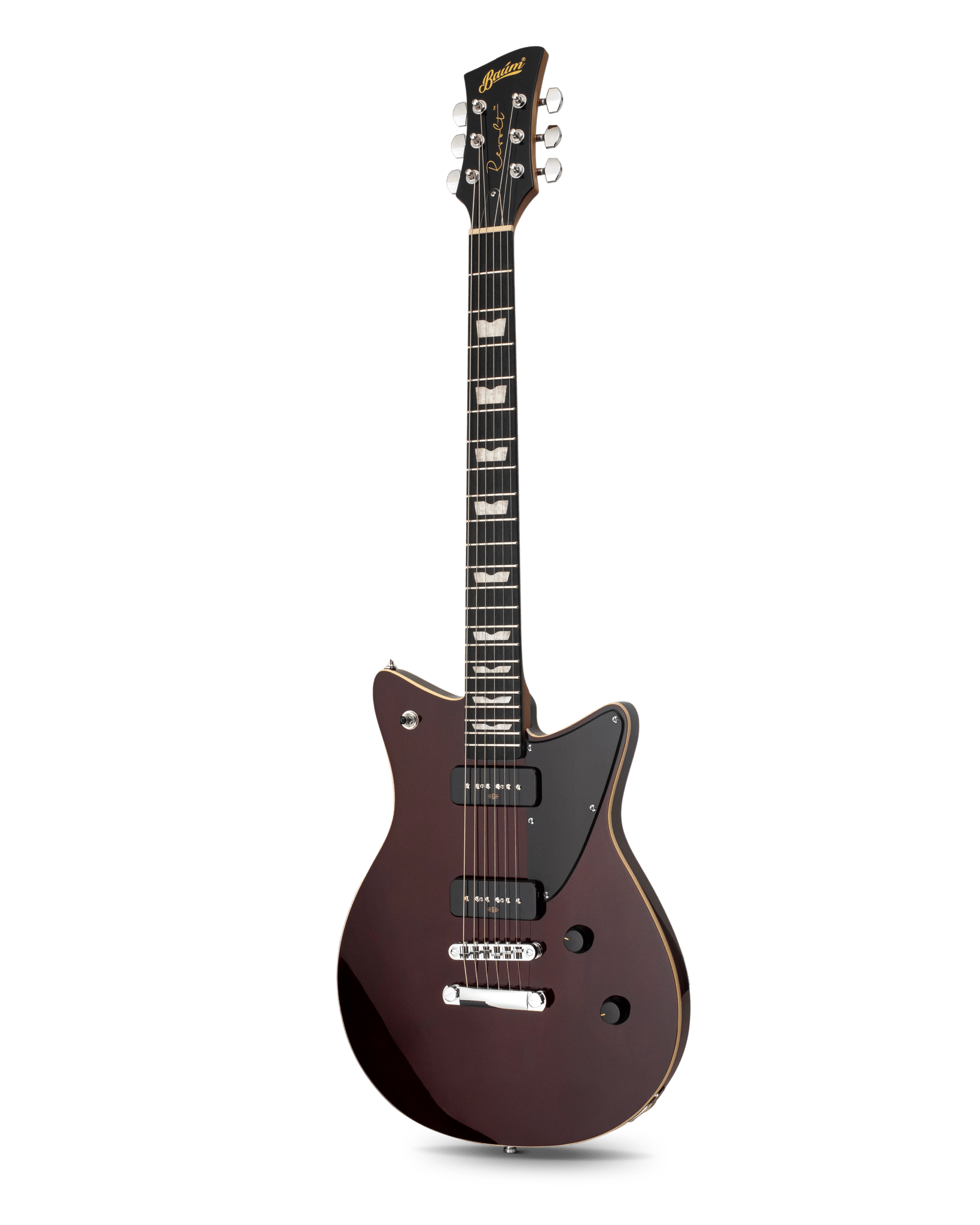
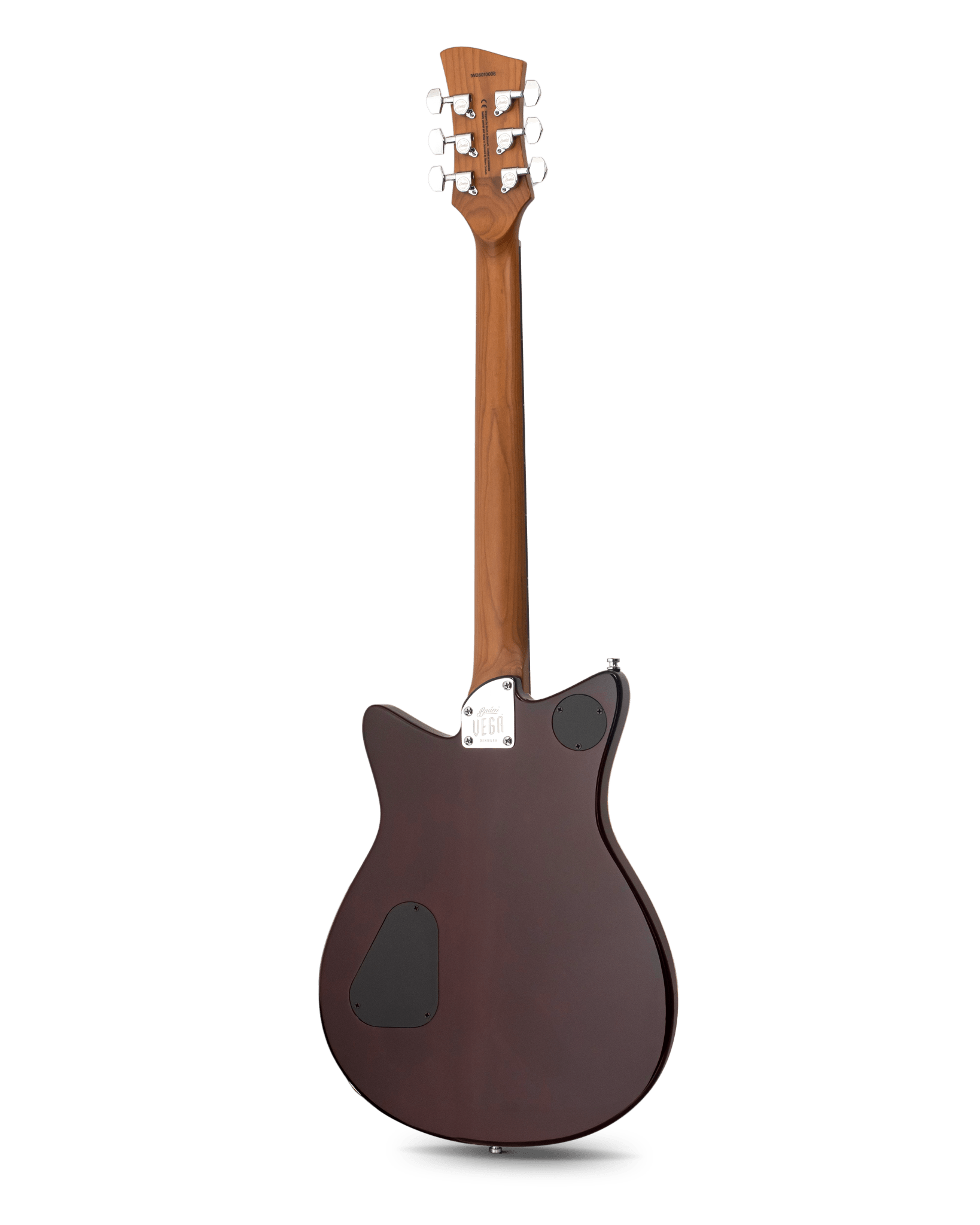
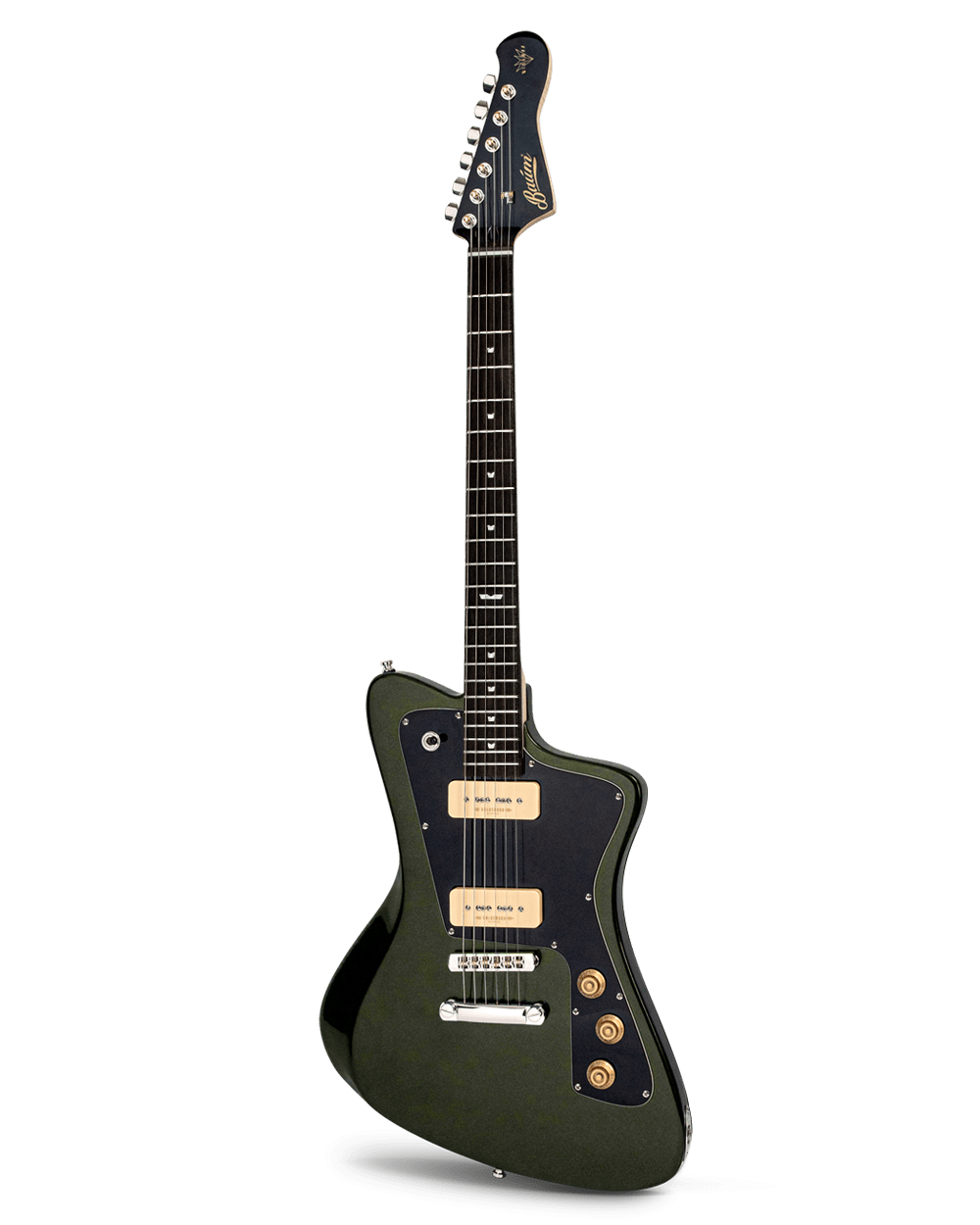
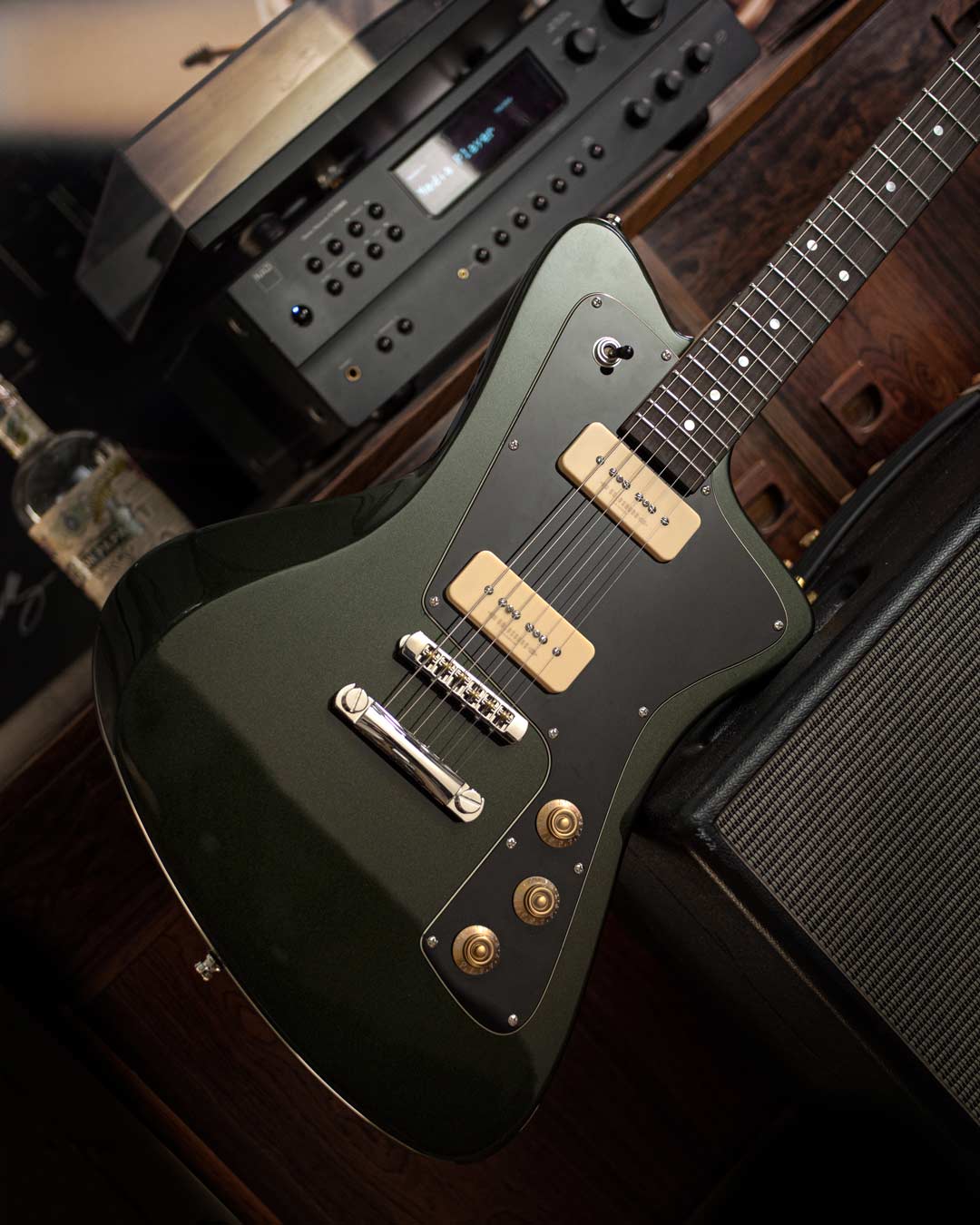
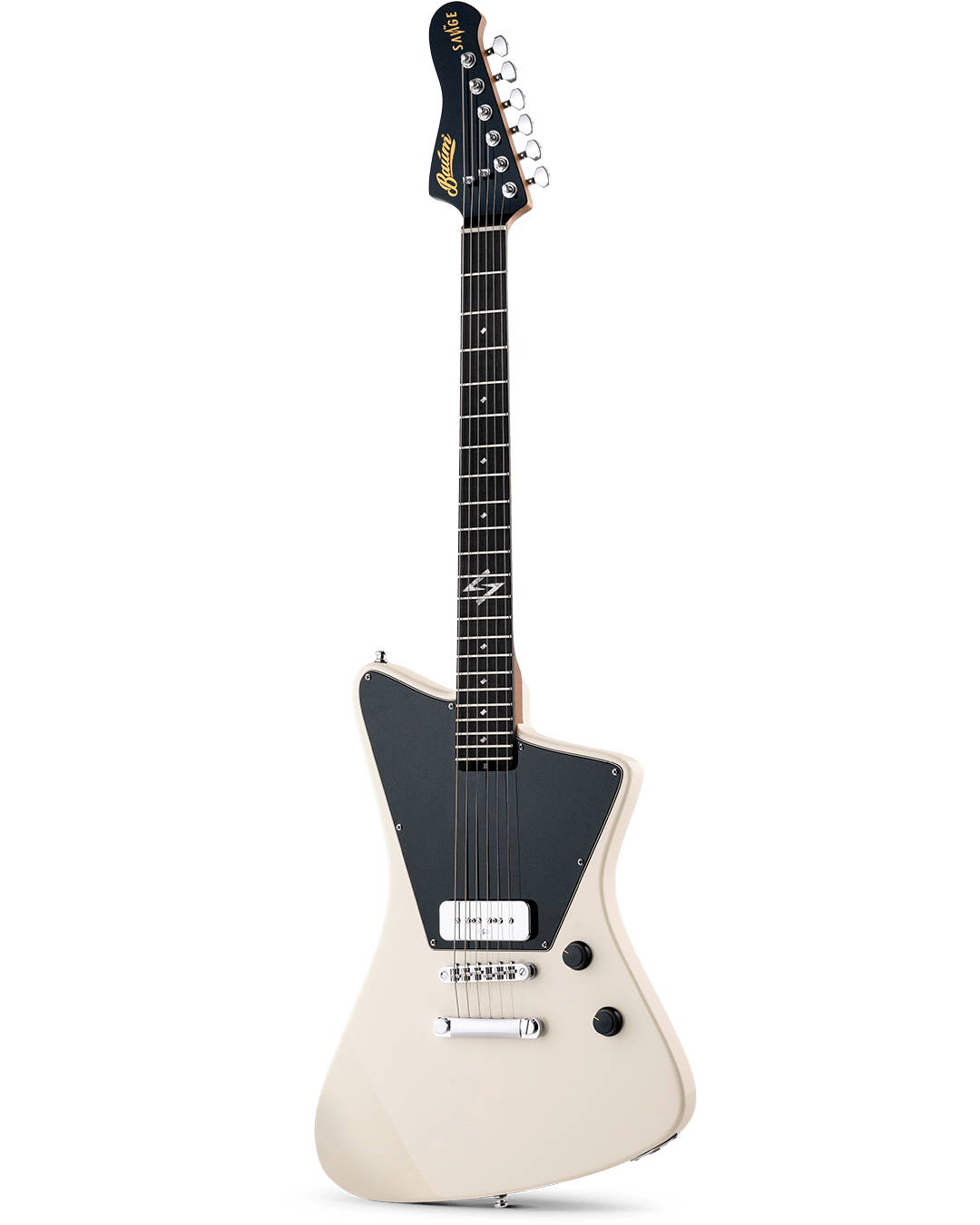
Baum offset electric guitars
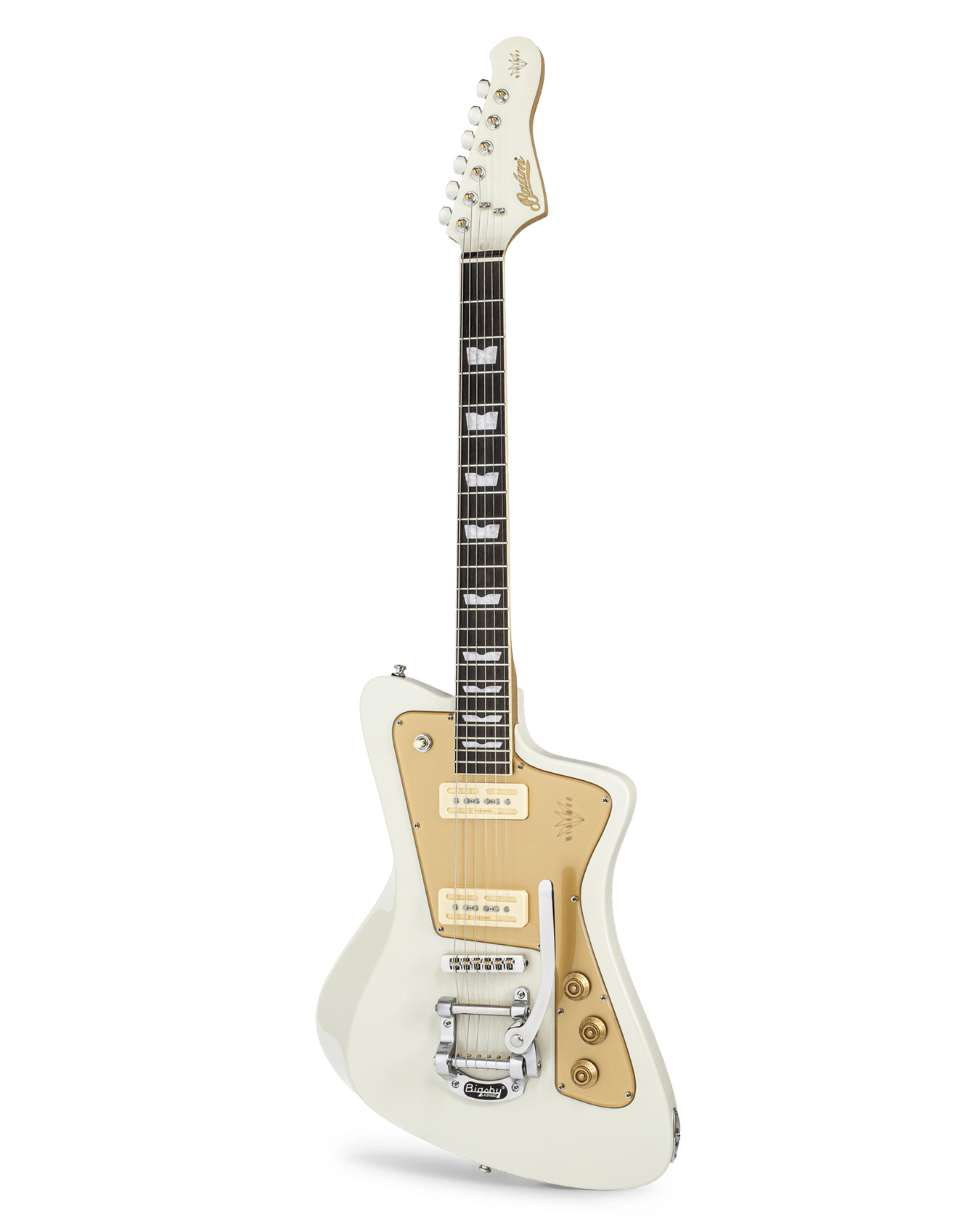
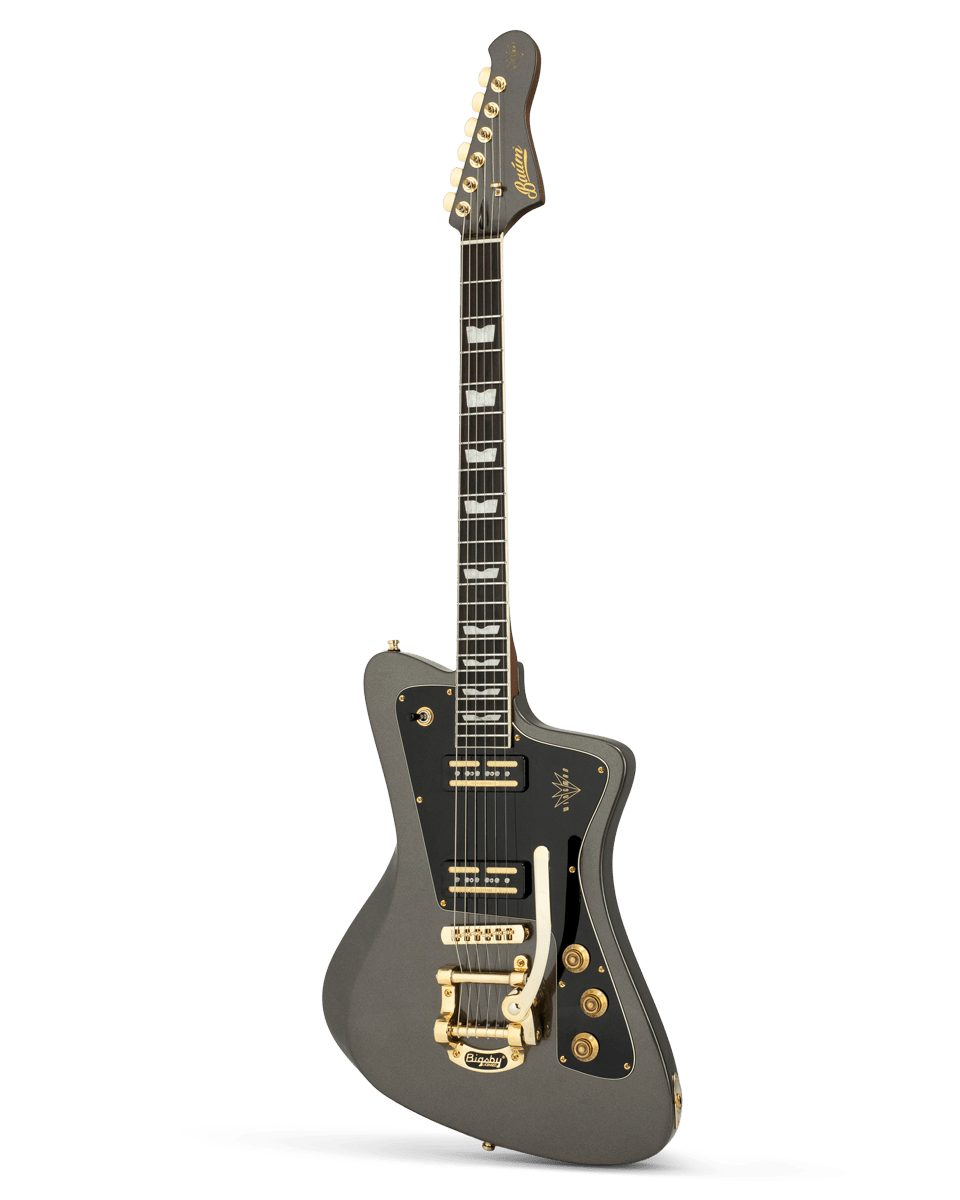
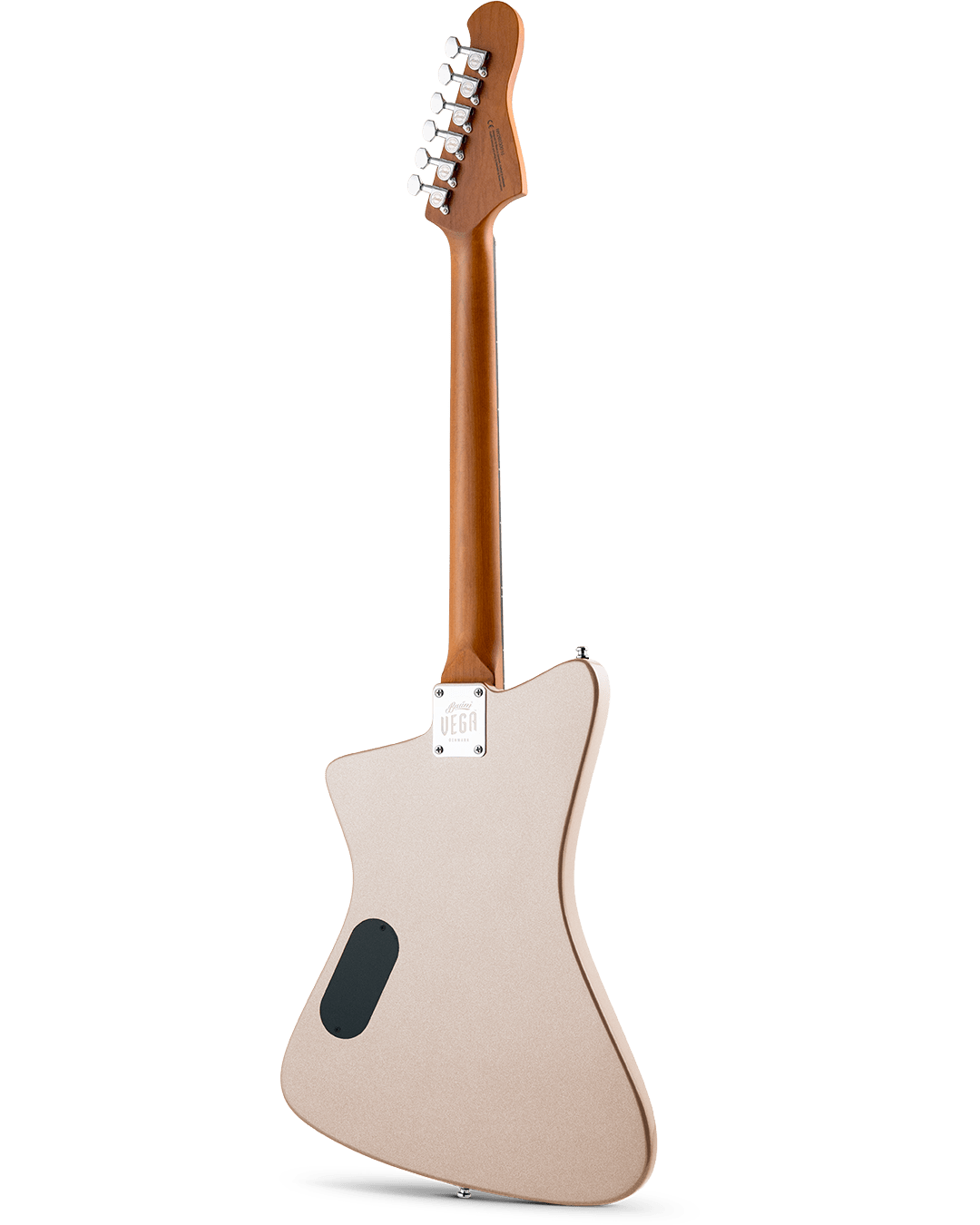
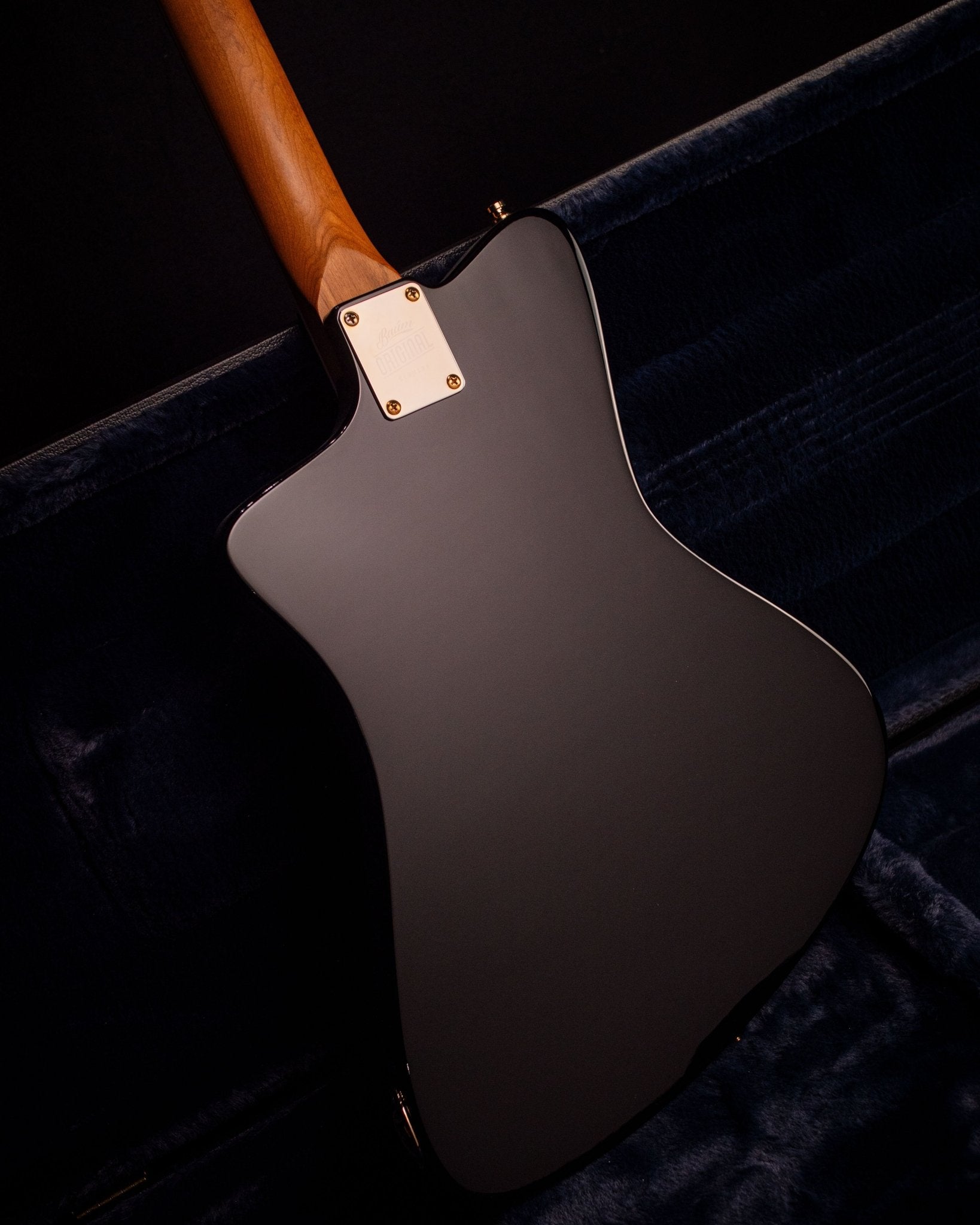
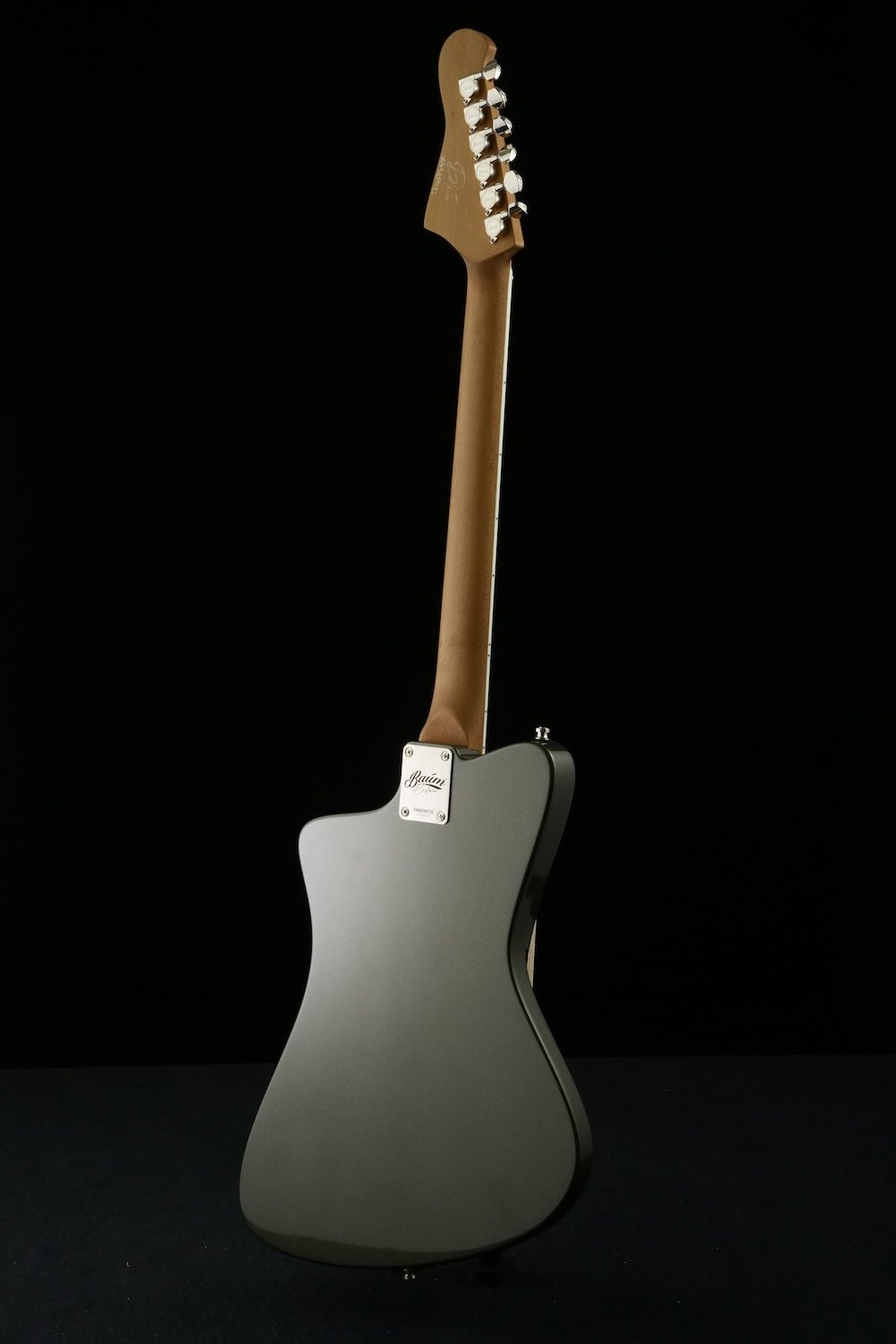
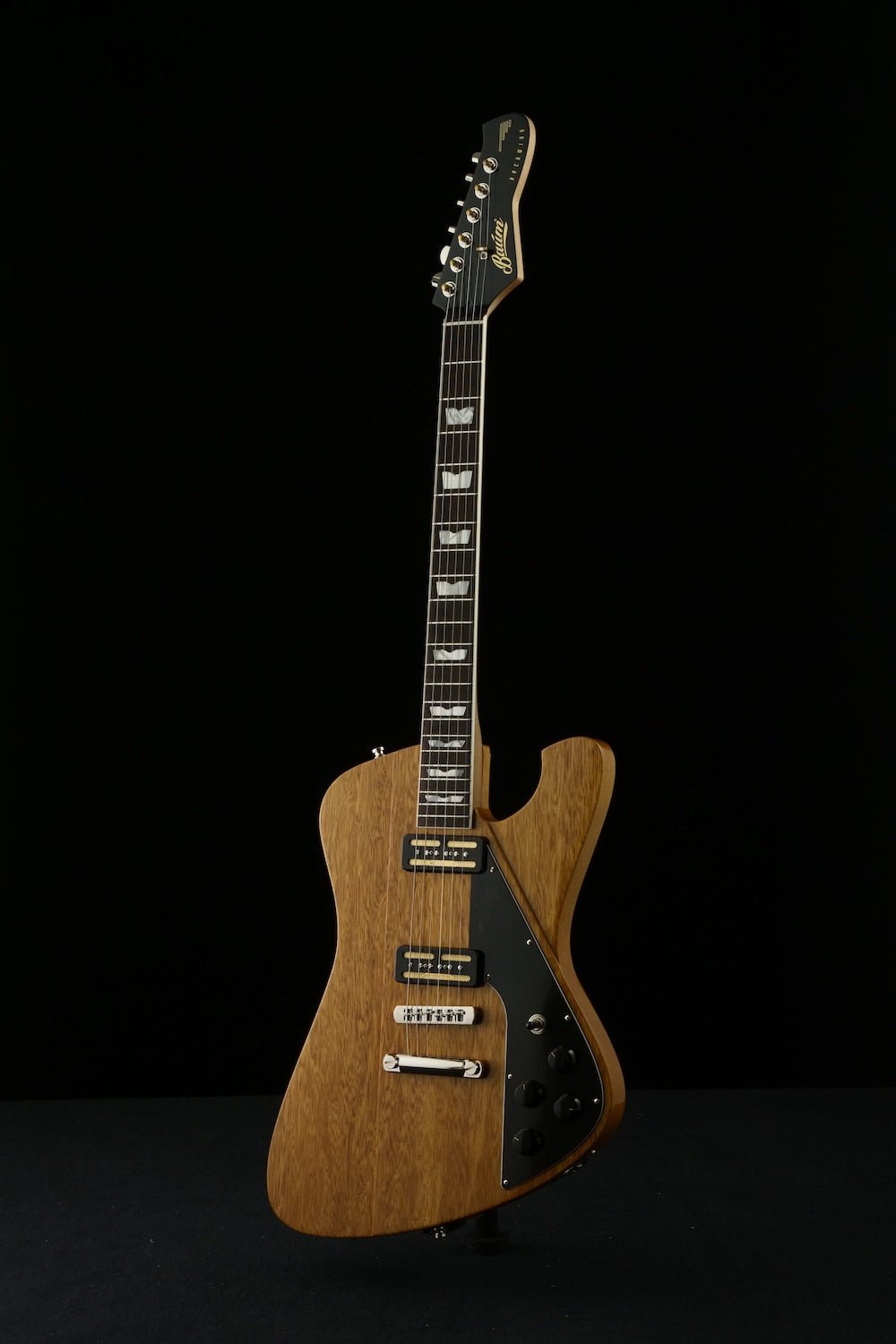
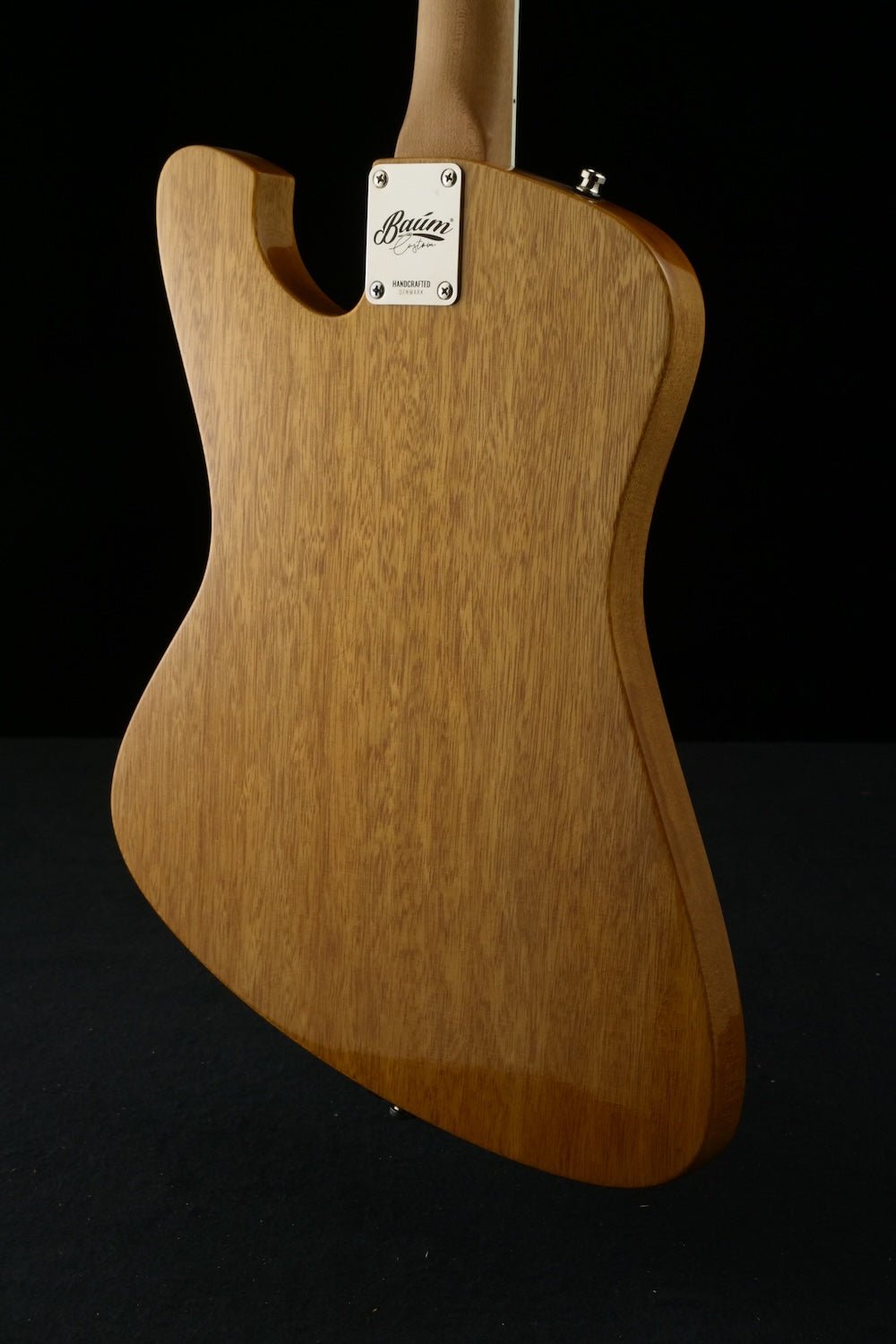
Offset body guitars are a defining part of what Baum builds. Multiple models across the lineup use the offset format, ranging from modern versatile designs to vintage-leaning and aggressive interpretations, and a semi-hollow offset that bridges into chambered construction. Building offset electric guitars is not a side category at Baum. It is central to the brand.
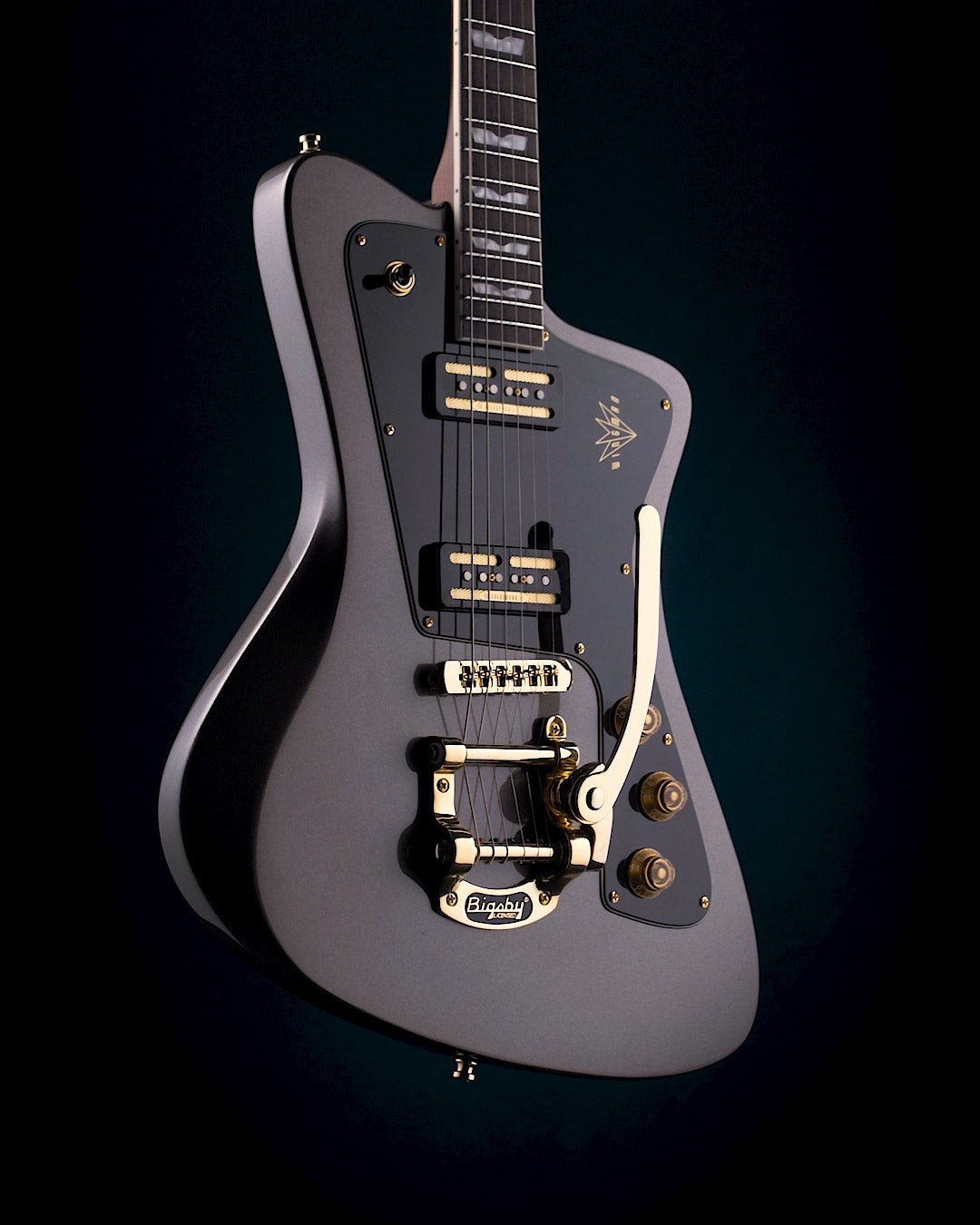
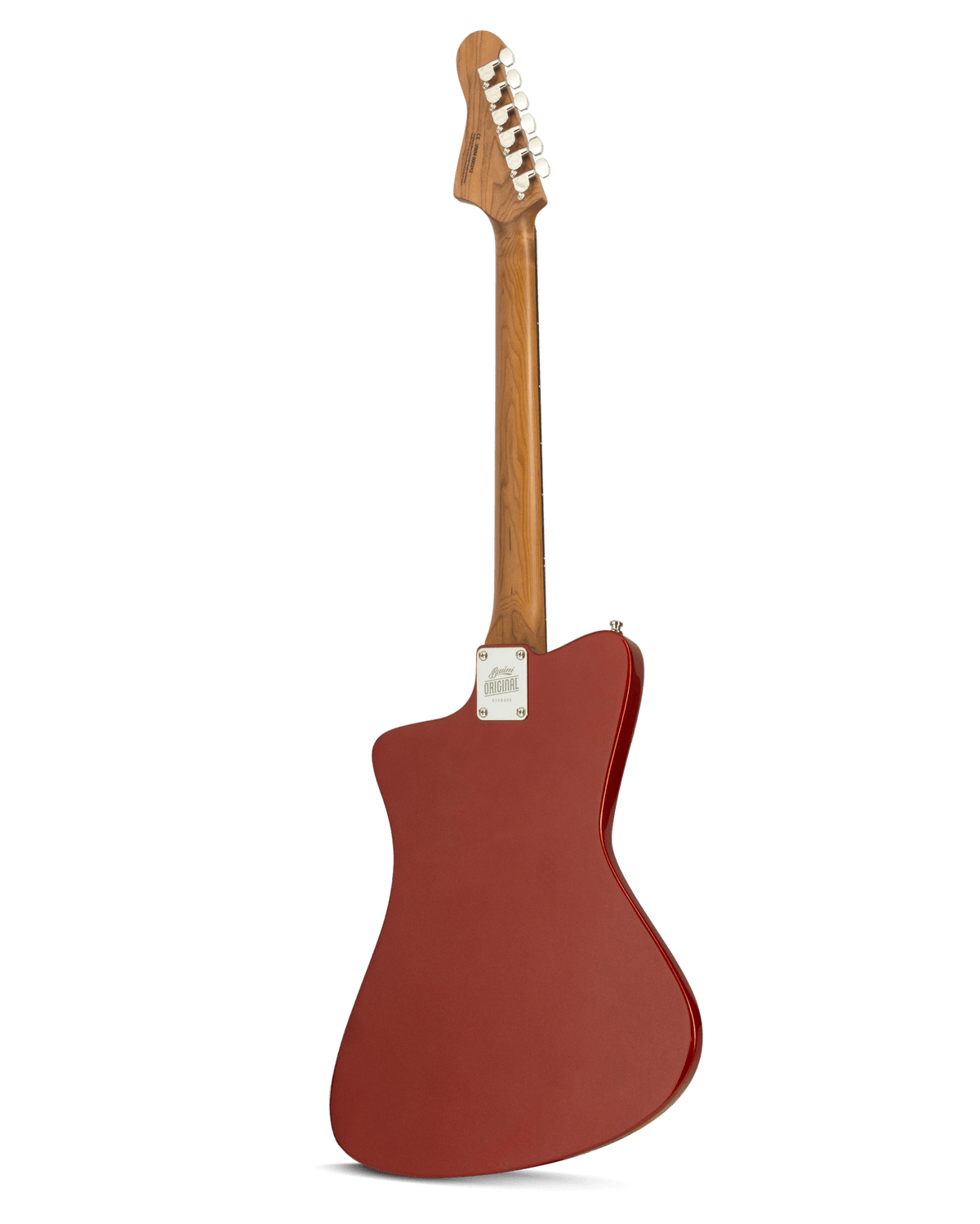
The offset body electric guitar is a body shape defined by asymmetric contours. The upper and lower bouts are not mirror images of each other, the upper horn extends further, and the overall body shape shifts the center of gravity in a way that changes how the guitar balances against the strap. Compared to a Les Paul-style or Stratocaster-style body, the offset format sits differently on the strap, sits differently on the leg when playing seated, and puts the upper frets in a slightly different position relative to the playing arm. It is not just a visual style choice. It is an ergonomic format with real playing consequences.
What is an offset guitar body
An offset guitar body is a solid or semi-hollow electric guitar body where the horns and bouts are deliberately asymmetric rather than mirror-symmetric. The format first appeared in the early 1960s as an alternative to the symmetric designs that dominated the first decade of solid body electric guitar production. The offset shape shifts the strap button position relative to the body's center of mass, which changes the playing balance. Players who spend long sessions on their feet tend to notice the difference. Players who play seated notice a different balance point on the leg. Neither is universally better than a symmetric body shape, but for a significant subset of players the offset format is more comfortable and more natural to play.
Offset body electric guitars have historically been associated with alternative rock, indie, punk, grunge, shoegaze and post-punk playing. That is not because the format is limited to those genres, but because guitarists working outside mainstream rock and pop in the 1980s and 1990s adopted offset guitars as an alternative to Les Paul-style and Stratocaster-style instruments. The tonal signature of an offset body electric guitar depends primarily on the pickups and the construction underneath, not on the offset shape itself. Modern offset guitars can cover clean jazz, country picking, blues-rock, alternative rock, punk, grunge or aggressive rock territory depending on the pickup configuration.
The ergonomic case for an offset body electric guitar
The reason the offset format has stayed relevant for six decades is that it solves a real ergonomic problem. Symmetric solid body guitars like the Les Paul concentrate mass in the lower bout, which produces a front-heavy balance that dips the headstock forward when the guitar hangs on a strap. Symmetric double-cut designs like the Stratocaster distribute mass more evenly but produce a different playing position that some players find restricting for upper-fret access.
An offset body guitar distributes mass differently. The longer upper horn moves the strap button position further from the neck joint, which shifts the balance point of the whole instrument. On most offset designs the guitar hangs more level, with less headstock dip, and the upper frets sit closer to the playing arm's natural position. For players who move on stage, play long sets, or spend significant time on lead work in the upper register, the offset format is measurably more comfortable to play than symmetric alternatives.
The offset body electric guitar format is not for everyone. Players who prefer the traditional feel of a Les Paul or the classic contours of a Stratocaster will not find an offset intuitive. But for players who have tried offset formats and found the balance and playing position work for them, going back to symmetric designs feels like a compromise.
Baum's offset guitar lineup
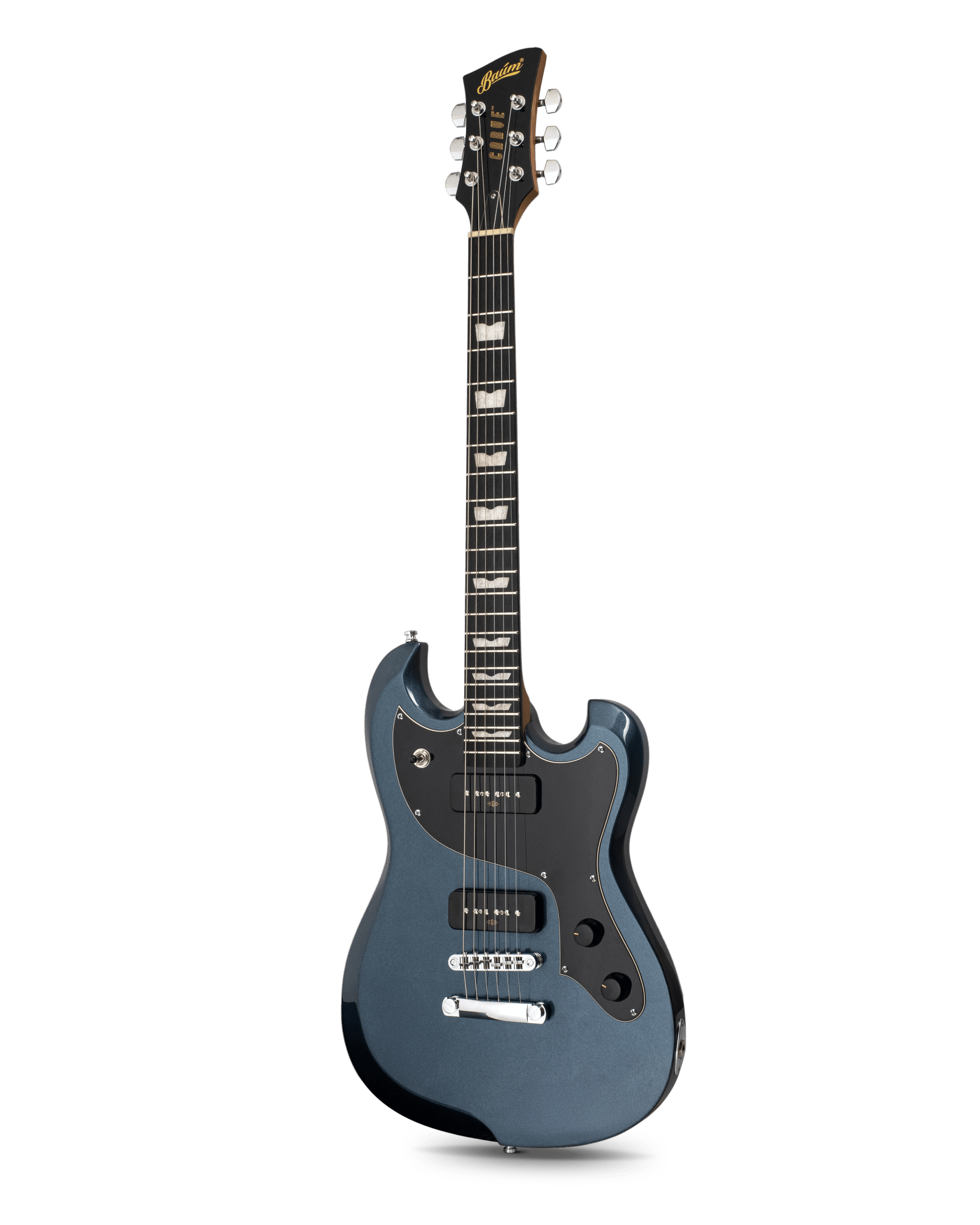
Baum builds offset electric guitars across different tonal directions and body characteristics. Each model uses the same underlying platform of 36mm mahogany body construction, roasted maple neck, Modern C profile and Levitator™ roller bridge. What varies between models is the pickup voicing, the body geometry within the offset format, and the tonal identity each is optimised for.
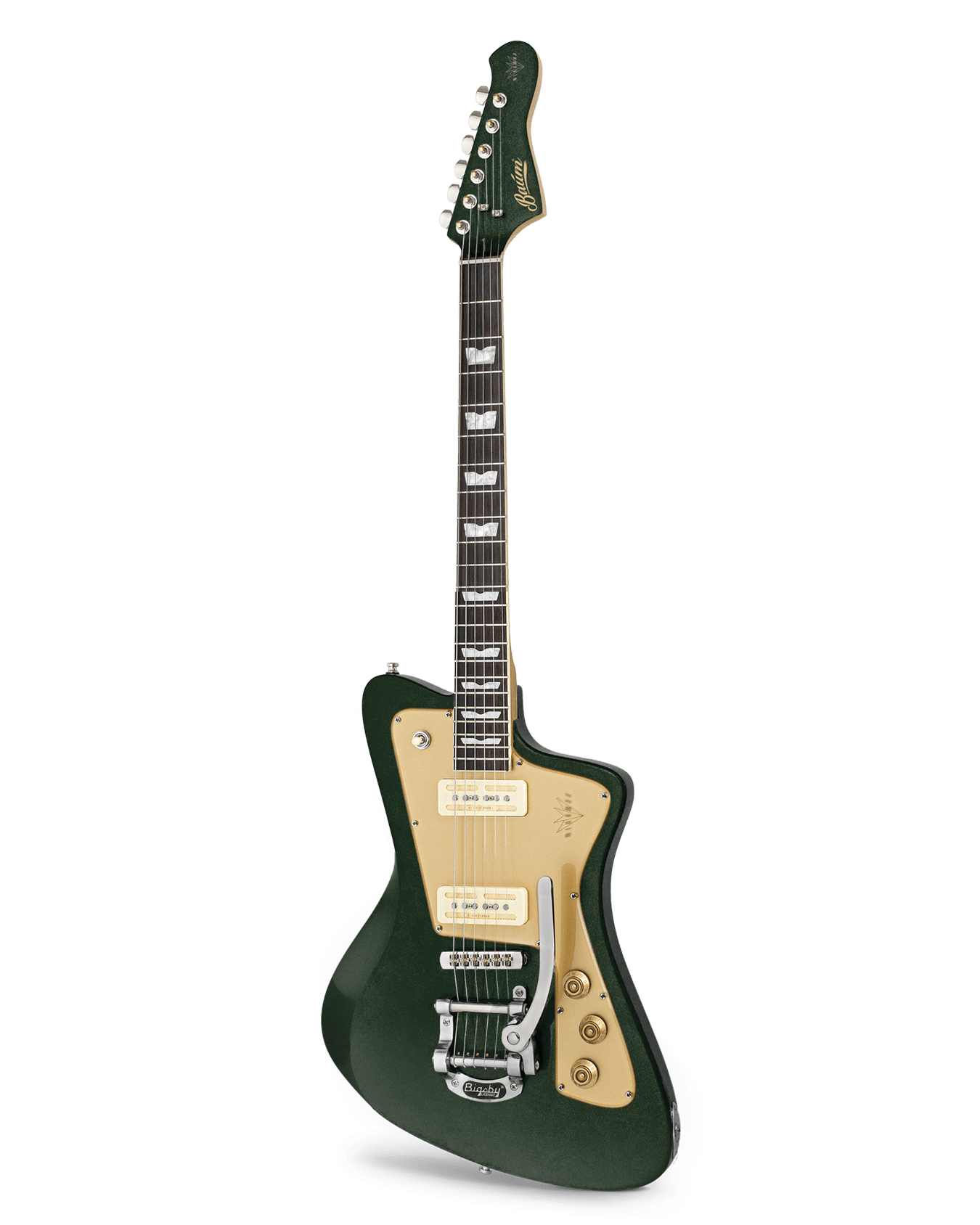
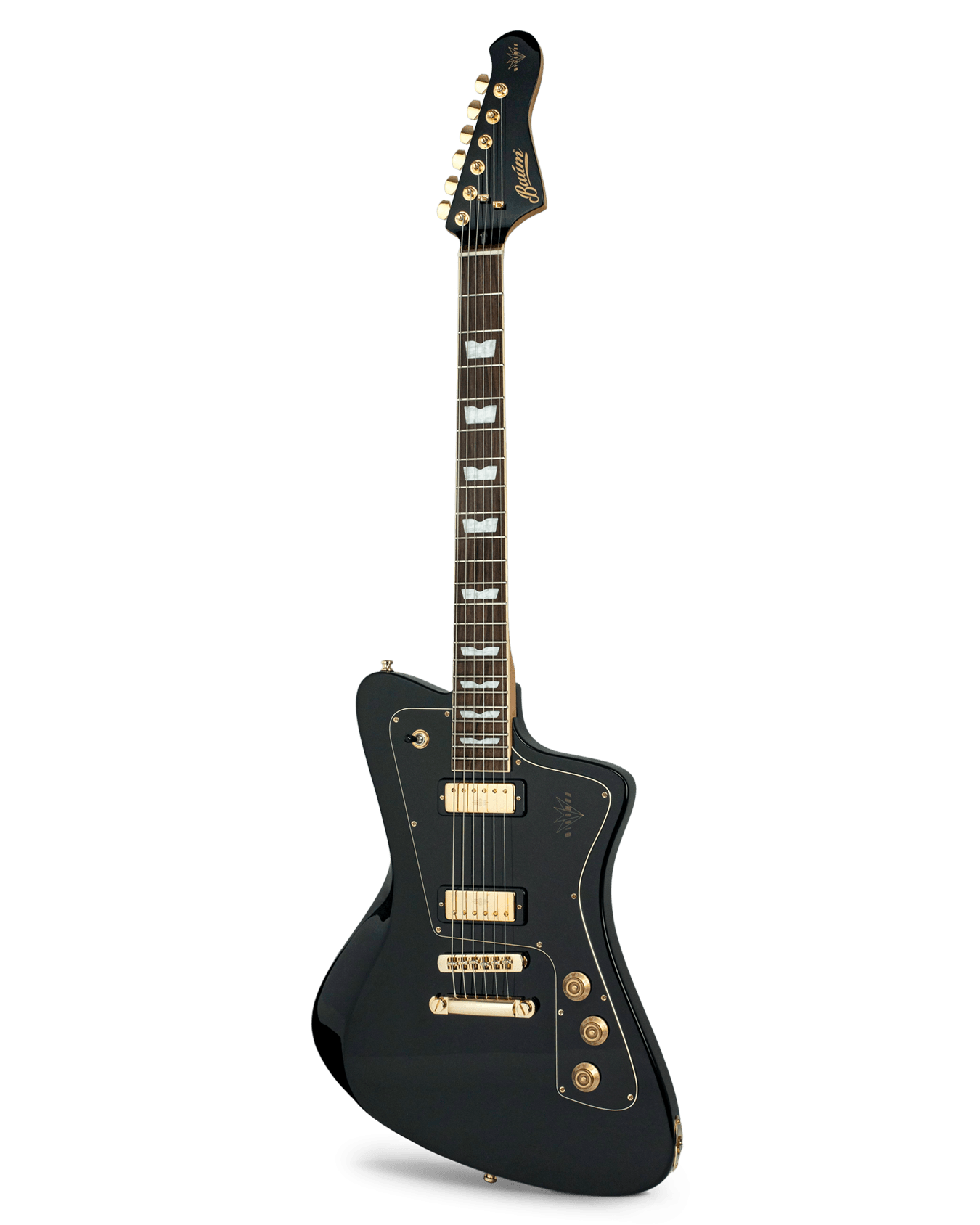
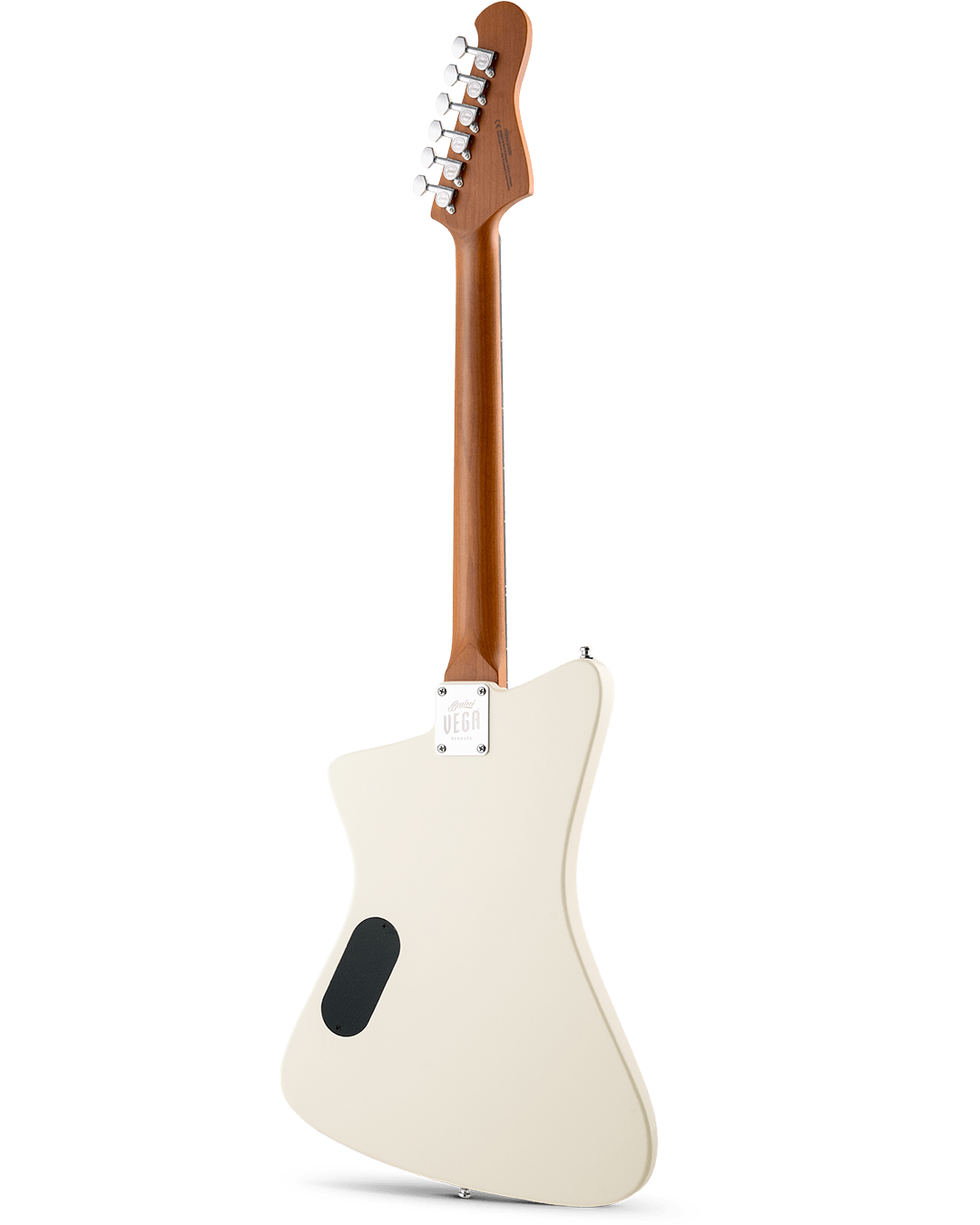
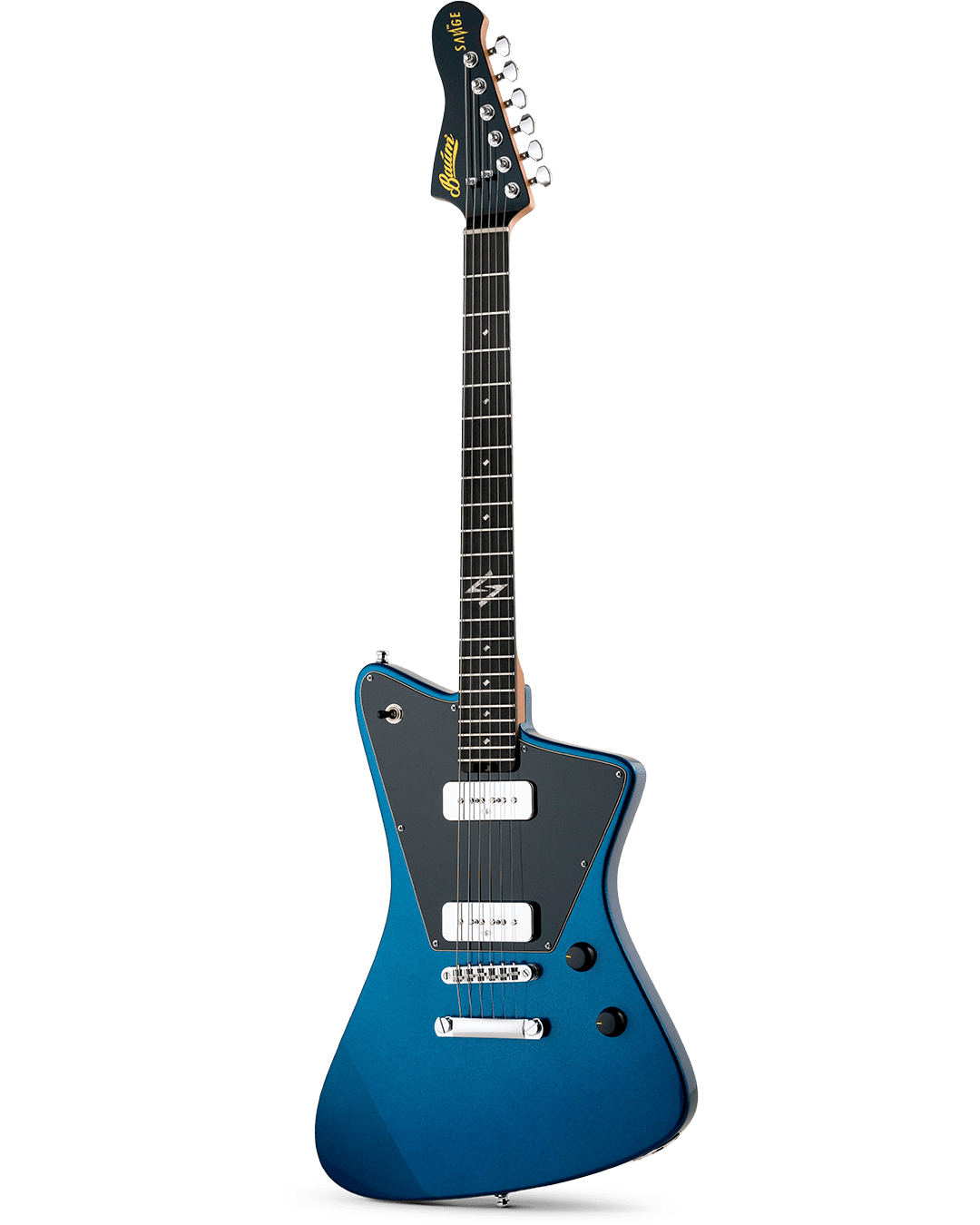
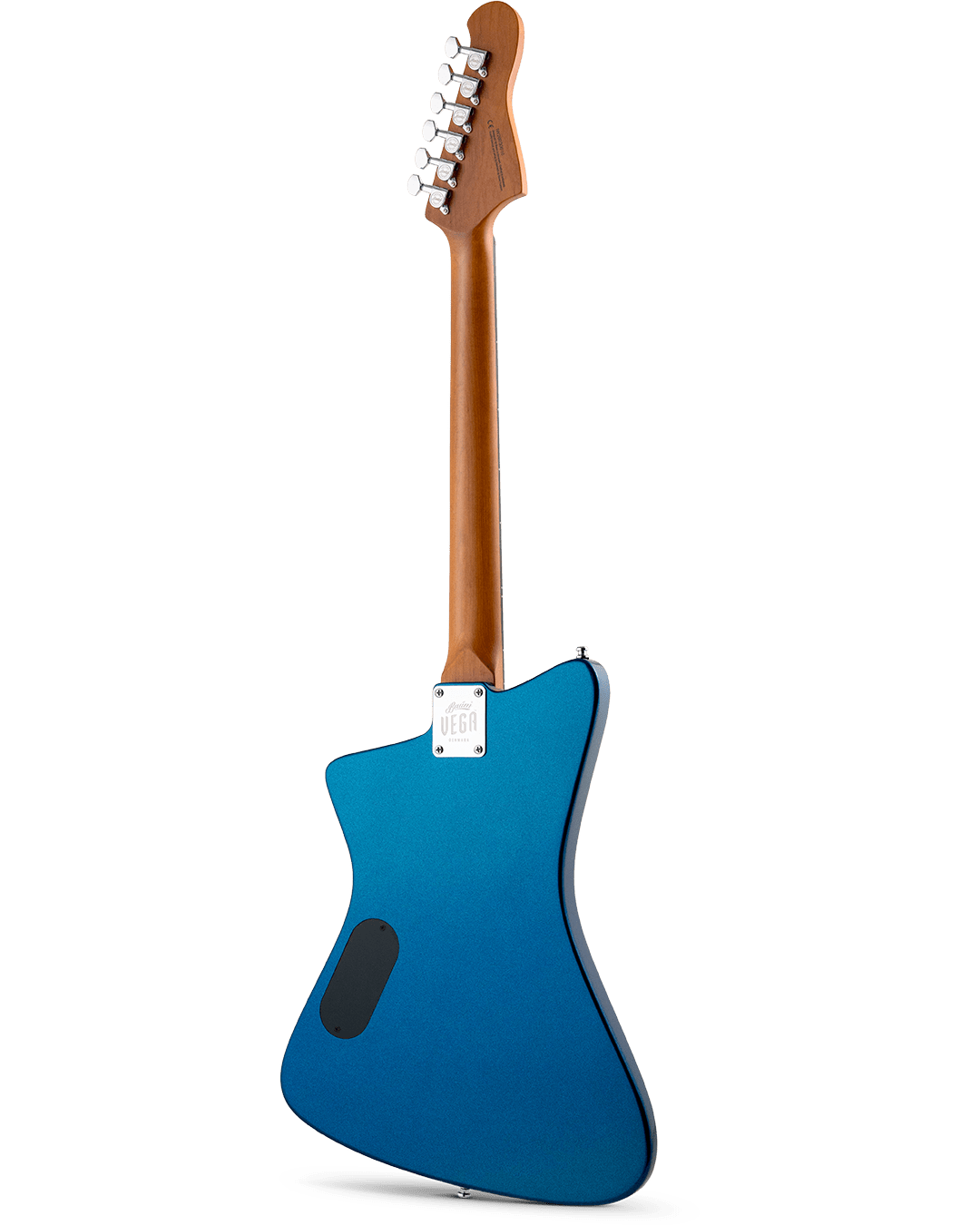
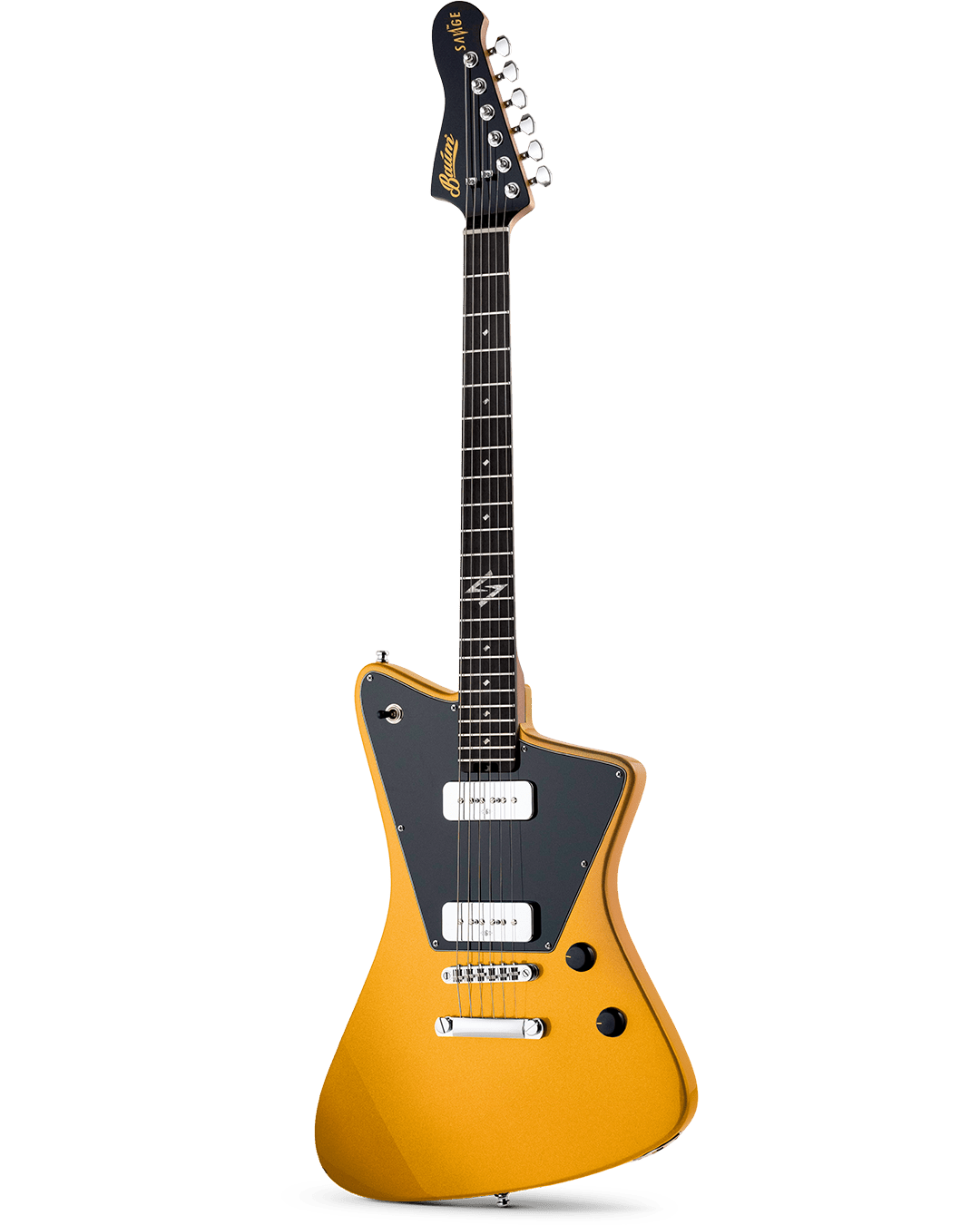
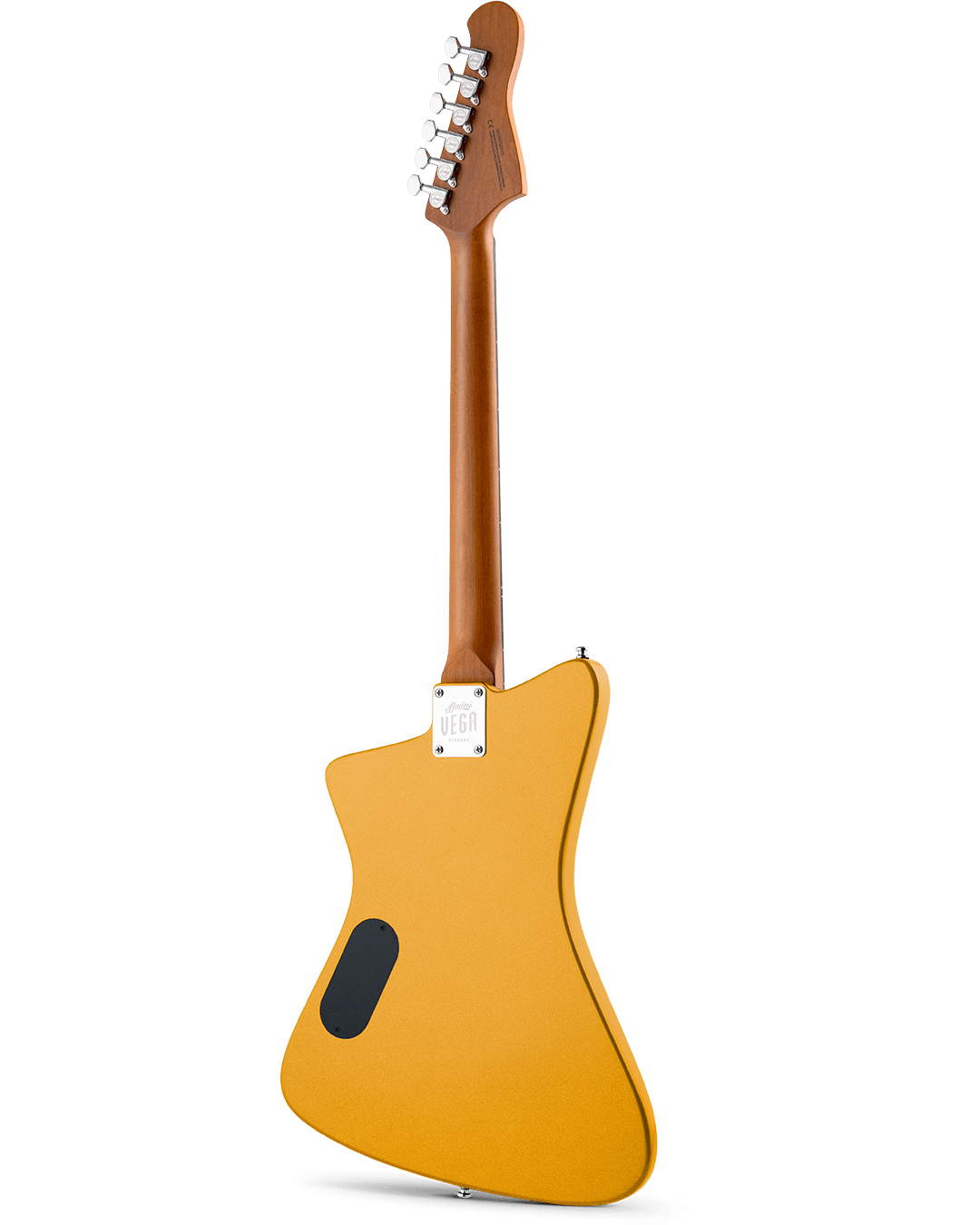
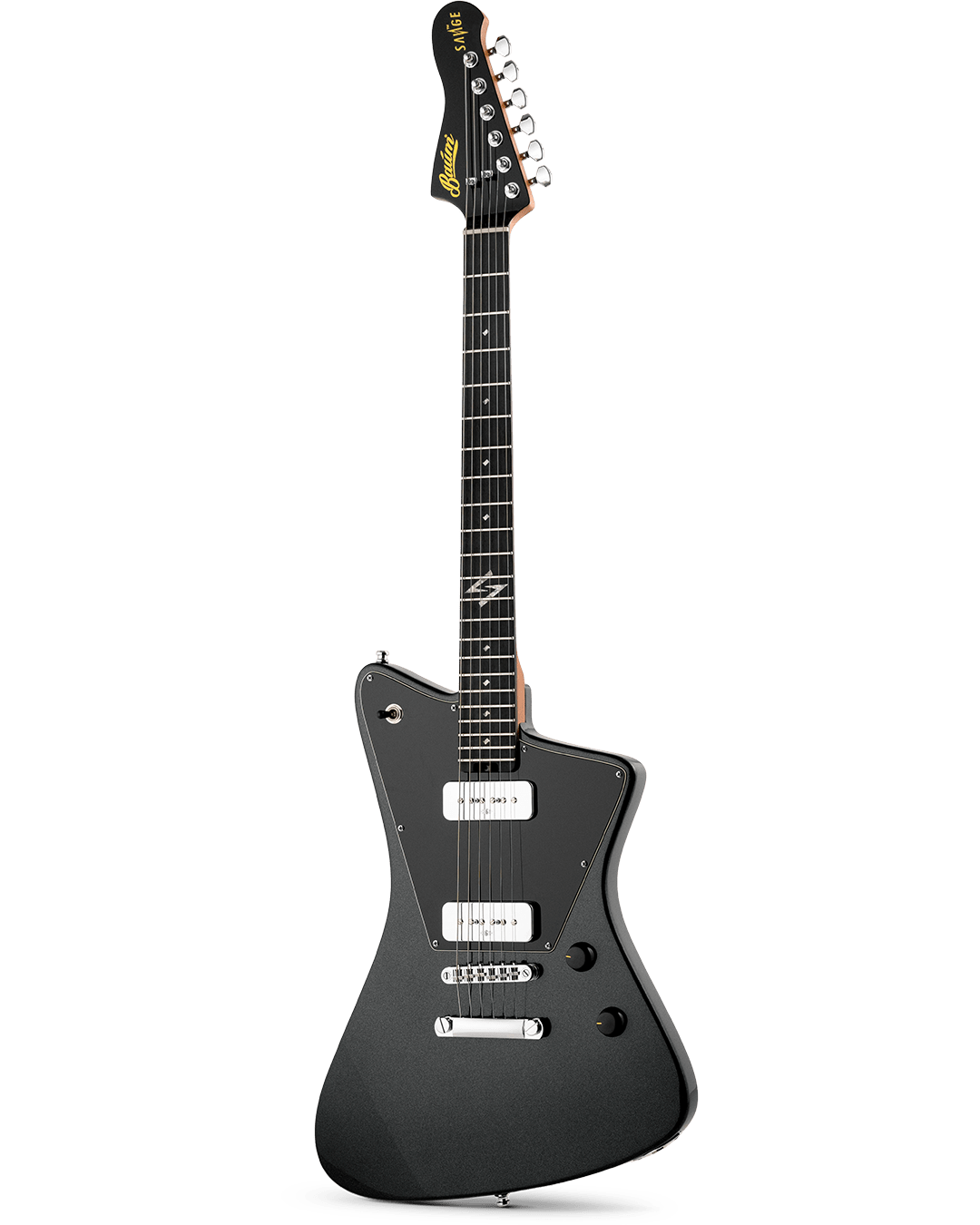
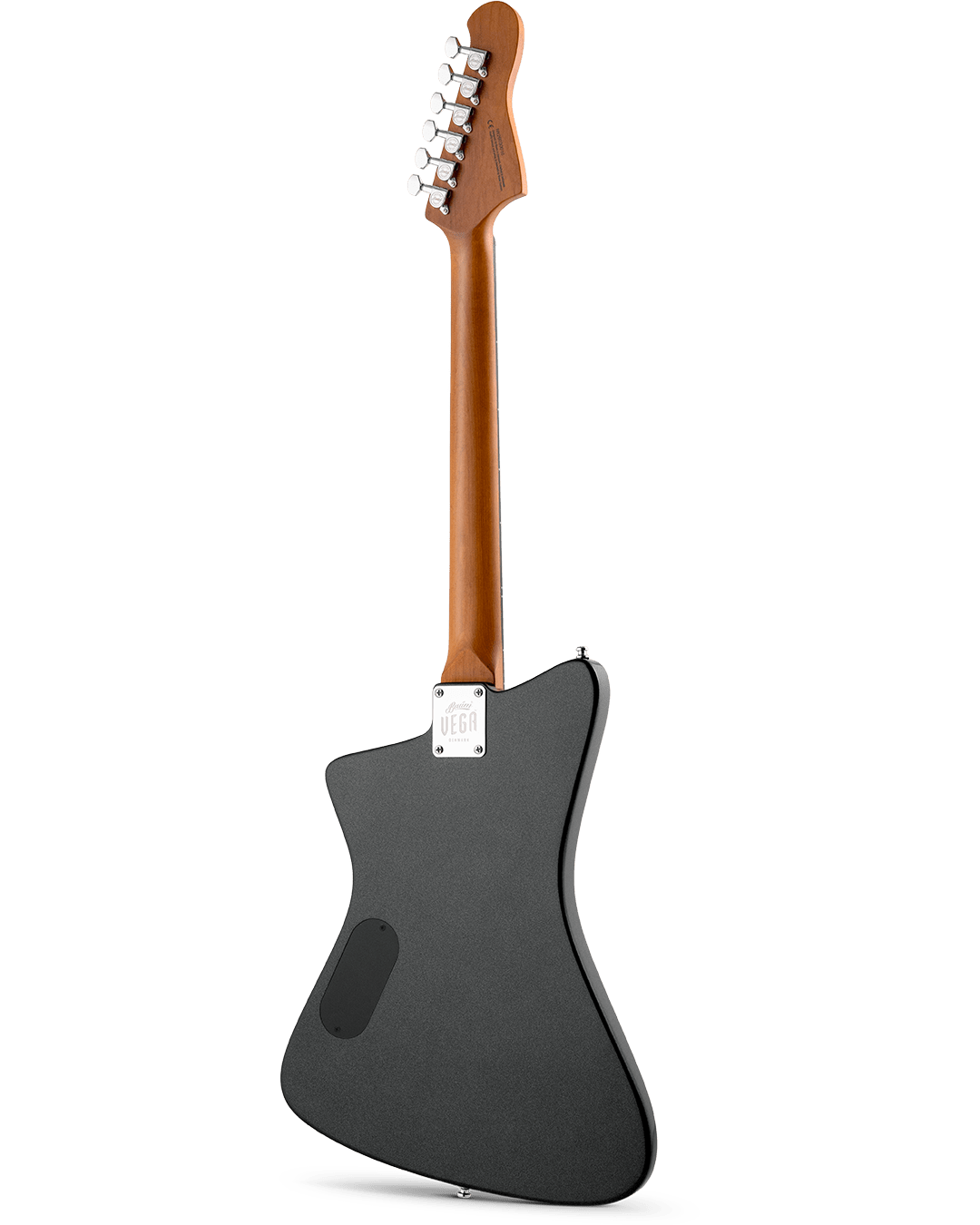
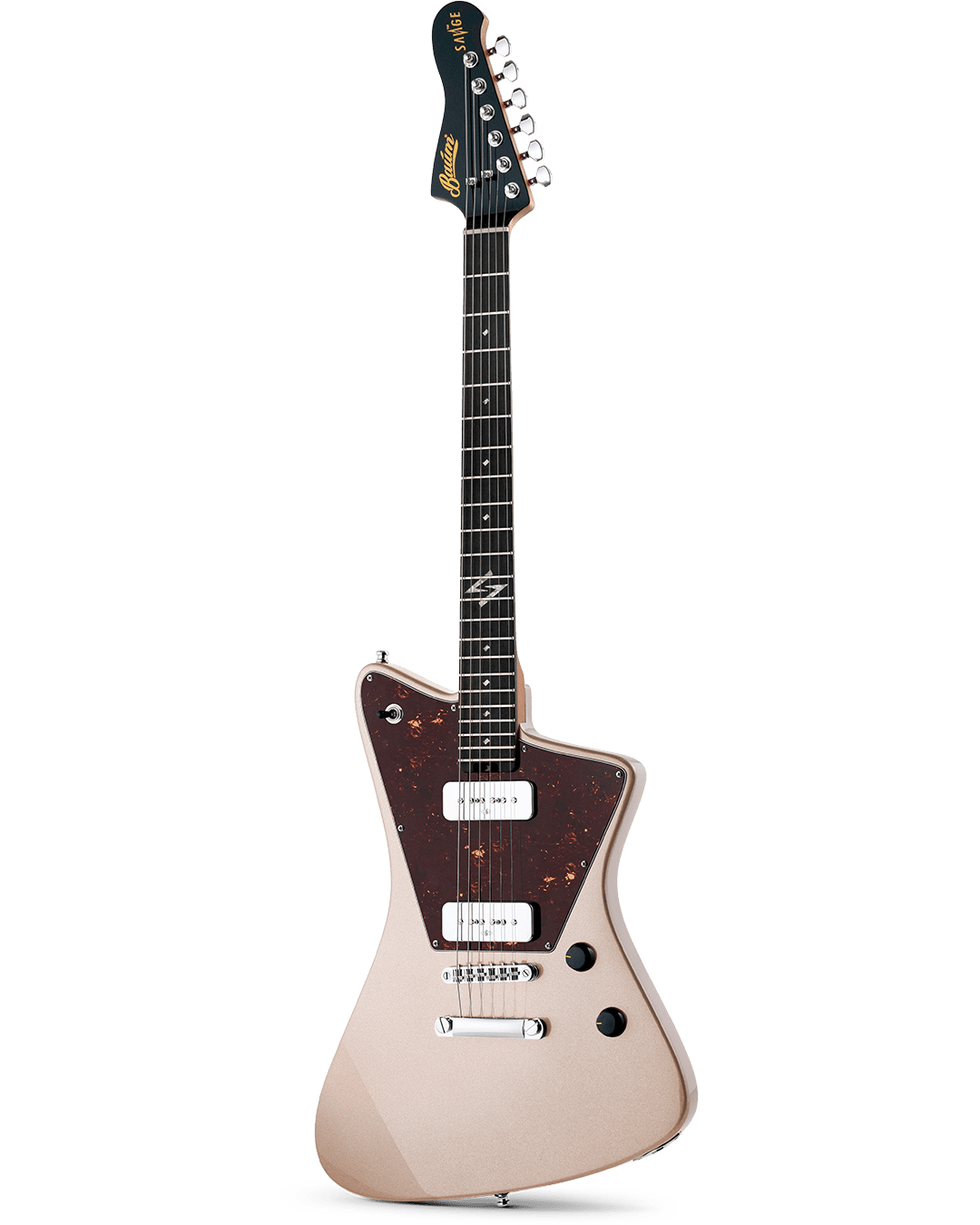
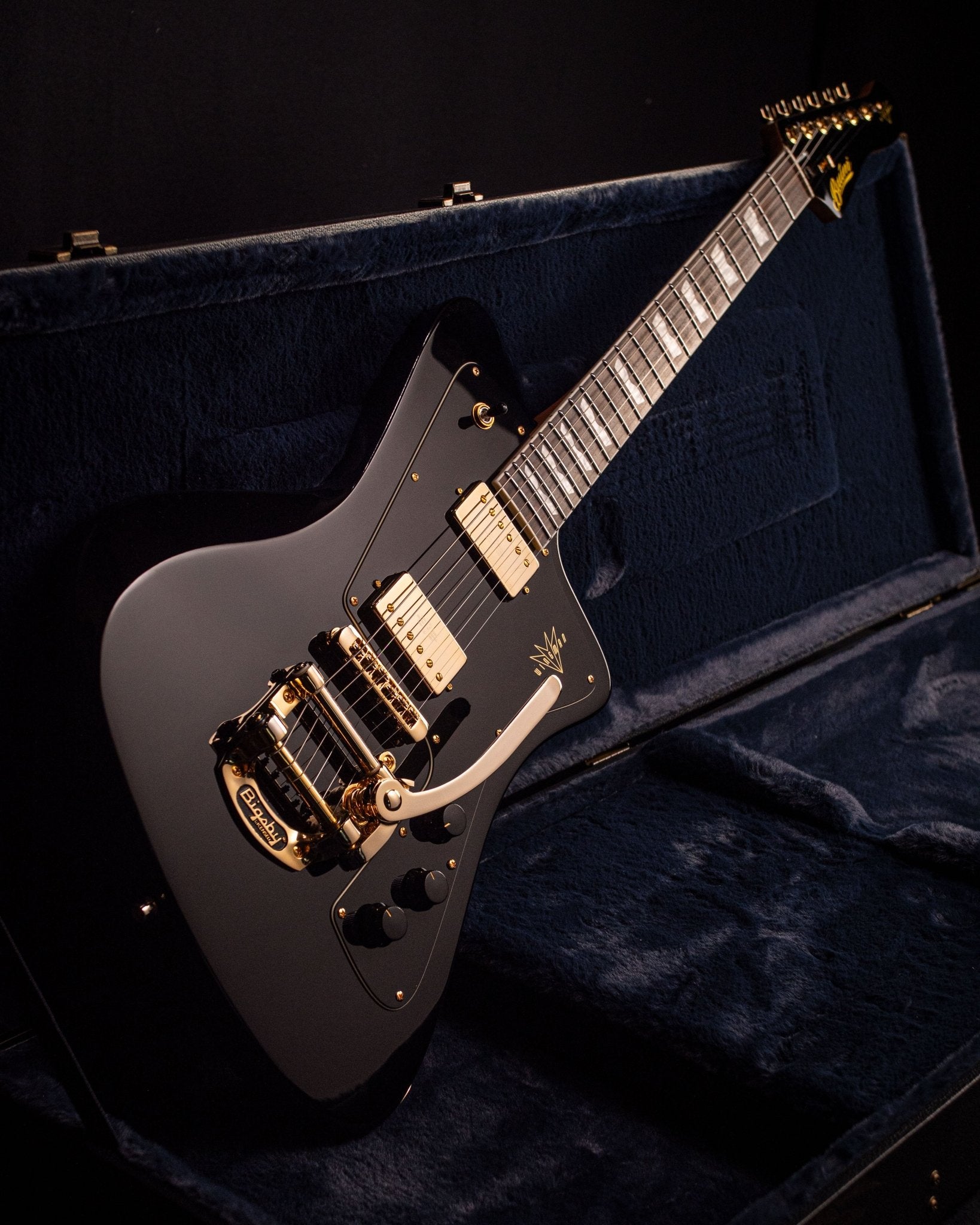
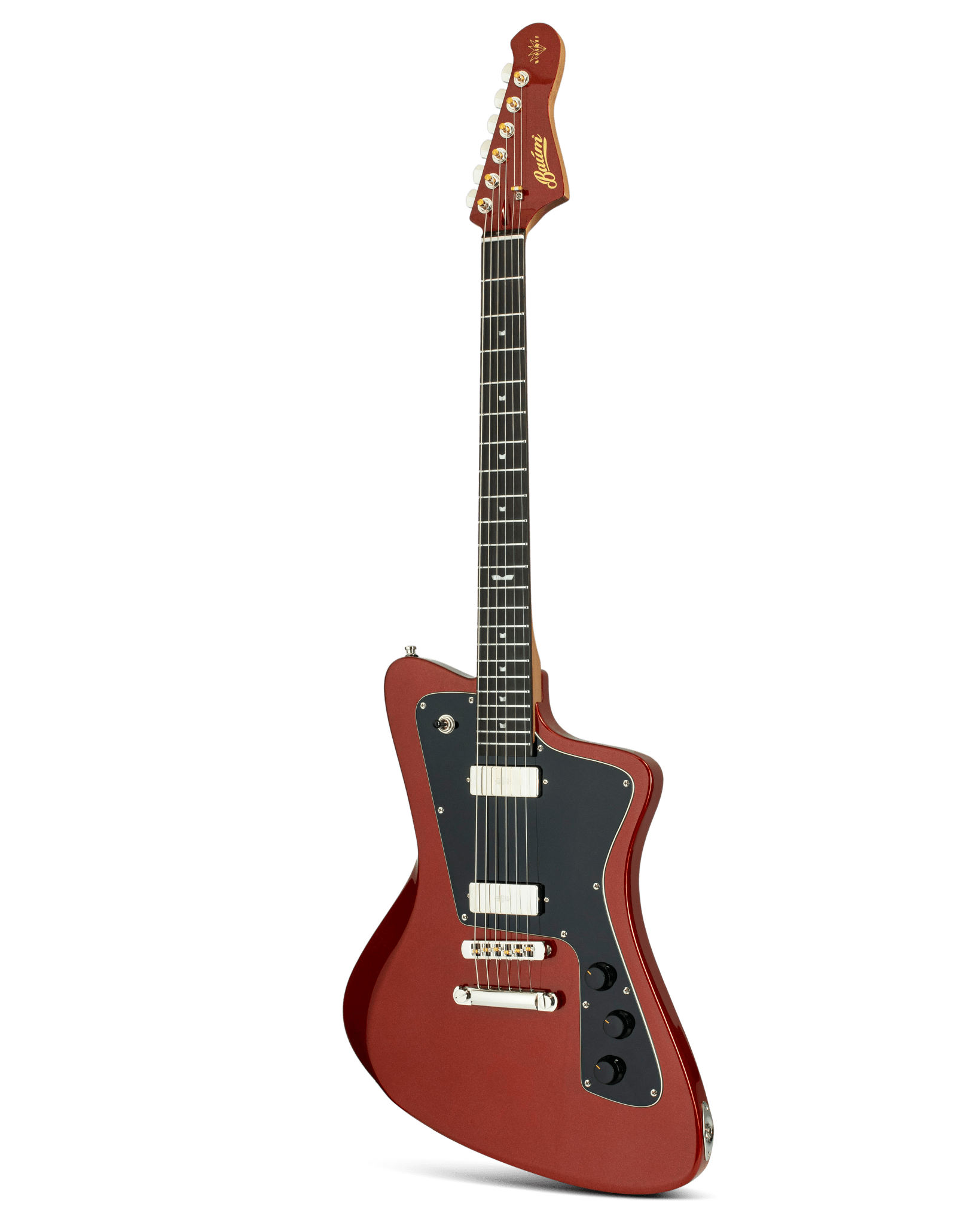
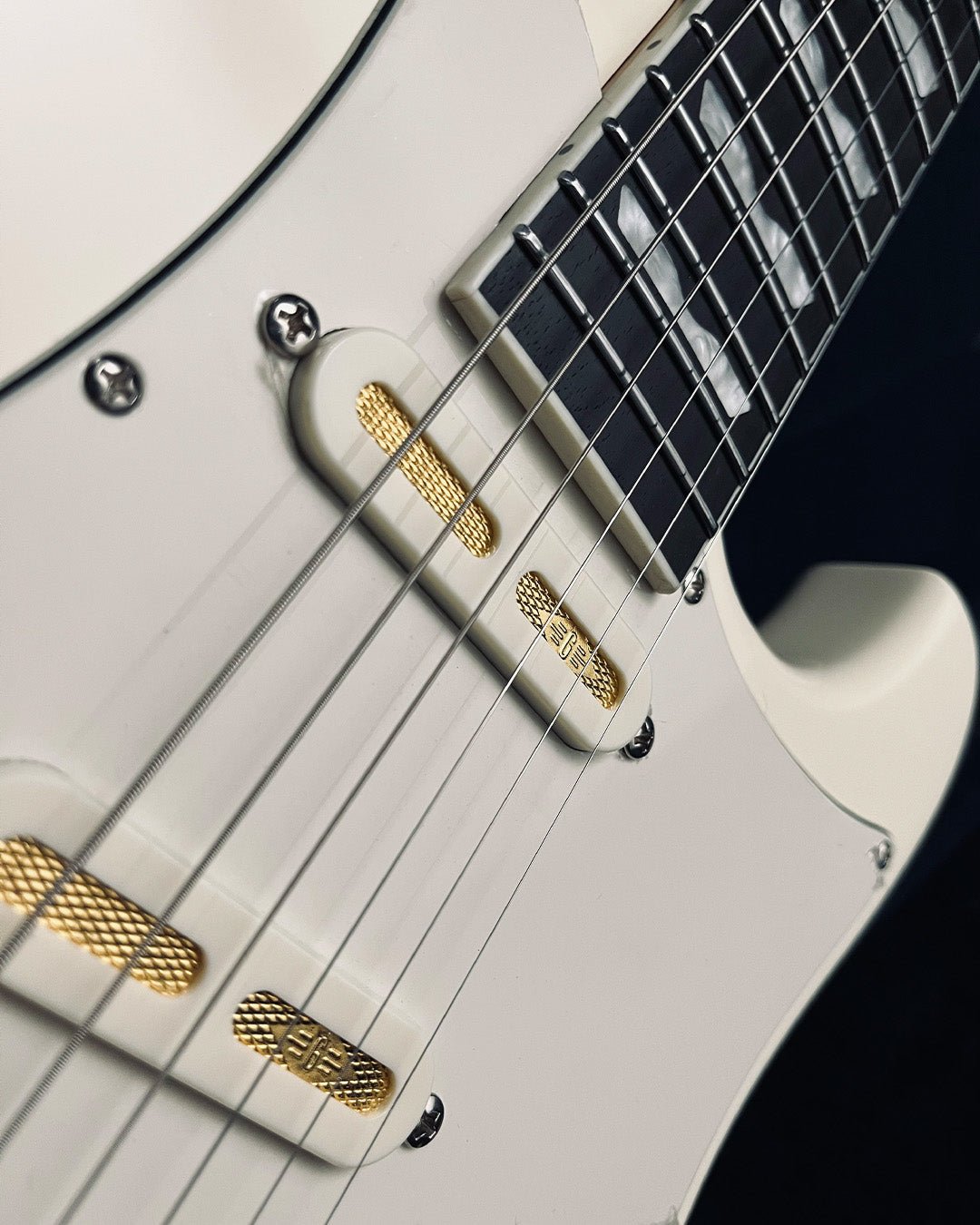
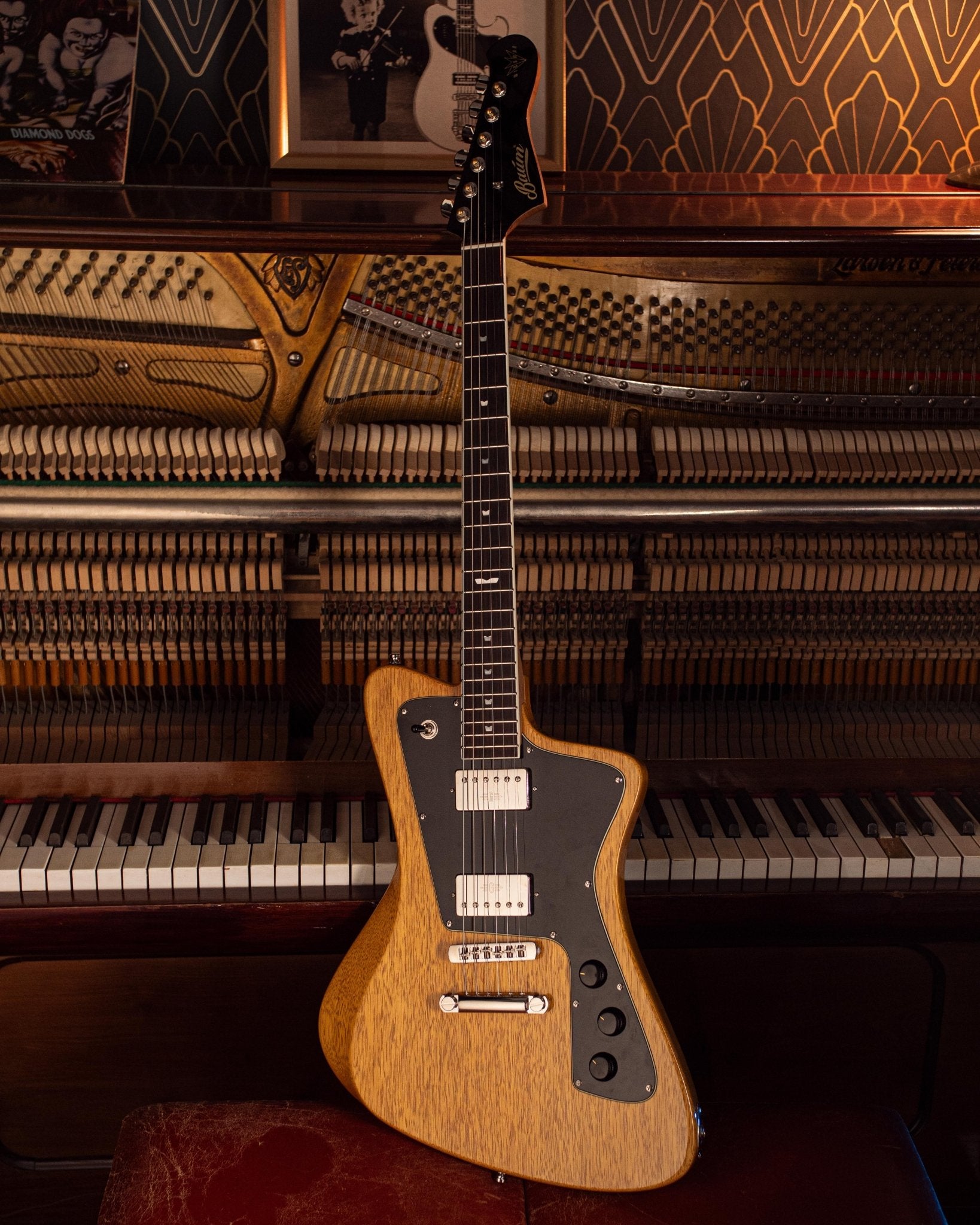
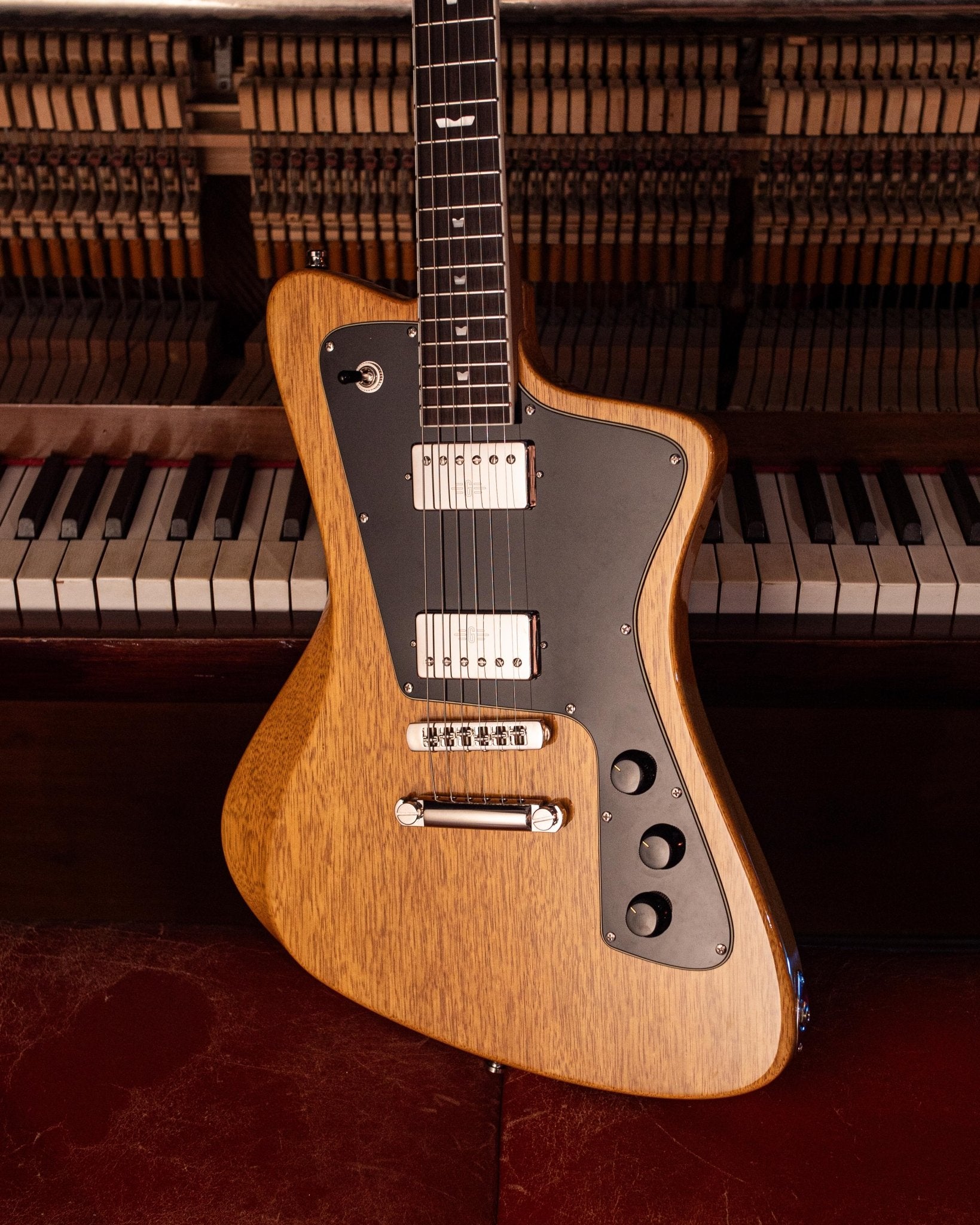
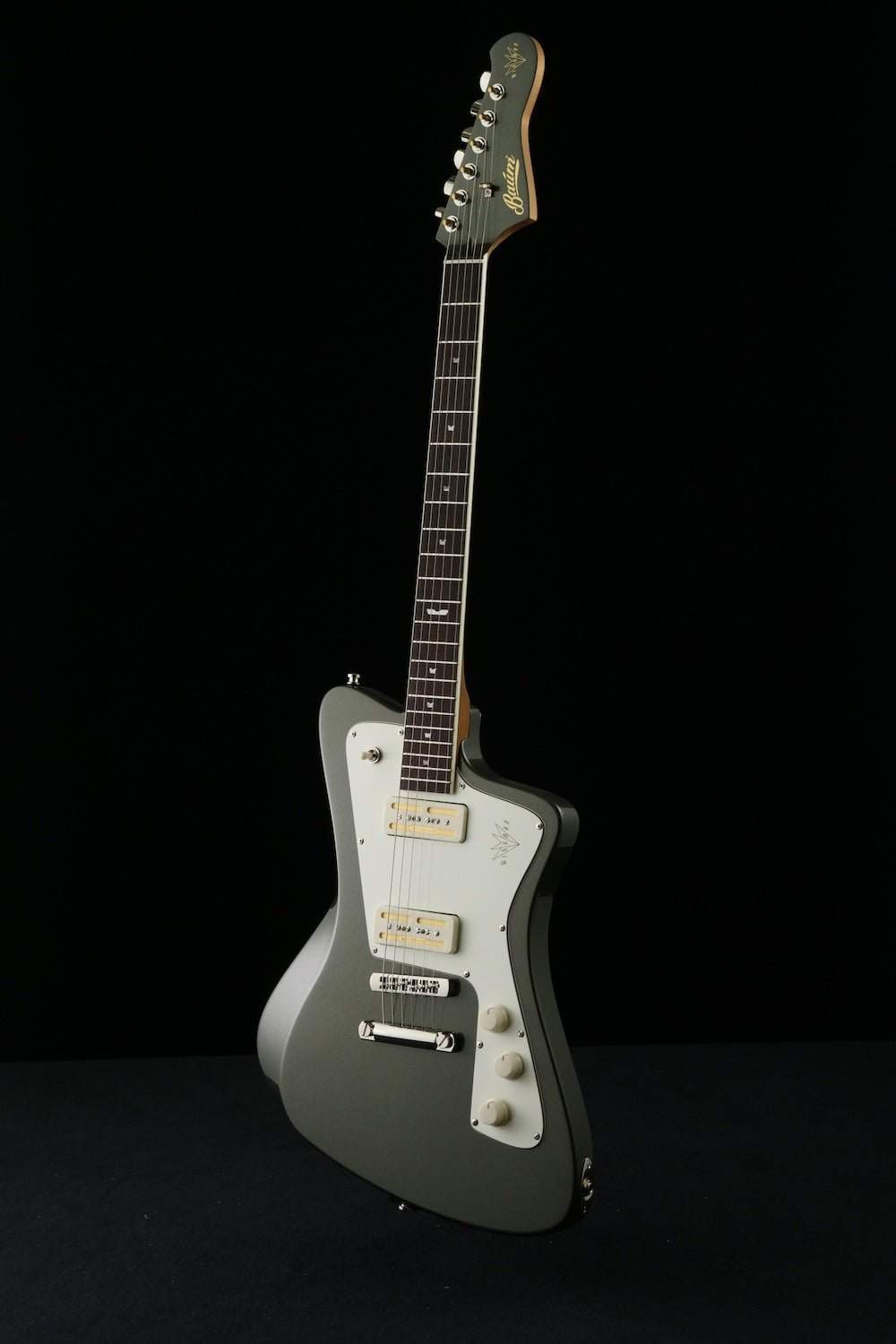
The Wingman is Baum's modern offset electric guitar, available with single coil, P-90 or humbucker pickup configurations depending on variant. It is the most versatile offset in the lineup, built to cover broad tonal ground across genres. The Backwing is the vintage-leaning offset, defined by Goldsound® Goldbucker mini humbuckers and a distinctly classic tonal character positioned between PAF humbucker and P-90 territory. The Savage is the aggressive offset, sharp-edged in body geometry and voiced with Goldsound® Ember™ P-90 pickups for grunge, punk and rock at loud stage volumes.
Modern versatile, vintage-leaning, and aggressive. Three distinct tonal directions within the offset format, all built on the same construction platform underneath.
The semi-hollow offset hybrid
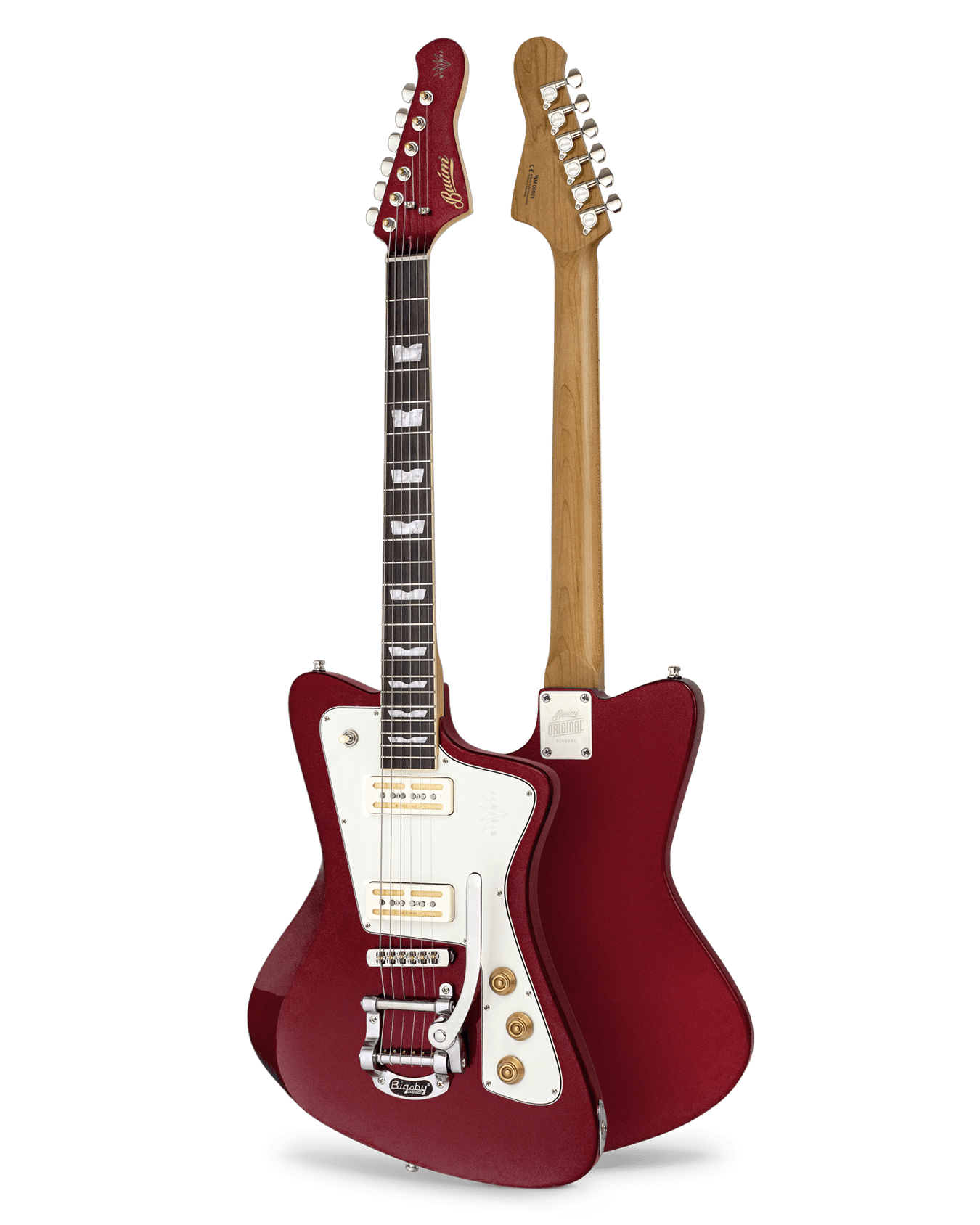
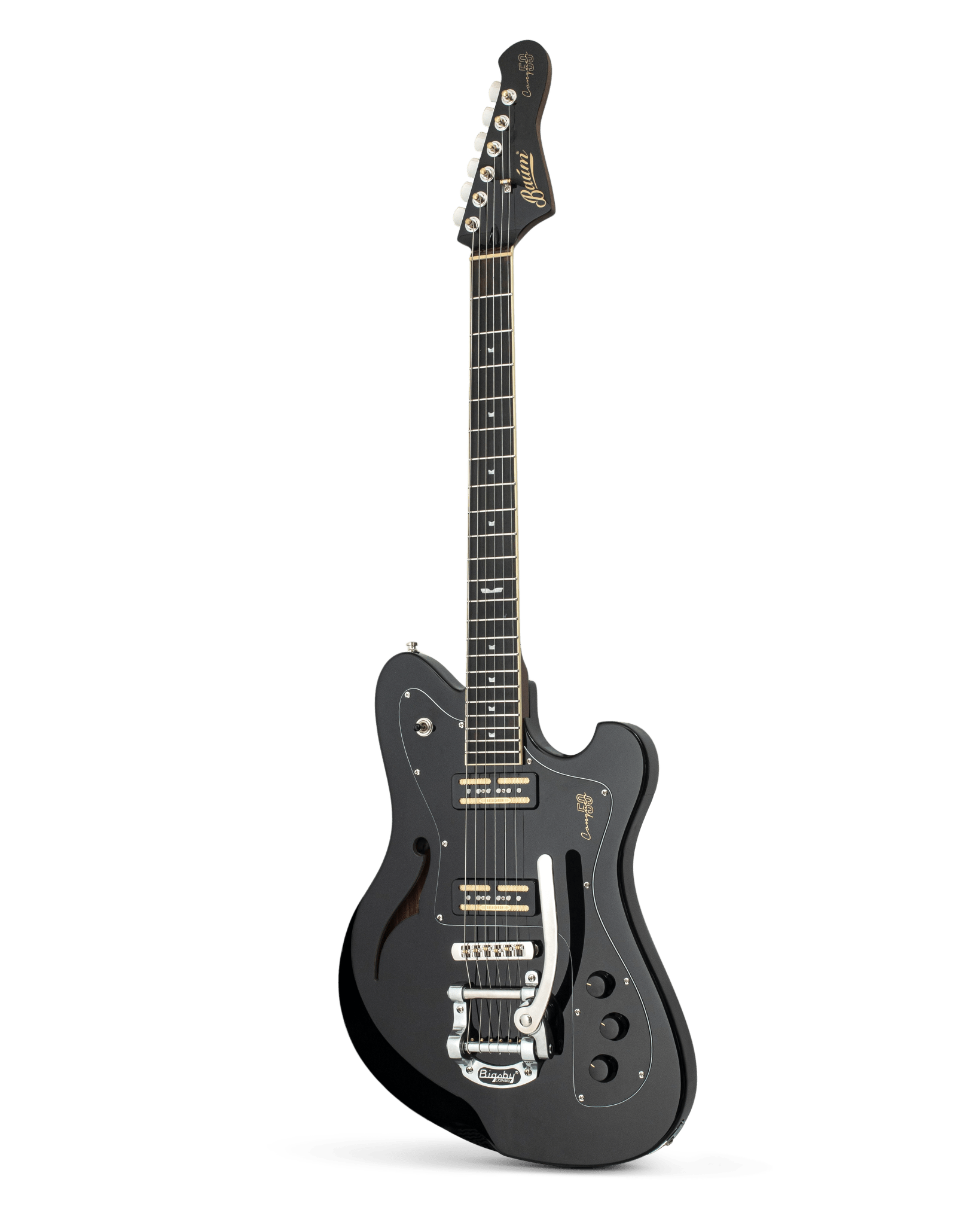
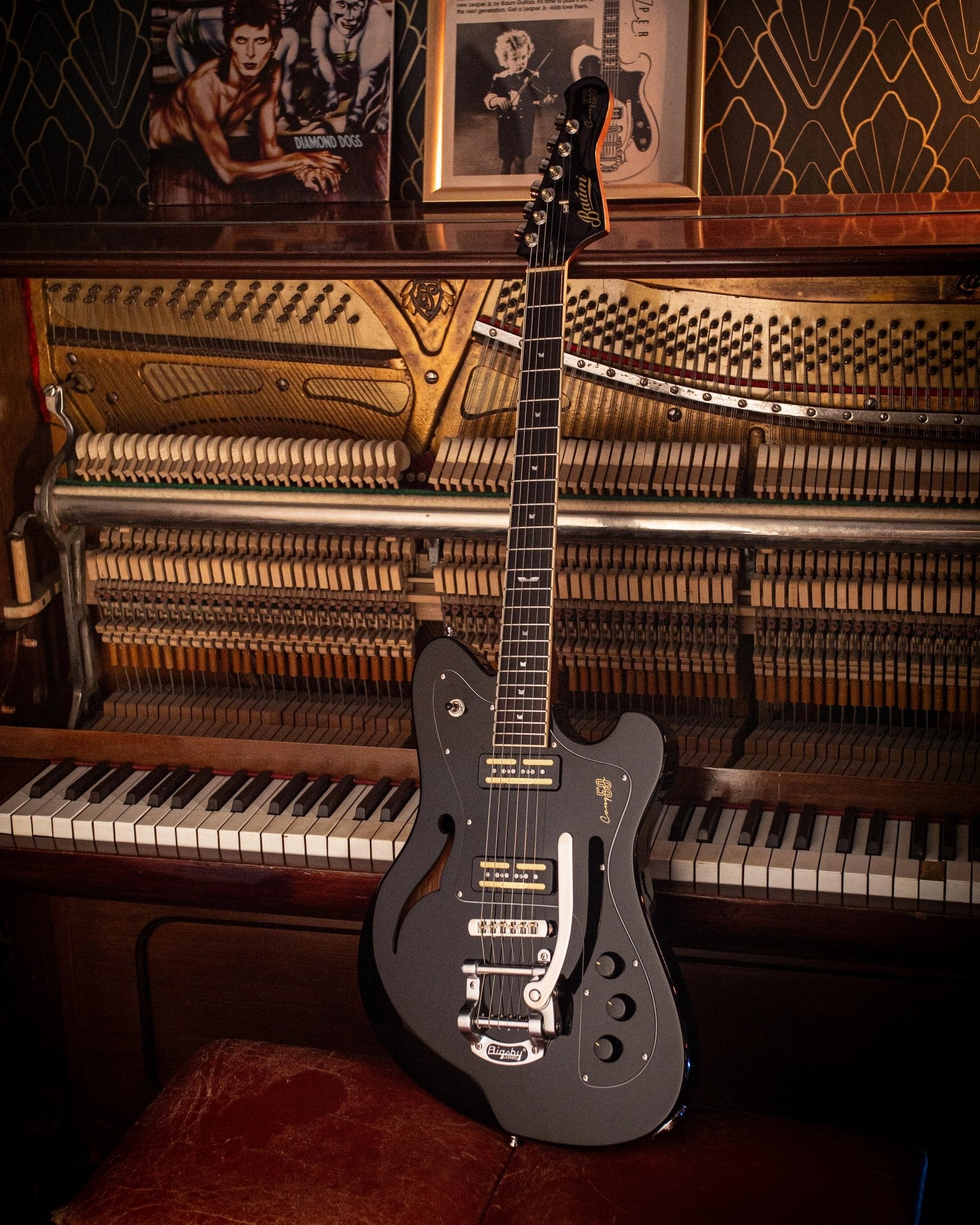
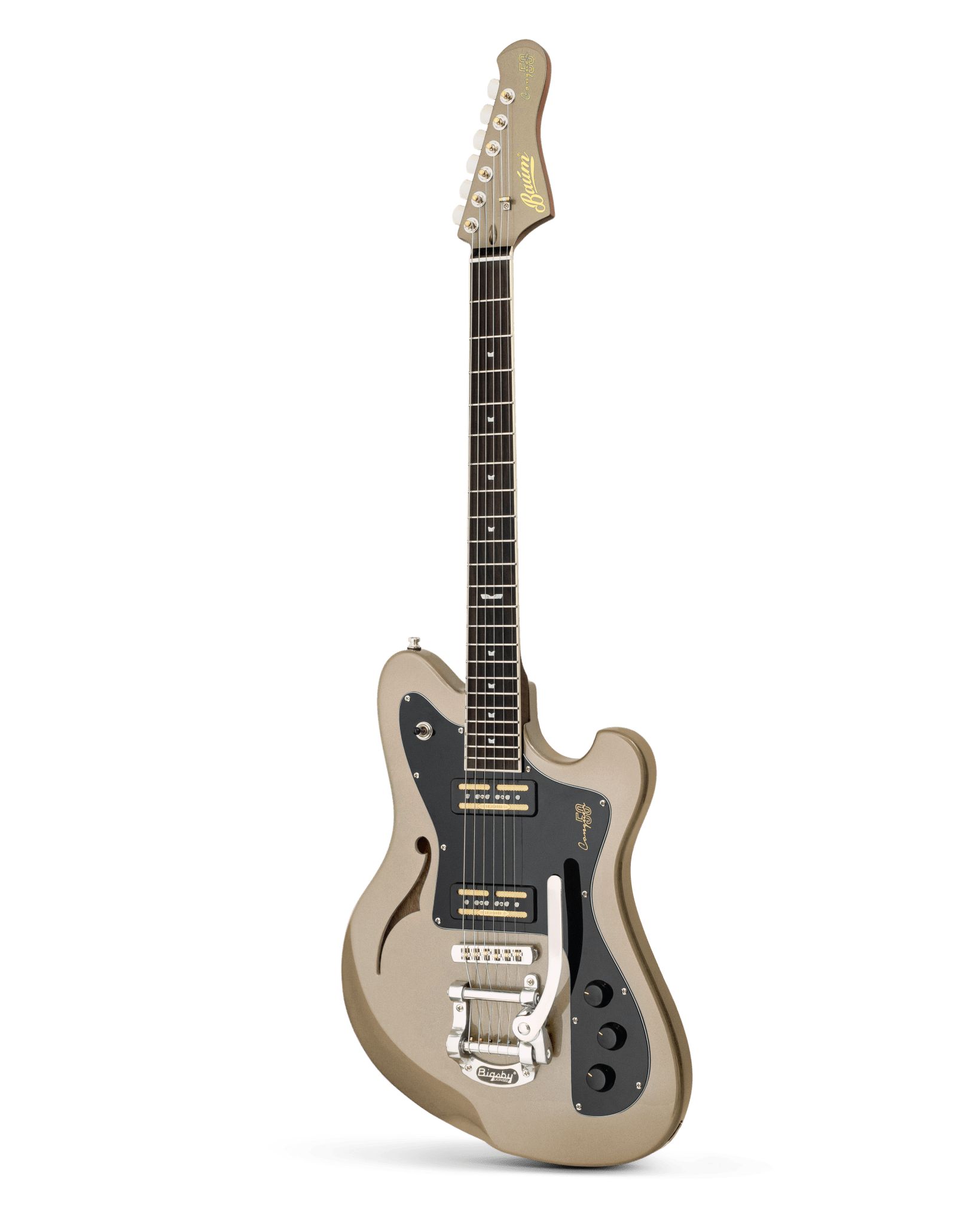
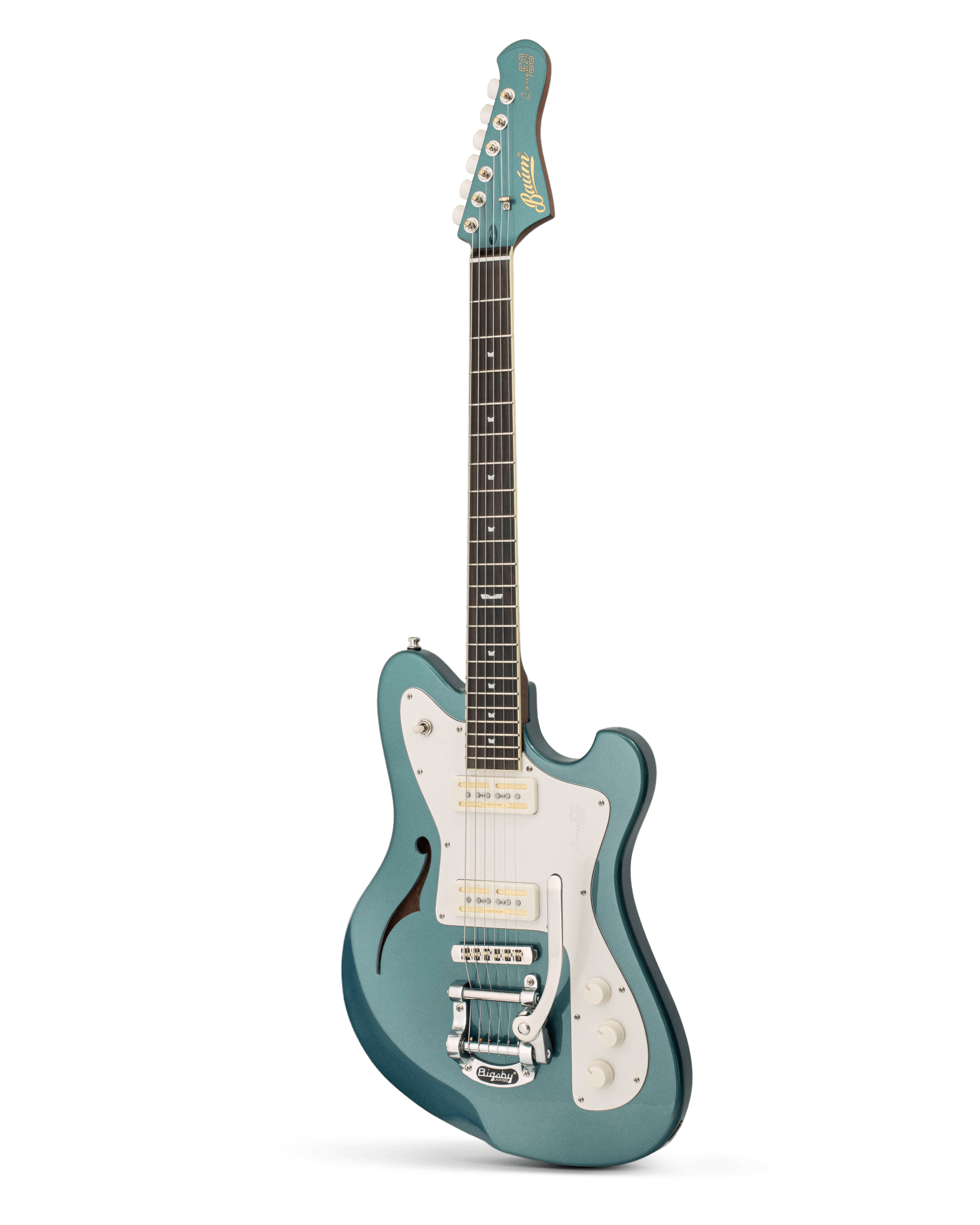
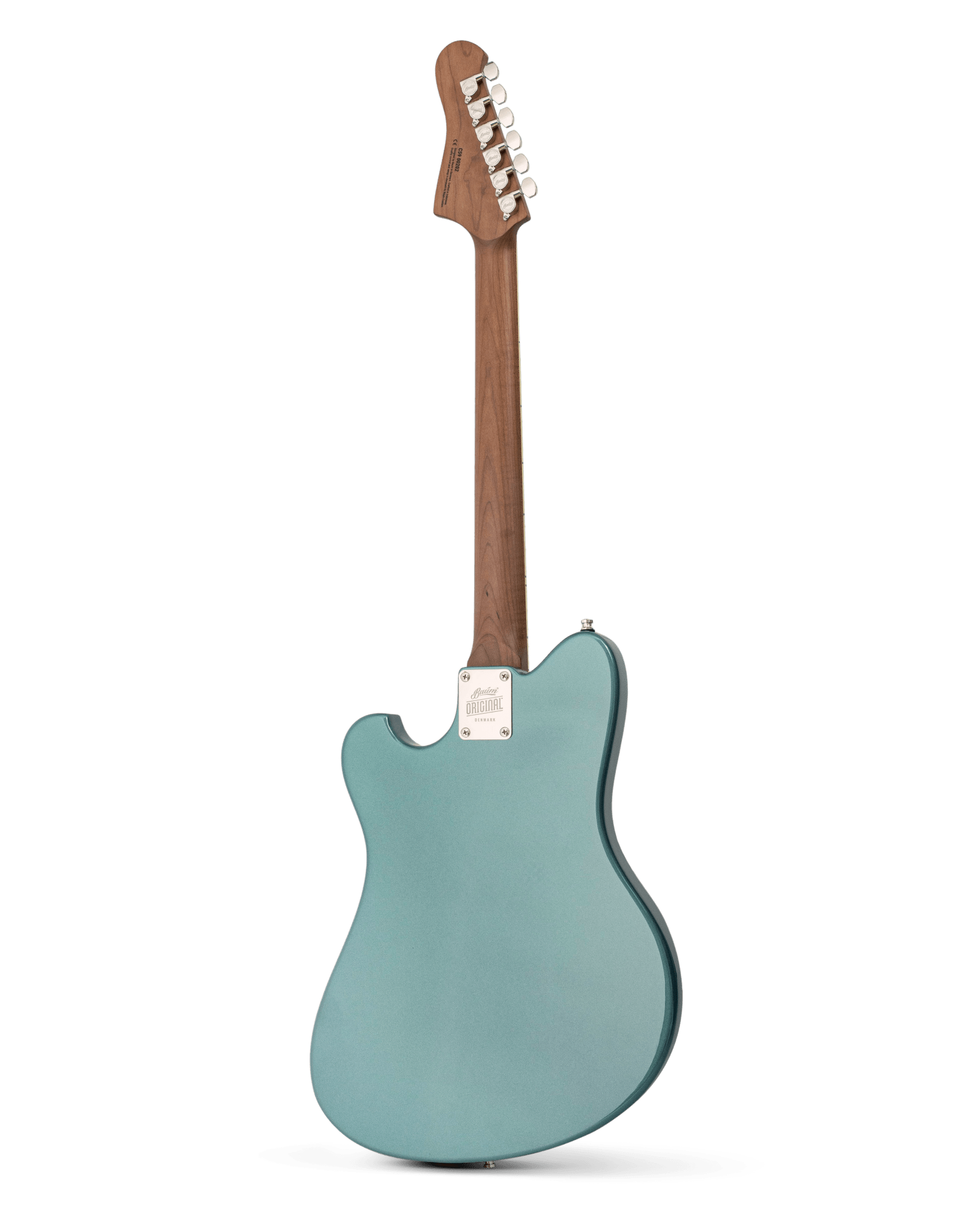
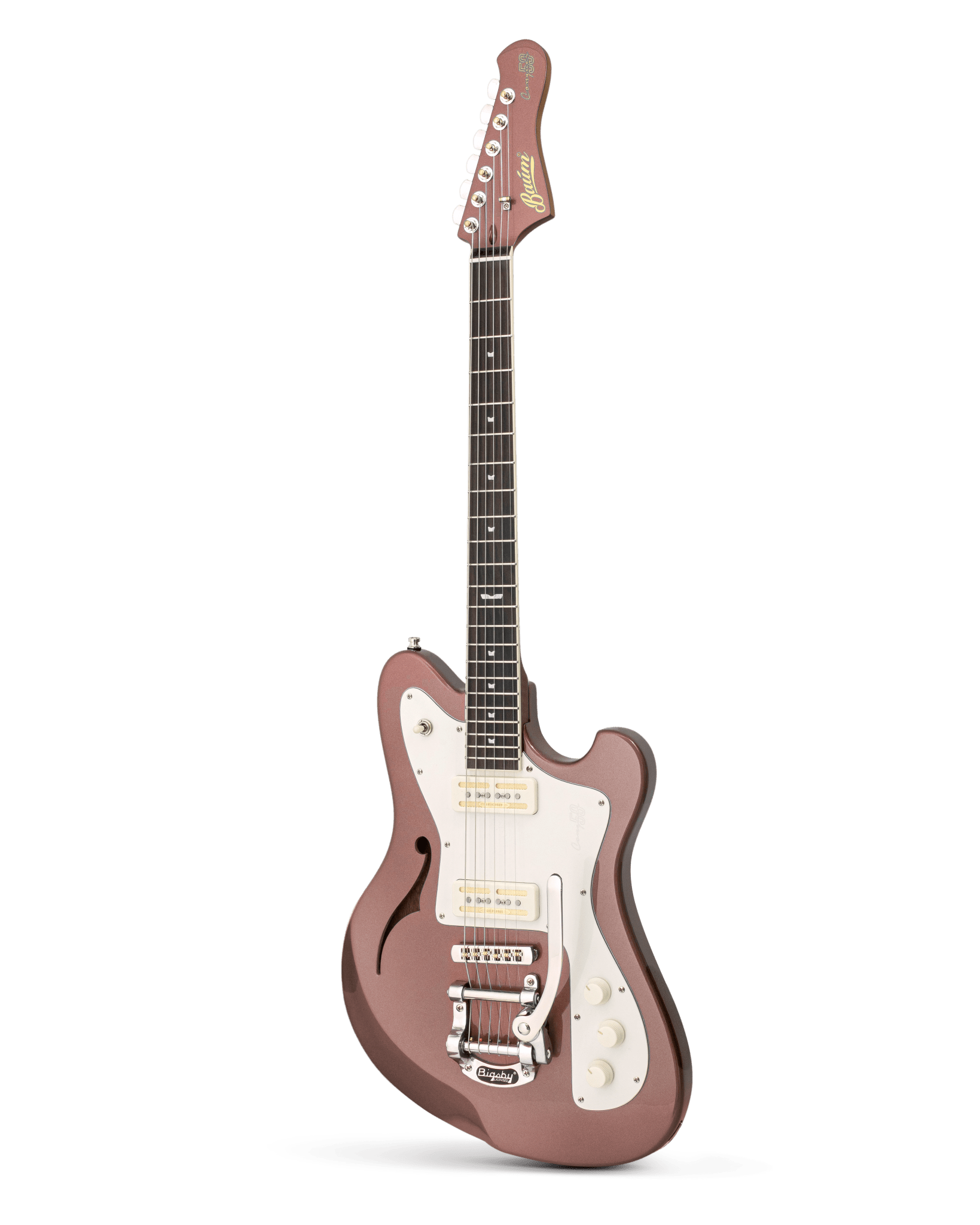
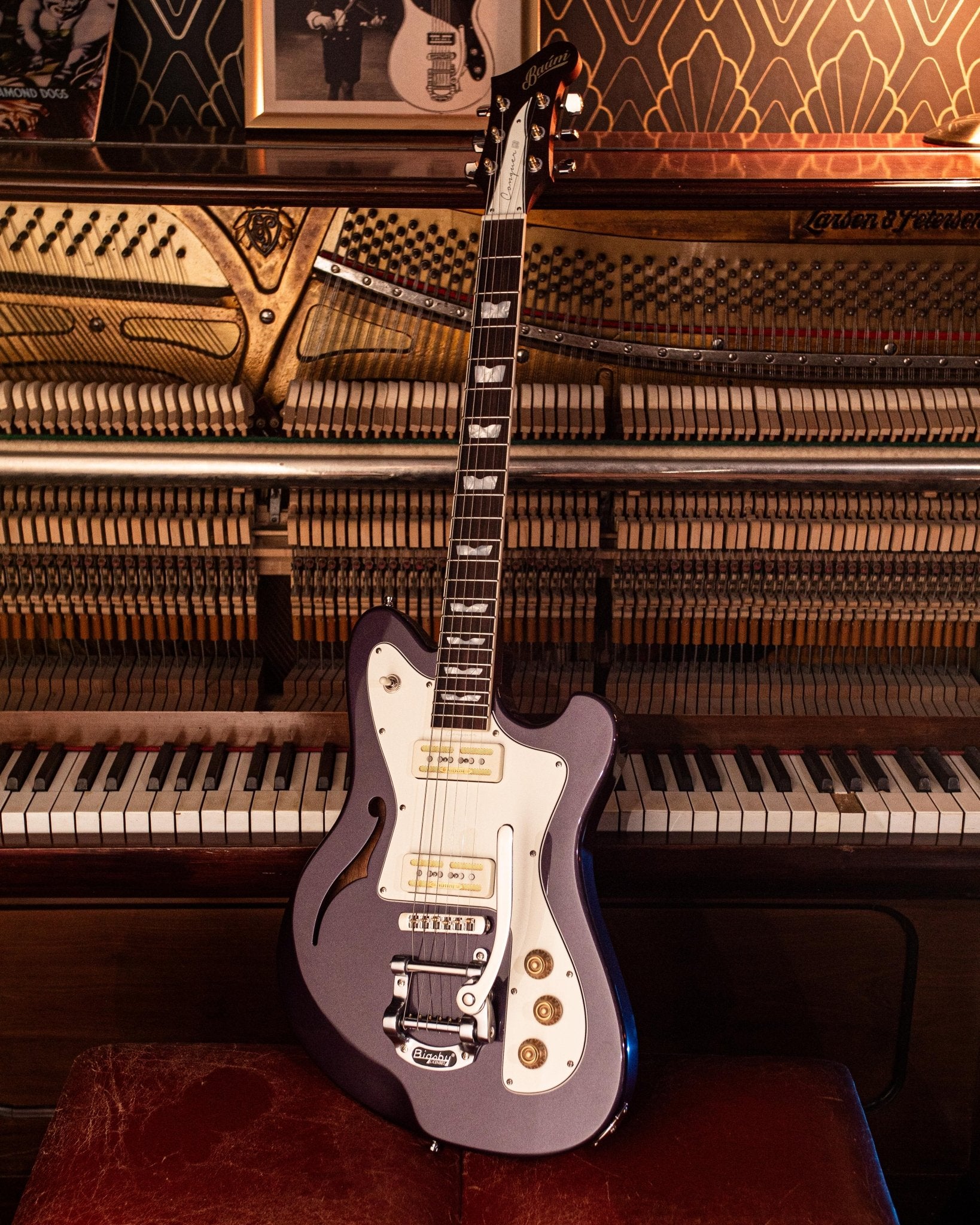
Baum also builds a semi-hollow offset electric guitar that sits between the solid body offset category and the semi-hollow category. The Conquer 59 takes the offset body shape and applies semi-hollow chambered construction to it, producing a hybrid instrument with the playing balance and visual identity of an offset combined with the tonal depth and natural resonance of a semi-hollow. Bigsby B50 vibrato comes as standard hardware, and the Levitator™ roller bridge solves the historical Bigsby tuning-stability problem.
The Conquer 59 is not a mainstream offset guitar and is not a mainstream semi-hollow. It occupies a specific corner of the format that few builders attempt. For players interested in the semi-hollow platform more broadly, Baum's semi-hollow electric guitar selection covers both the Conquer 59 and the traditional Leaper Tone.
Why Baum builds offset electric guitars
Boutique electric guitar builders typically focus on refined versions of established formats. Solid body double-cut, semi-hollow, T-style. Offset construction is more technically demanding because the asymmetric body shape has to be balanced correctly for the strap position to work, the tremolo systems have to be optimised for the format's specific quirks, and the pickup voicing has to match the offset's inherent resonance characteristics. Cheap offset guitars are common in the entry-level market, while well-built modern offset guitars are rare.
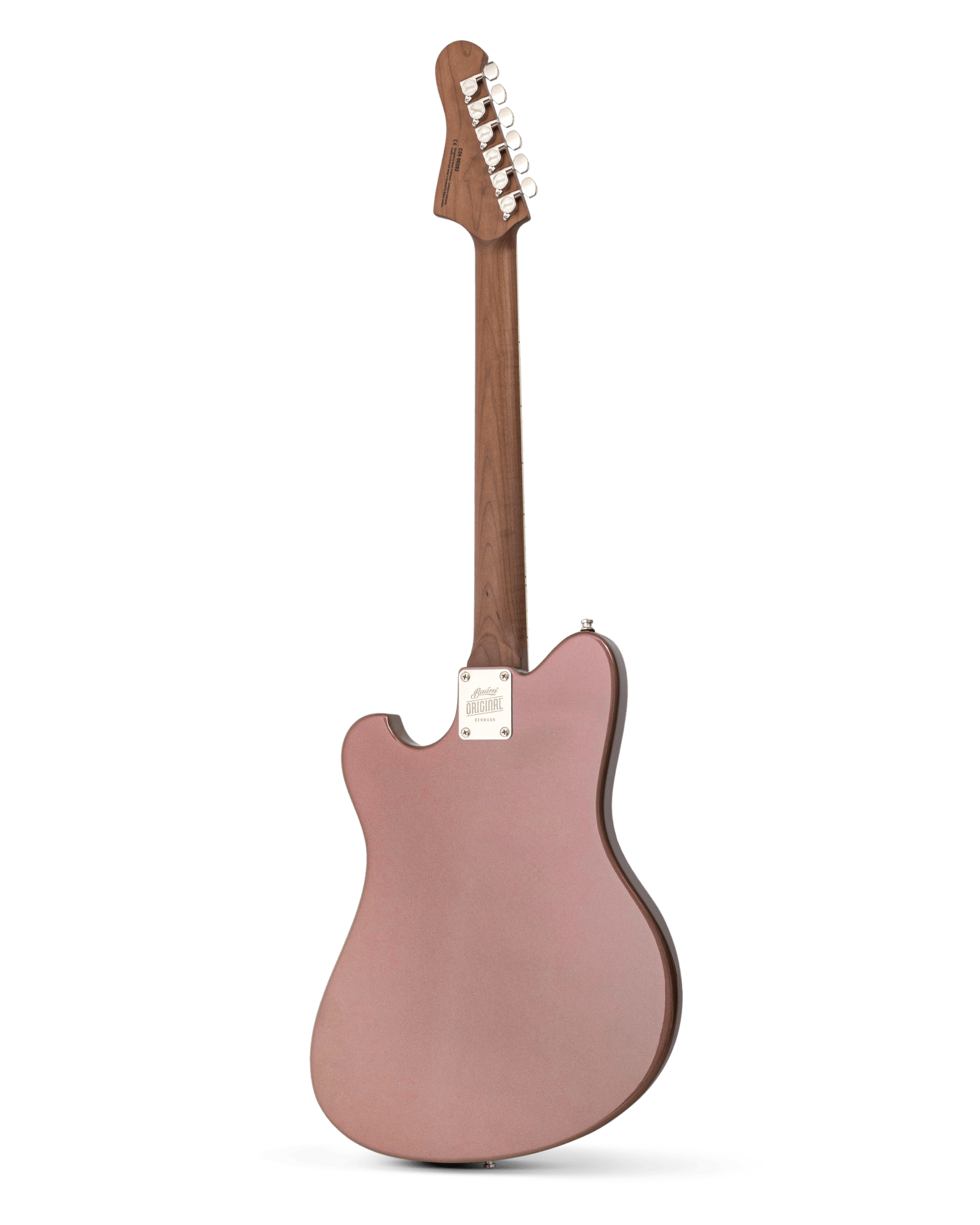
Baum's approach to the offset format applies the same construction philosophy that defines the wider Baum electric guitar lineup. Thinner mahogany body than the industry standard for better string vibration transmission. Roasted maple neck for dimensional stability across temperature and humidity changes. Proprietary Goldsound® pickups matched to each model's construction rather than selected from a catalogue. Levitator™ roller bridge as standard on models with tremolo systems, which eliminates the friction problems that compromise most offset guitars with vibrato use.
For players looking for a modern offset electric guitar or a custom offset guitar built to boutique standards, the Baum lineup covers the format across multiple tonal directions without treating offset as a novelty category.
Choosing an offset body electric guitar
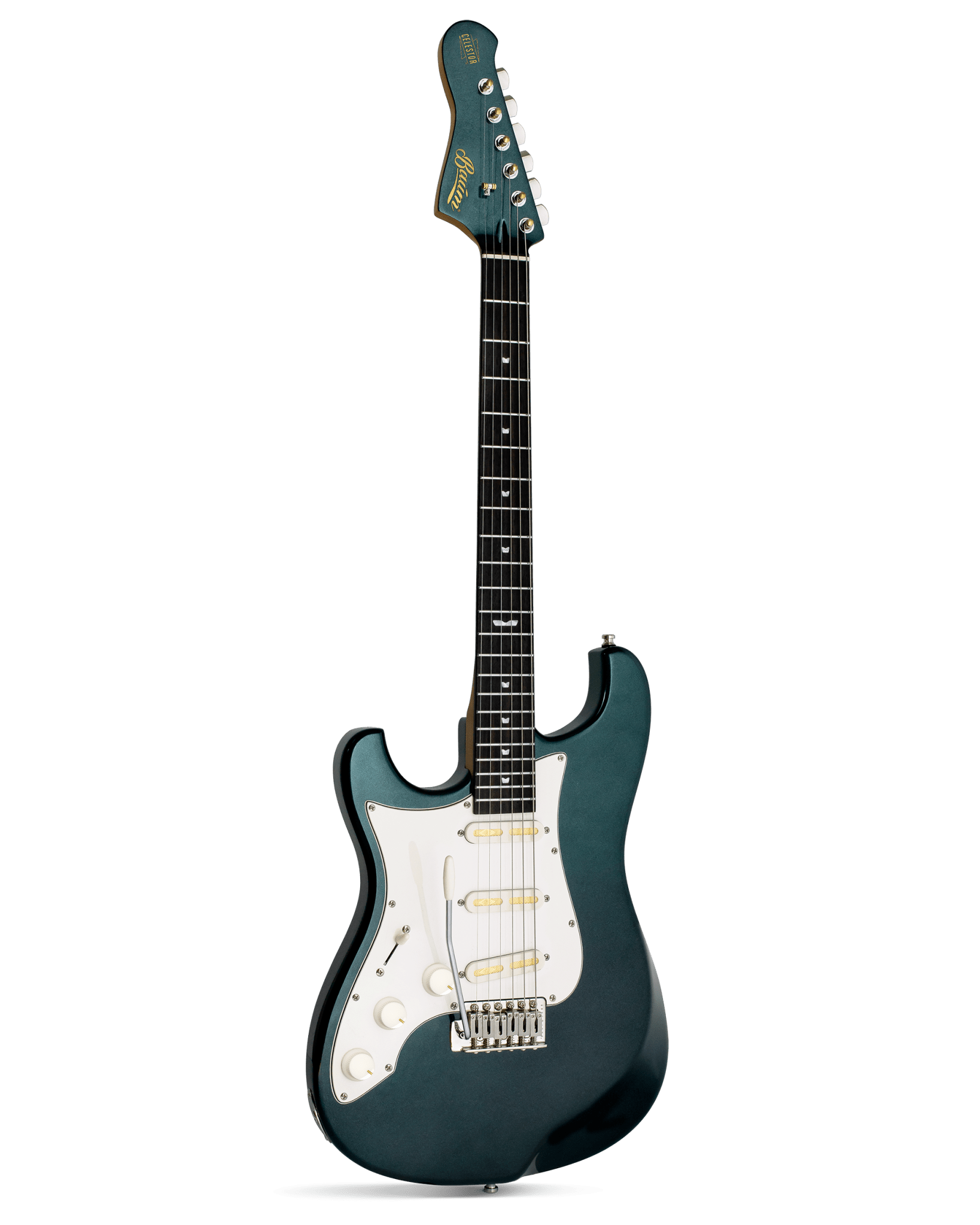
The choice between Baum's offset models depends on tonal preference, playing genre and pickup configuration priorities. Players who want an offset with maximum tonal versatility and multiple pickup options tend toward the Wingman. Players who want a classic vintage character with mini humbucker voicing tend toward the Backwing. Players who want an aggressive offset with P-90 attitude built for loud stages tend toward the Savage. Players who want the offset playing position combined with semi-hollow resonance and Bigsby vibrato tend toward the Conquer 59.
All Baum offset electric guitars share the same underlying construction platform. What varies is what that platform is optimised for. The right offset for any given player depends on which tonal and genre priorities matter most, not on which model is objectively better.
45 days with a Baum offset
Offset body electric guitars are ergonomic instruments as much as they are tonal instruments. The best way to test whether an offset format works for your playing is to spend real time with one, in your own environment, across the situations you actually play in. Baum doesn't sell through retailers, so every offset electric guitar in the lineup ships direct from Denmark, set up by hand in Aarhus, and comes with a 45-day home trial regardless of which model you choose.