Left handed electric guitars and bass built in Denmark
Finding a well-built left handed electric guitar is harder than it should be. Finding a well-built left handed bass guitar is even harder. Most manufacturers treat left handed models as a footnote, offering a handful of options from a catalogue of dozens, often with limited colour choices and delayed shipping timelines. The assumption across most of the industry is that left handed players will accept whatever is available because the alternative is learning to play right handed or flipping a right handed instrument upside down.
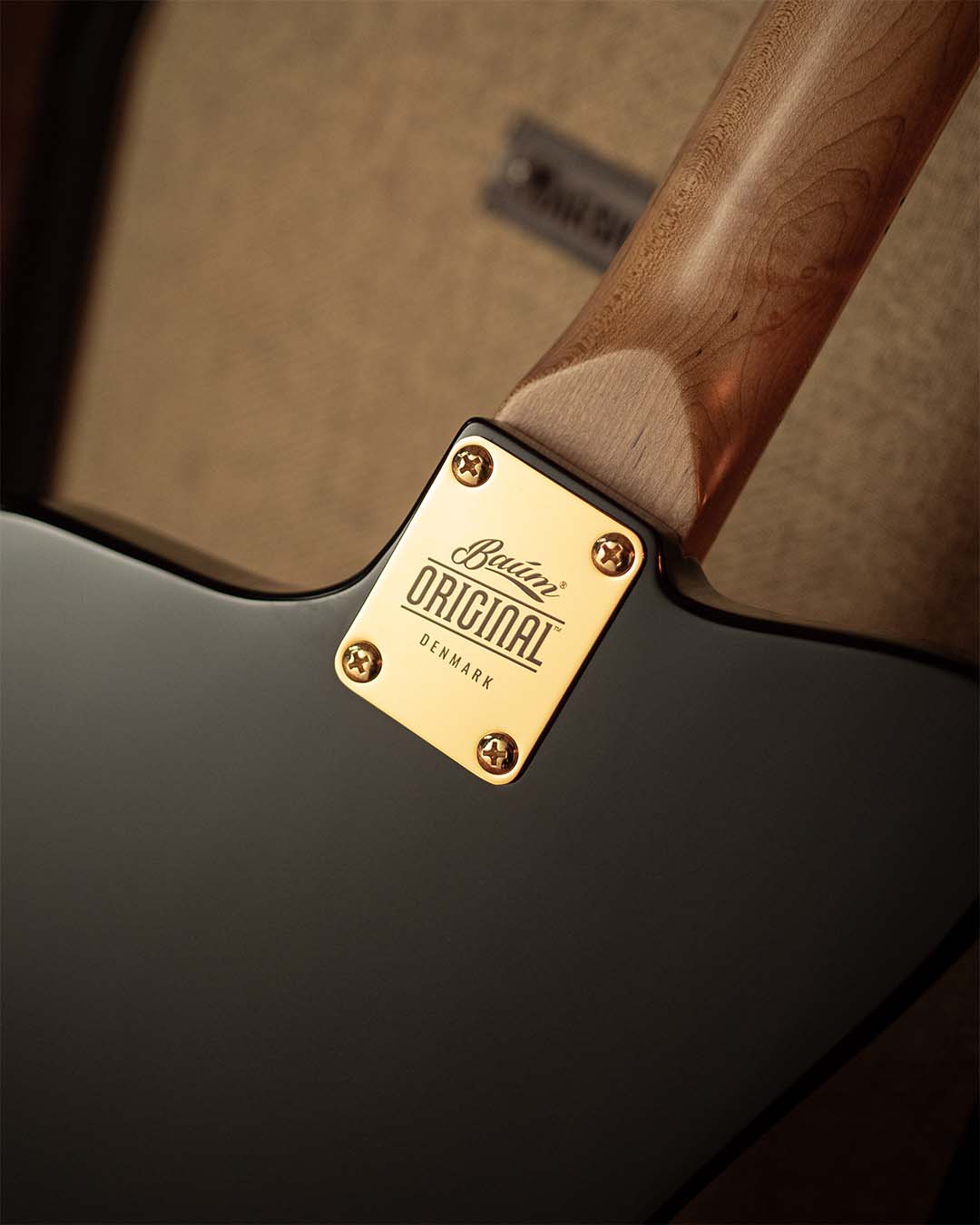
Baum does not build left handed instruments that way. The left handed models in the lineup are purpose-built with the same body construction, the same neck profile, the same pickup voicing and the same hardware as their right handed counterparts. They are set up by the same team in Aarhus, Denmark, and they ship with the same 45-day home trial.
What purpose-built left handed means
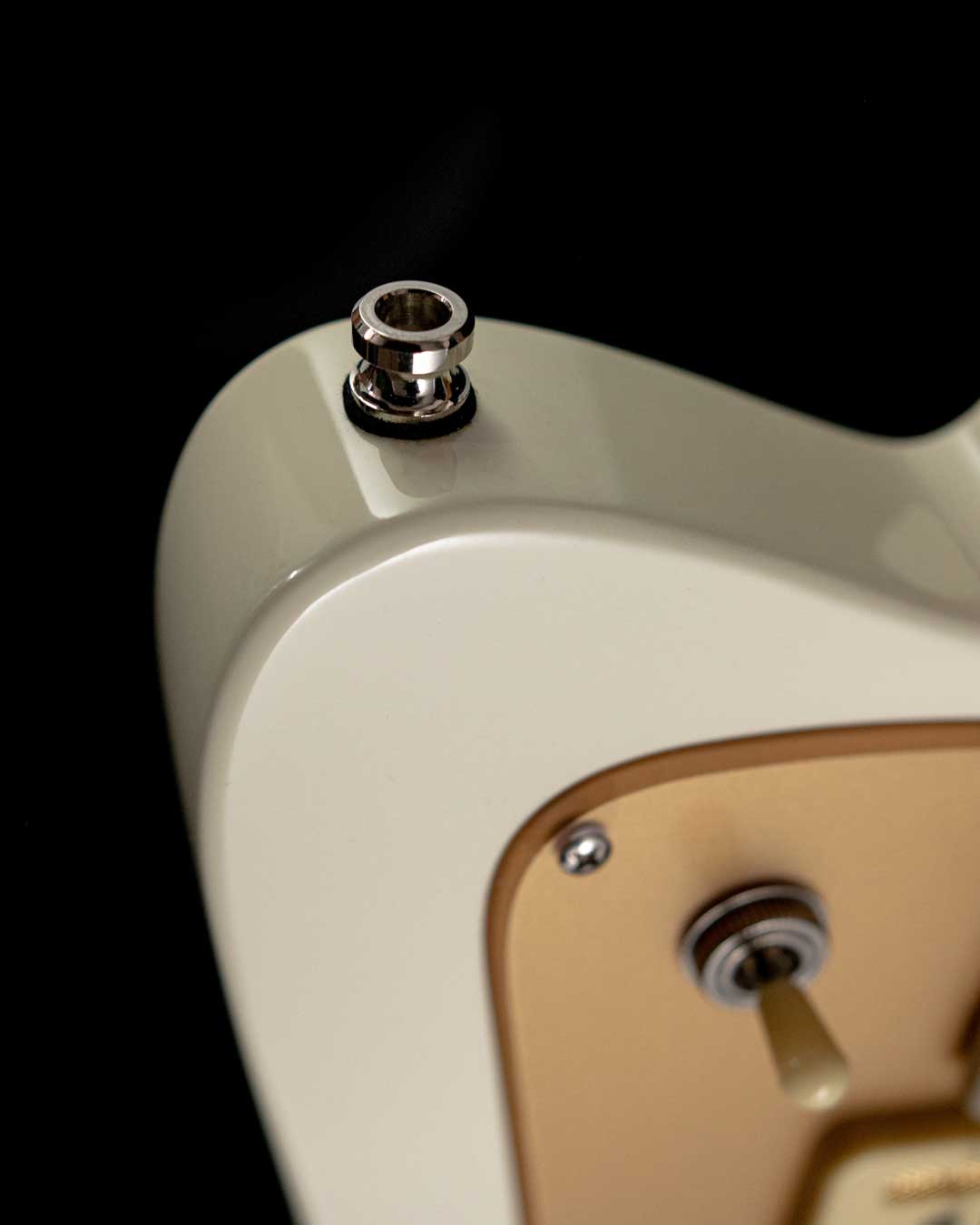
A purpose-built left handed electric guitar or bass guitar is not a right handed instrument with the strings reversed. The nut is cut for left handed string order. The bridge is intonated for left handed string tension. The pickup positioning accounts for the reversed string direction, which affects how the pickups read the vibration pattern of each string. The electronics layout is mirrored so the controls sit in the correct position for left handed playing. The body contours are shaped for the opposite playing orientation.
Cheap left handed electric guitars and left handed bass guitars skip some or all of these steps. They take a right handed body, flip the nut and bridge, and call it left handed. The result is an instrument that technically works but does not play or sound the way it should. Purpose-built means every component is oriented correctly from the start, not adapted after the fact.
The left handed guitar lineup
Baum builds left handed electric guitars across different body styles and tonal territories within the lineup.
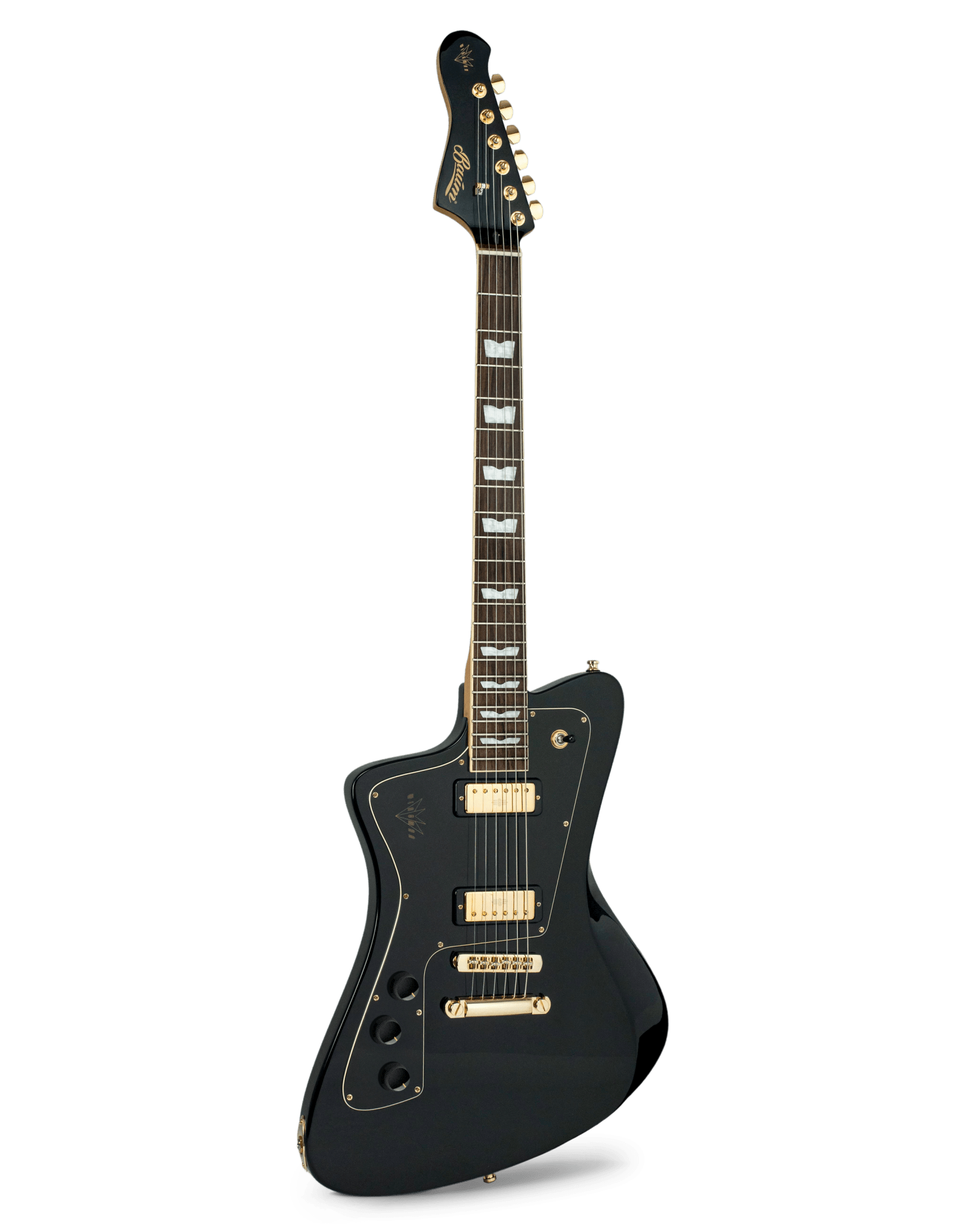
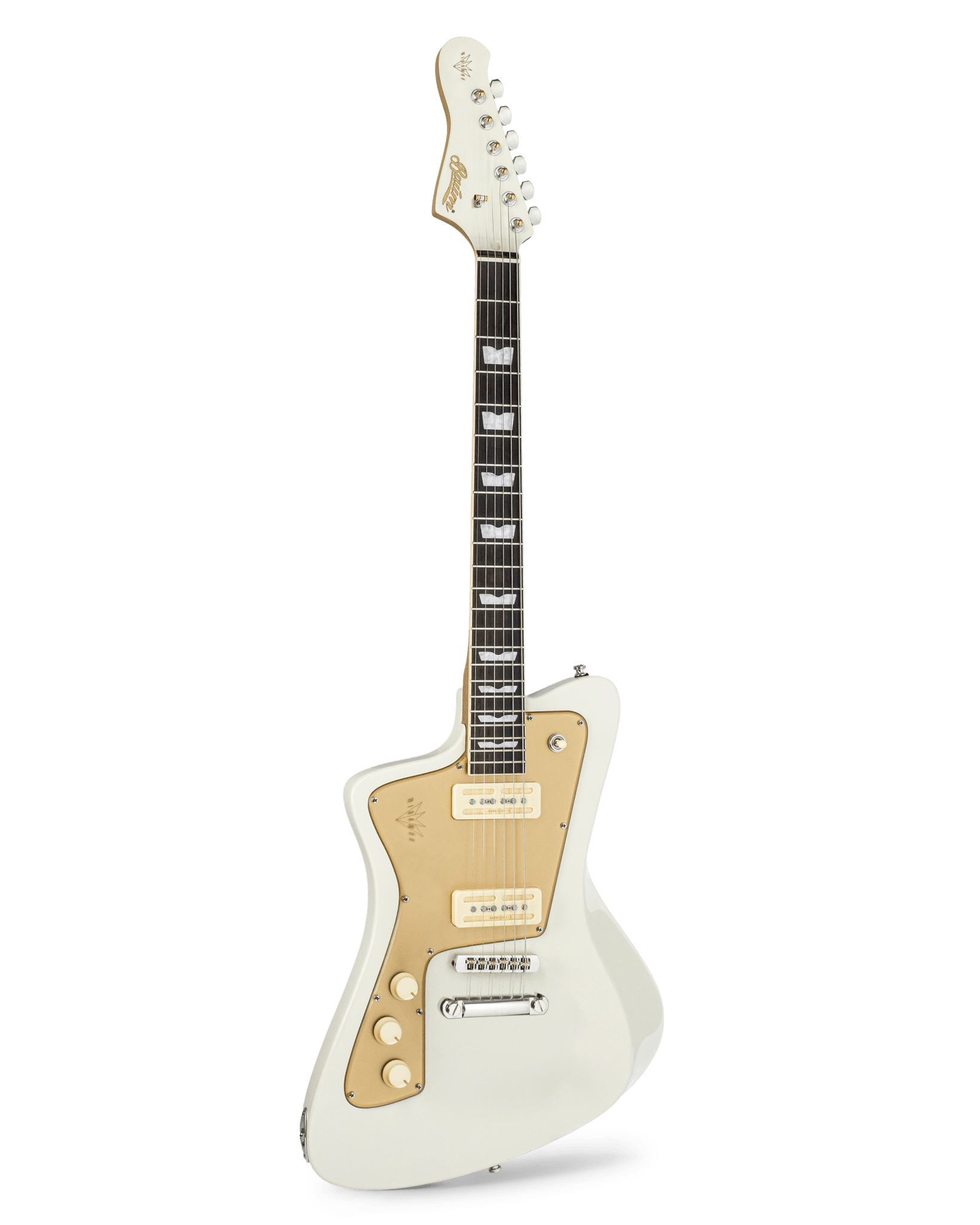
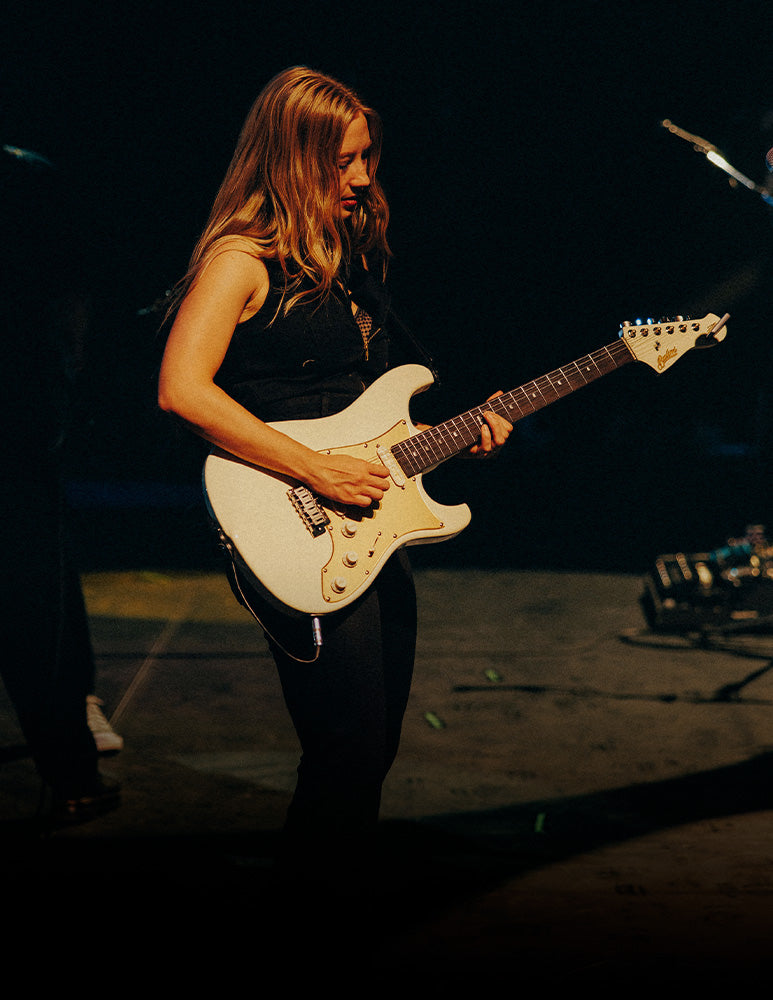
The Wingman is Baum's modern offset electric guitar and the model with the most left handed variant options. The left handed Wingman shares everything with the right handed version. 36mm mahogany offset body, roasted maple neck with Modern C profile, Levitator™ roller bridge and Goldsound® pickups. The left handed offset guitar format is particularly underserved in the wider market because most boutique offset builders do not produce left handed versions at all, which makes the Wingman one of the few purpose-built left handed offset guitars available from a boutique manufacturer.
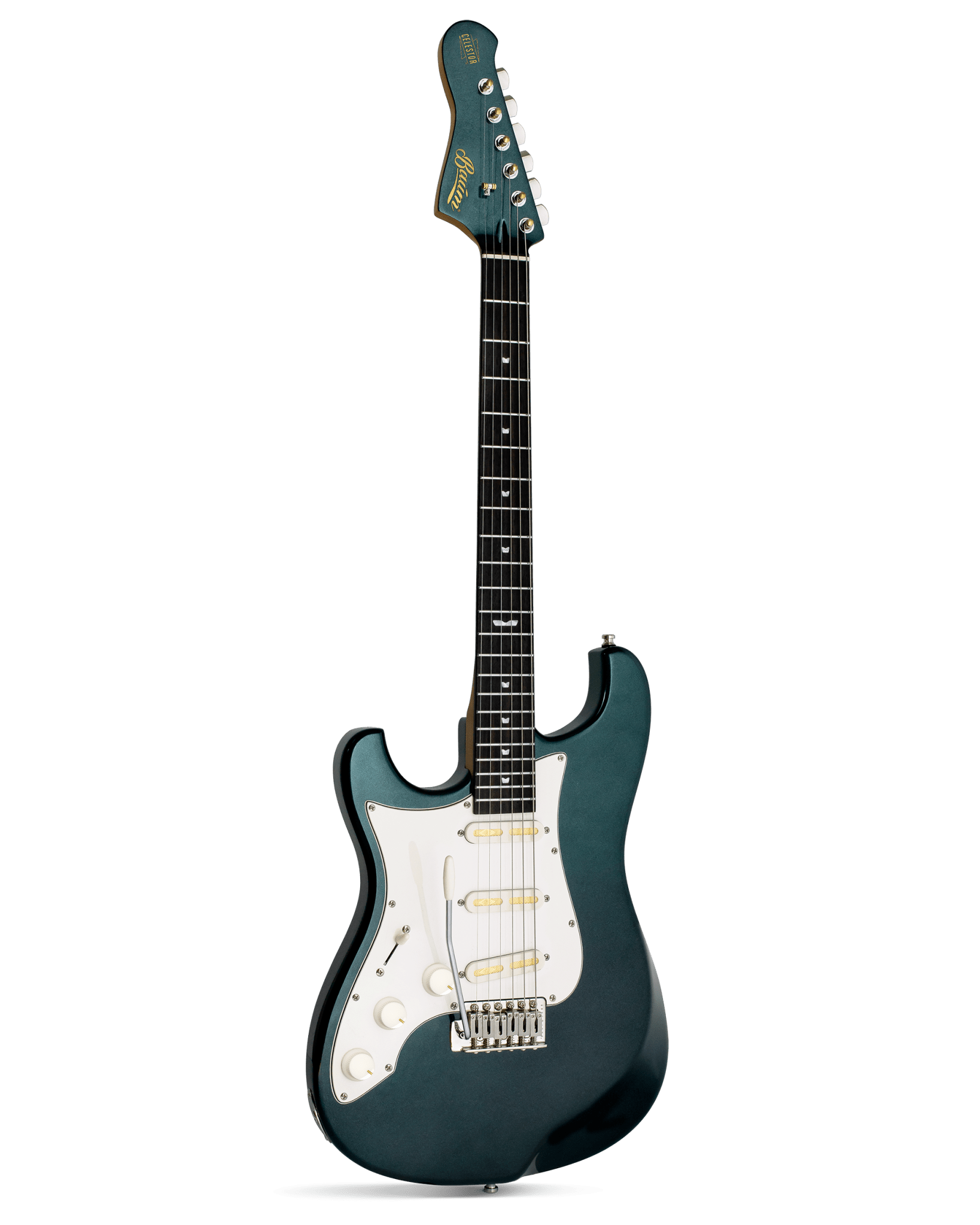
The Celestor is Baum's S-type electric guitar with Goldsound® Sonar single coils and TrueTone™ tremolo system. The left handed Celestor gives left handed players access to an S-type platform with extended pickup wiring and a modern tremolo system, built on the same Baum construction platform as the right handed model.
The left handed guitar selection covers offset and S-type territory, with the Wingman and Celestor as the current core of the left handed lineup. For the full range of guitar models including semi-hollow, solid body double-cut and T-type platforms, the Baum electric guitar lineup shows everything Baum builds across nine models and five body styles.
The left handed bass lineup
Left handed bass guitars are even scarcer than left handed electric guitars in the wider market. Most bass manufacturers that offer left handed variants limit the selection to one or two entry-level models, which leaves left handed bass players with almost no options at the boutique level.
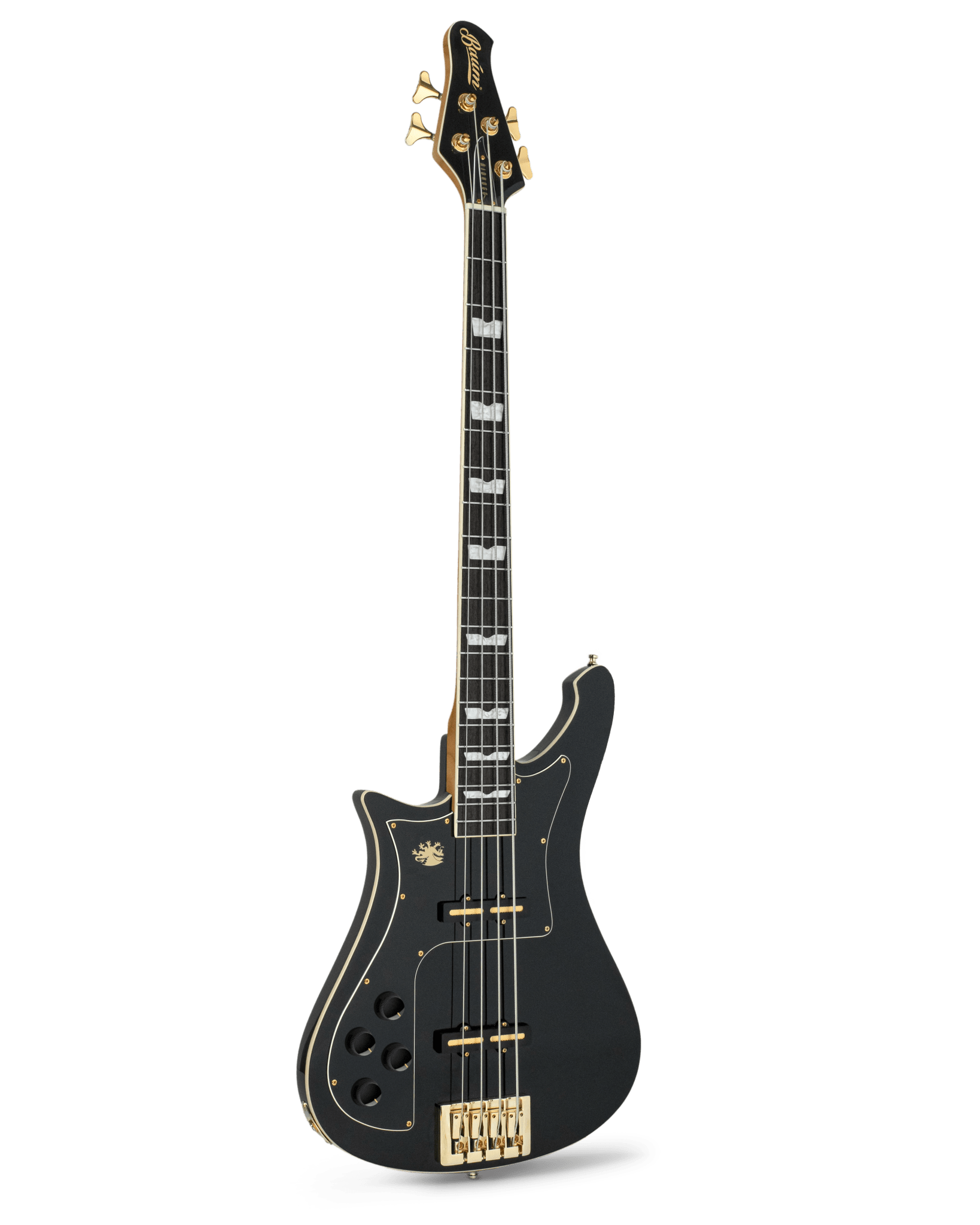
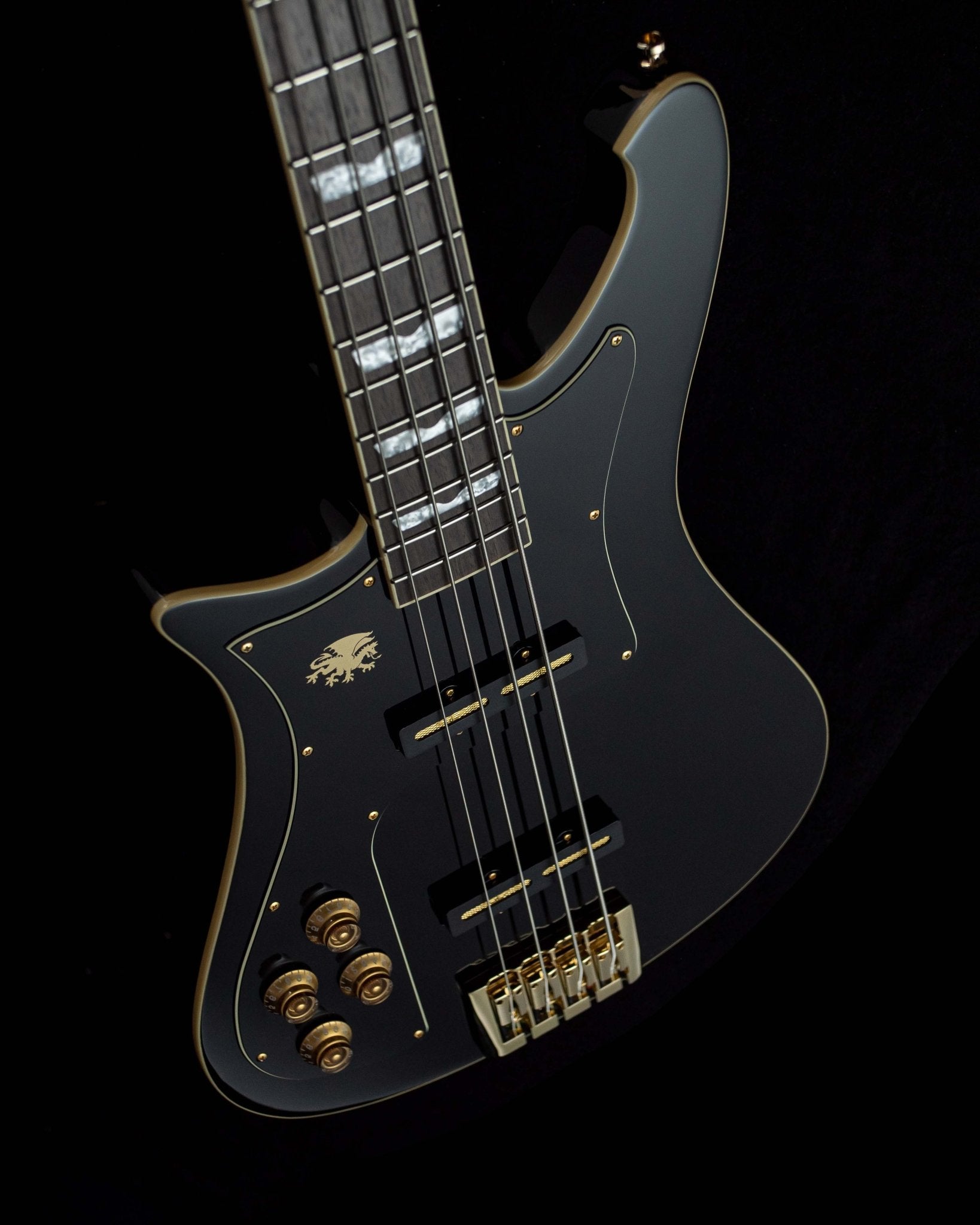
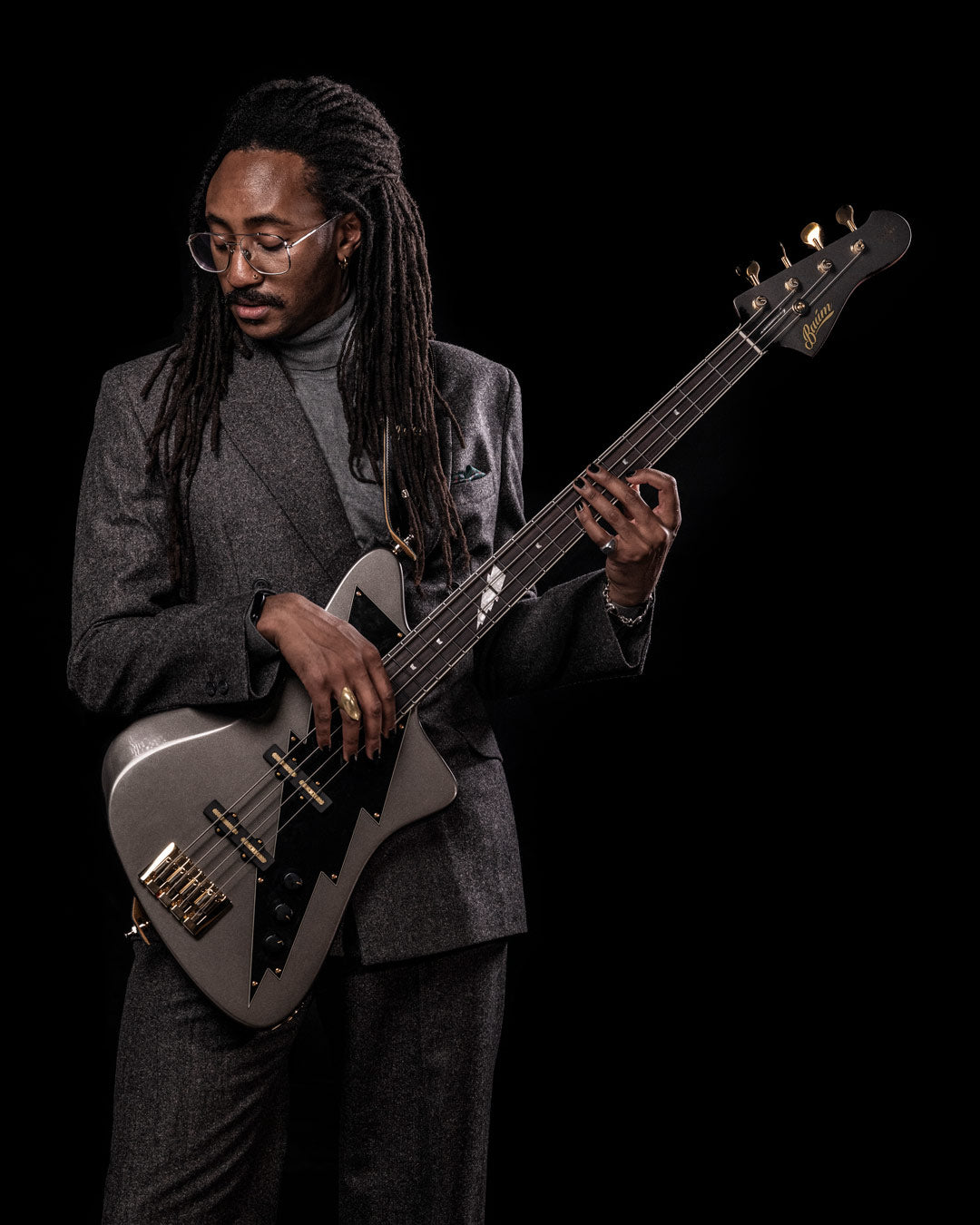
The Nidhogg is Baum's double-cut bass guitar, and the left handed Nidhogg is built to the same specification as the right handed model. Same mahogany body construction, same roasted maple neck, same Goldsound® bass pickups, same hardware. It sits within Baum's double-cut bass selection and gives left handed bass players access to a purpose-built boutique instrument rather than a compromised adaptation of a right handed design.
Why left handed instruments are hard to find
Roughly 10% of the global population is left handed. The percentage of left handed electric guitars and left handed bass guitars produced by most major manufacturers sits between 2% and 5% of their total catalogue. That gap between demand and supply has existed for decades and shows little sign of closing.
The economic reason is straightforward. Left handed production runs are smaller, which increases per-unit cost. Tooling, moulds and jigs need to be mirrored or rebuilt. Inventory management becomes more complex. Most large manufacturers solve this by offering a small number of left handed models and accepting that left handed players will choose from what is available rather than what they actually want.
Boutique builders are in a better position to address this because their production runs are already small and their construction approach is already hands-on. Building a left handed Baum uses the same workshop, the same team and the same process as a right handed Baum. The per-unit economics are closer to parity than they are at factory scale, which is why Baum can offer purpose-built left handed instruments without treating them as a special-order afterthought.
45 days matters more for left handed players
The 45-day home trial is important for every Baum customer, but it matters more for left handed players than for anyone else. Left handed guitarists and bass players have fewer opportunities to test instruments in music stores because most stores carry little or no left handed stock. The typical buying experience for a left handed player is ordering online based on specifications and reviews, hoping the instrument feels right, and dealing with the return process if it does not.
Baum's direct-from-Denmark model with a 45-day return window changes that dynamic. Every left handed electric guitar and left handed bass guitar ships set up by hand in Aarhus, and the trial period is long enough to take the instrument through rehearsals, recording sessions and live situations before deciding. For left handed players who are used to compromising on what is available rather than choosing what they actually want, 45 days with a purpose-built instrument is a different experience entirely.