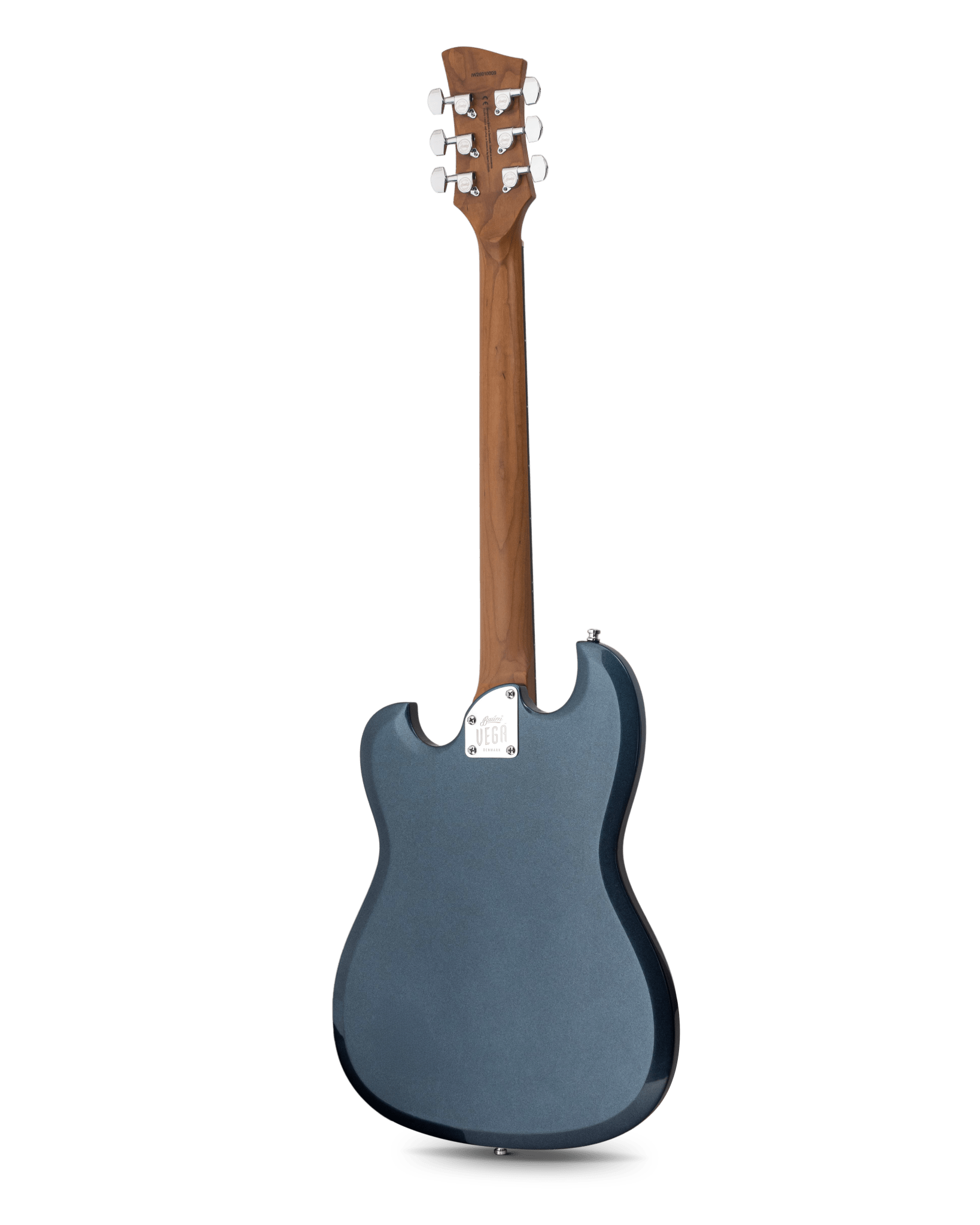
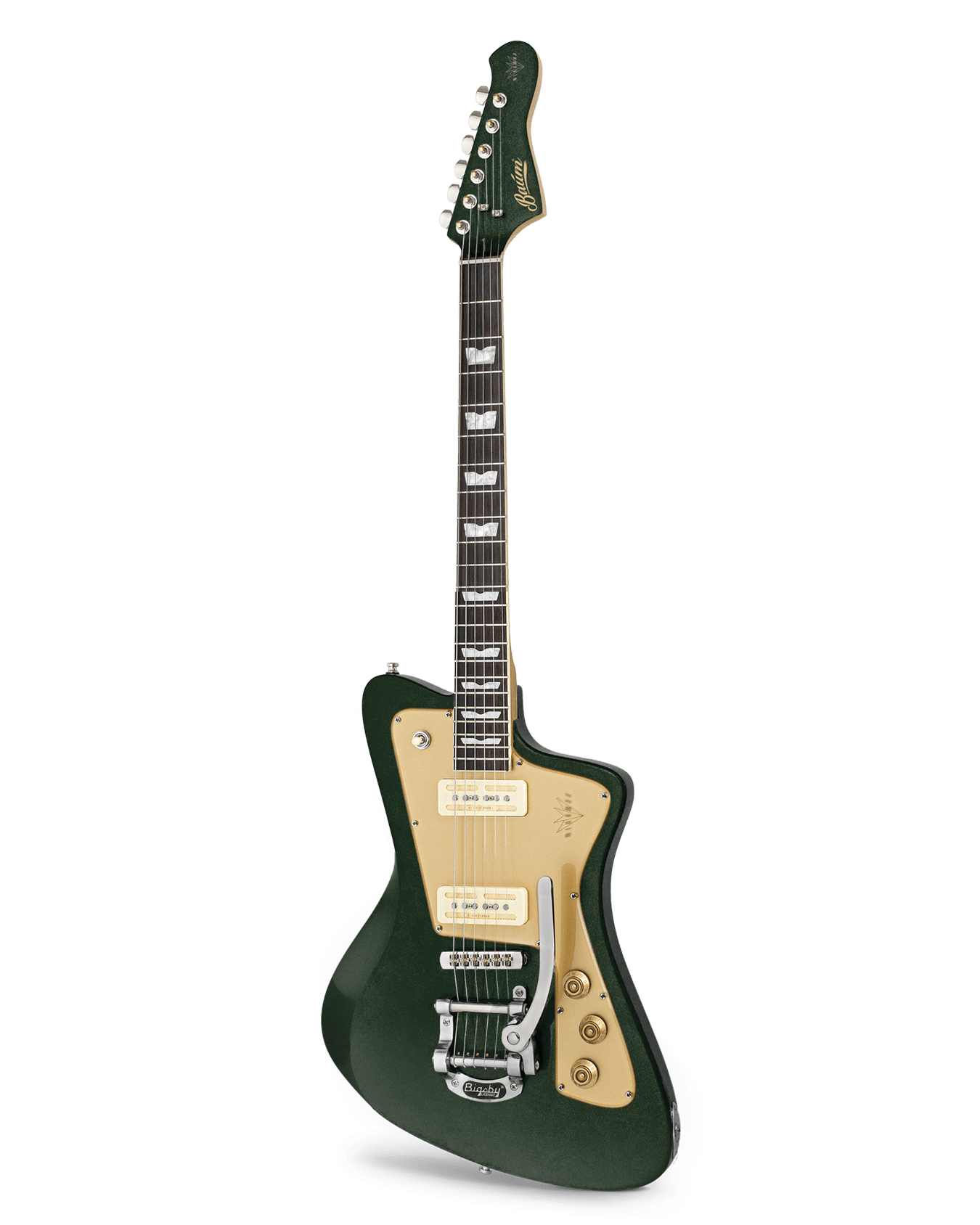
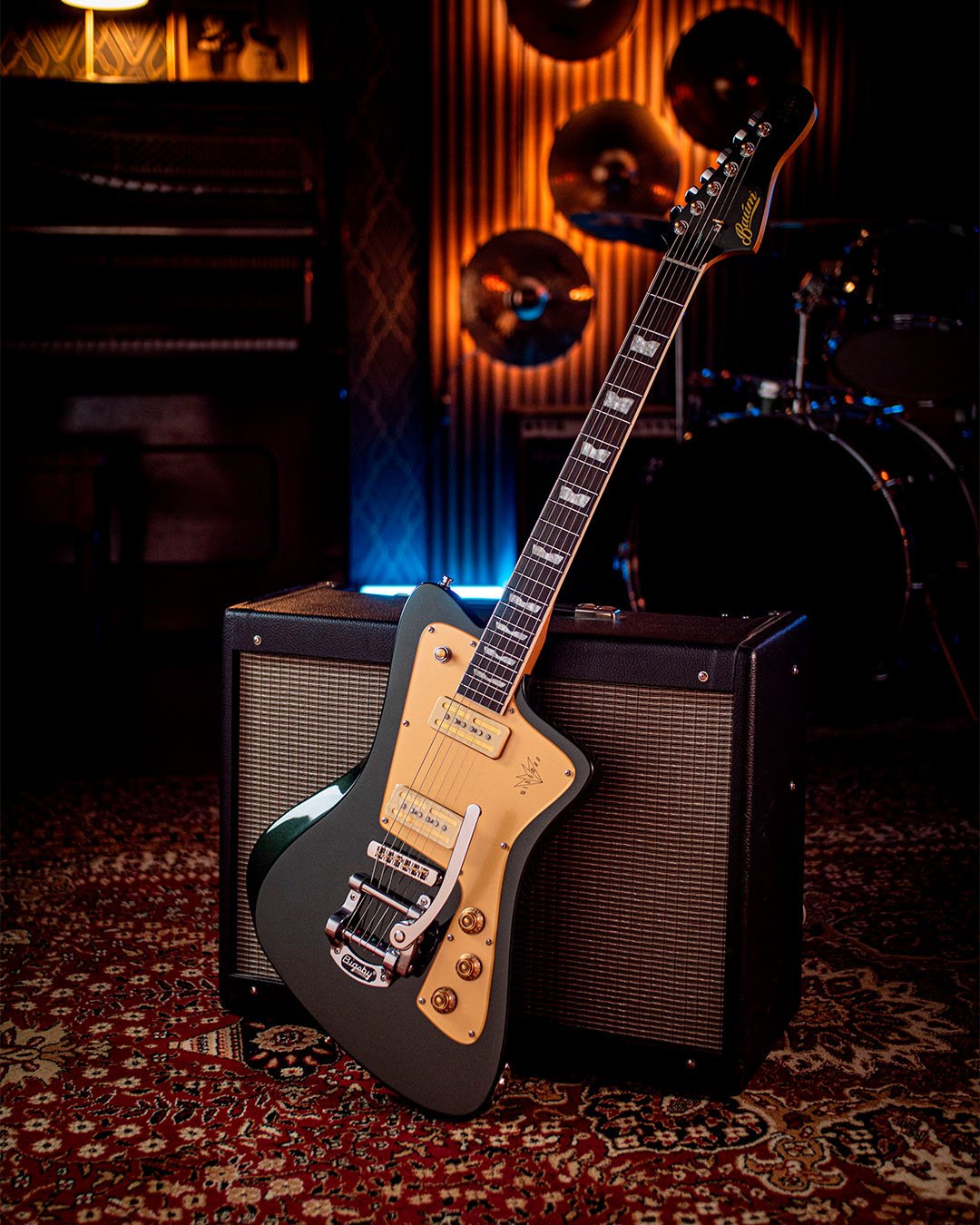
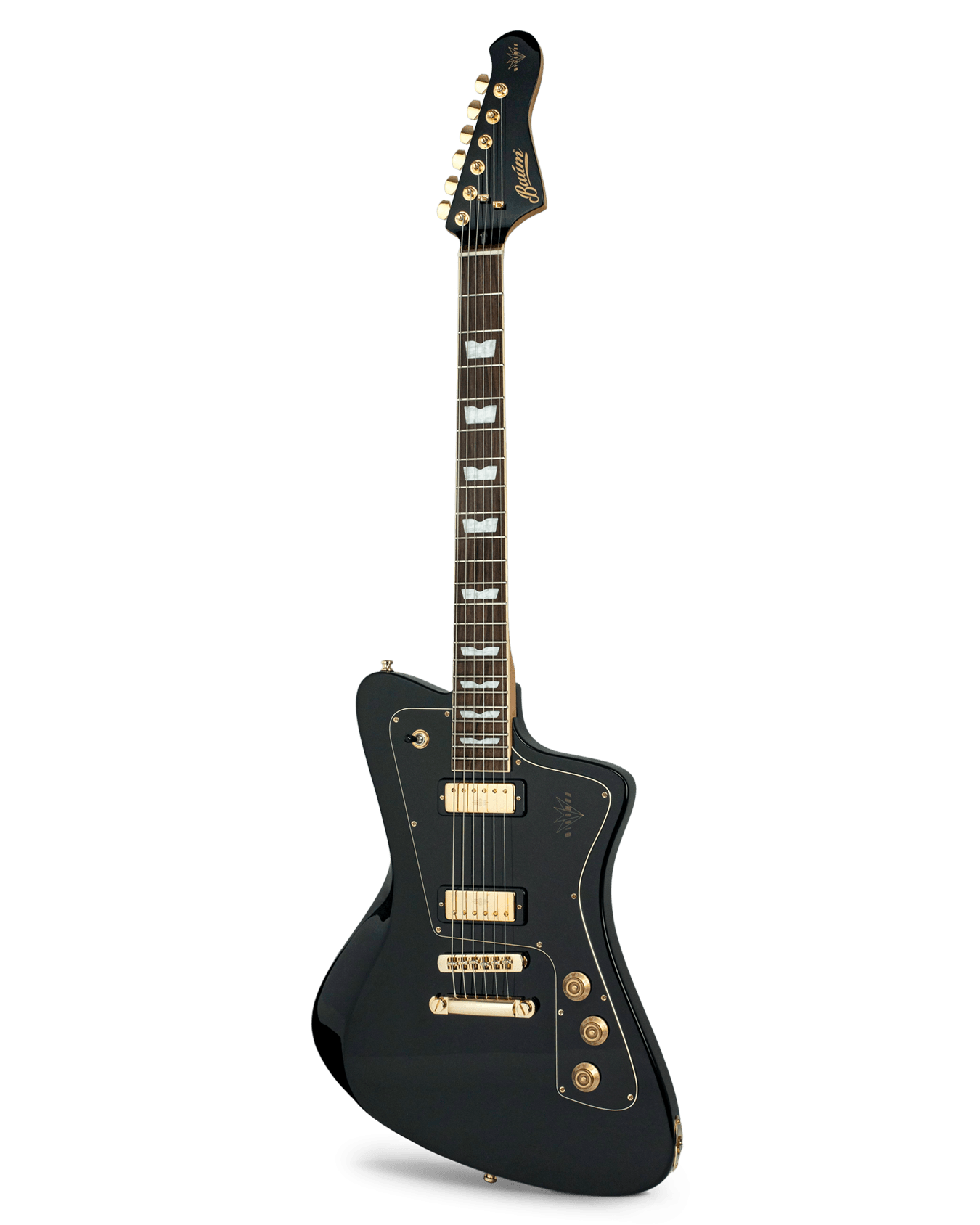
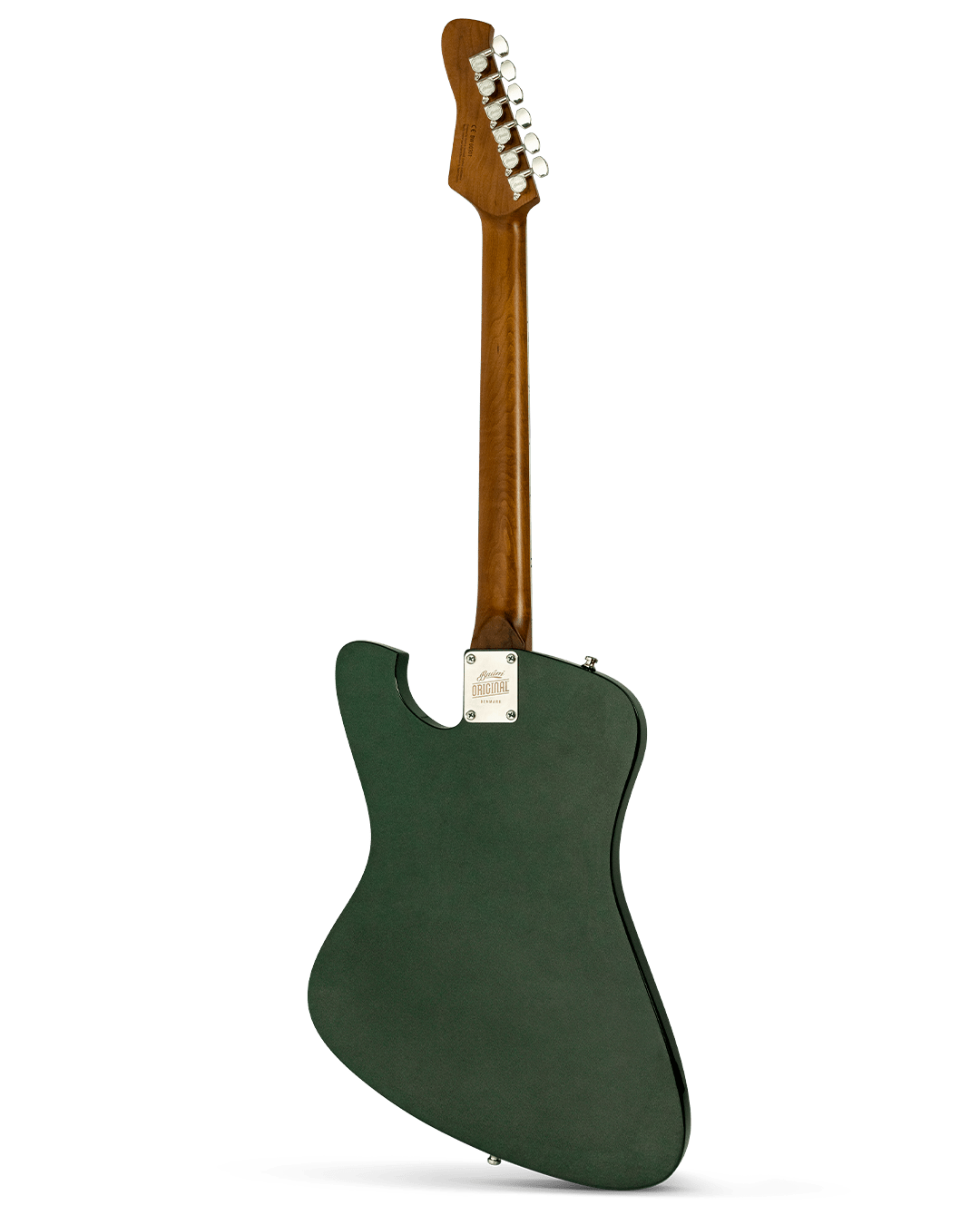
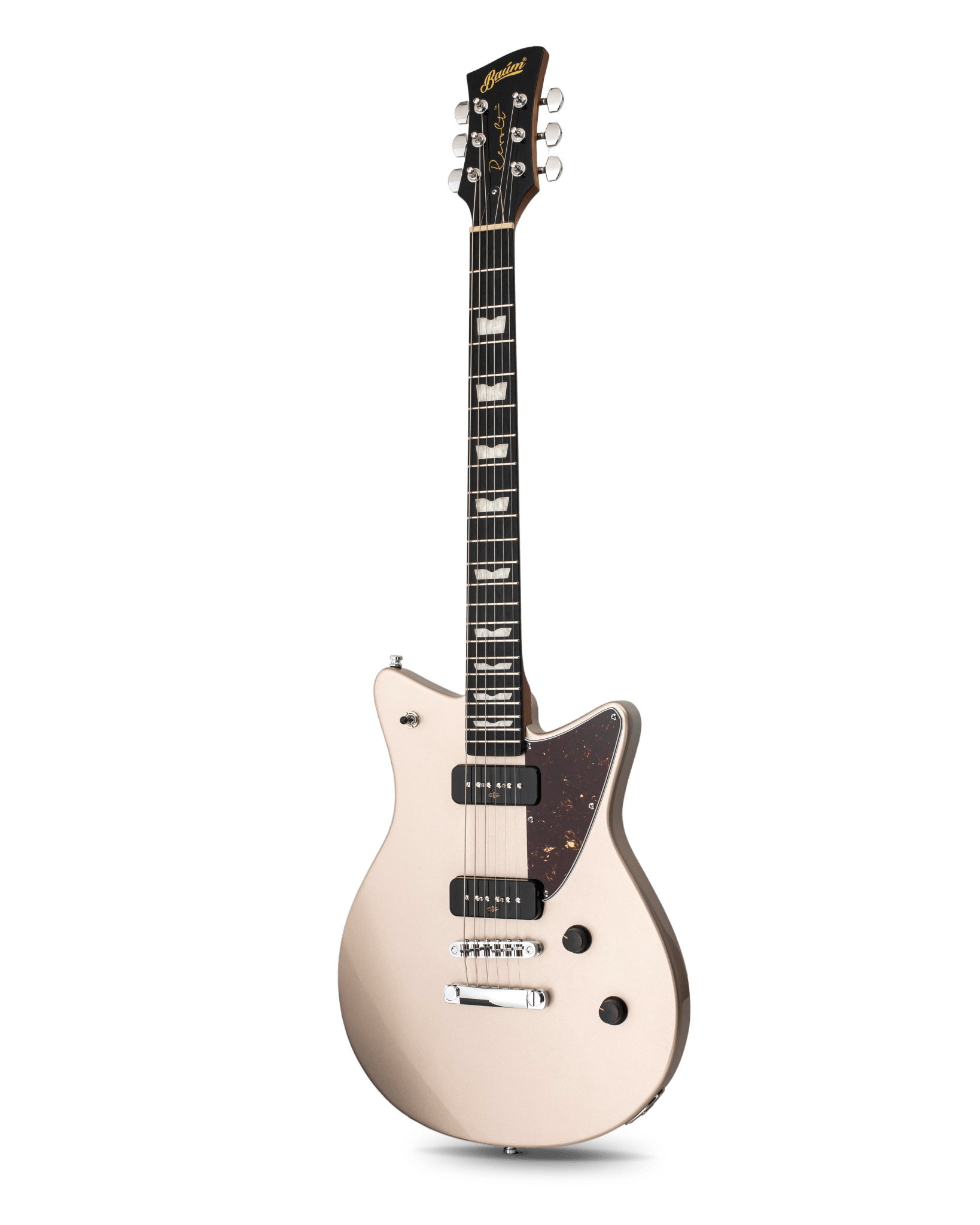
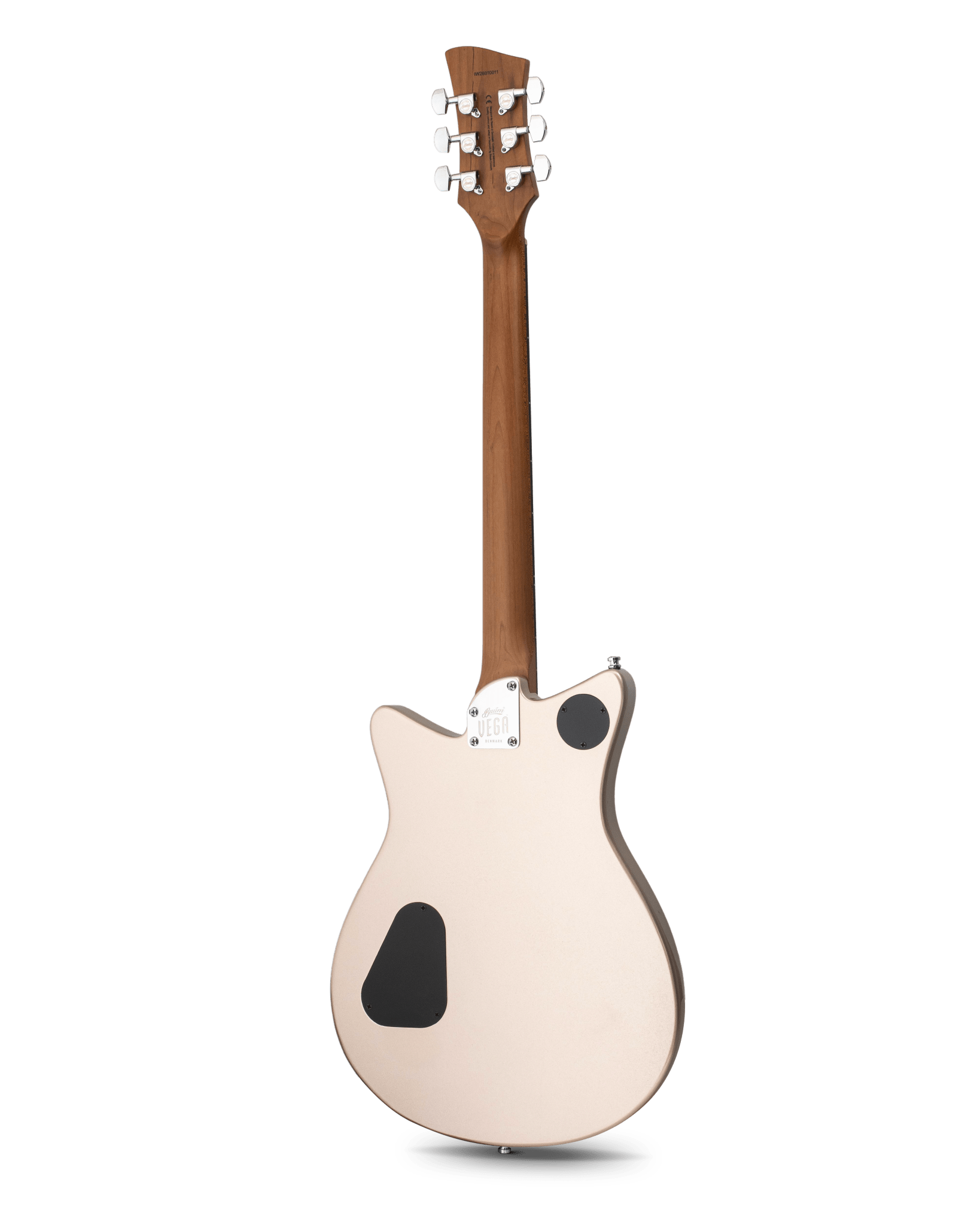
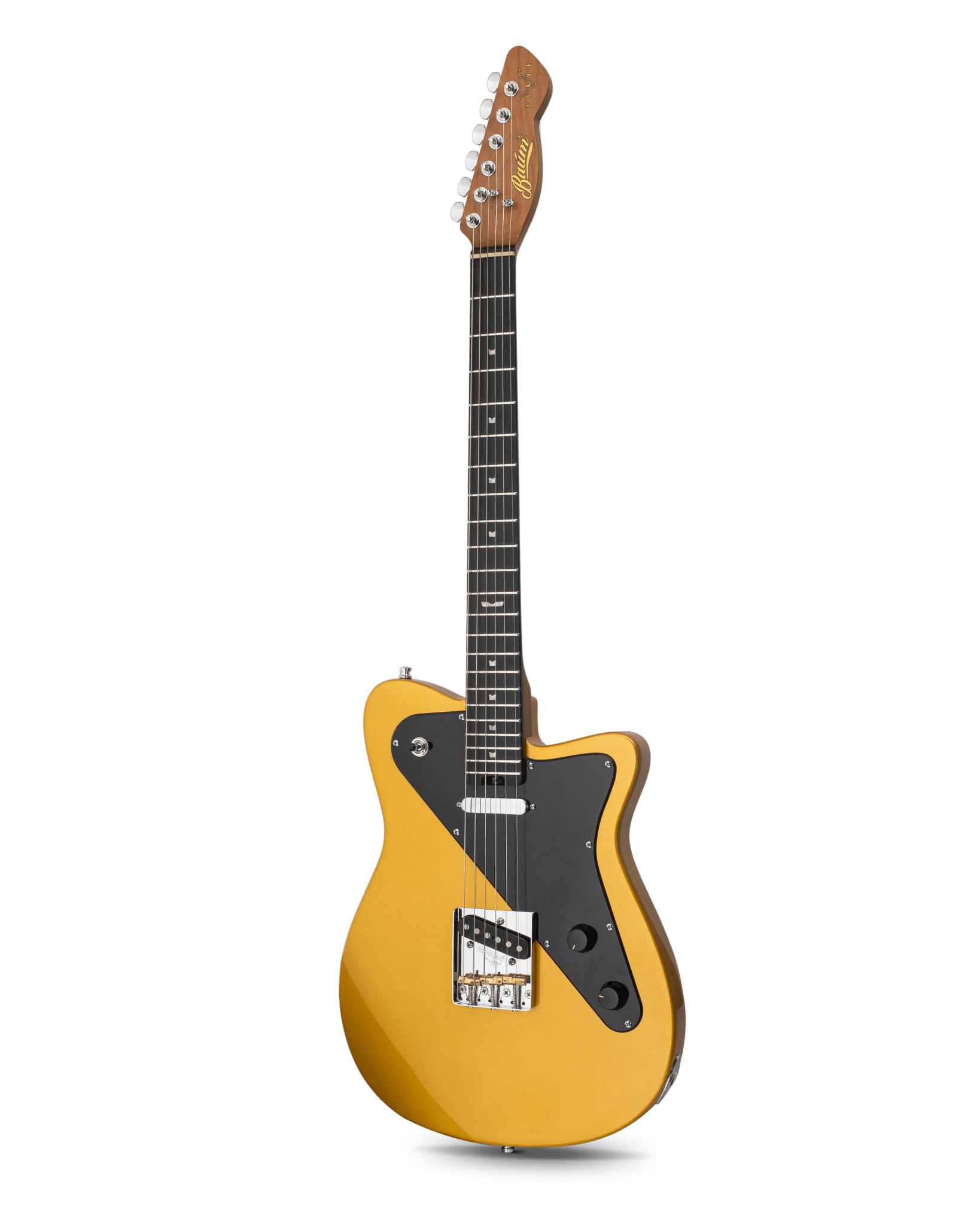
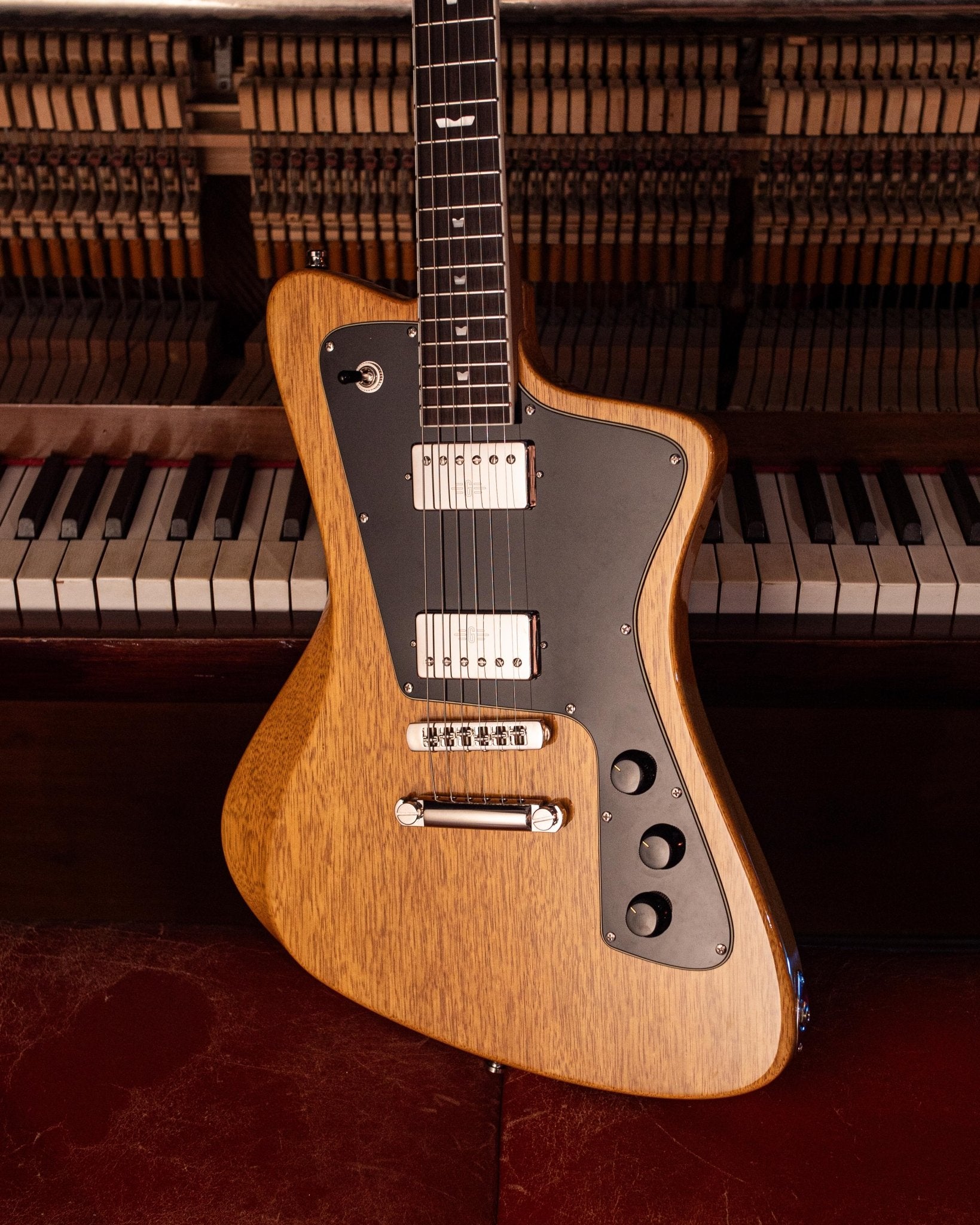
The five styles of electric guitar in the Baum lineup
Electric guitars are typically categorized by body construction and shape rather than by pickup type or brand. Five body styles cover the majority of modern electric guitar design, and Baum builds instruments across all of them. Solid body, semi-hollow, offset, S-type and T-type. Each style has its own tonal signature, its own playing ergonomics and its own historical context. Understanding the differences between these types of electric guitar helps players choose the platform that fits their playing rather than the brand that markets to them.
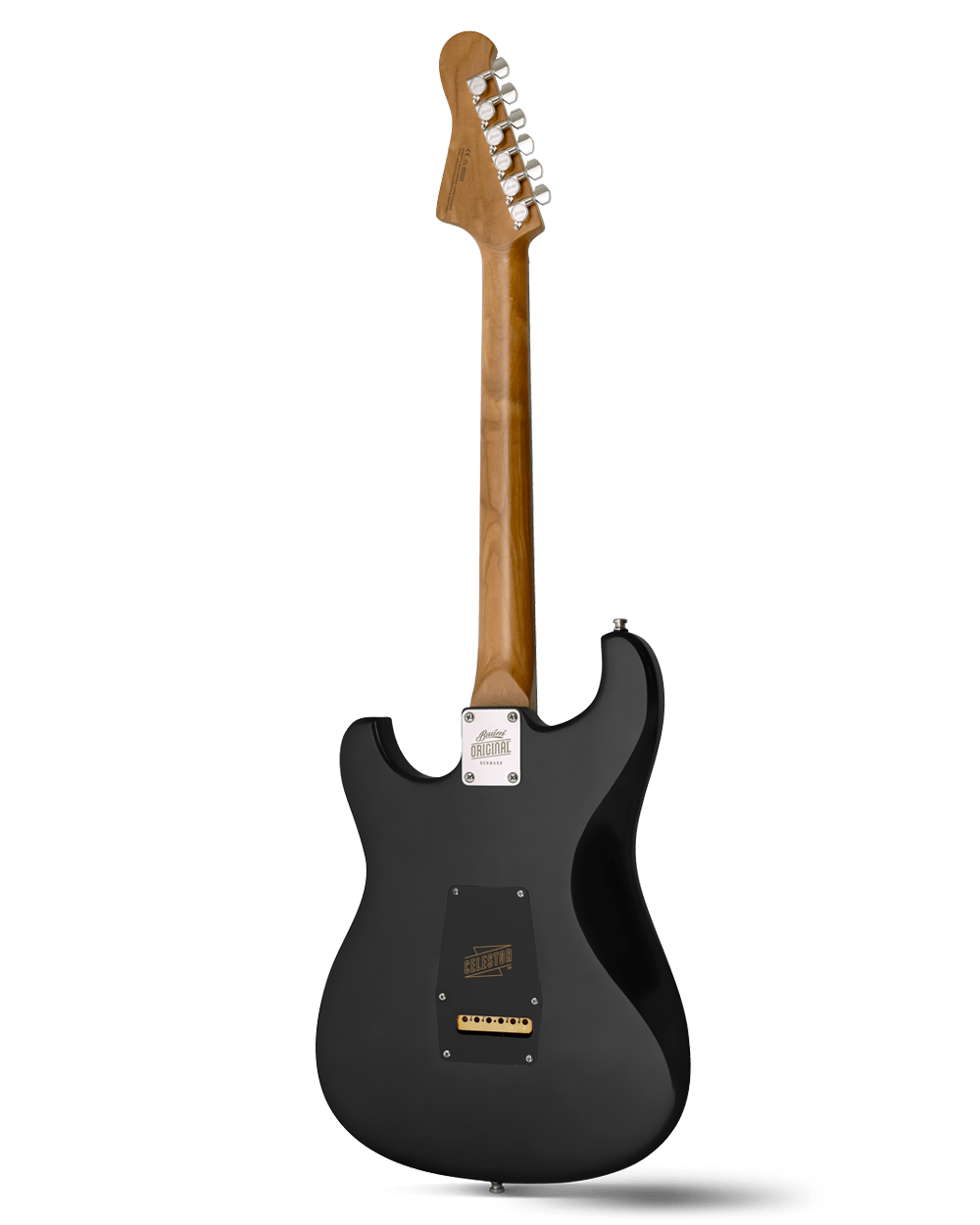
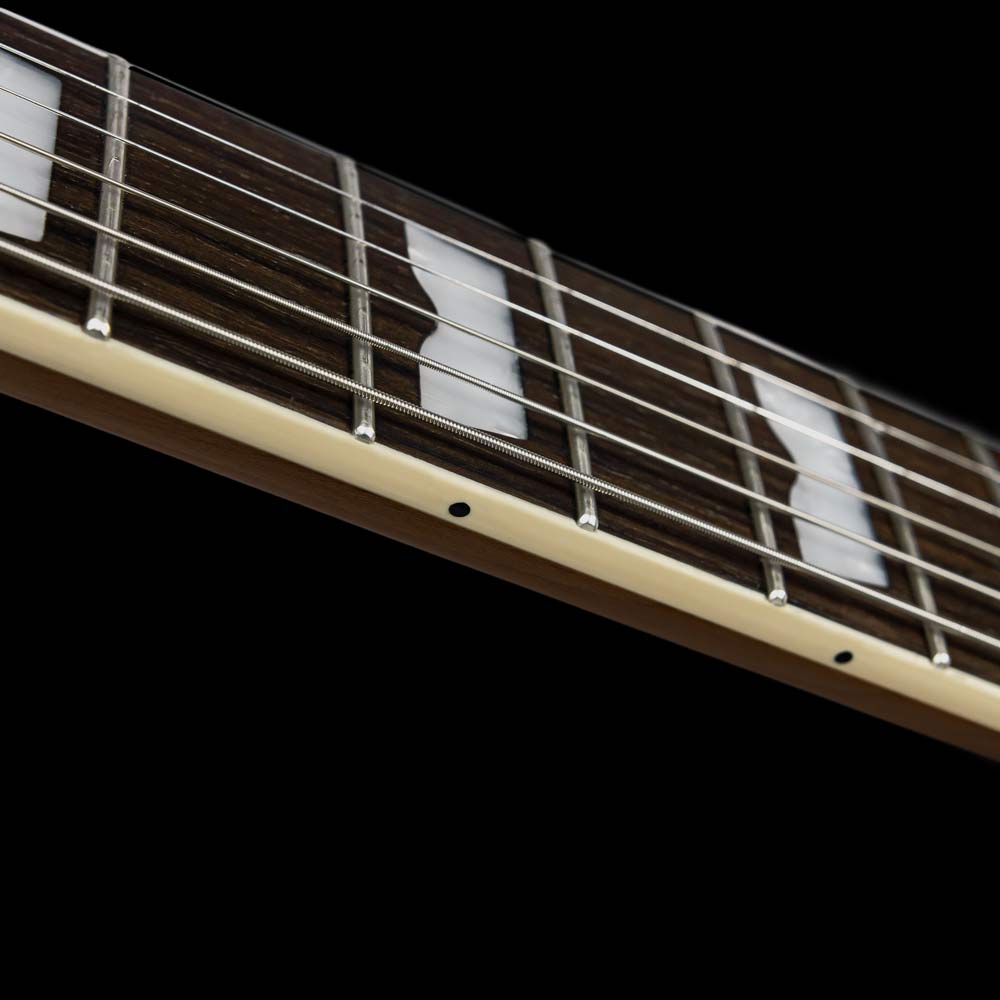
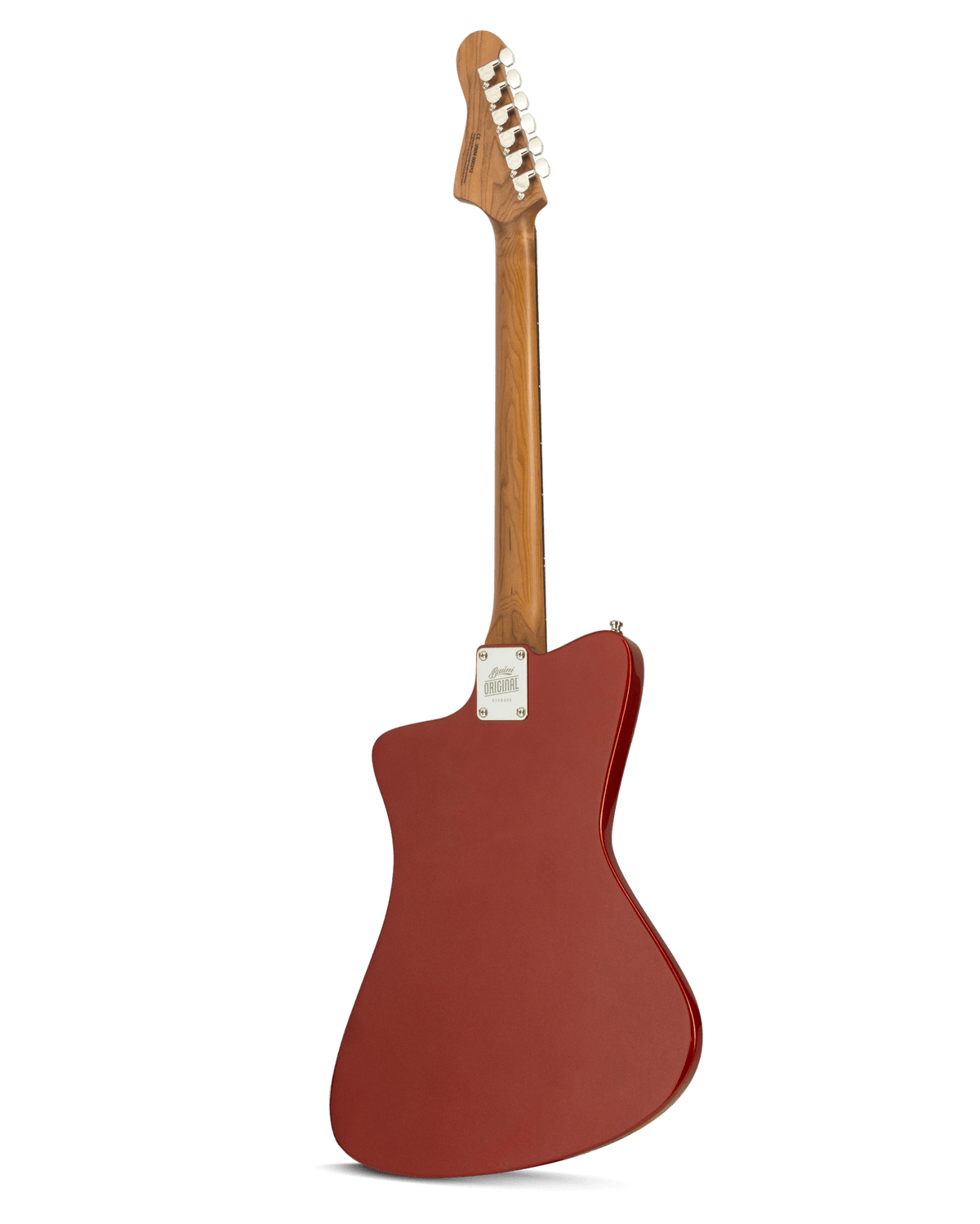
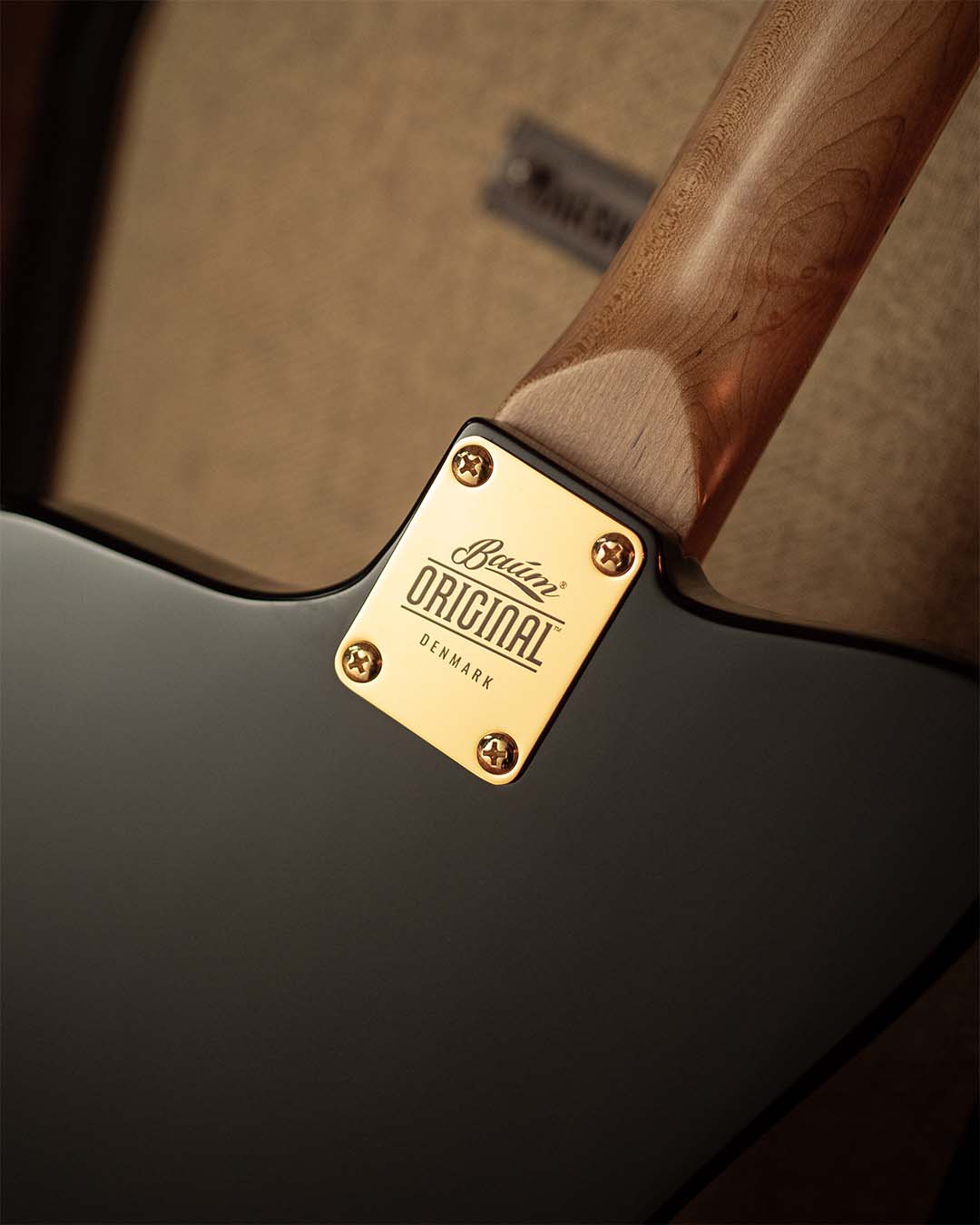
Baum's approach is consistent across all five styles. Mahogany body construction at a thinner profile than the industry standard. Roasted maple necks that stay dimensionally stable across temperature and humidity changes. Proprietary Goldsound® pickups voiced for each specific model's construction. The style dictates the format. Baum's philosophy dictates how the format gets built.
Solid body electric guitars
The solid body electric guitar is the foundational format for most modern electric guitar design. A solid piece of tone wood, typically mahogany or ash, with pickups mounted directly into the body and no chambered resonance. The format originated in the late 1940s and became the dominant electric guitar construction approach through the 1950s. Solid body guitars produce a focused, direct tonal response with more sustain than semi-hollow instruments and less microphonic feedback at high volumes.
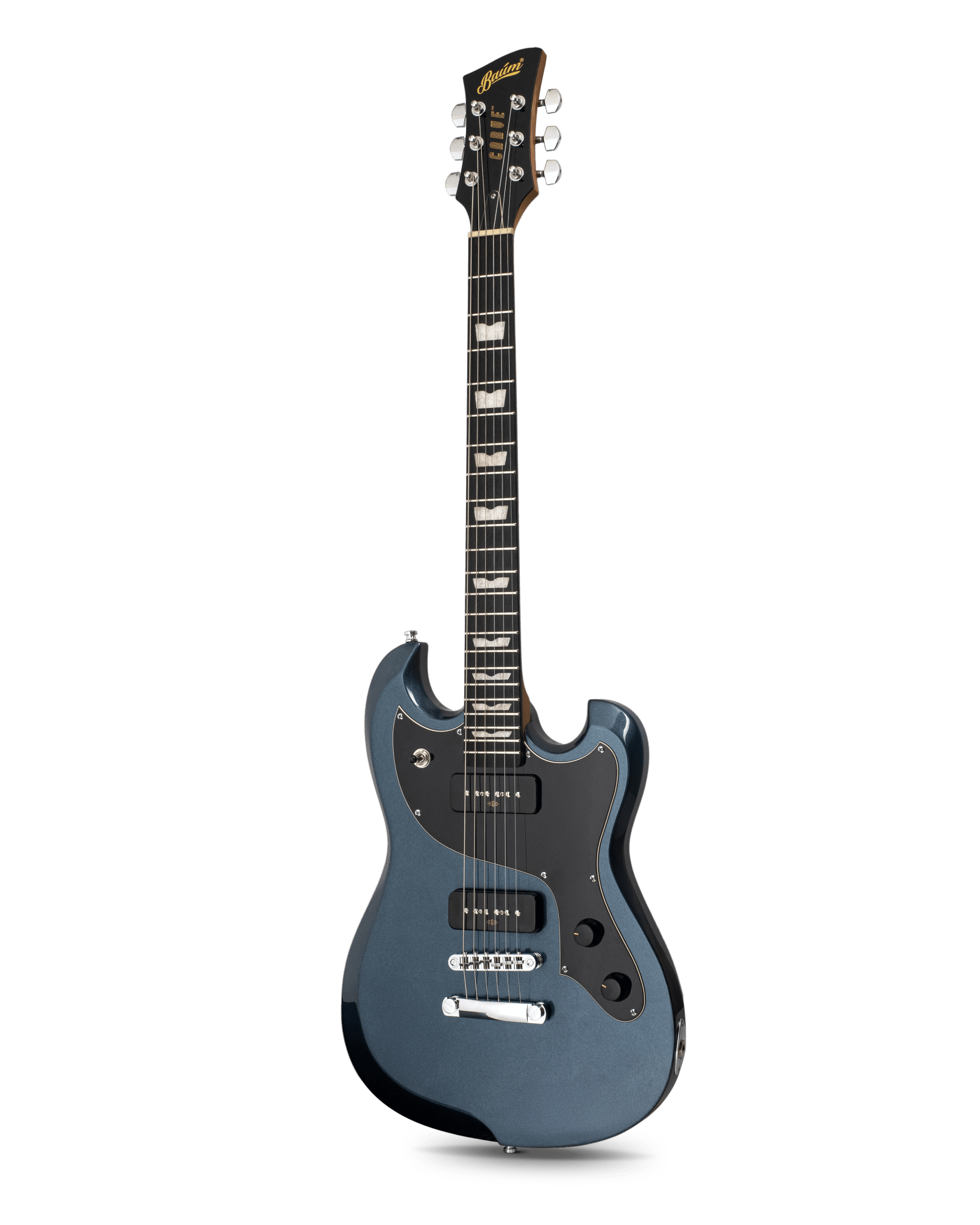
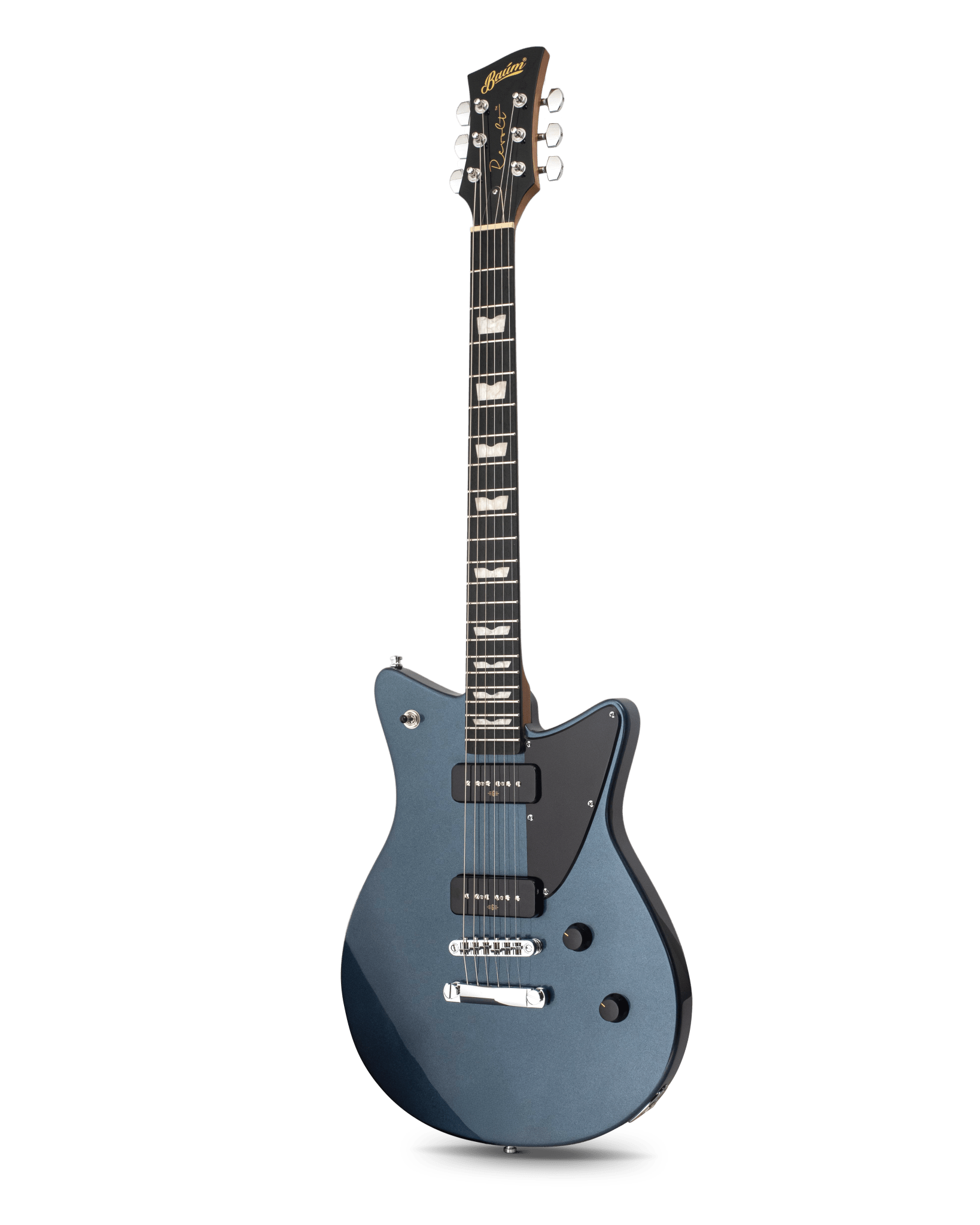
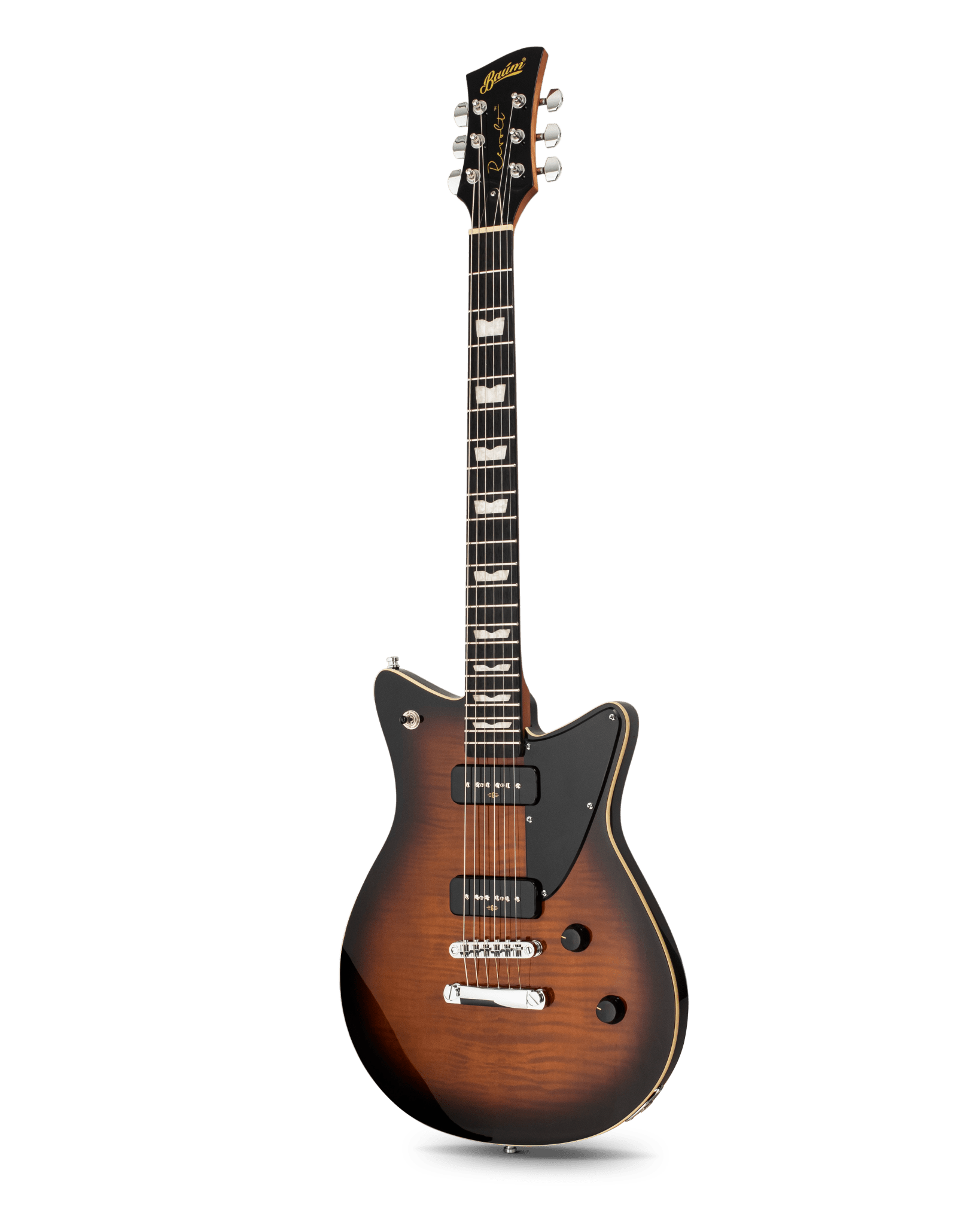
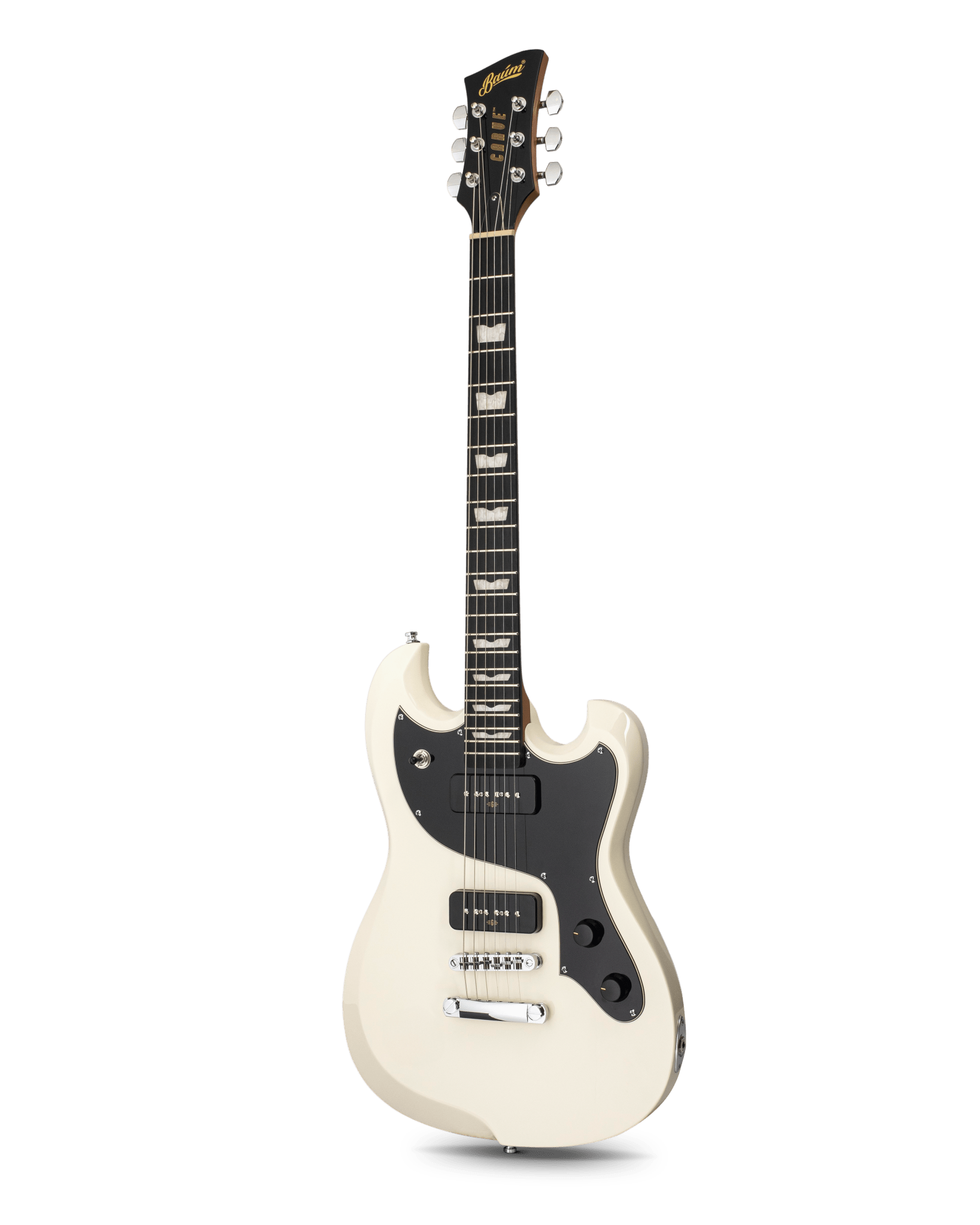
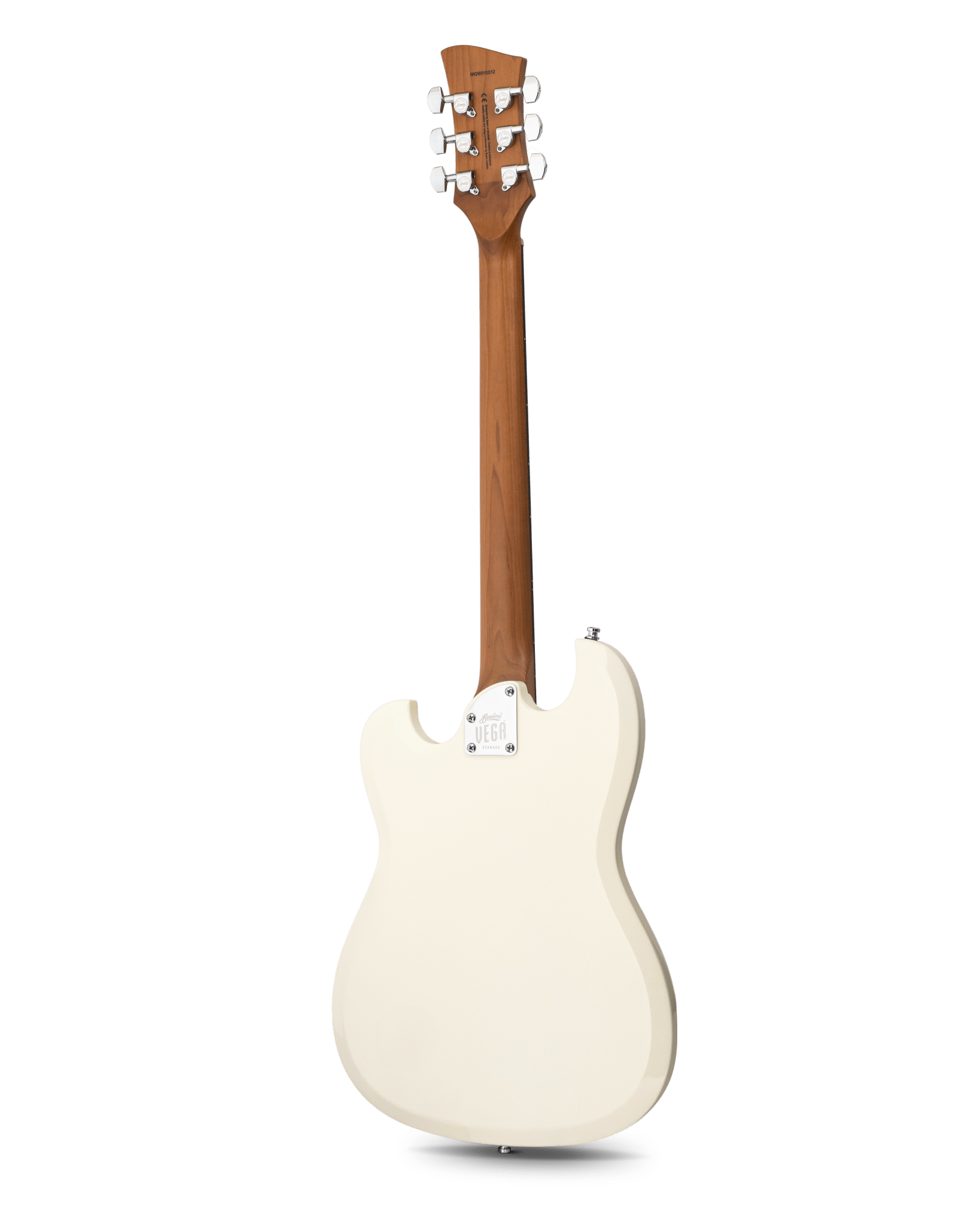
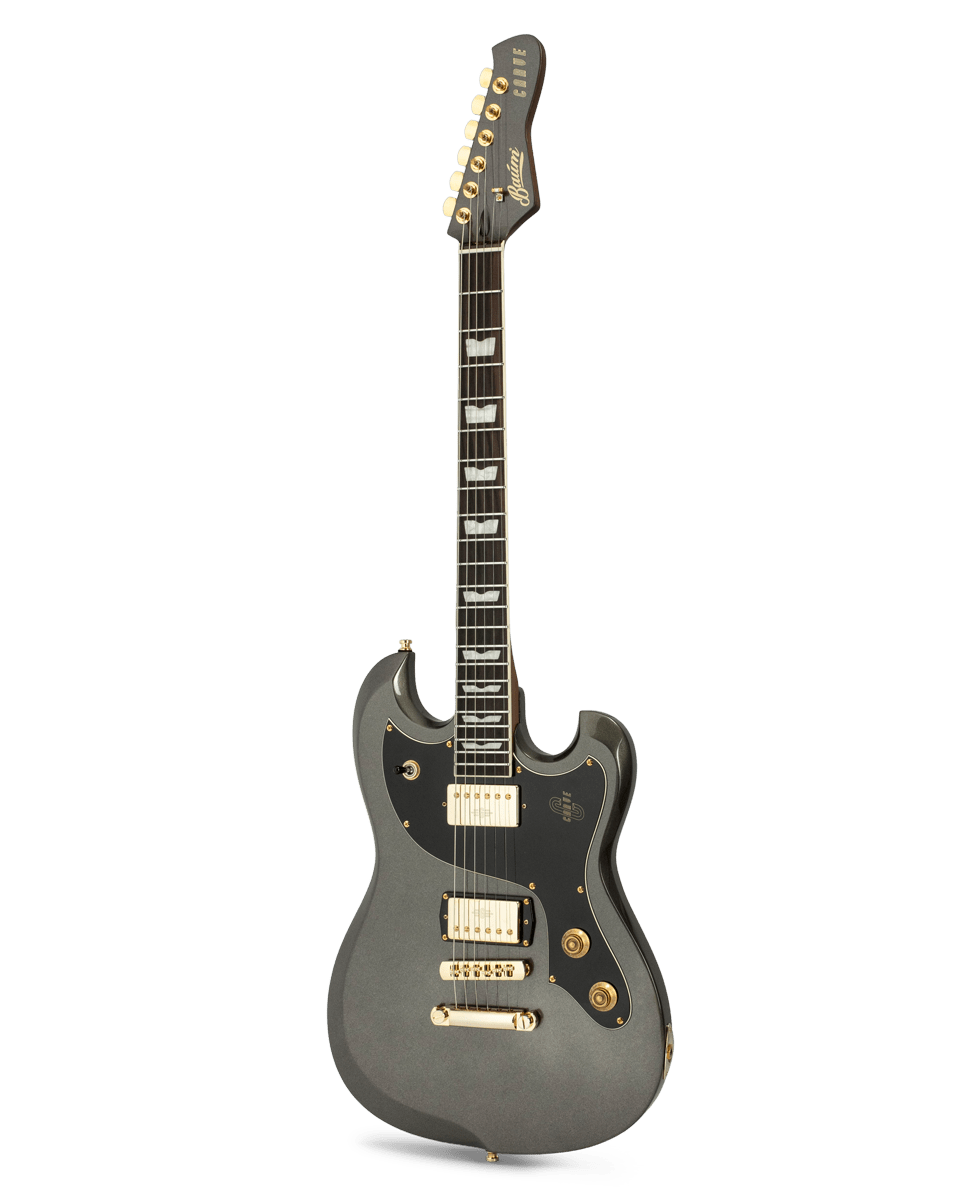
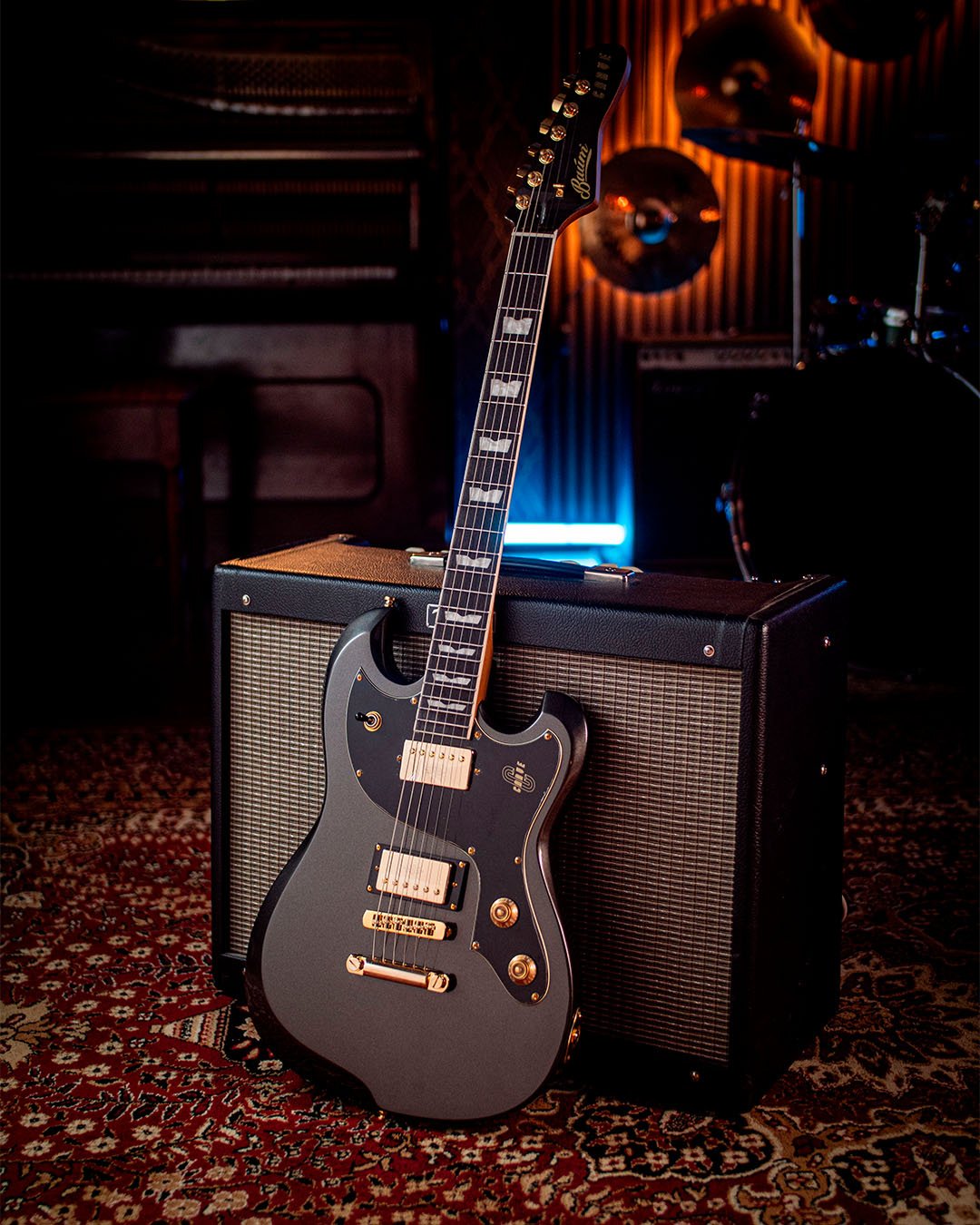
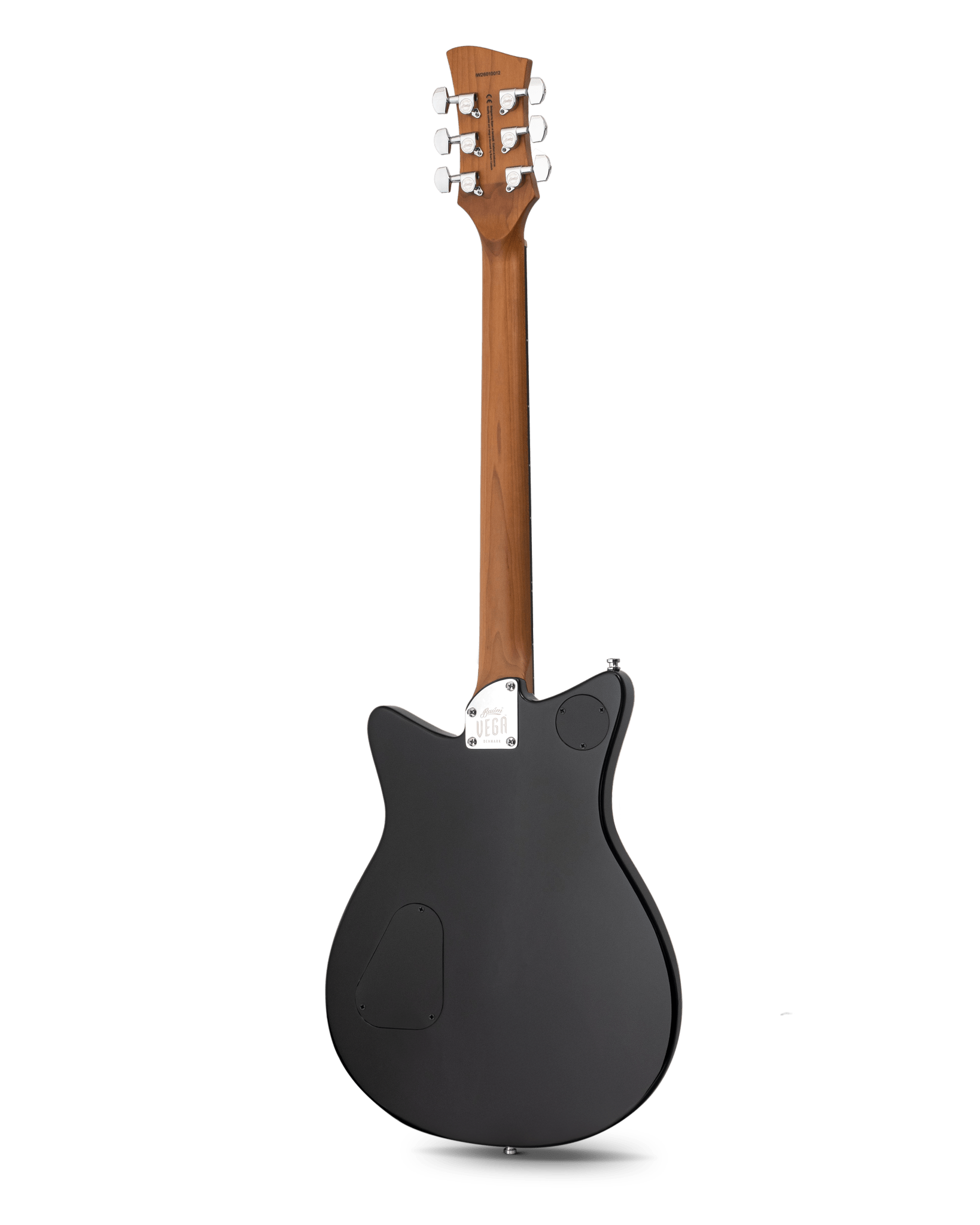
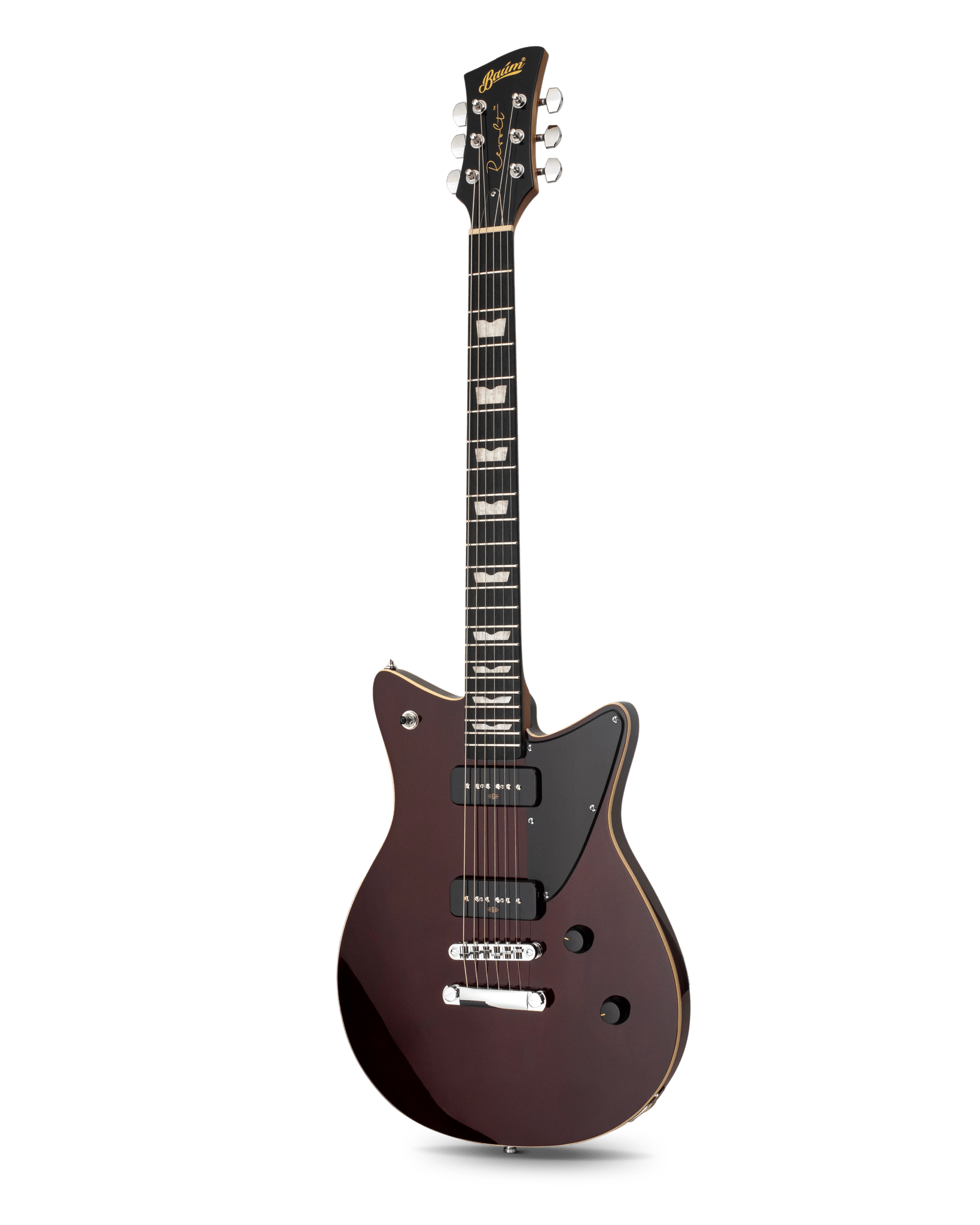
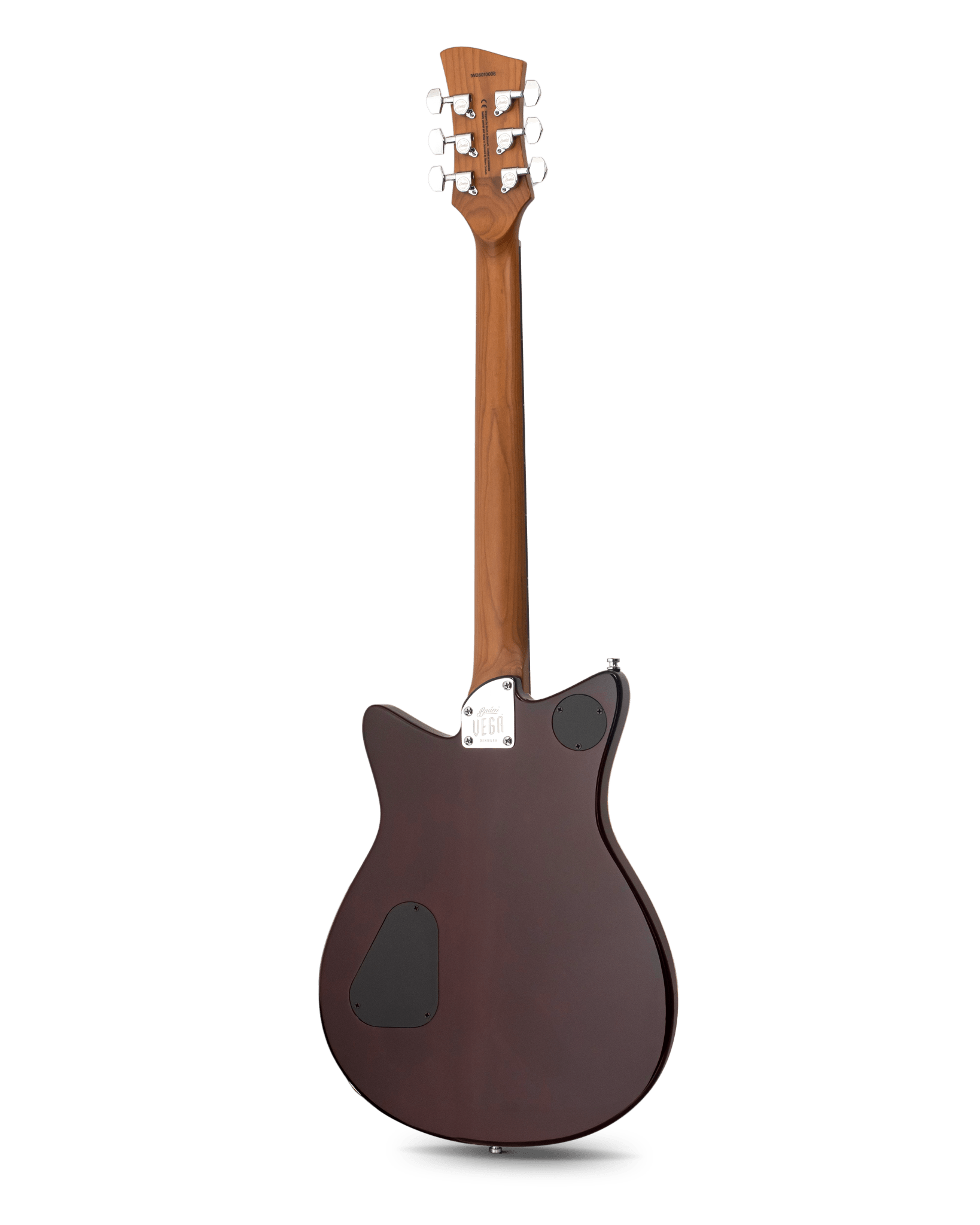
In the Baum lineup, two models cover solid body territory. The Carve is a modern SG-style double-cut built around Goldsound® Ember™ P-90 pickups, raw and mid-forward in character. The Revolt is the classic-leaning double-cut interpretation of the same format, with rounded vintage-derived body contours and rock 'n' roll attitude. Both use the same Ember™ P-90 pickup platform, but the body geometry and tonal character differ enough to place them in distinct spots within Baum's broader solid body electric guitar selection.
Semi-hollow electric guitars
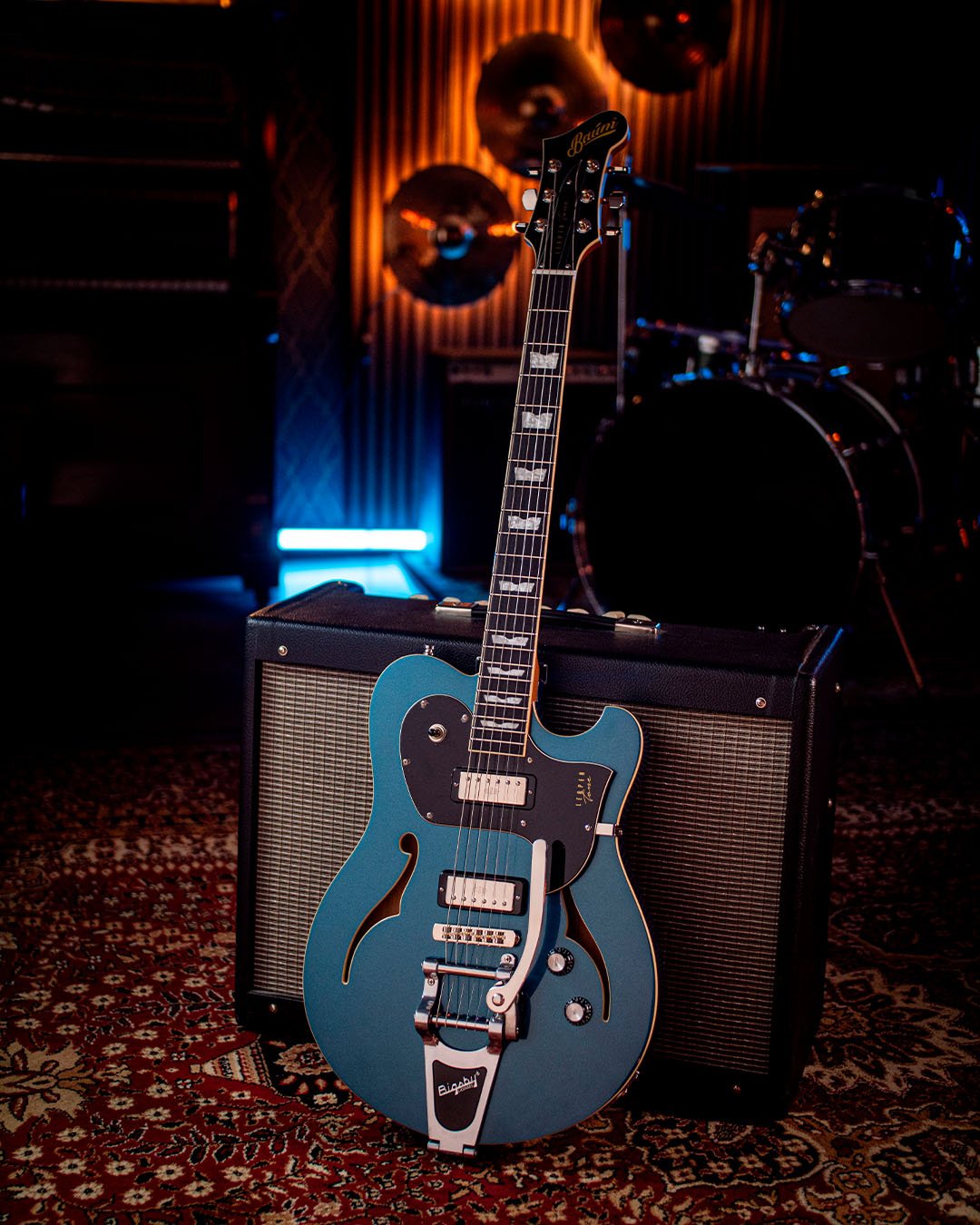
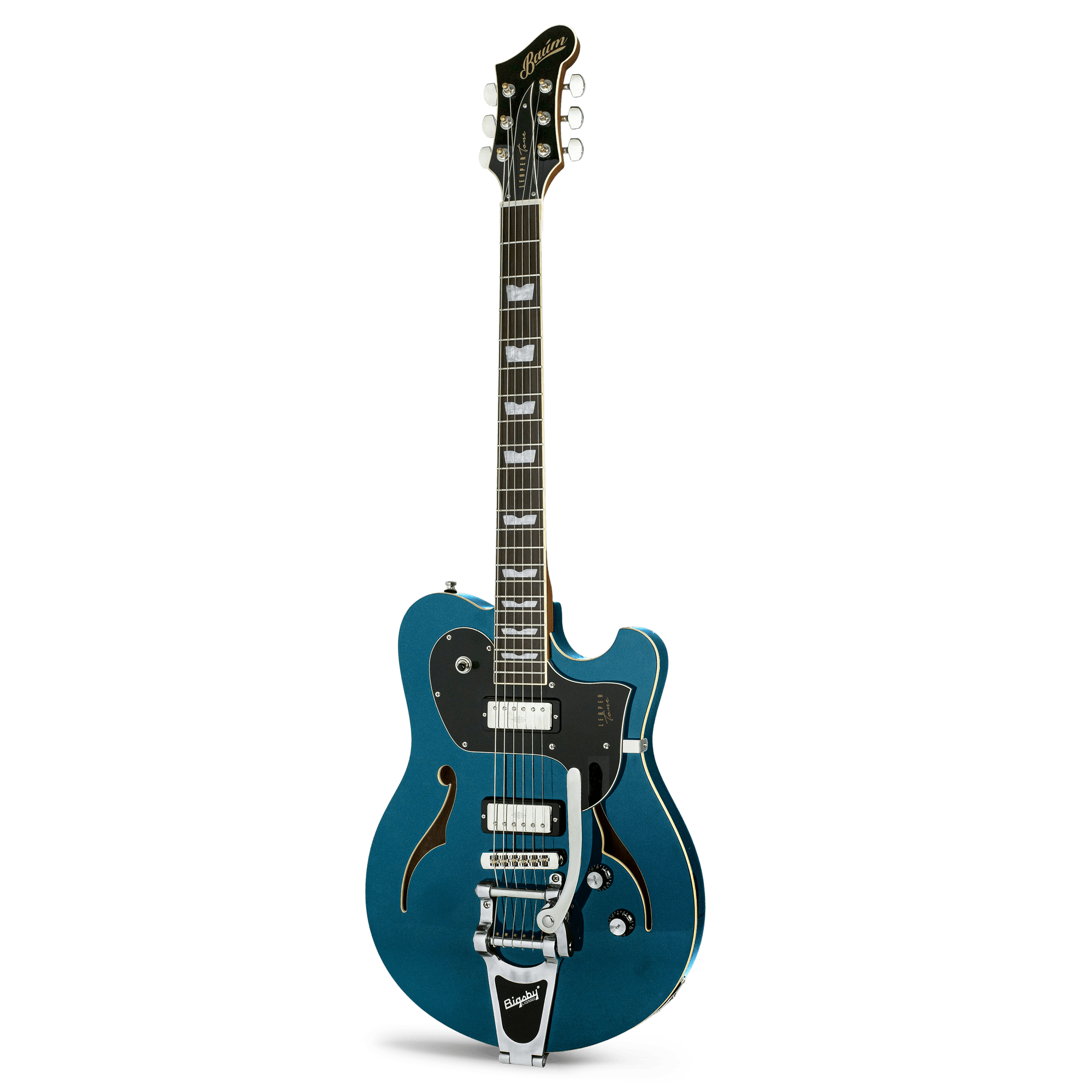
Semi-hollow construction adds a chambered body cavity with a solid center block underneath the pickups. The chambered wings of the body produce natural air movement and acoustic resonance, while the solid center block reduces the feedback problems that limit fully hollow guitars at high stage volumes. The format was popularized in the late 1950s by ES-style archtops and has been a cornerstone of jazz, blues, blues-rock, alt-rock and indie playing ever since. Semi-hollow guitars sound different from solid bodies because the resonance is part of the instrument's tonal signature, not just a byproduct of construction.
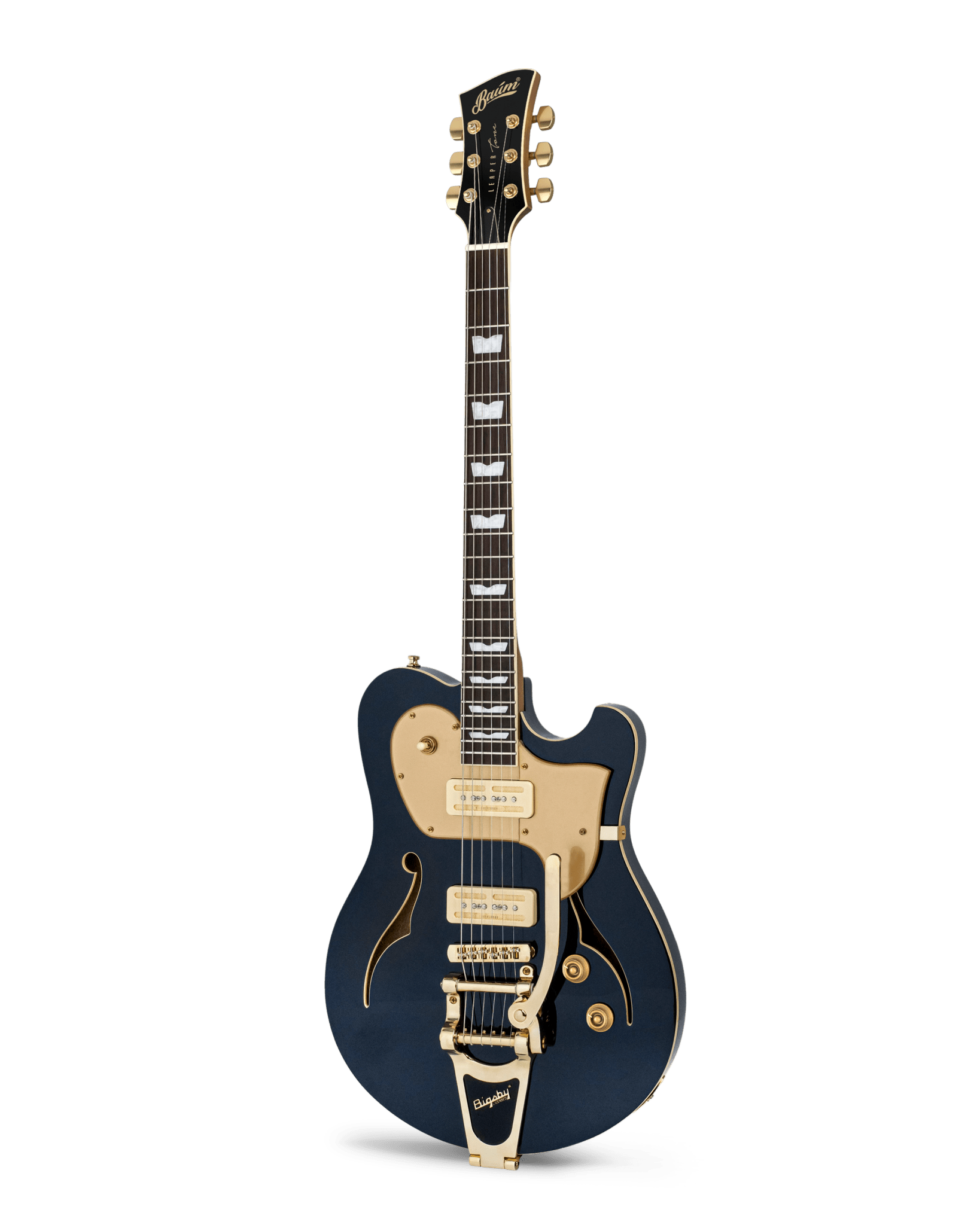
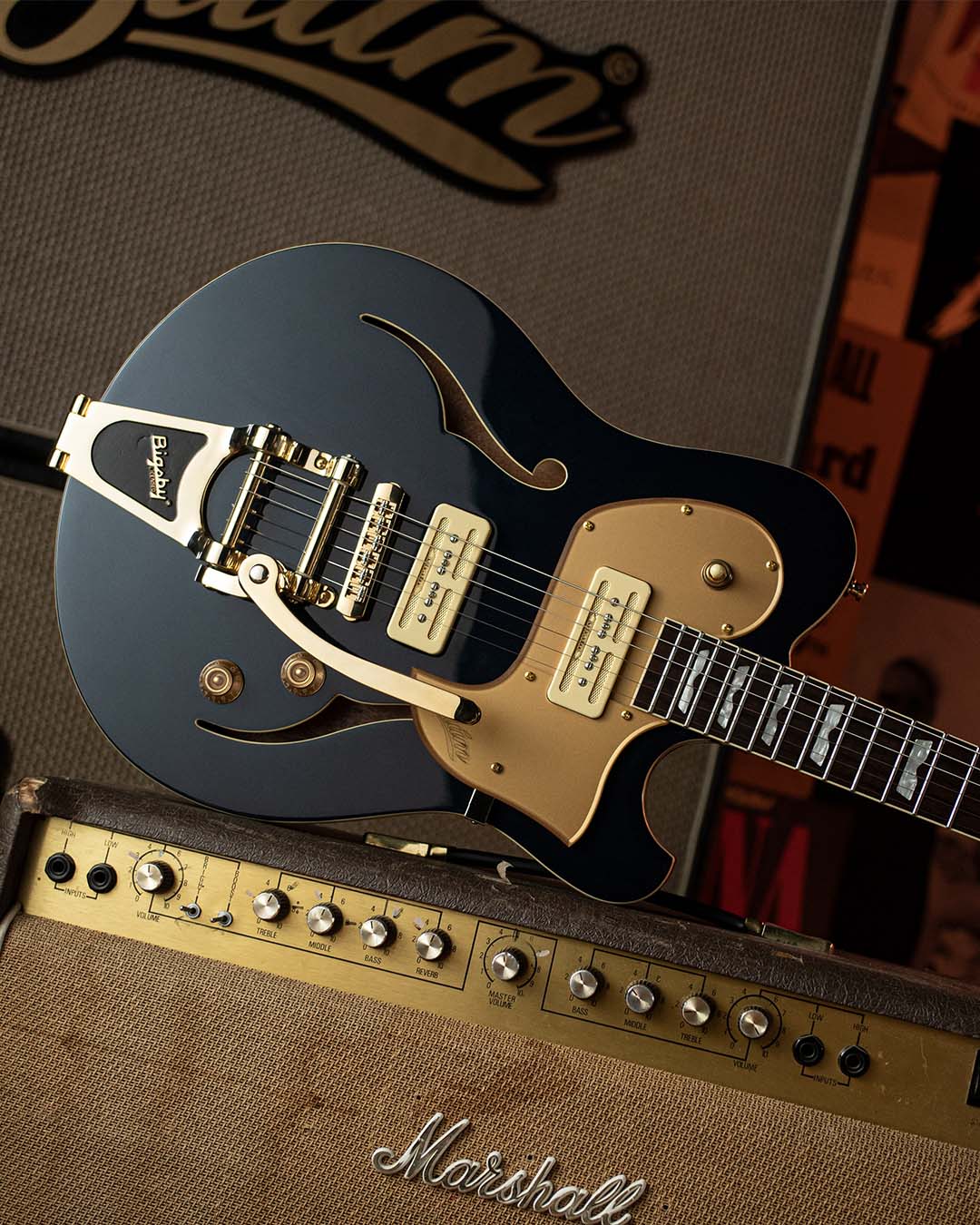
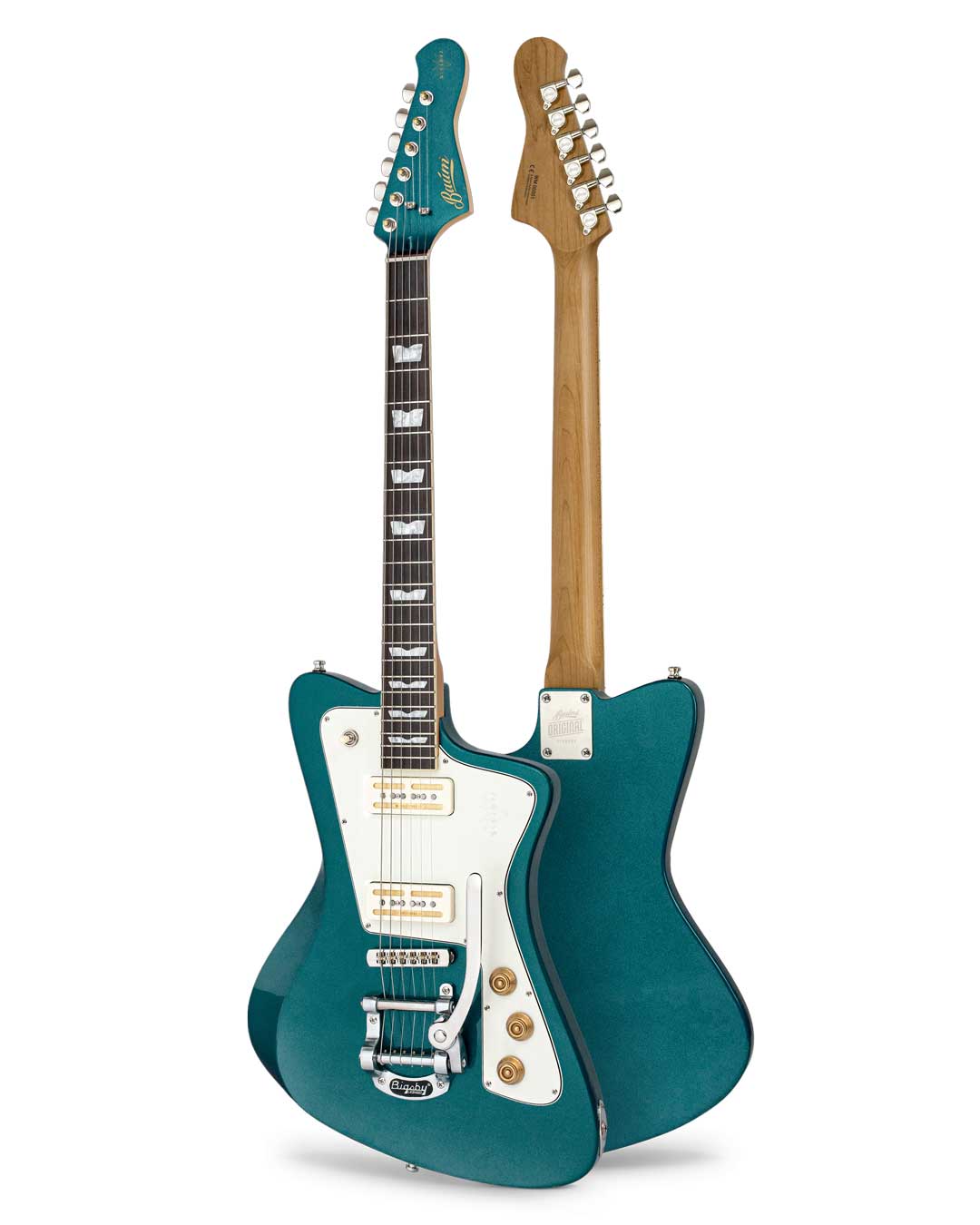
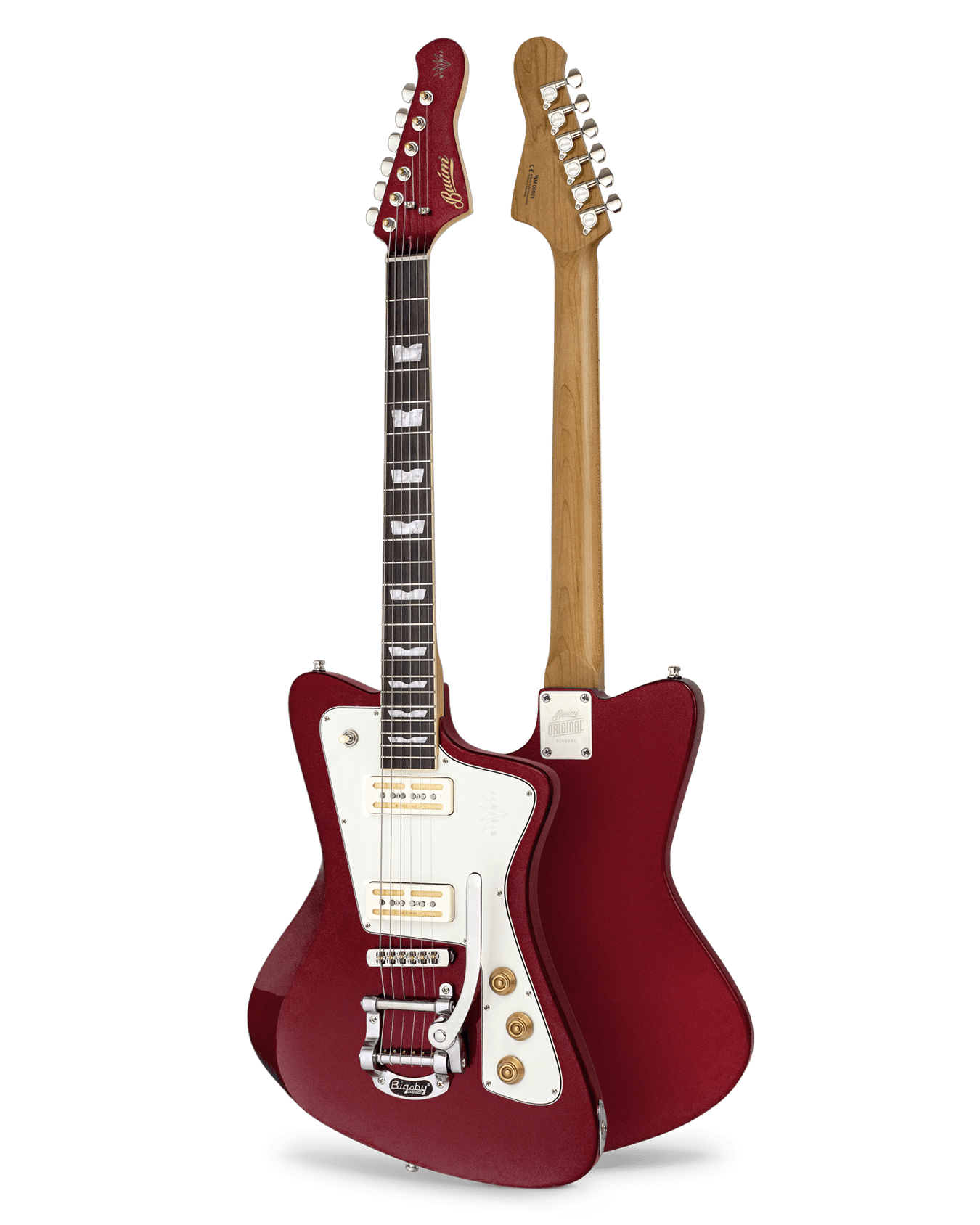
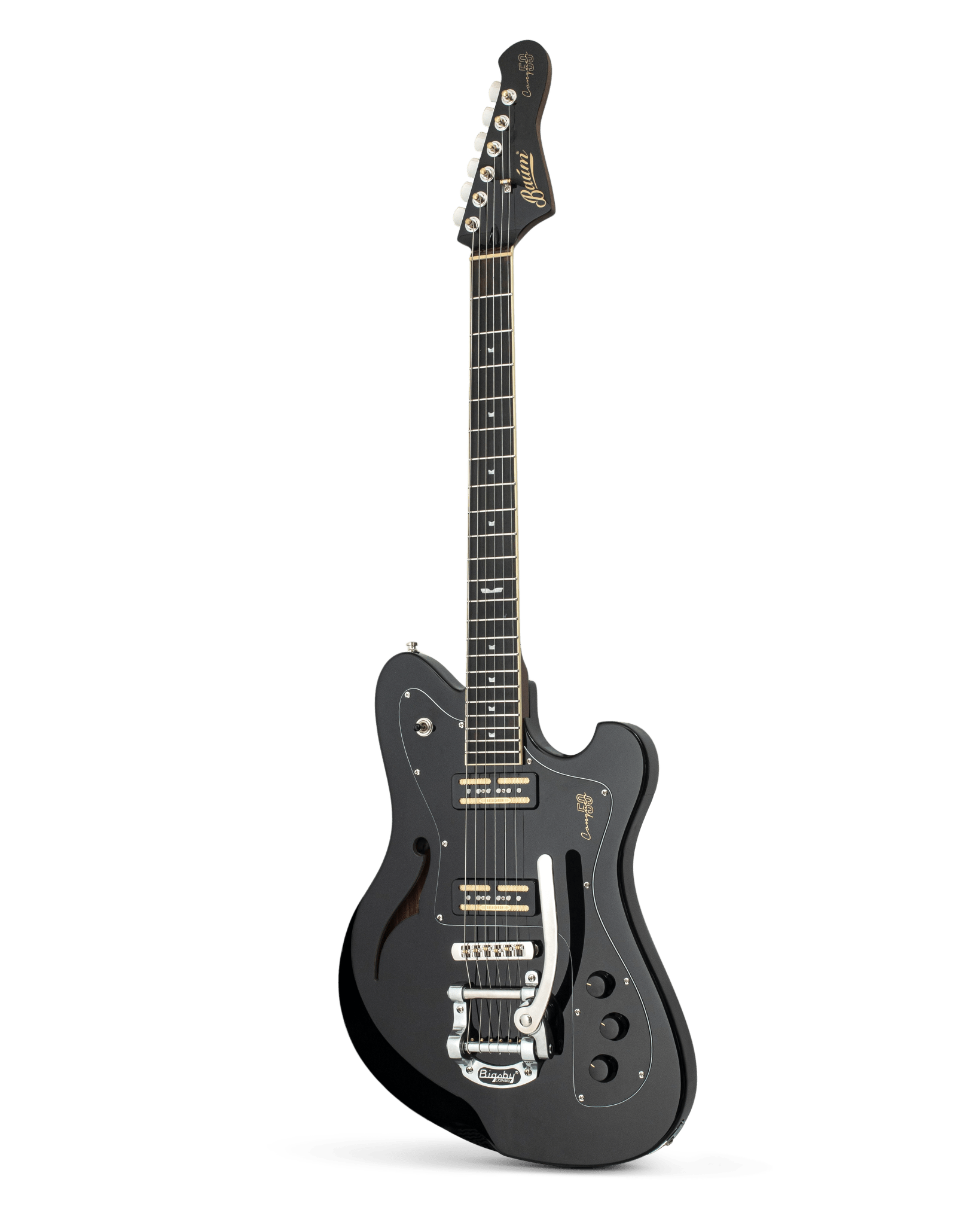
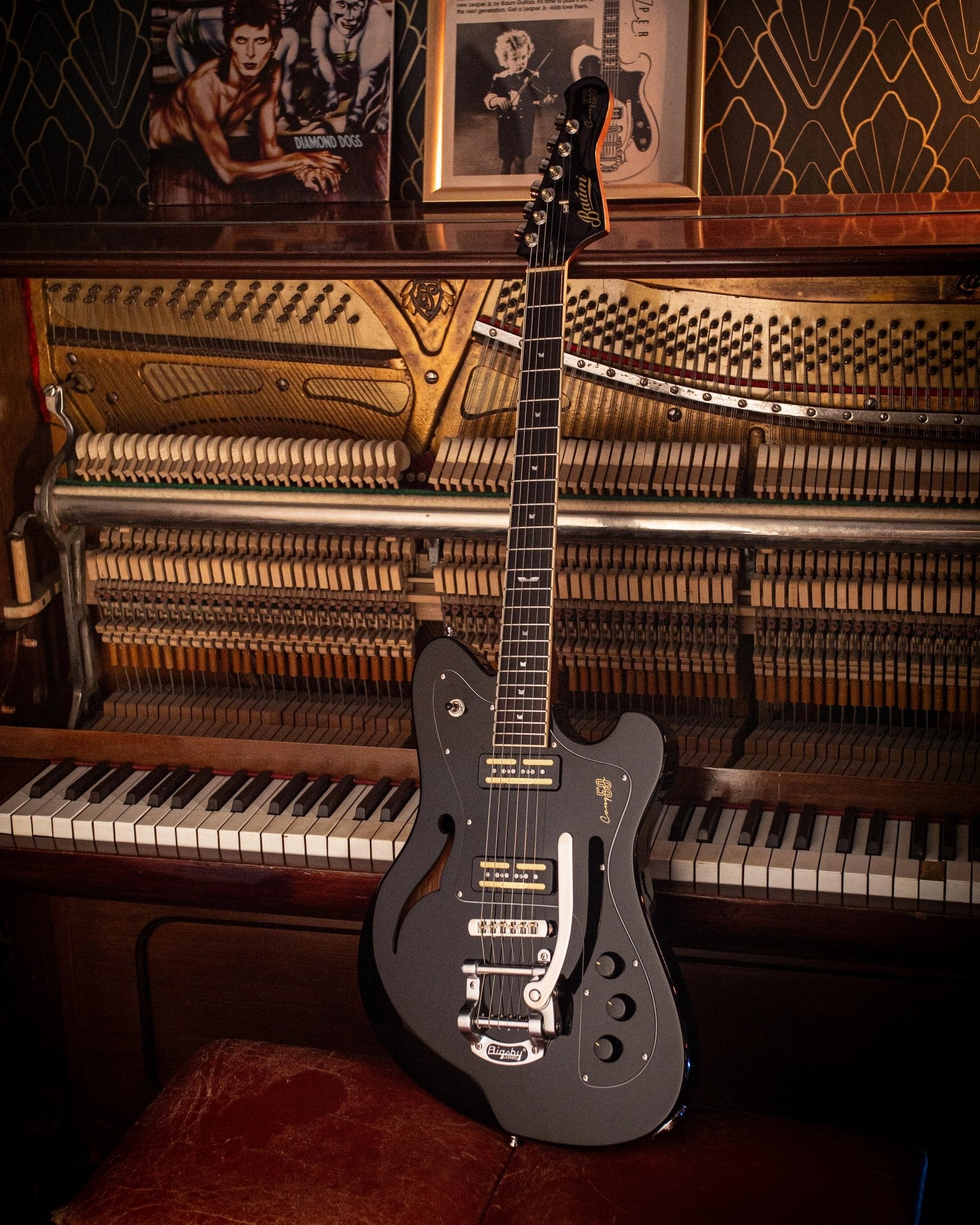
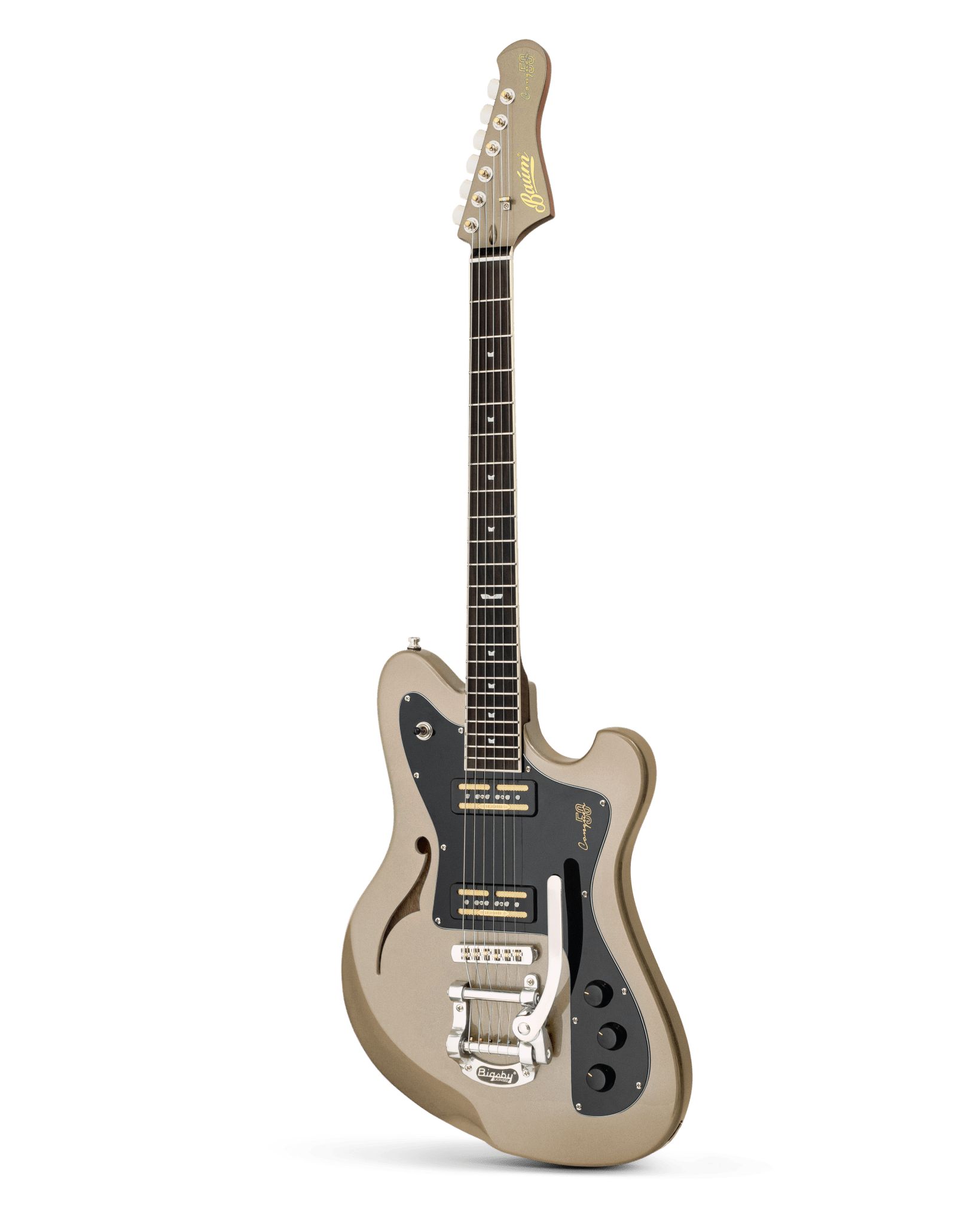
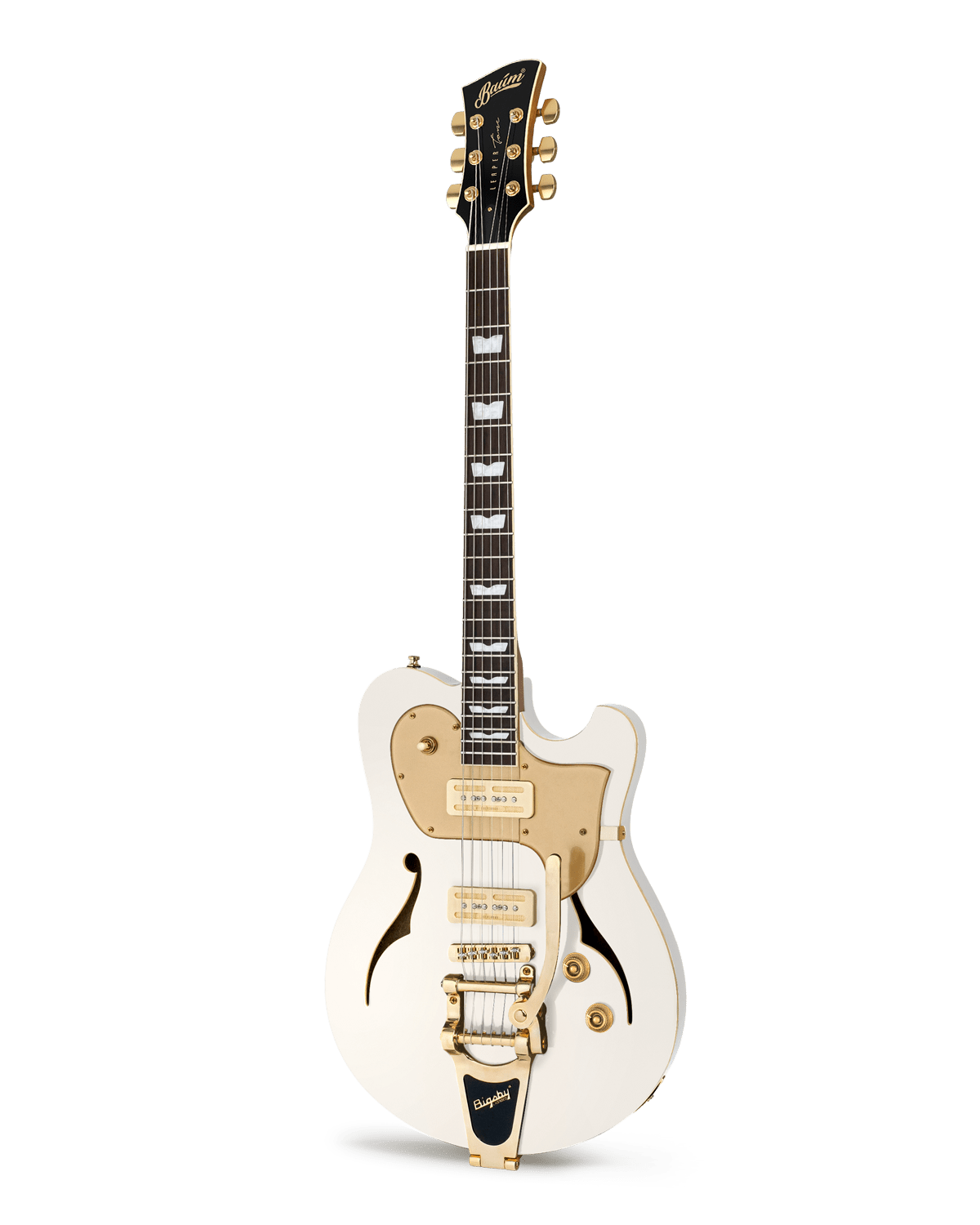
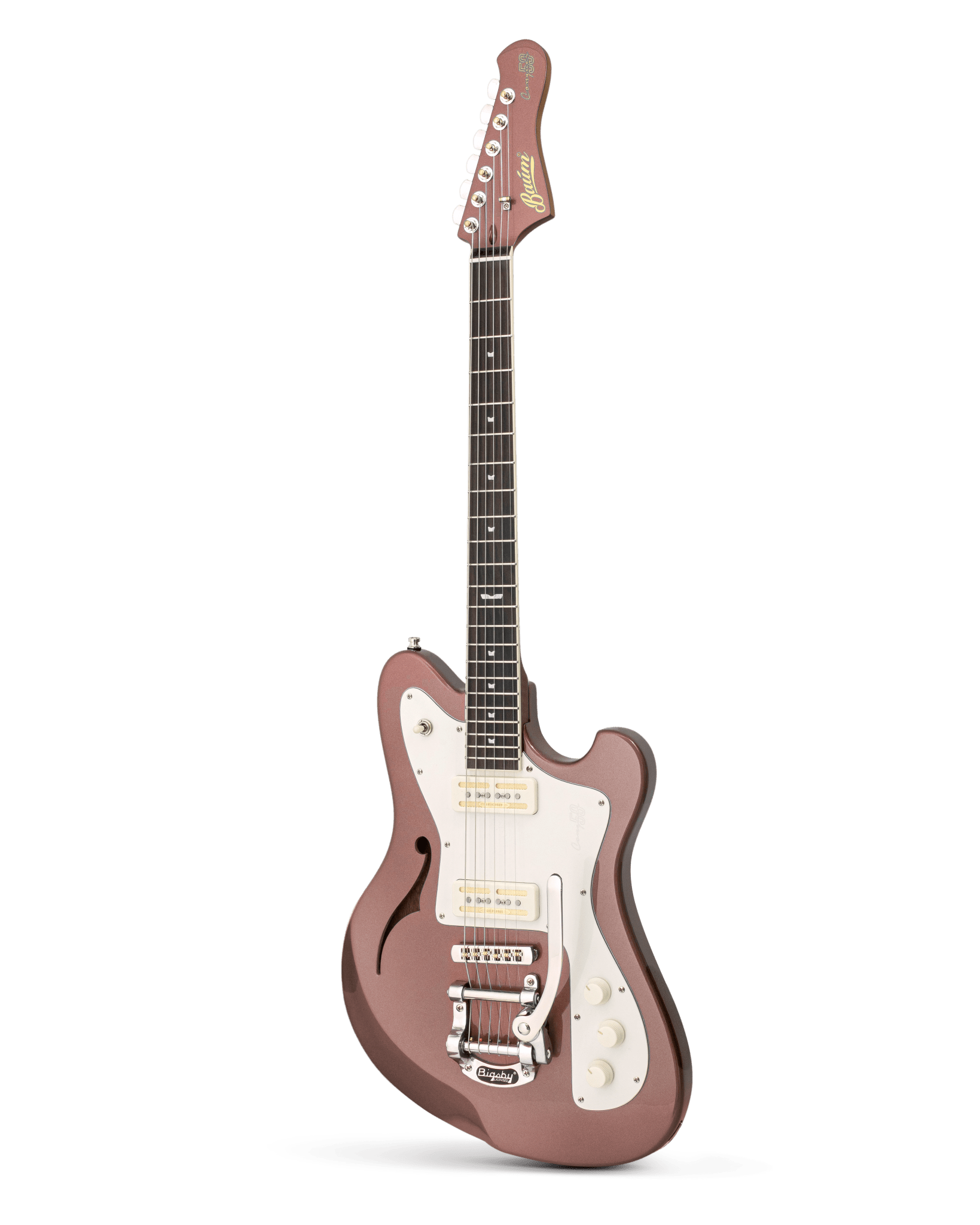
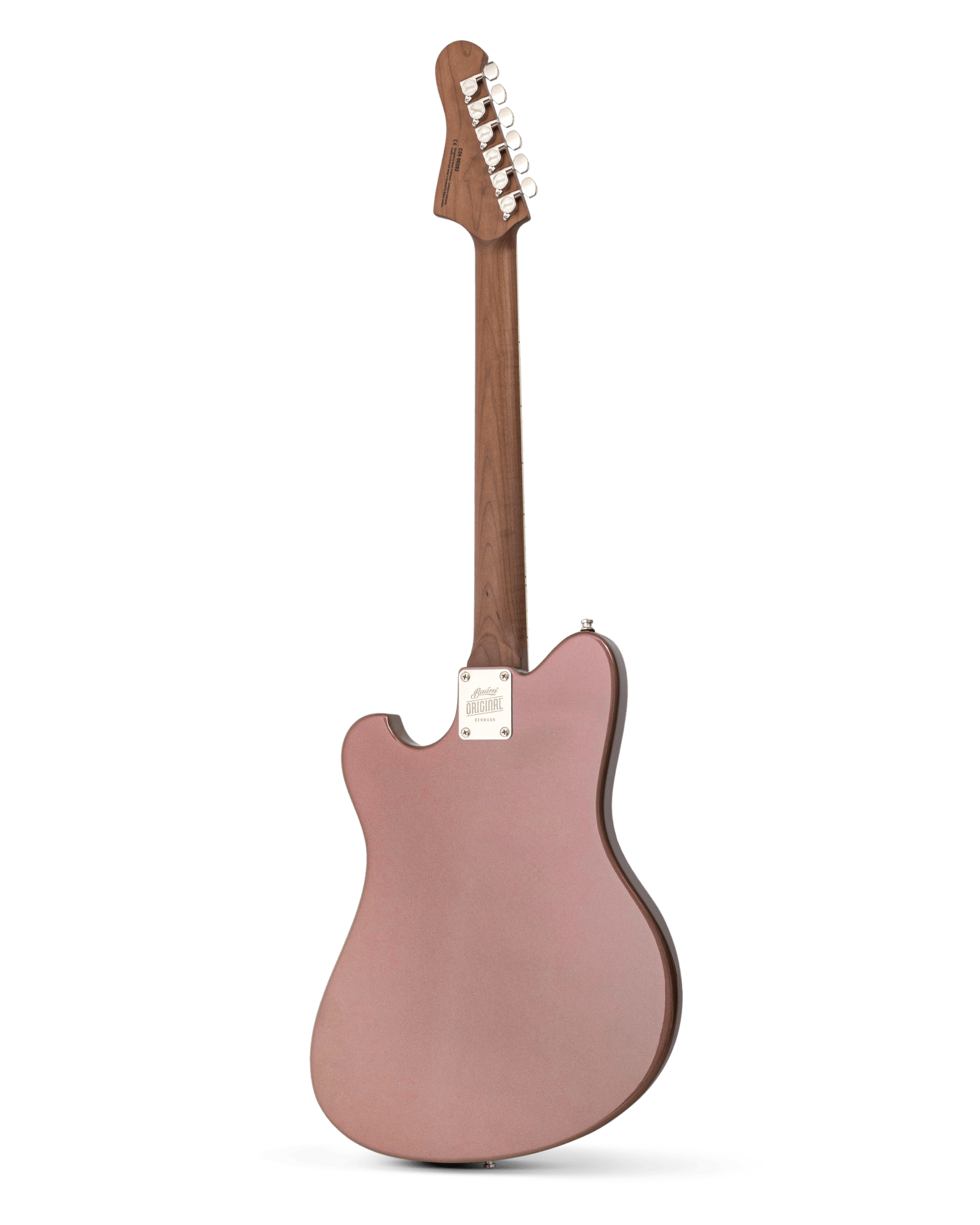
Within Baum's semi-hollow electric guitar selection, two models cover different corners of the format. The Conquer 59 is a semi-hollow offset with Bigsby B50 vibrato and Goldsound® Jabmaster single coils, bridging the offset and semi-hollow universes in a way few modern guitars attempt. The Leaper Tone is the traditional semi-hollow that started Baum in 2015, built around Goldsound® Rewind '52 P-90 pickups and Bigsby B70 vibrato.
Offset electric guitars
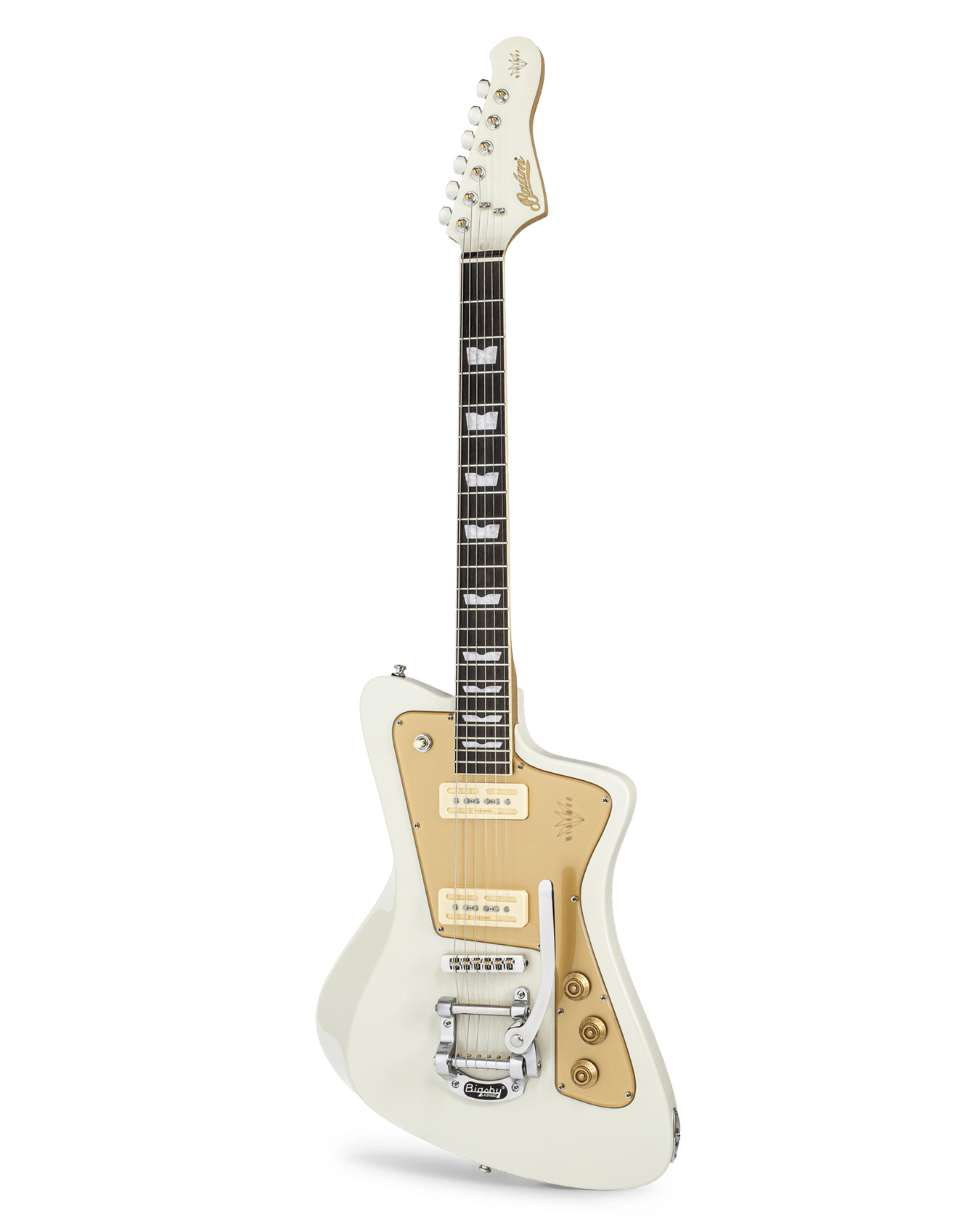
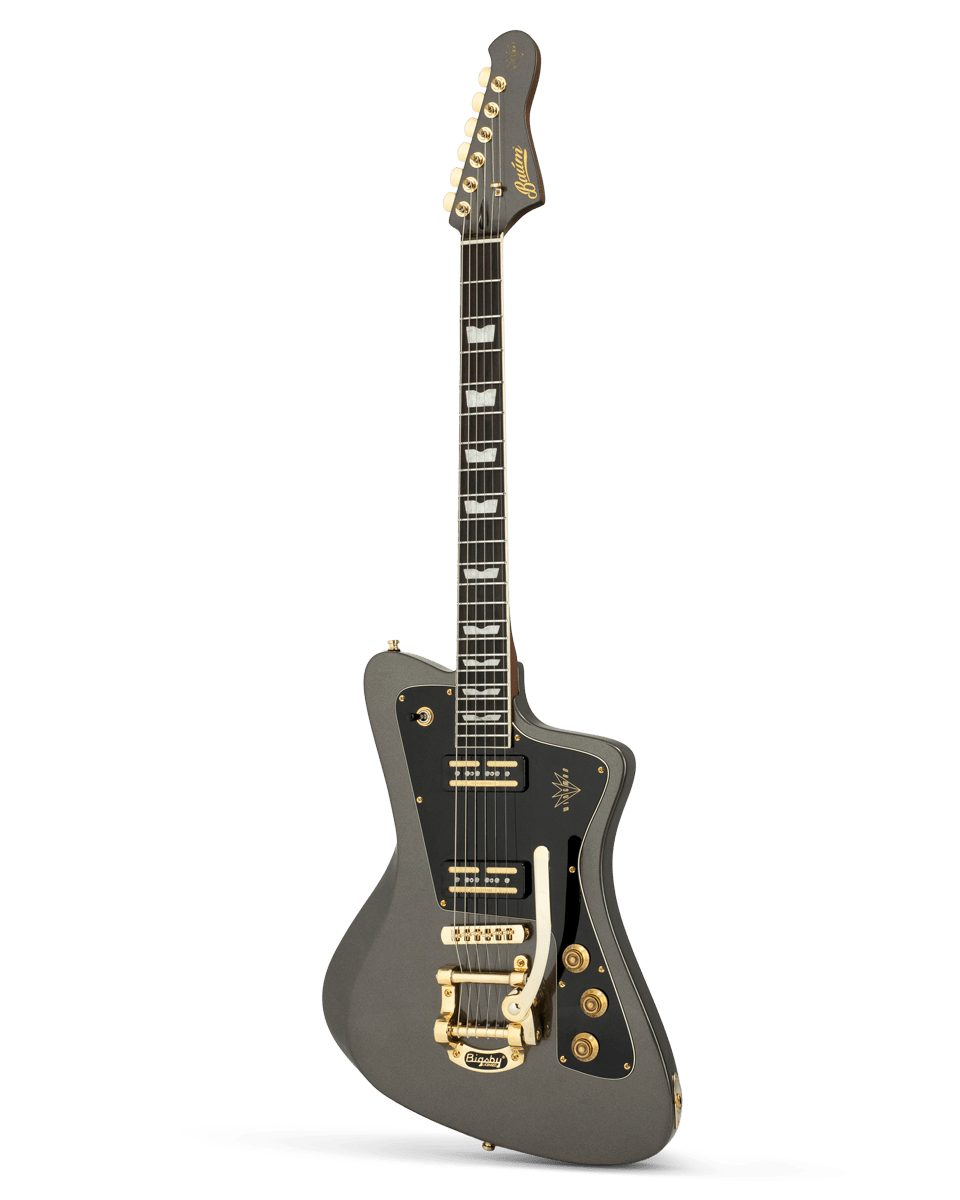
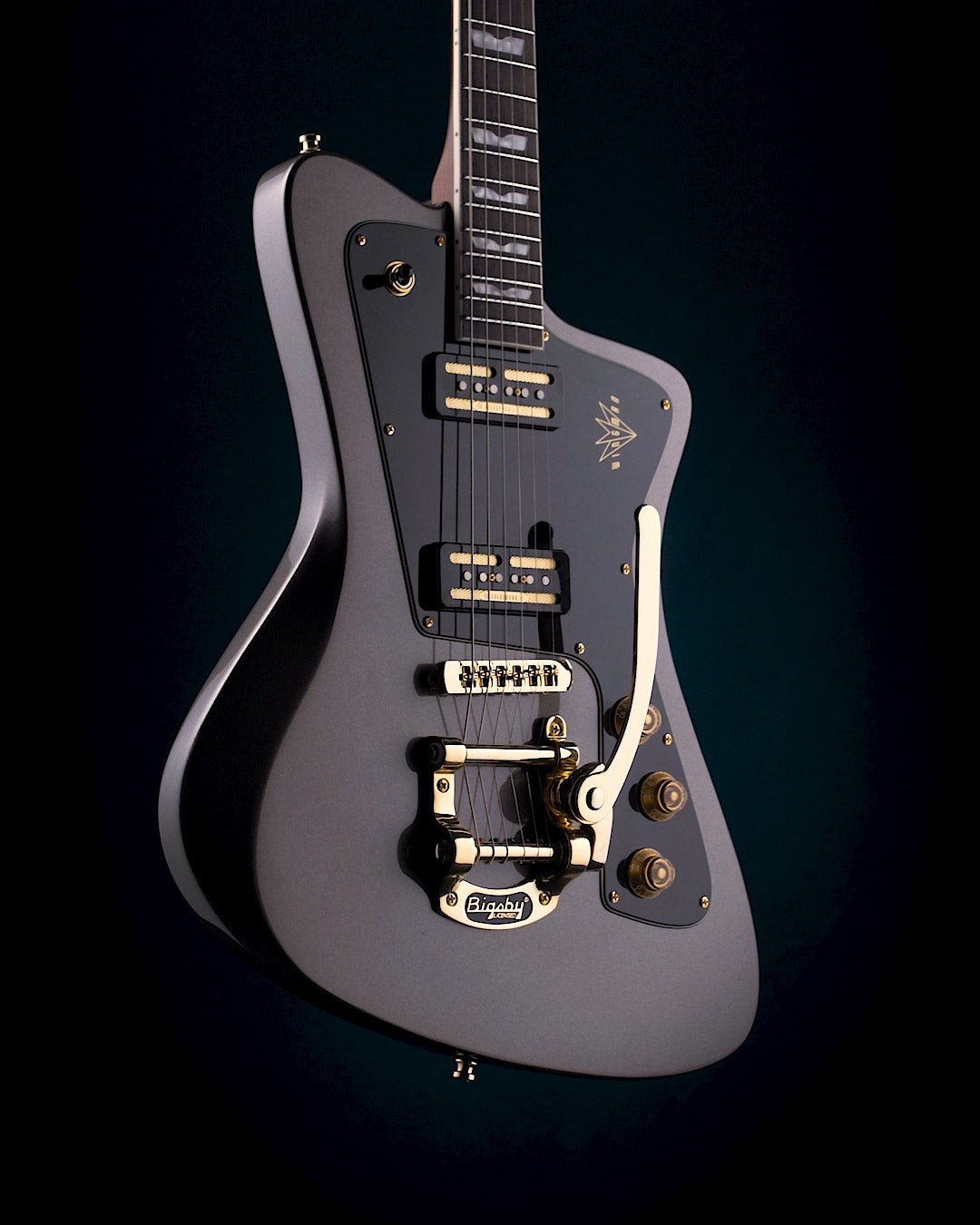
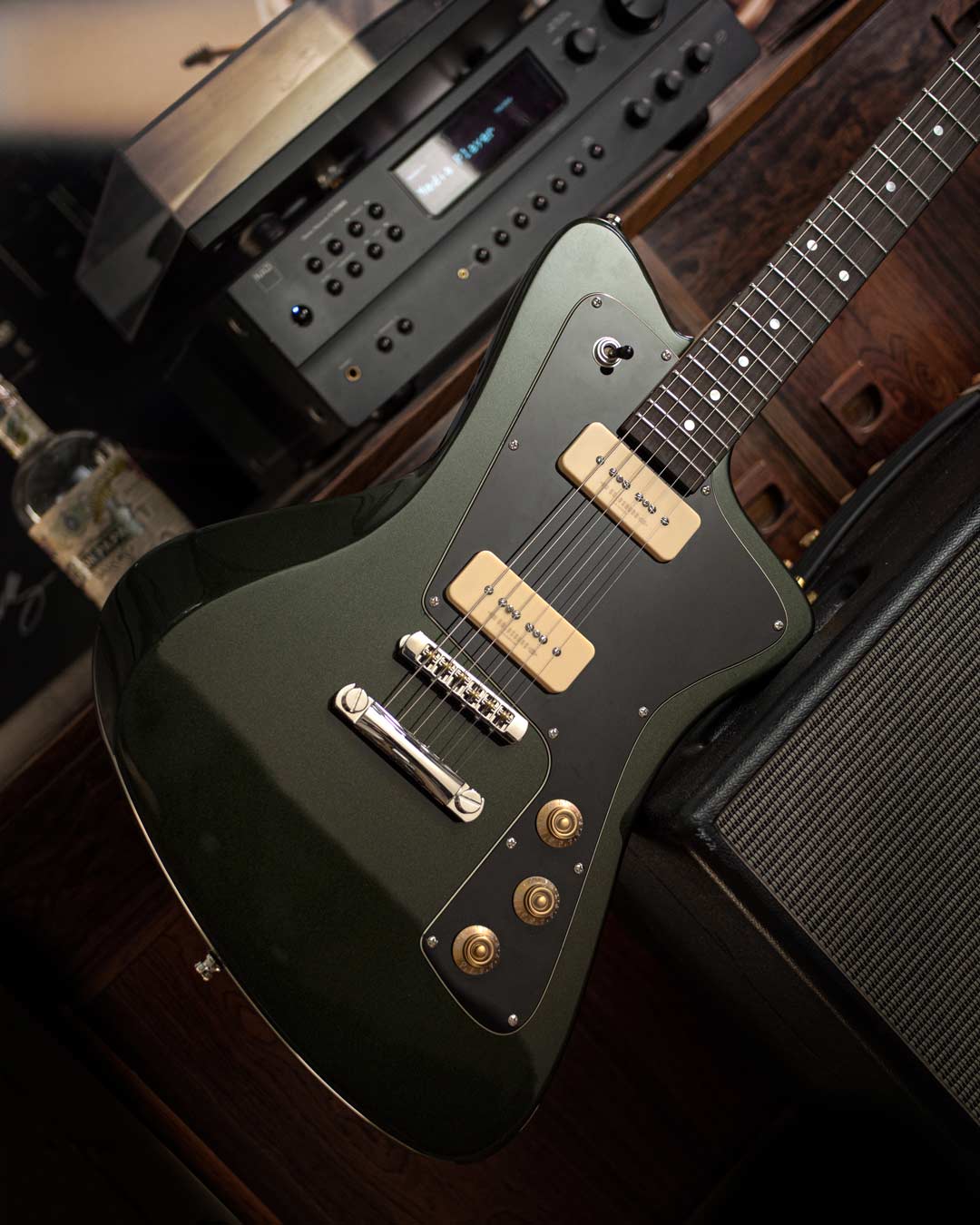
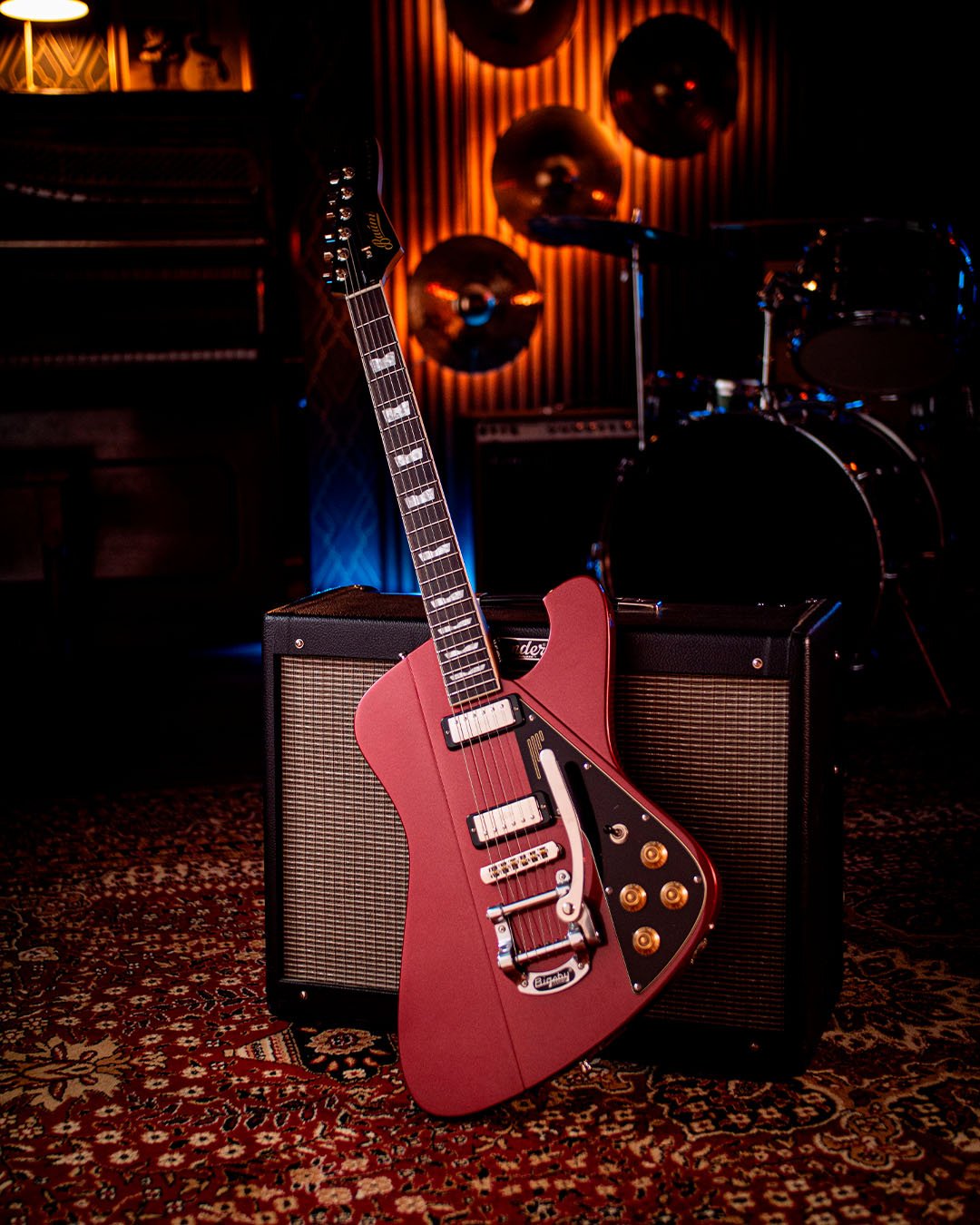
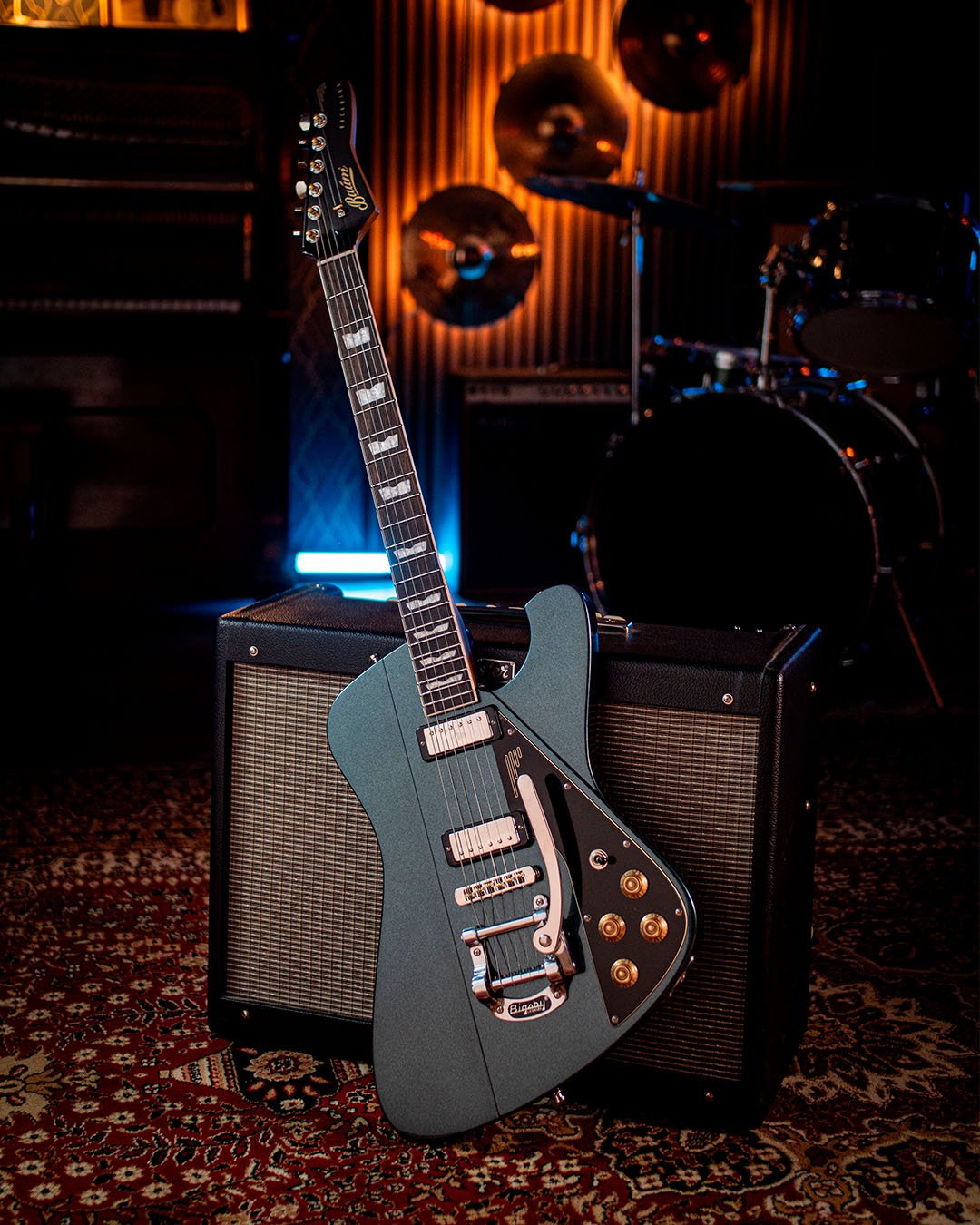
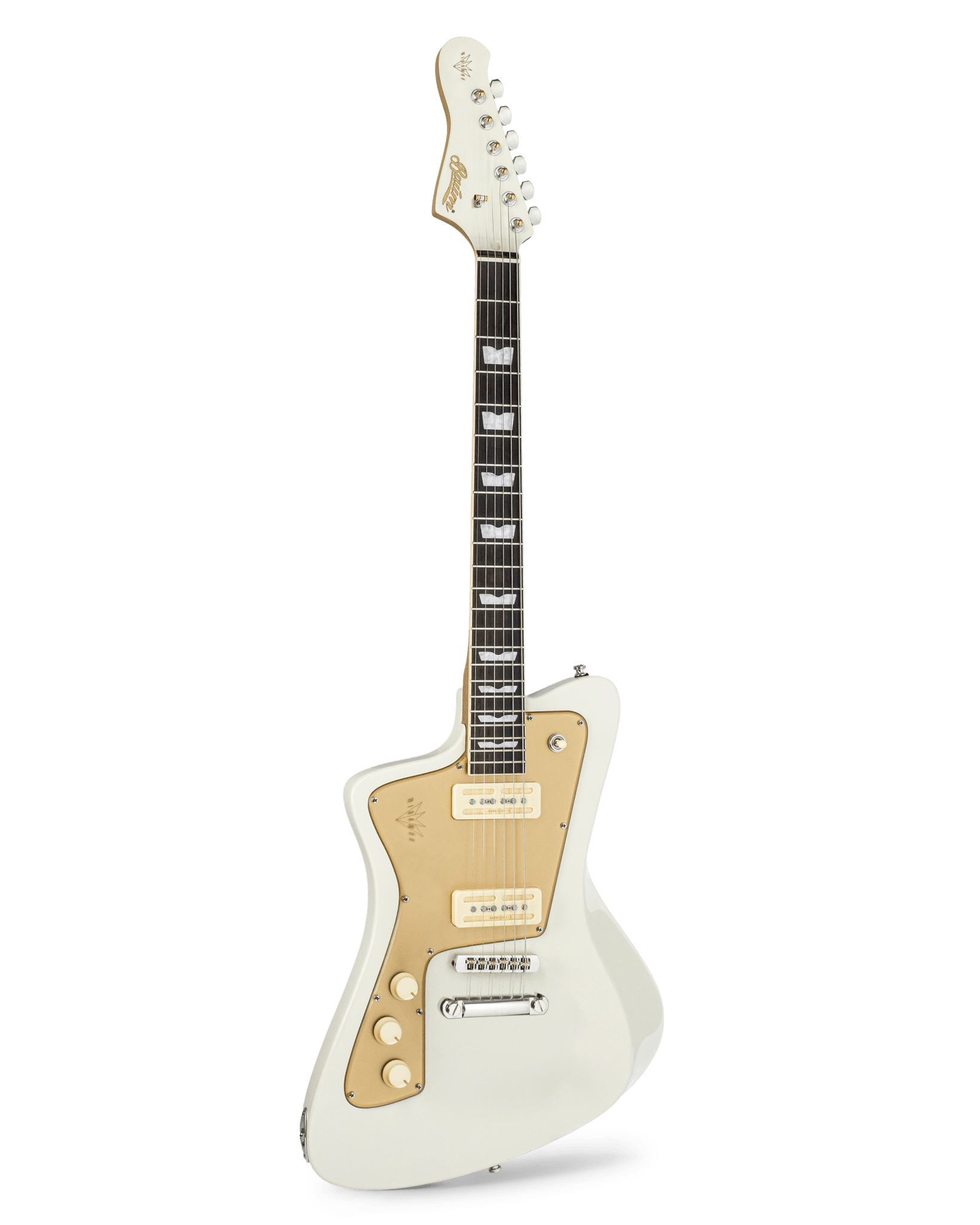
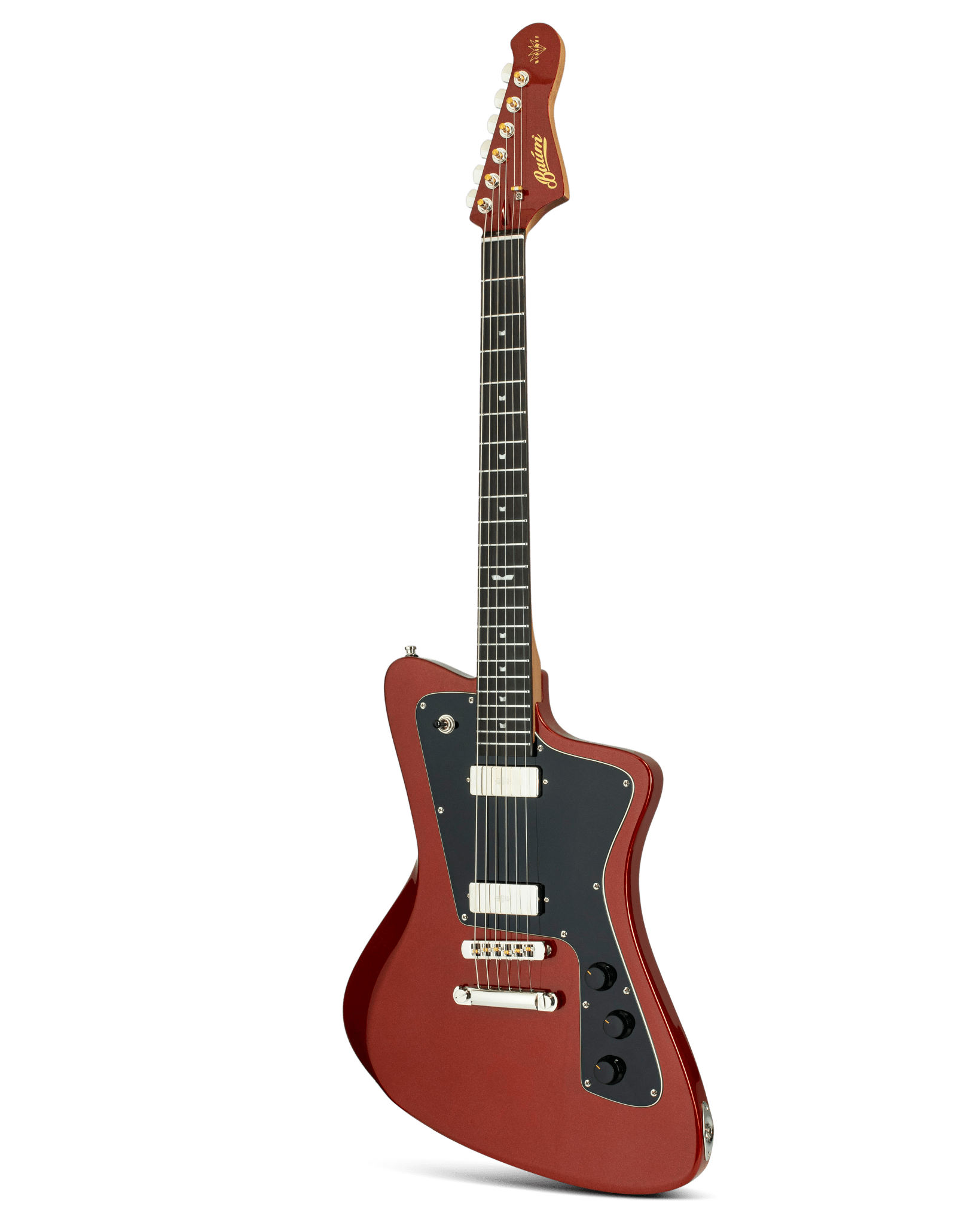
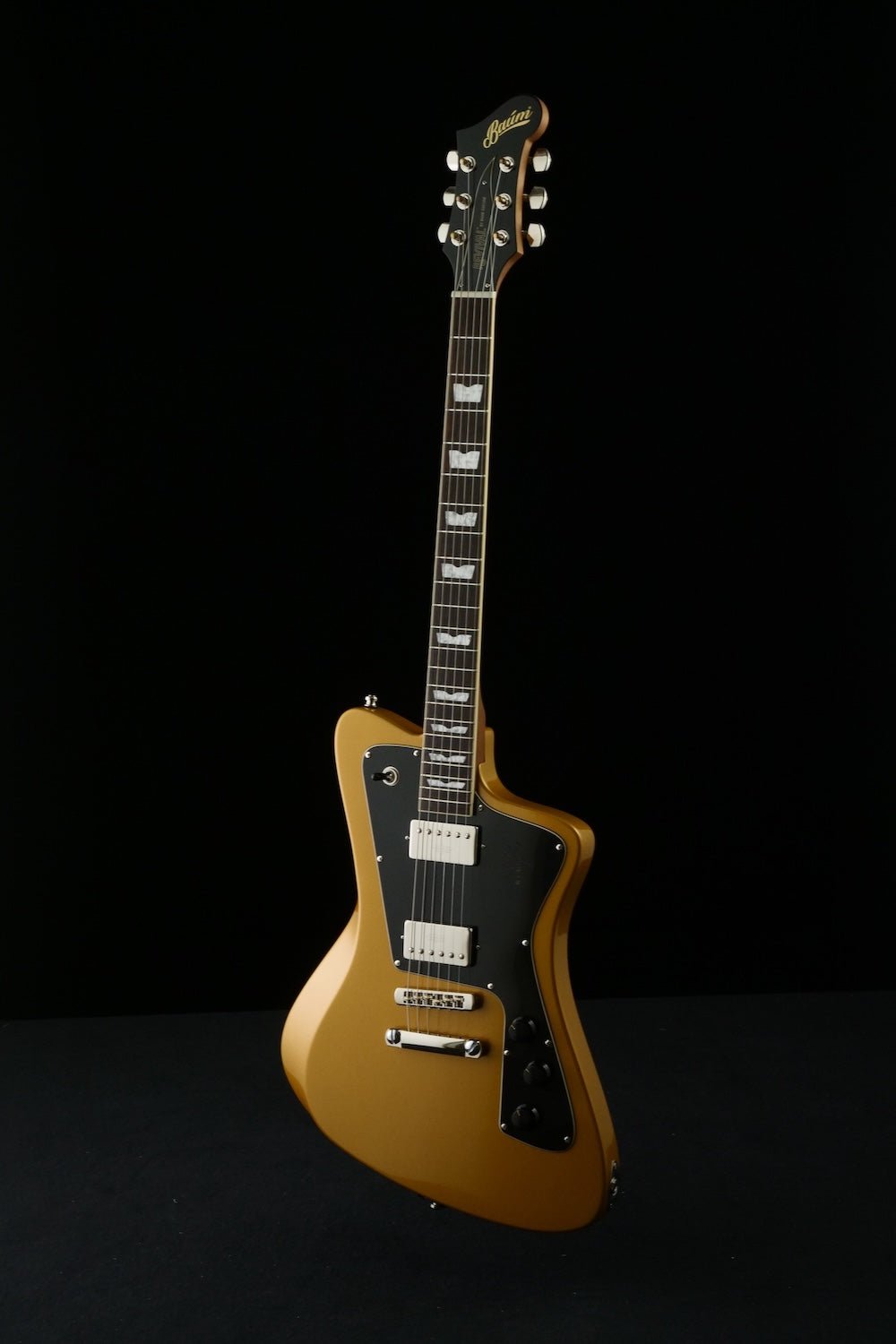
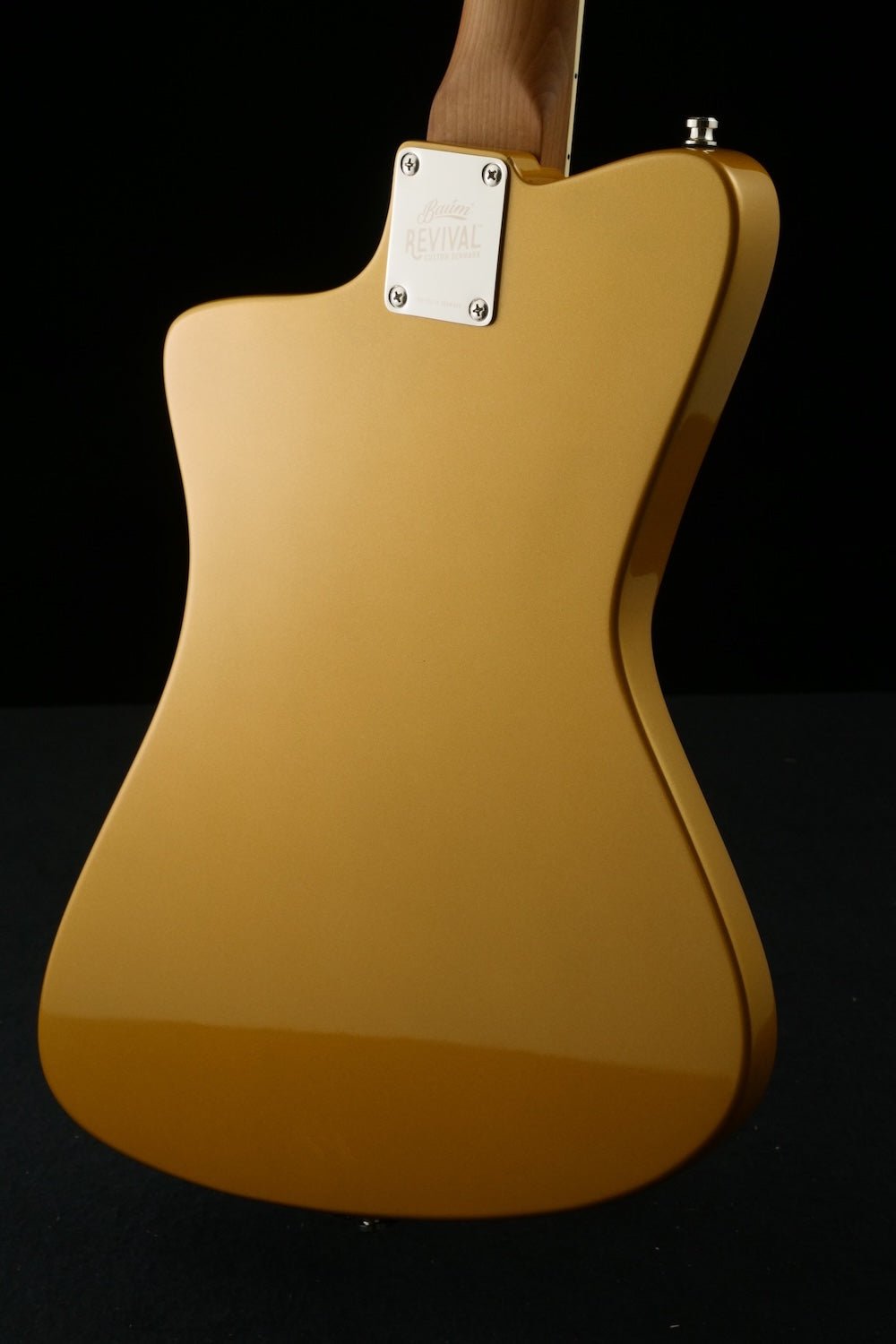
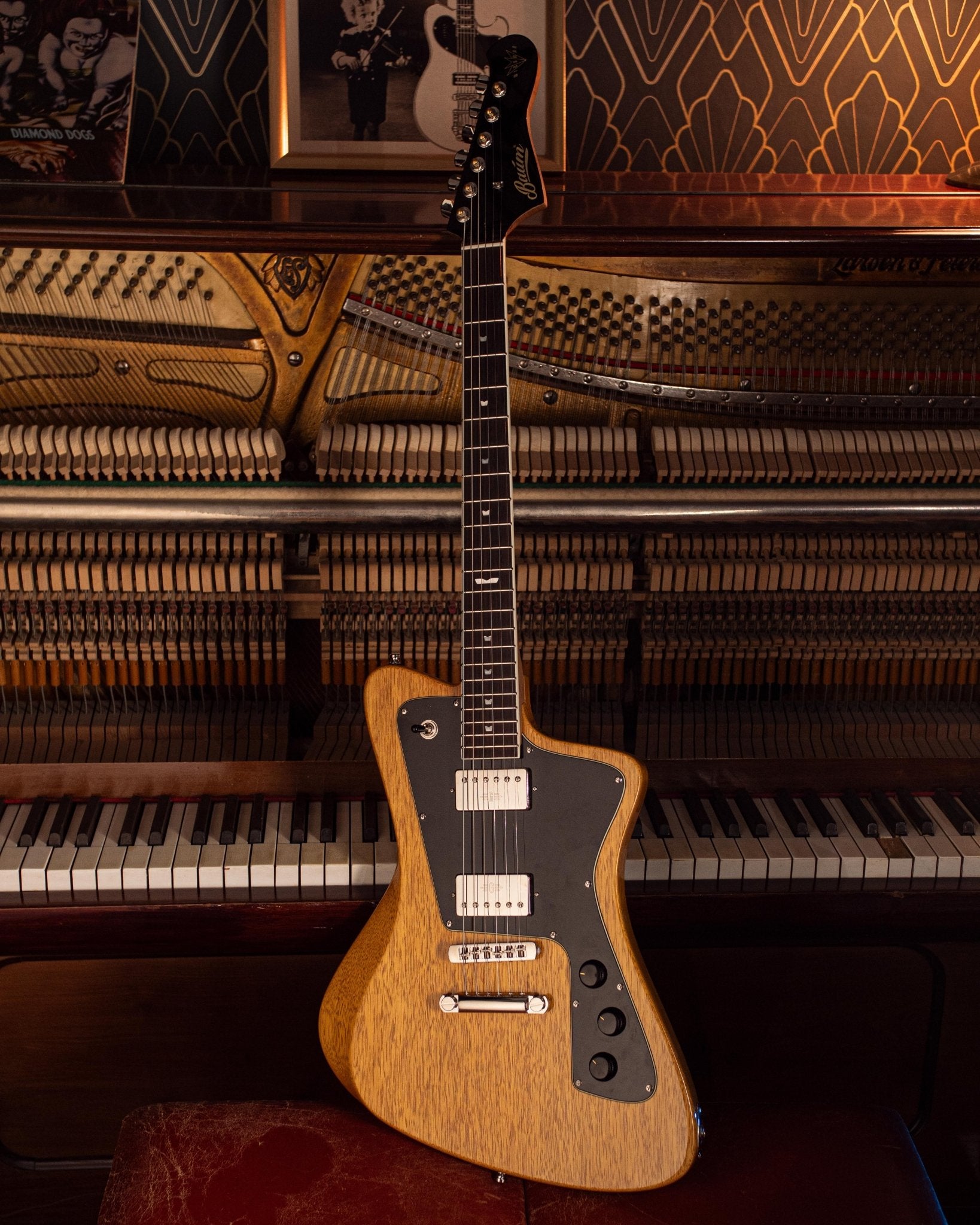
The offset body shape appeared in the early 1960s as an alternative to the symmetric contours of Les Paul-style and Stratocaster-style designs. The offset format has a longer upper horn, lower body mass and a playing position that balances differently against the strap. The shape shifts the center of gravity in a way that suits players who move on stage rather than sit in a studio. Offset guitars have historically been associated with alternative rock, indie, punk, grunge and shoegaze because the format was adopted by players in those genres who wanted an alternative to mainstream solid body designs.
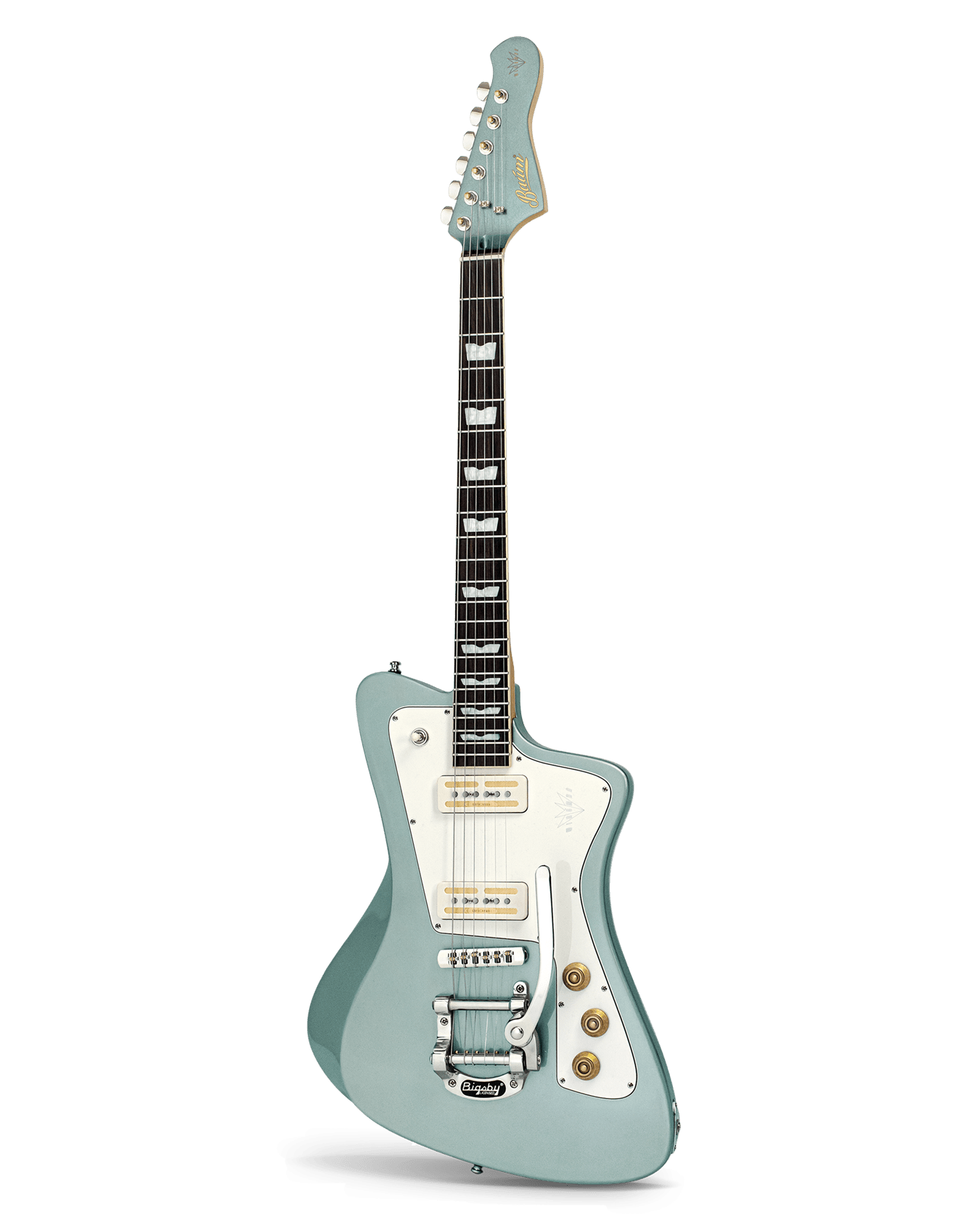
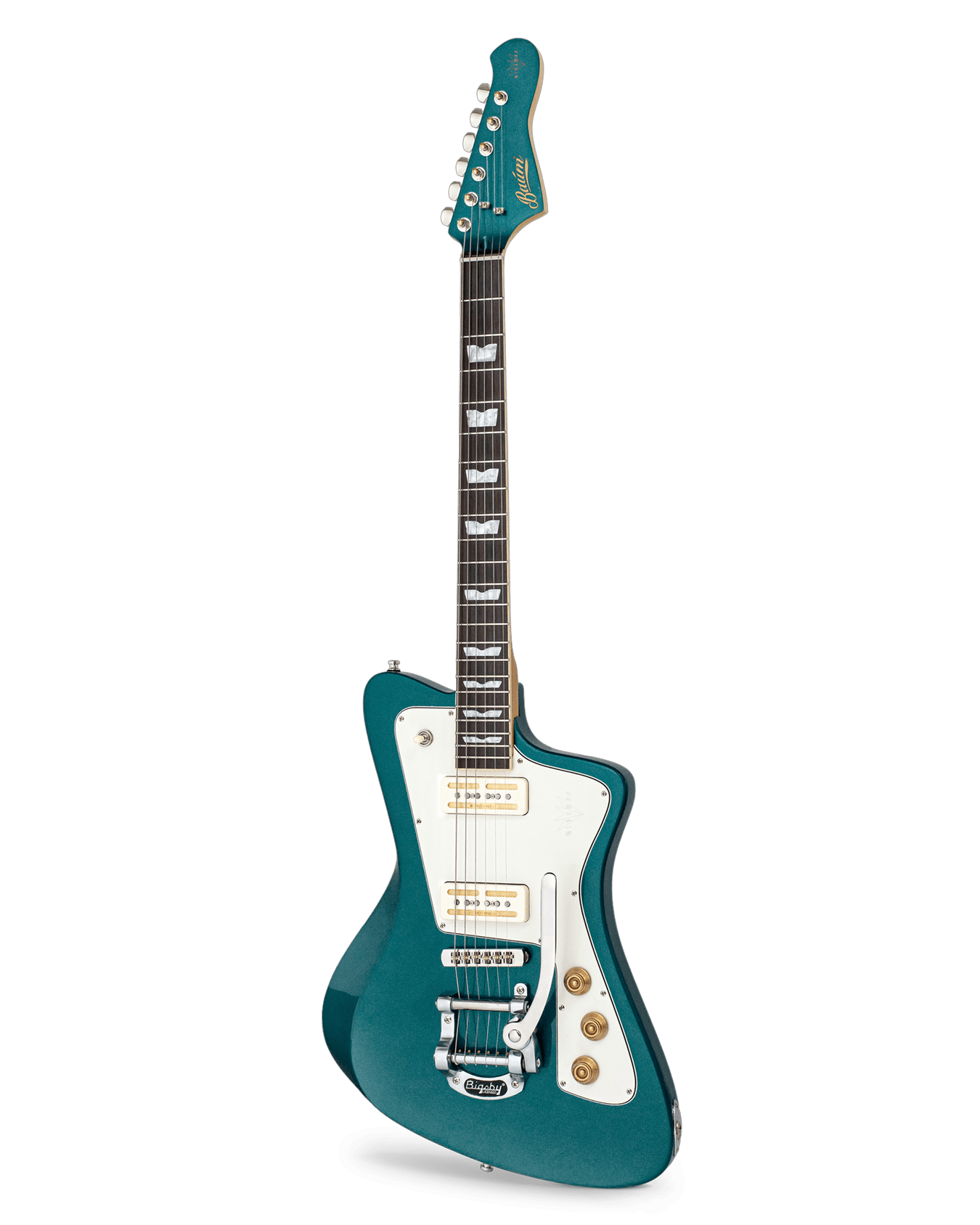
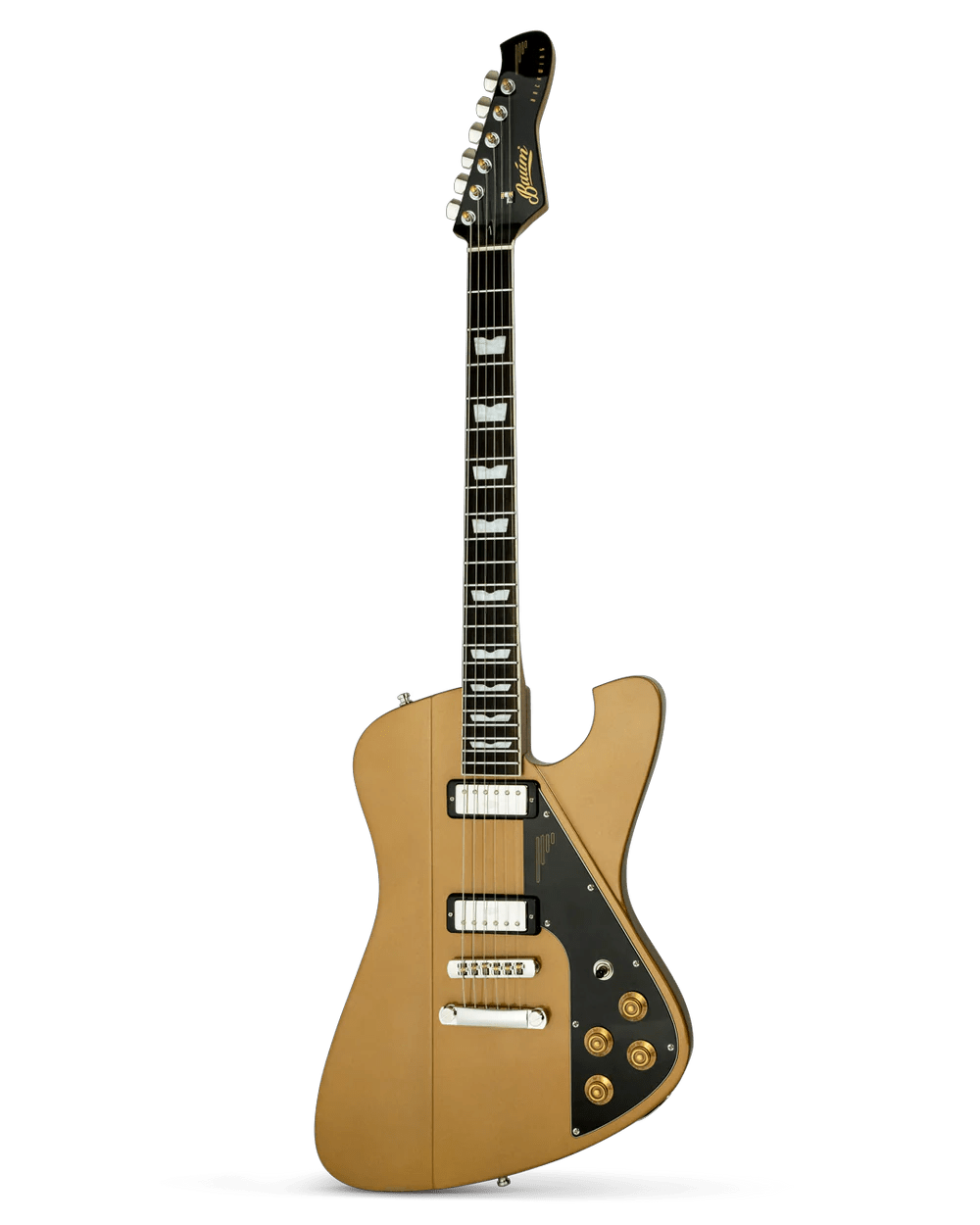
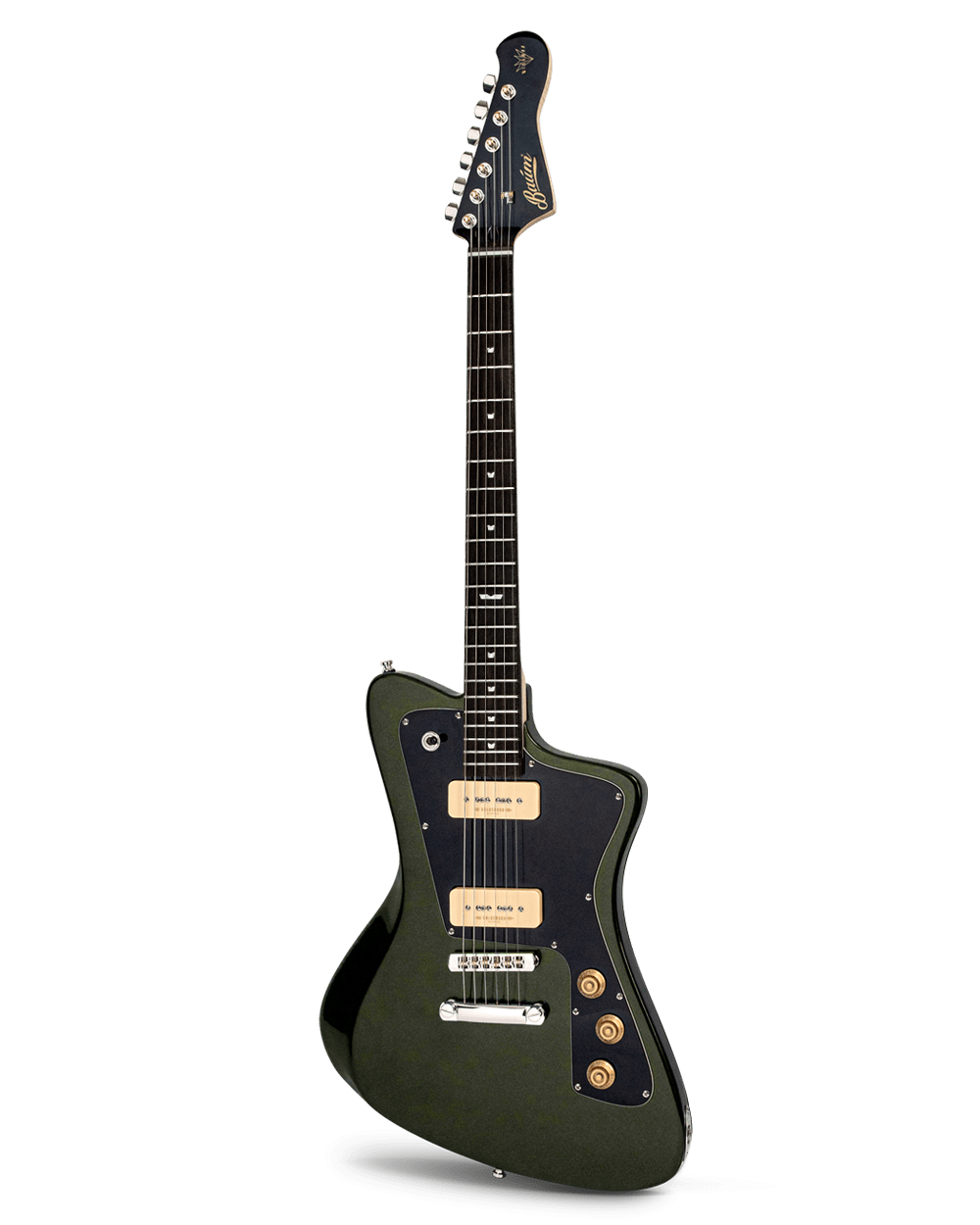
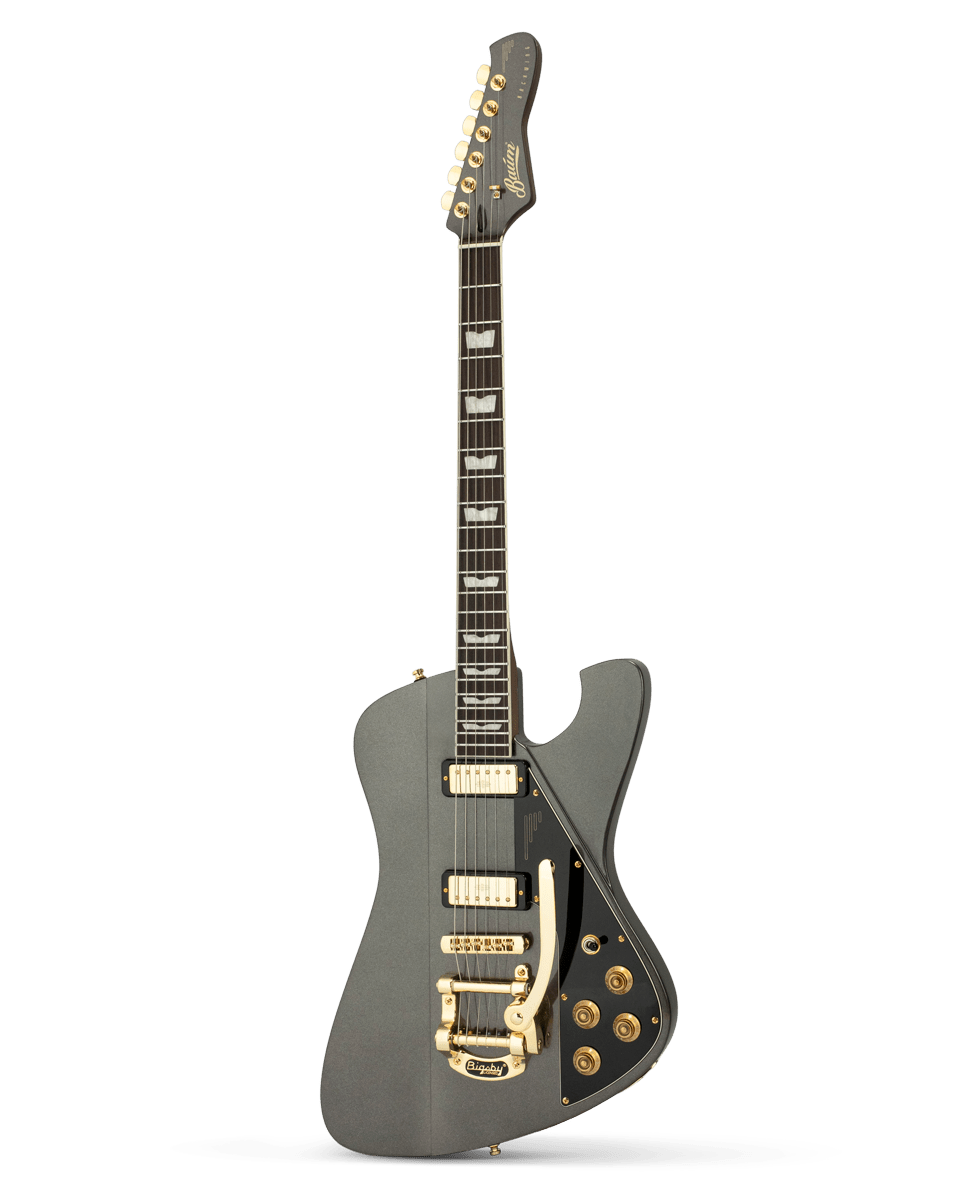
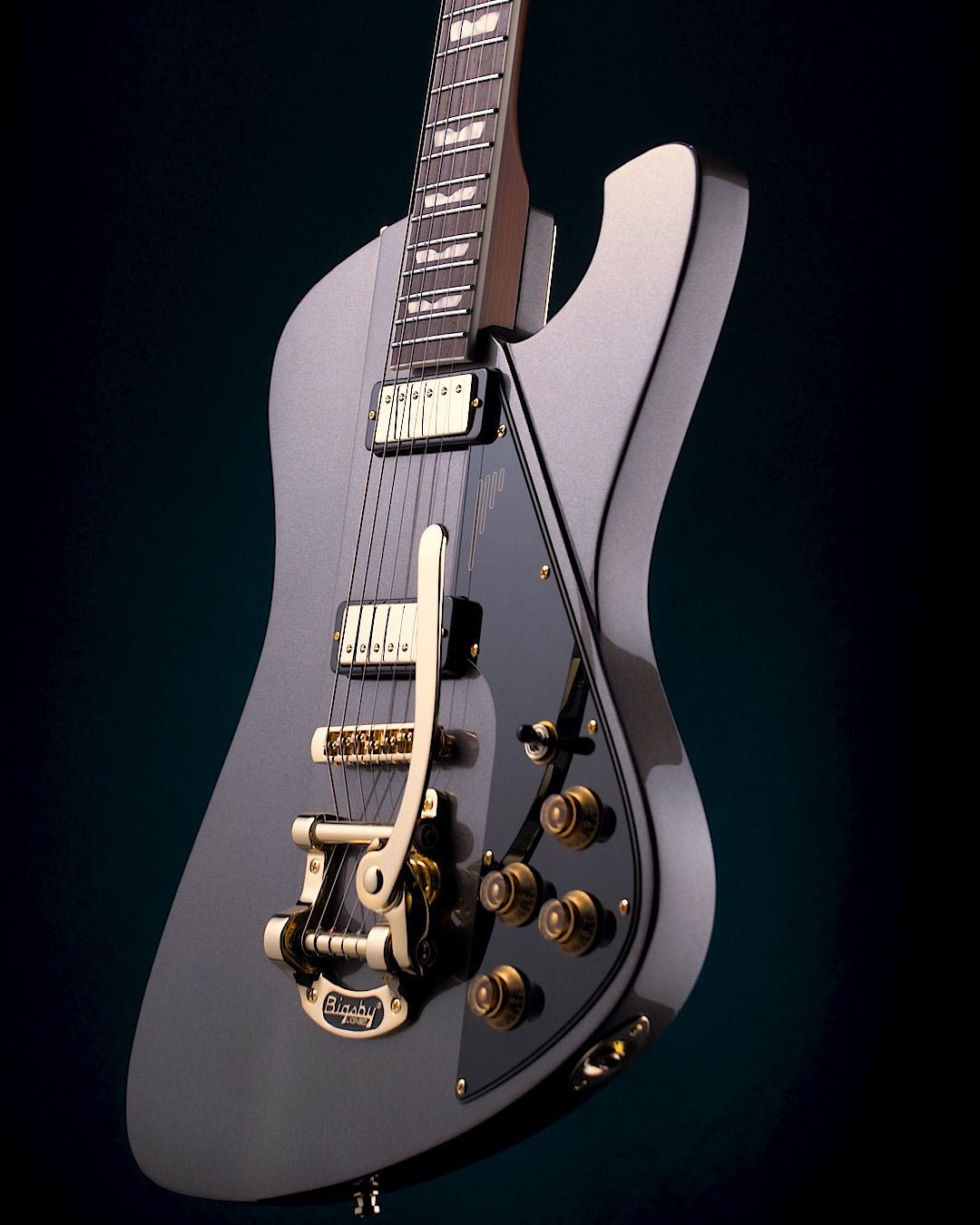
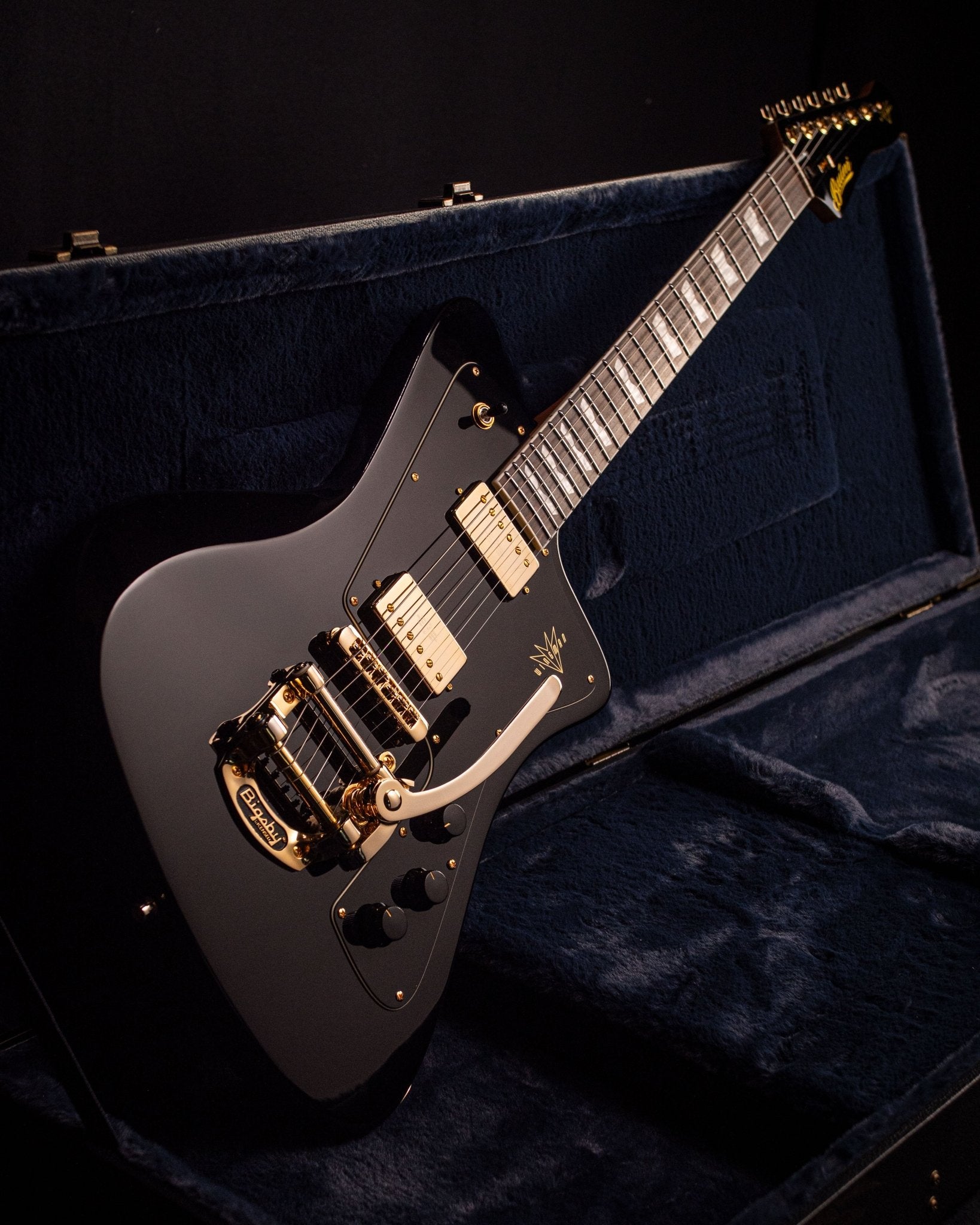
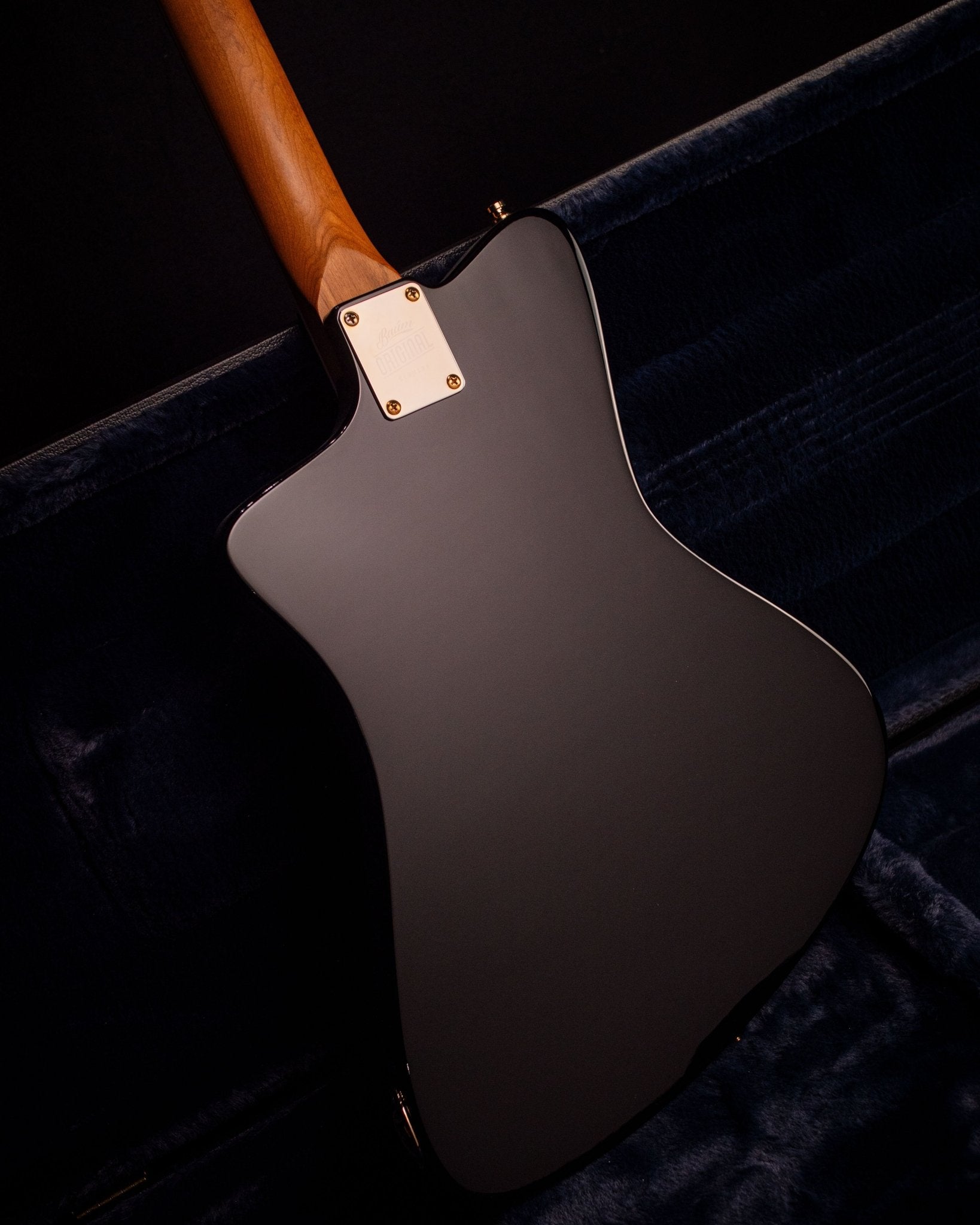
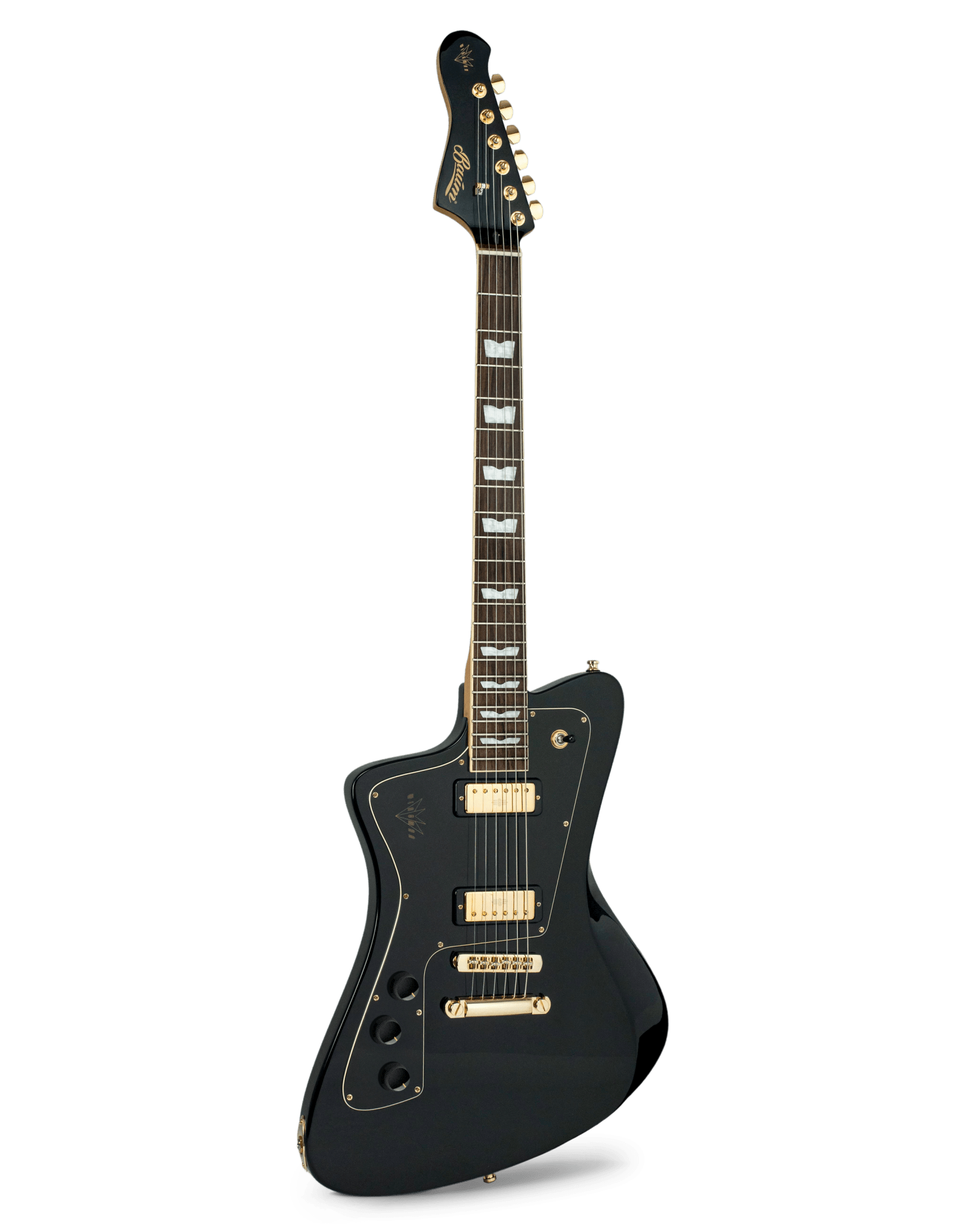
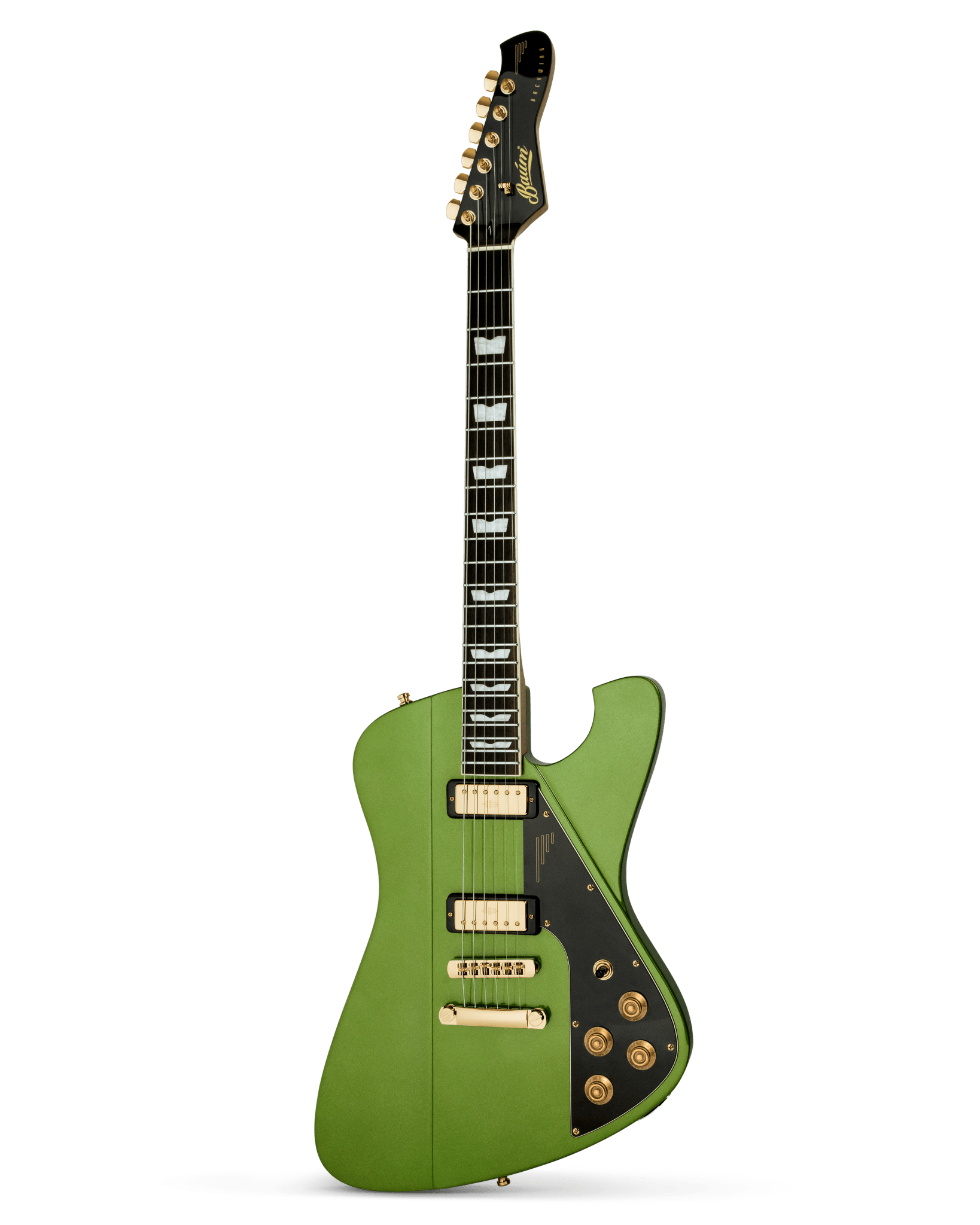
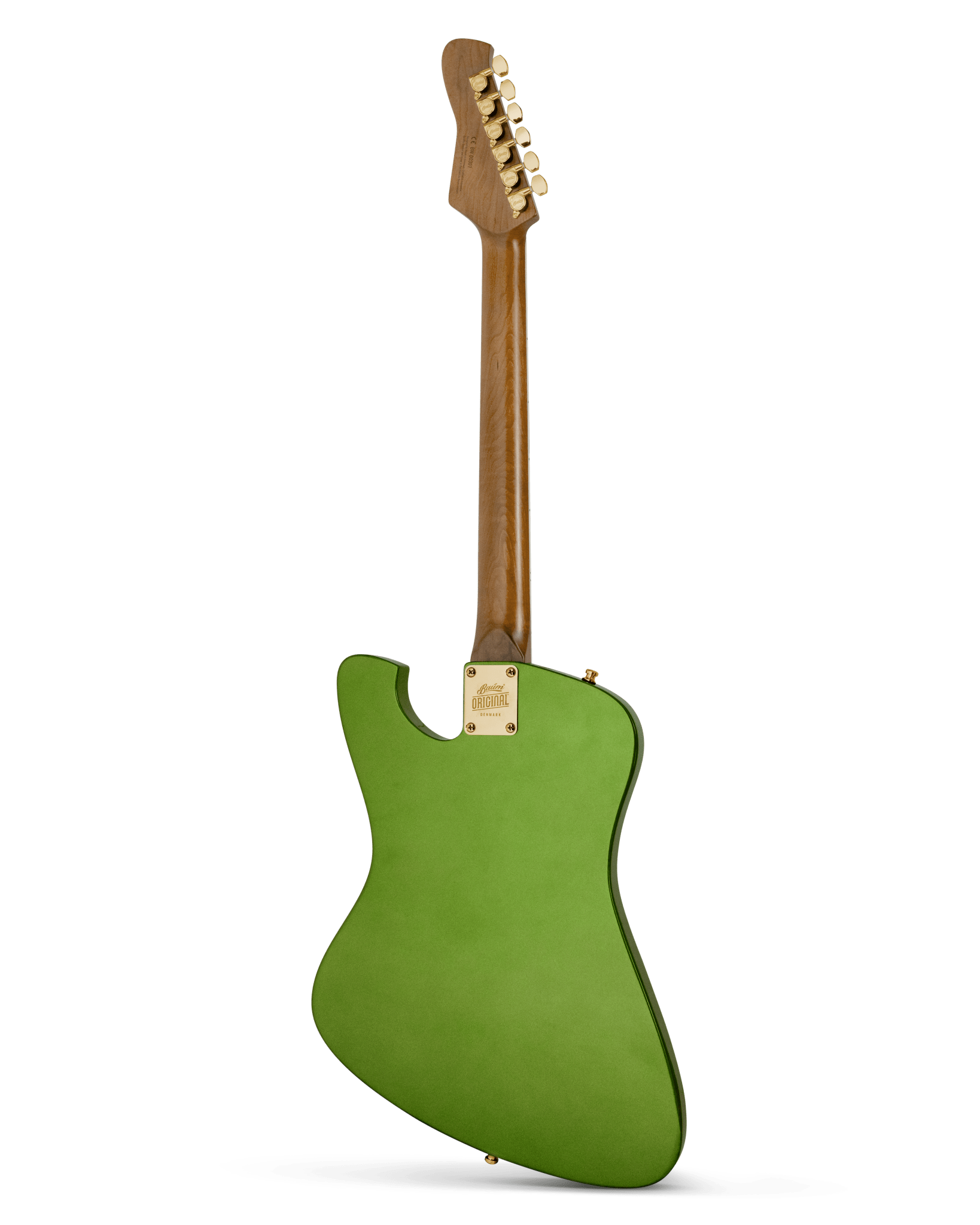
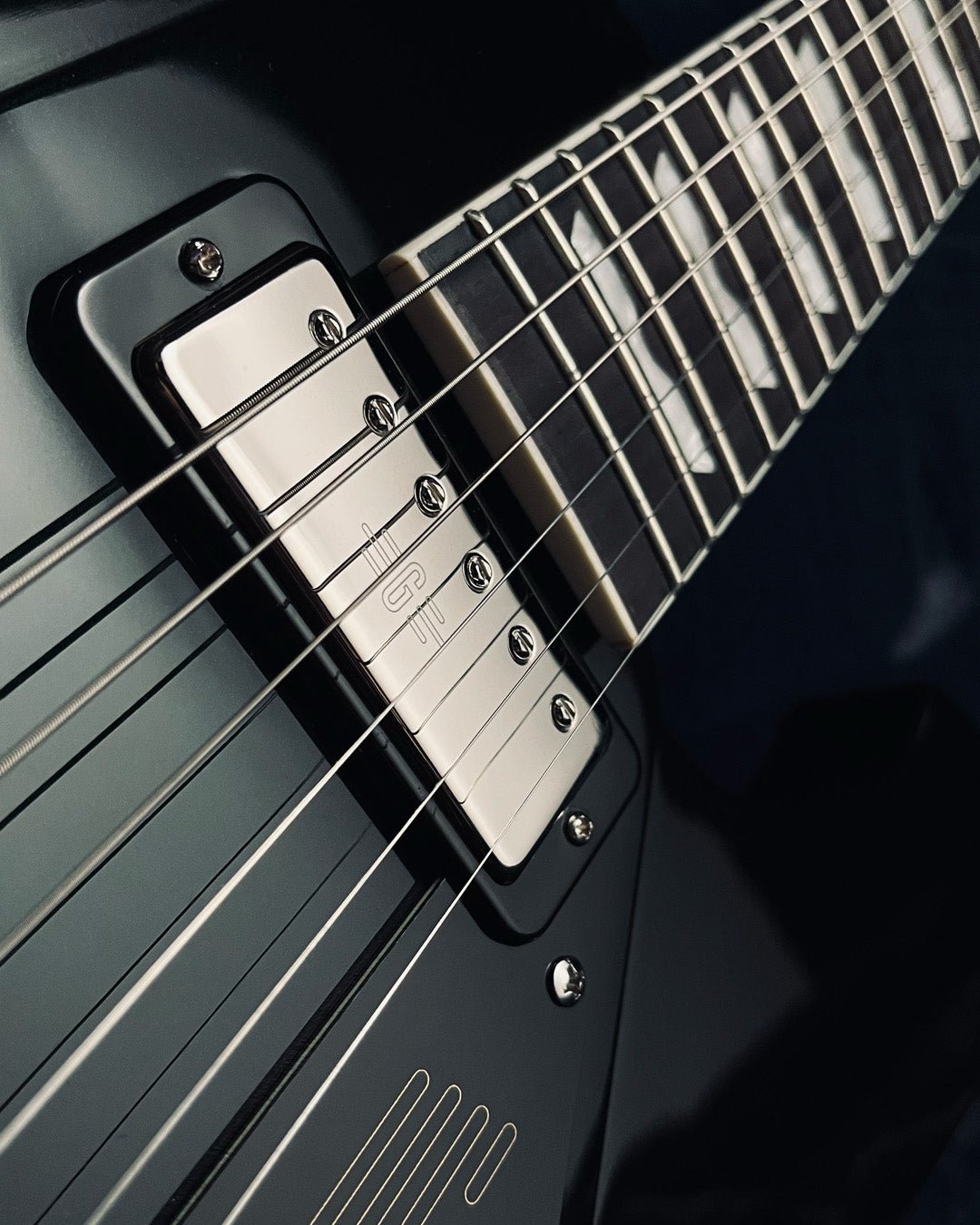
Three Baum models cover the offset electric guitar territory, each with a different intent. The Wingman is the modern, versatile offset available with single coil, P-90 or humbucker pickup configurations. The Backwing is the vintage-leaning offset built around Goldsound® Goldbucker mini humbuckers with a distinctly classic tonal character. The Savage is the aggressive offset built for grunge, punk and rock, with Goldsound® Ember™ P-90 pickups and a sharp-edged body geometry designed for loud stages. Three models, three different intents within the same body family.
S-type electric guitars
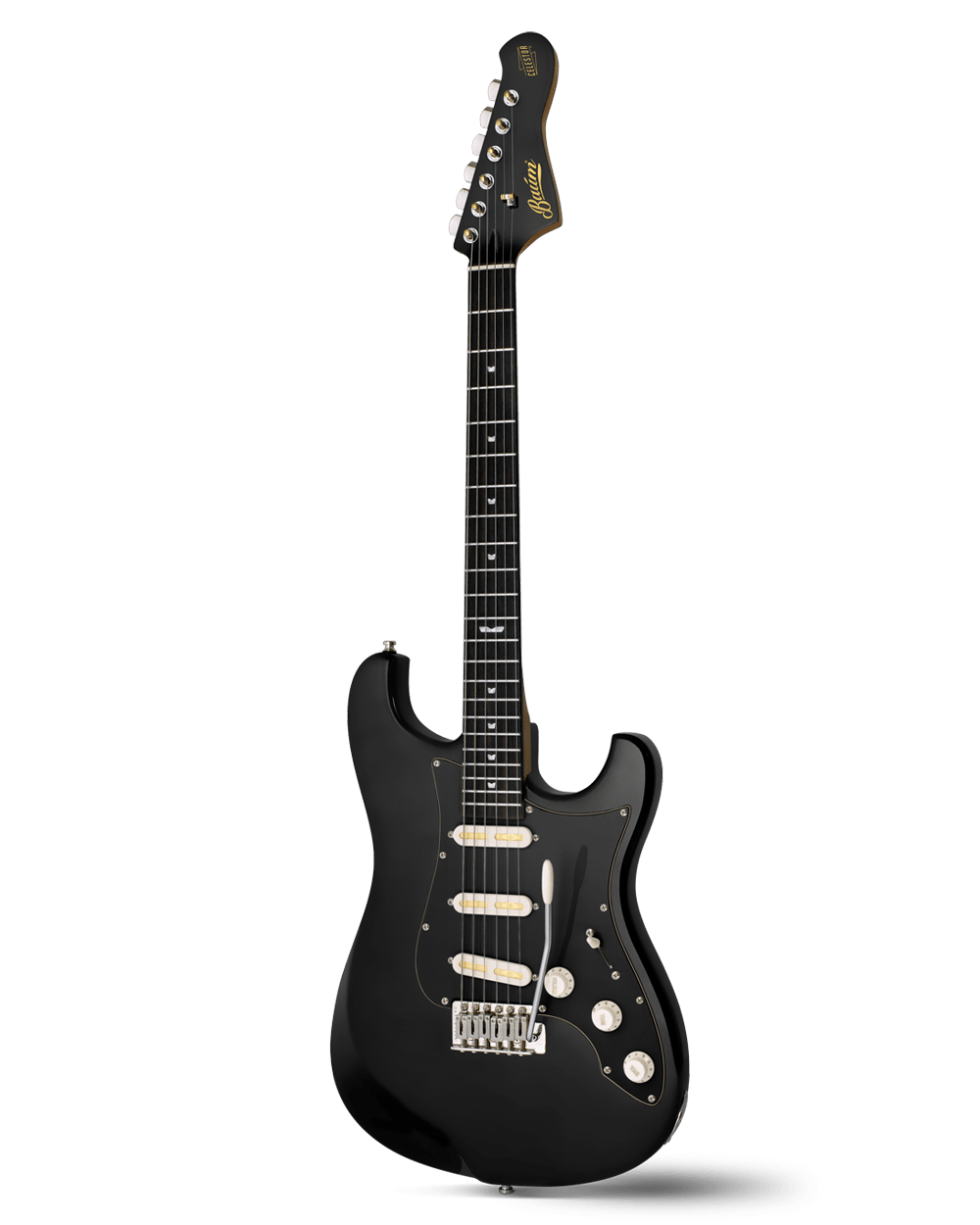
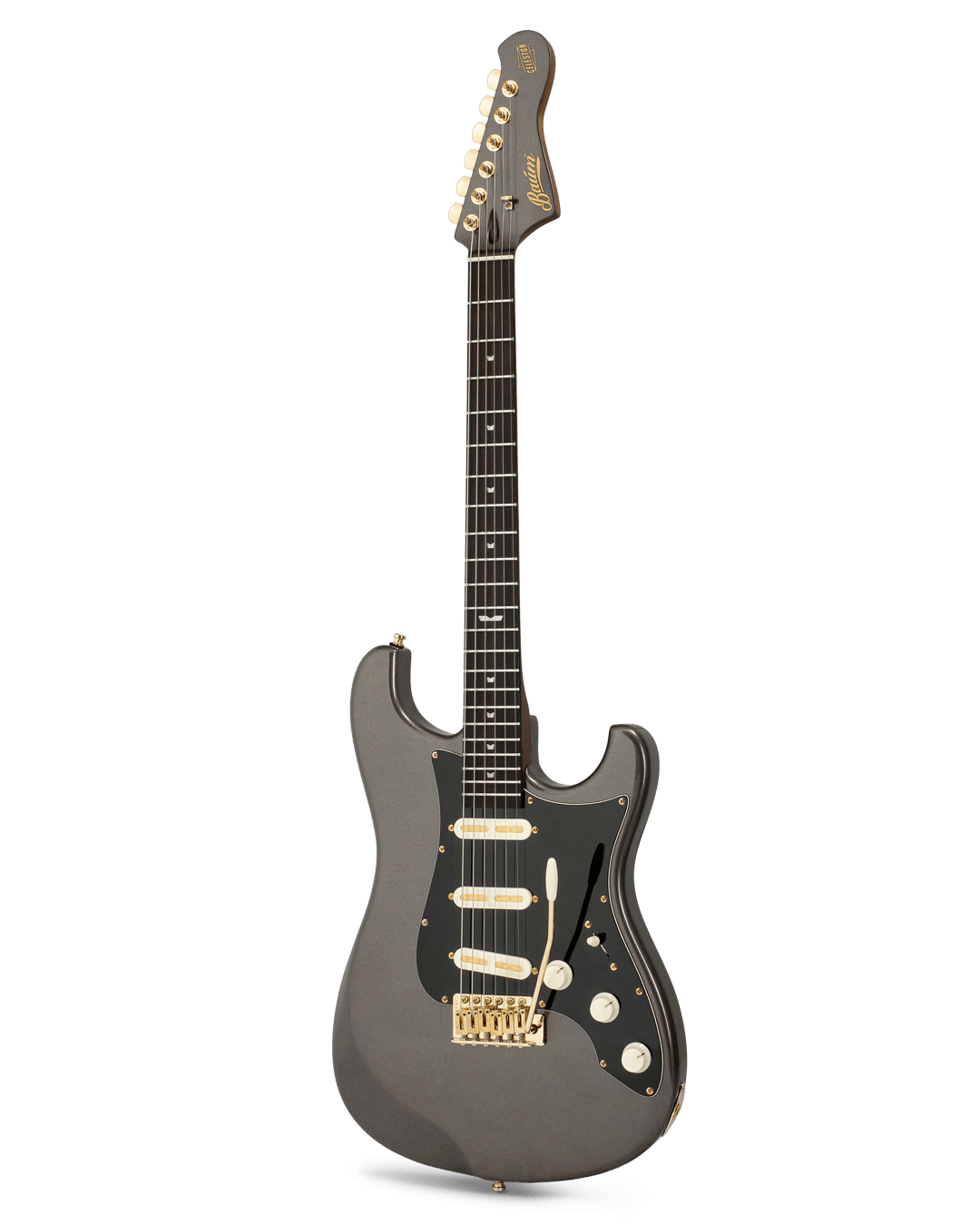
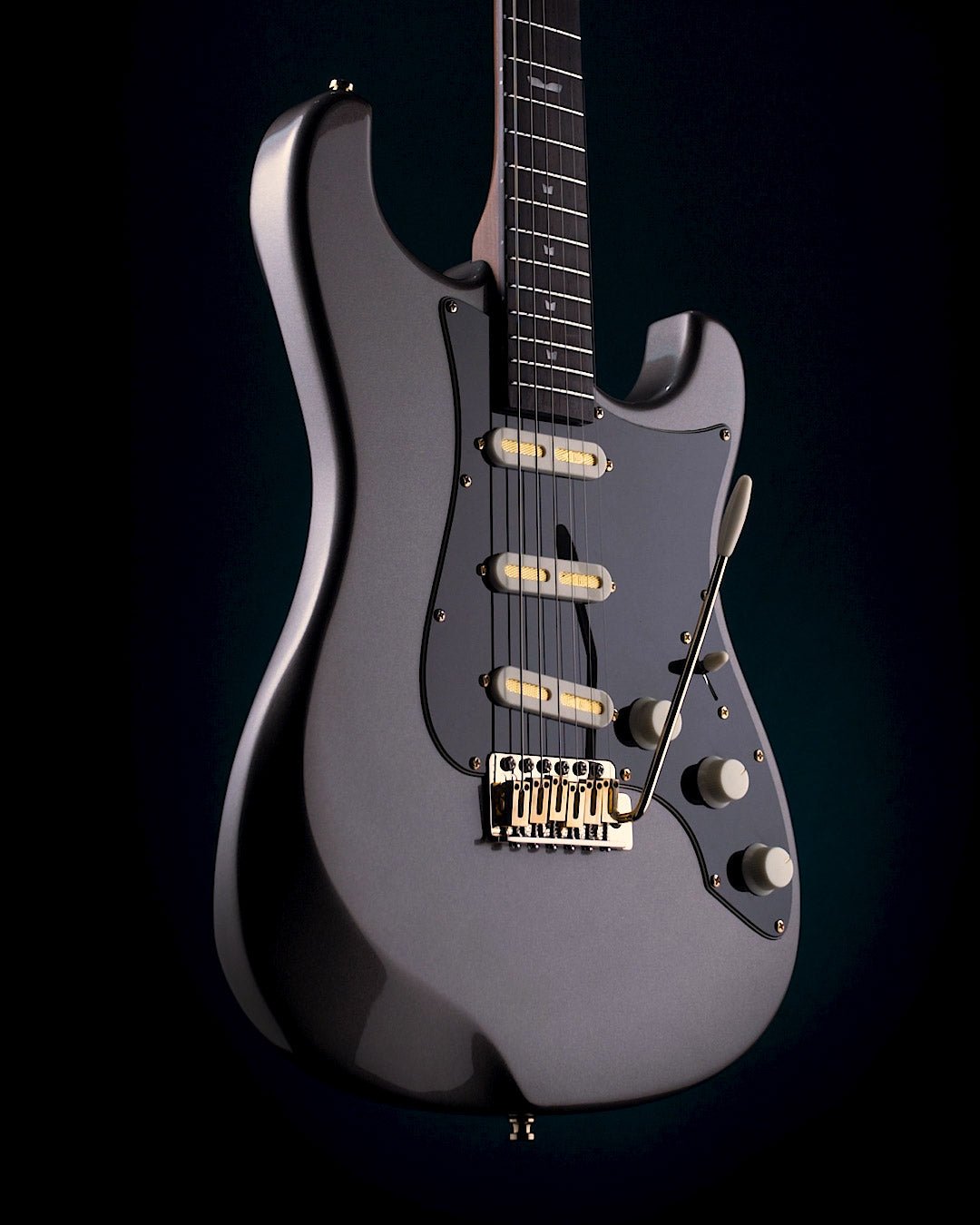
The S-type platform originated in 1954 as a redesign of the earlier T-type format, introducing a contoured double-cut body, three single coil pickups and a synchronized tremolo system. It became the most-copied electric guitar design in history because the format is genuinely versatile across genres. Clean funk, country picking, blues rhythm, classic rock lead, modern indie textures, all sit naturally within an S-type platform. The tonal signature is defined by single coil clarity, articulate high-end response and a tremolo system that opens up expressive vibrato and pitch bending techniques.
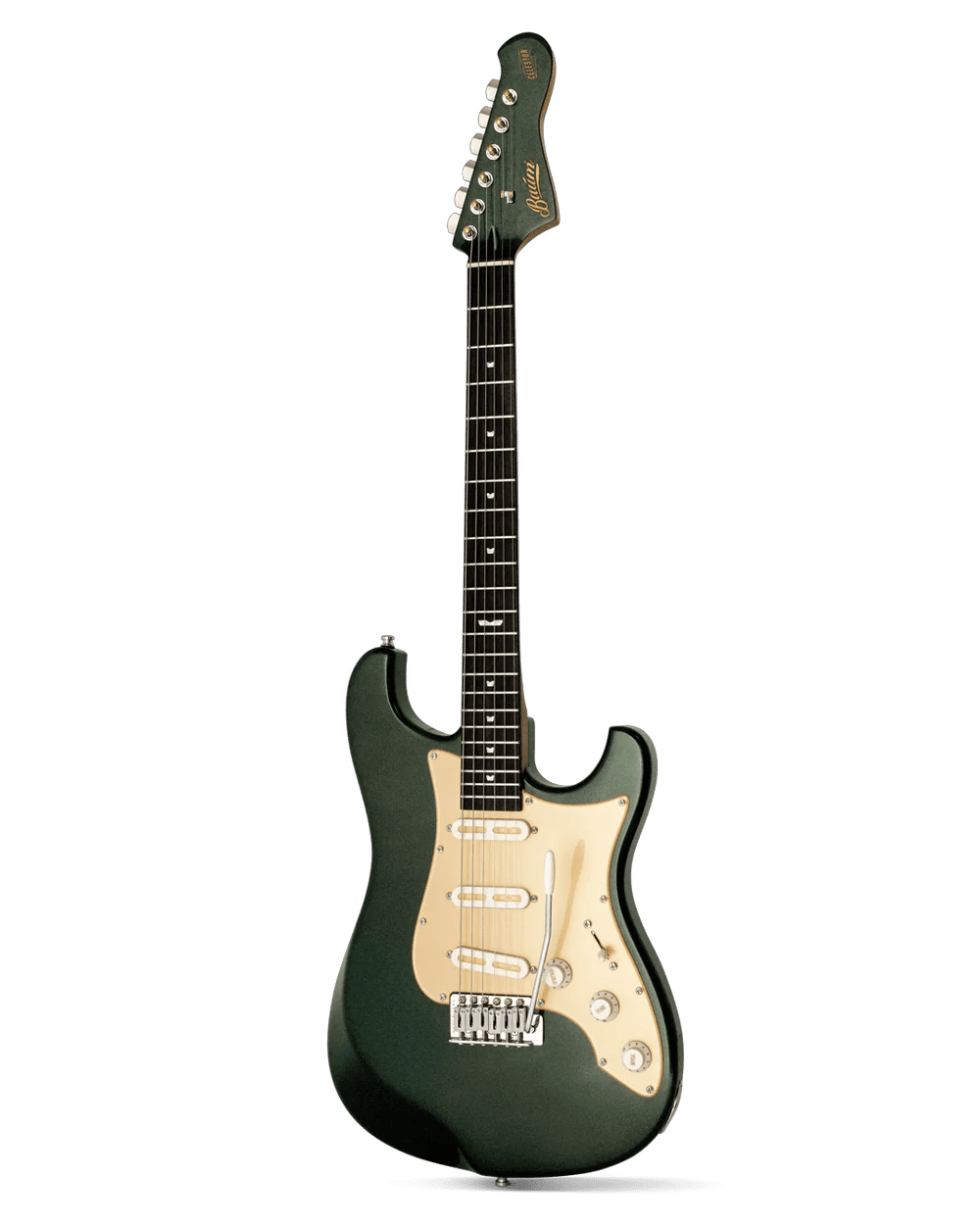
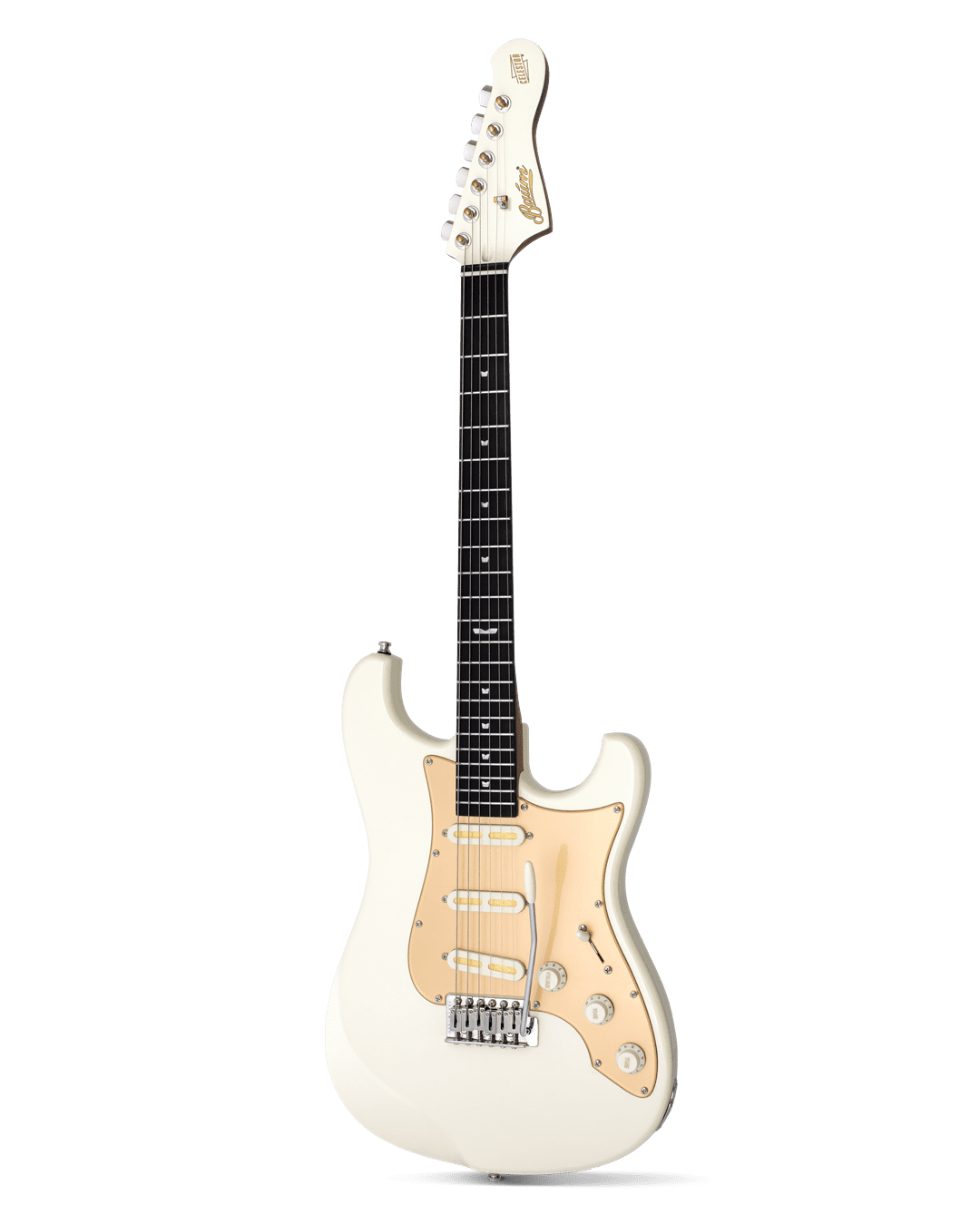
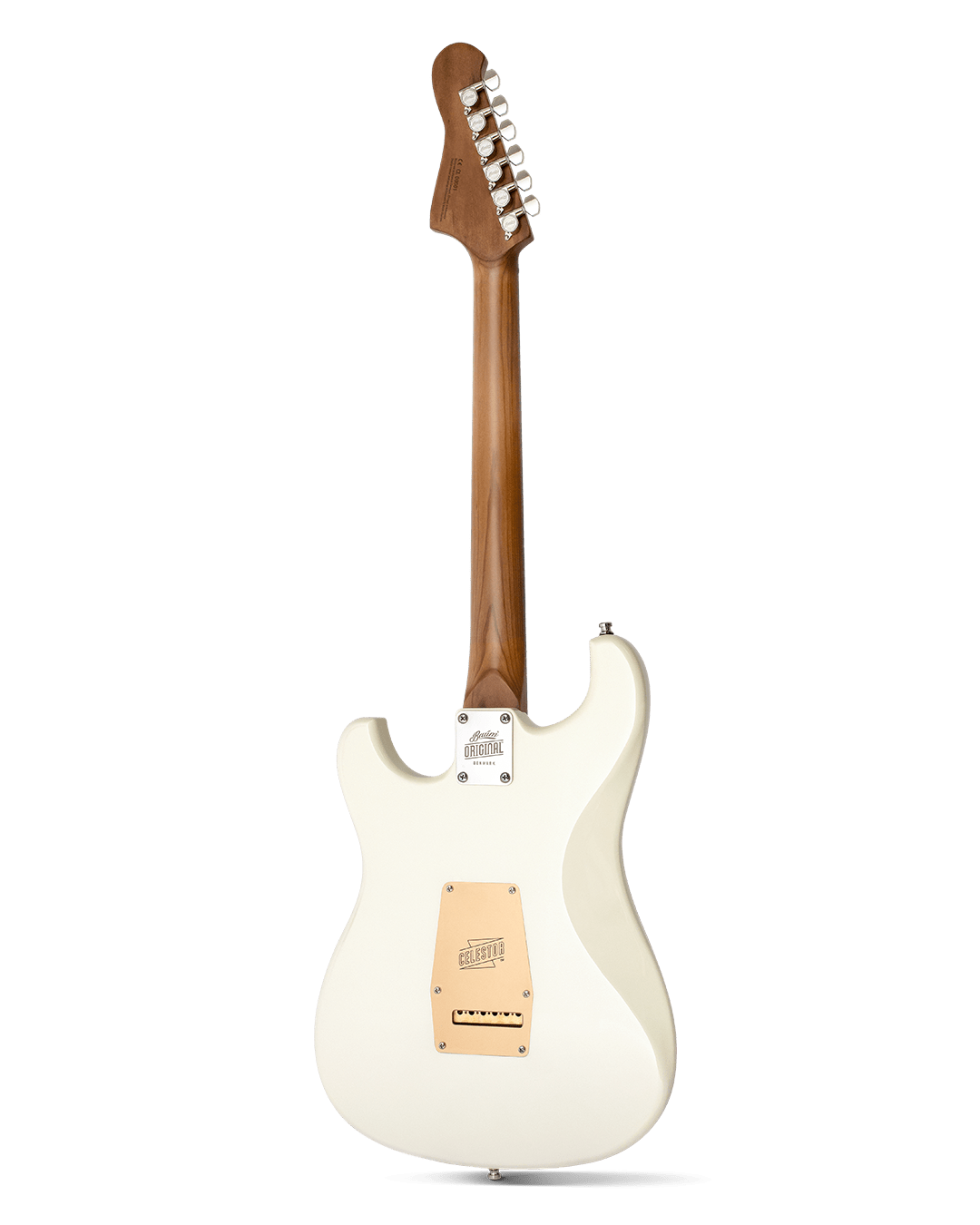
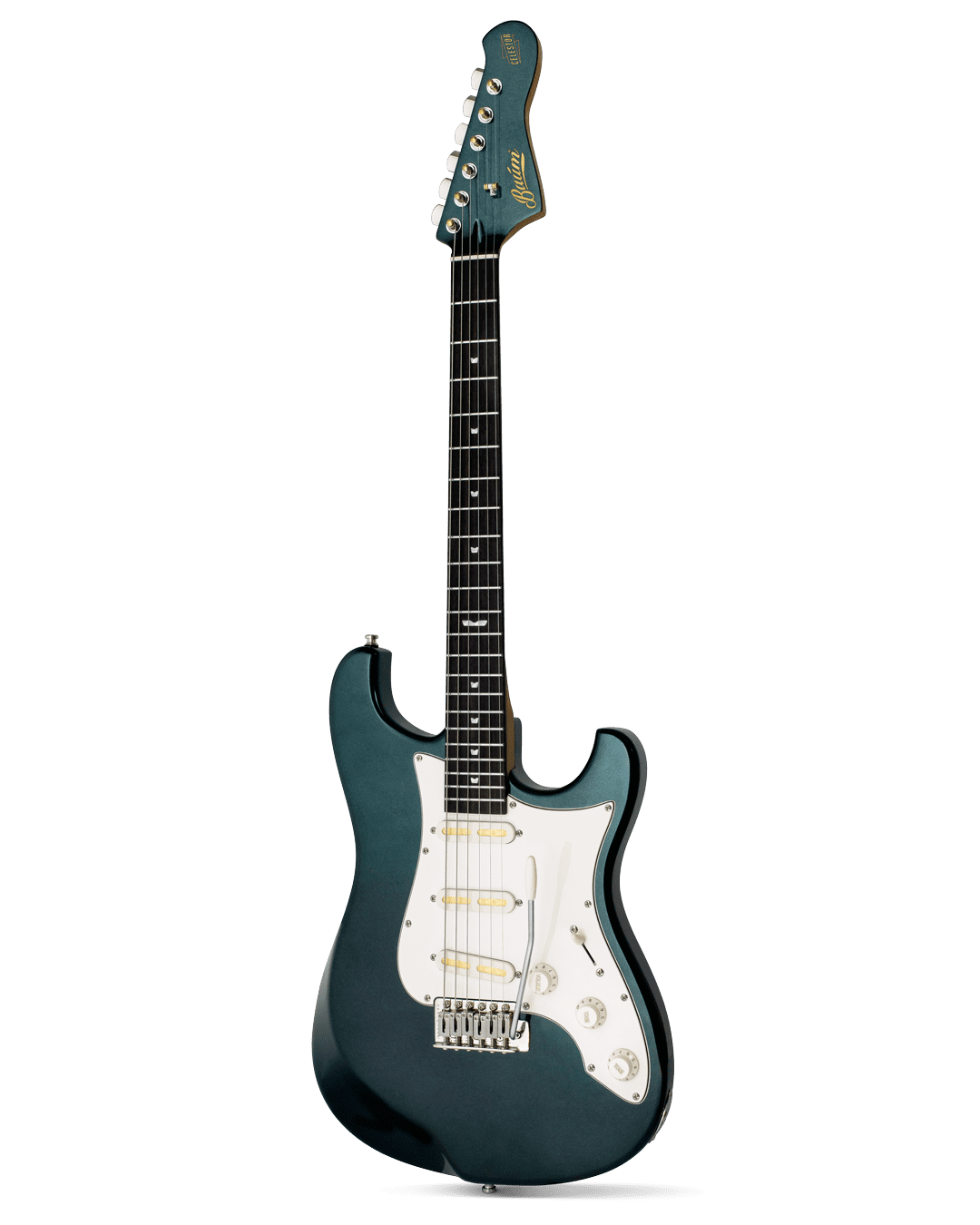
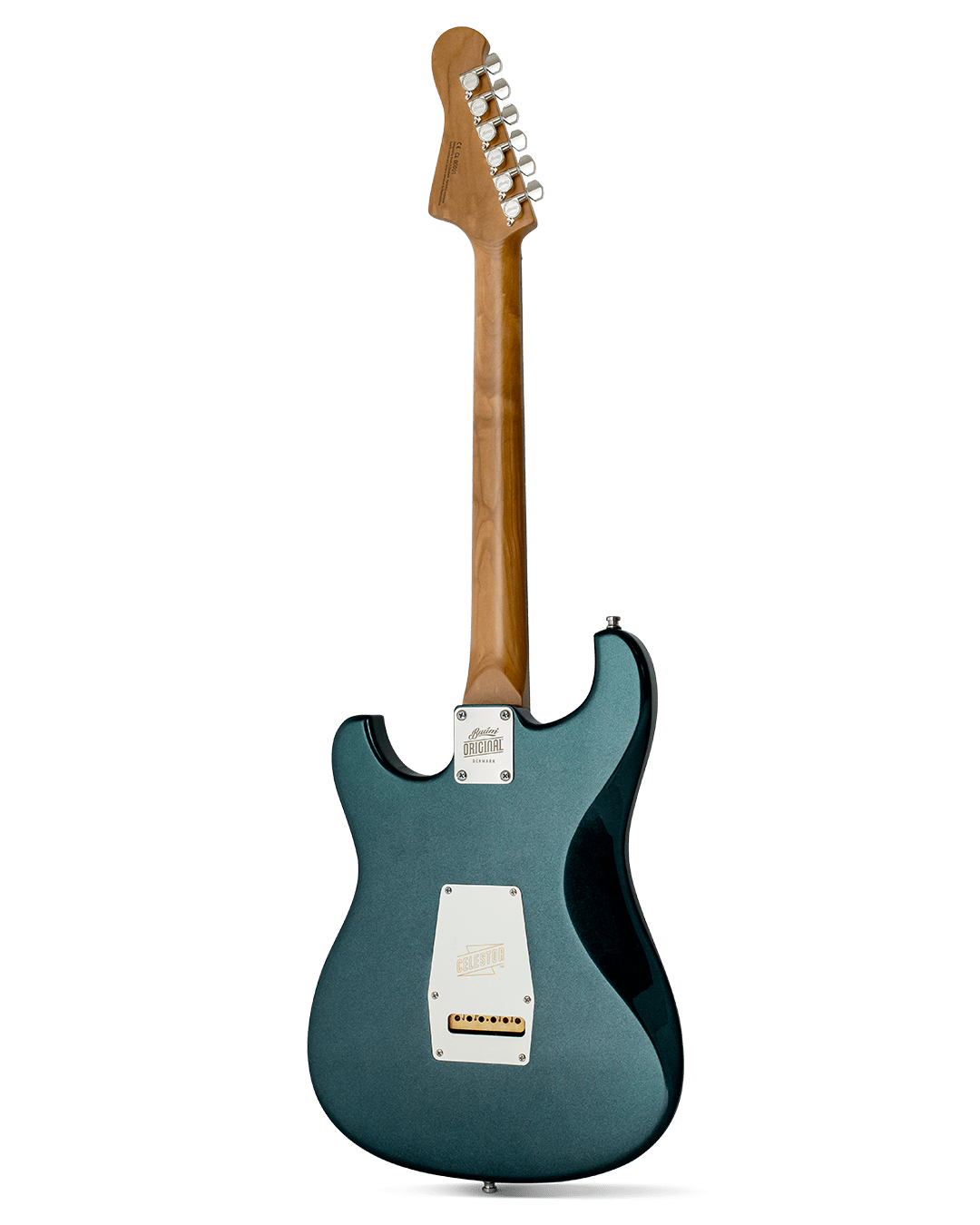
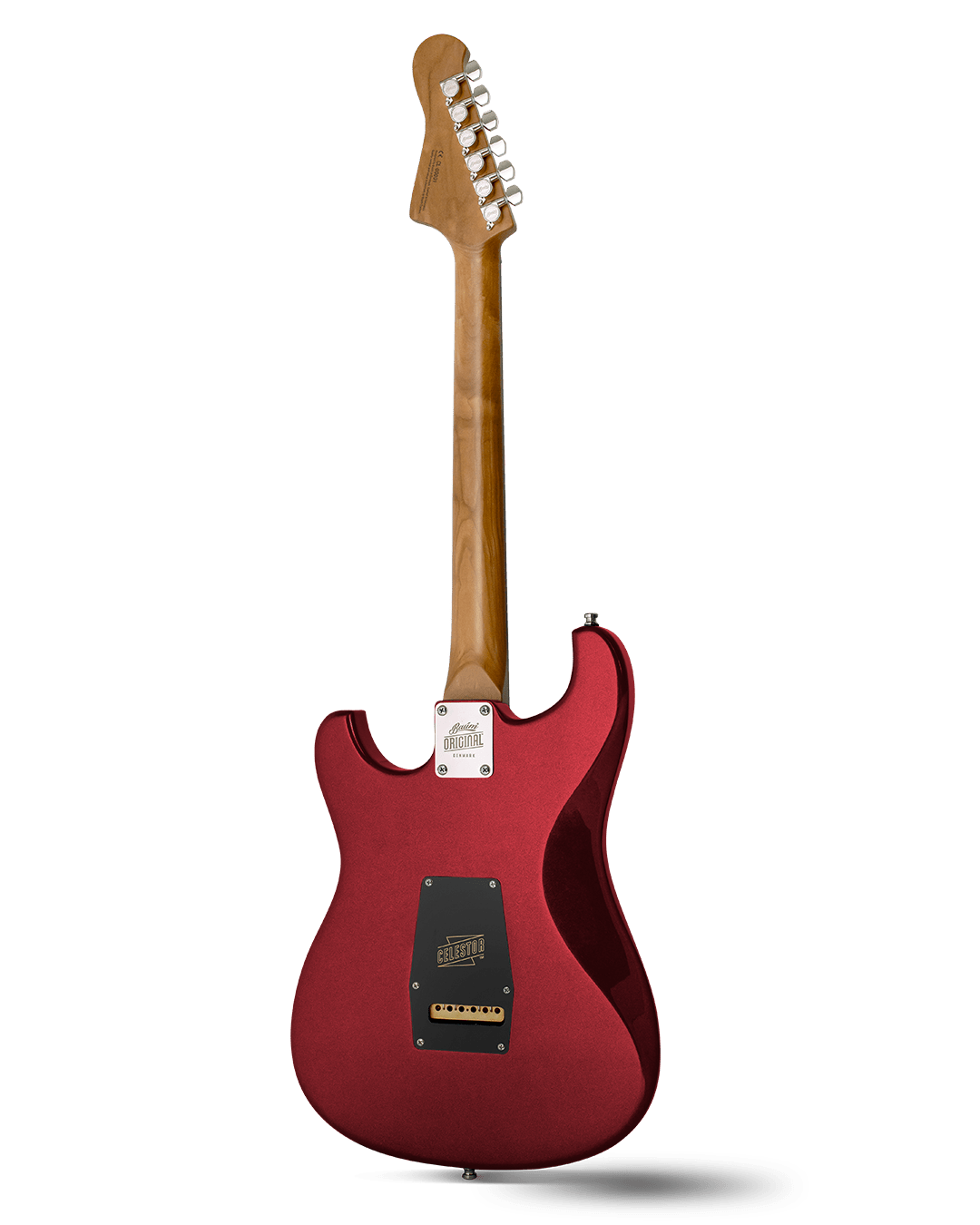
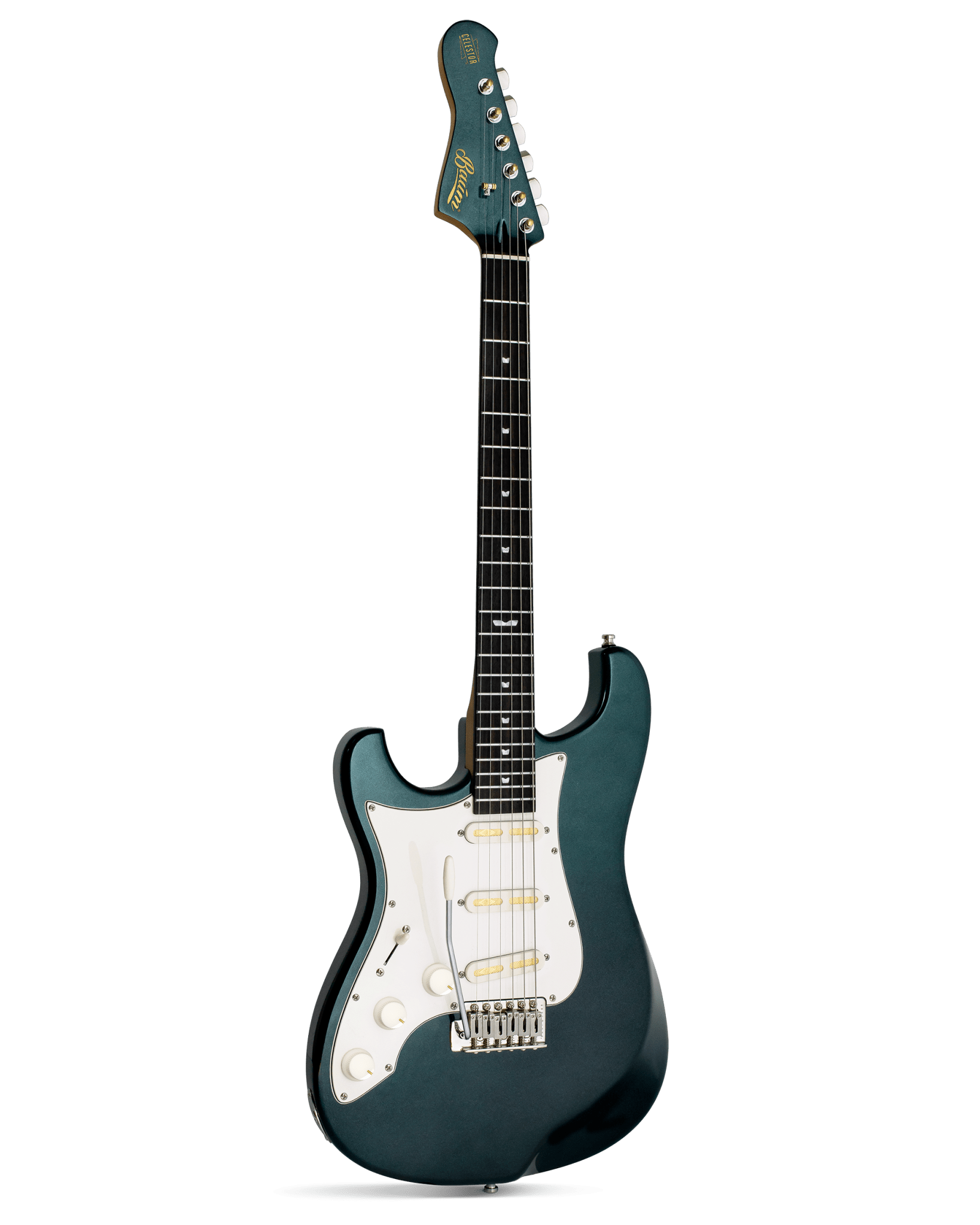
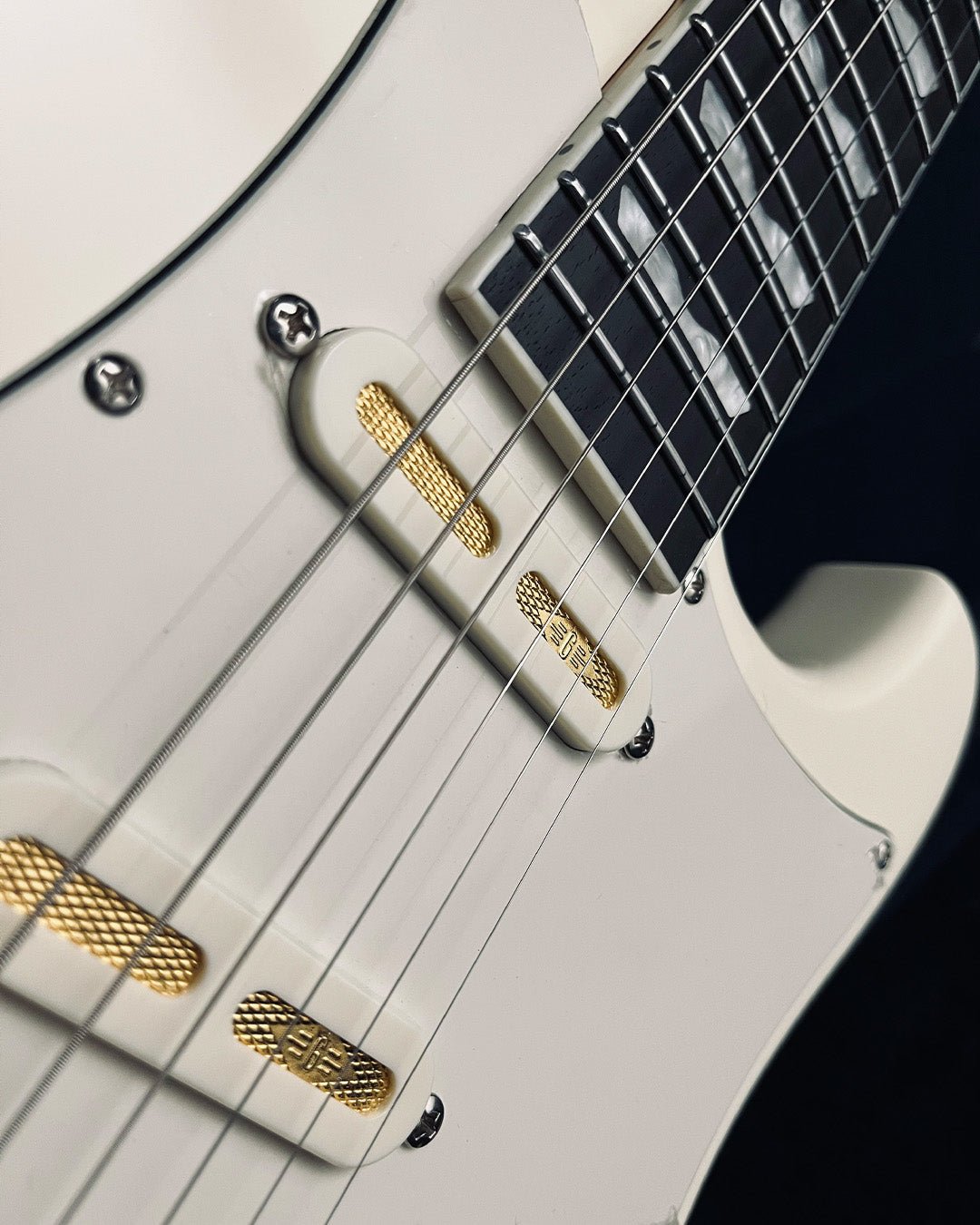
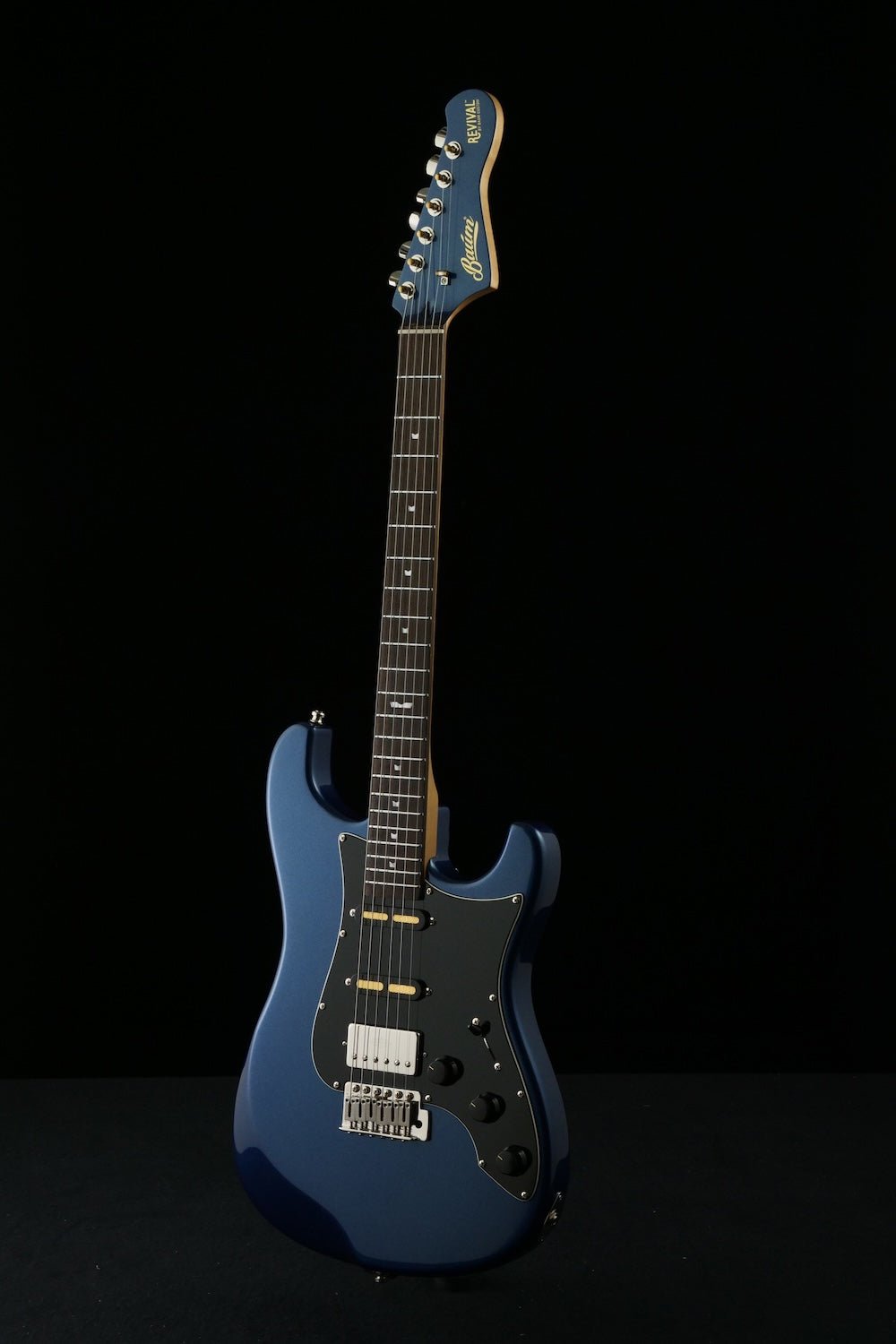
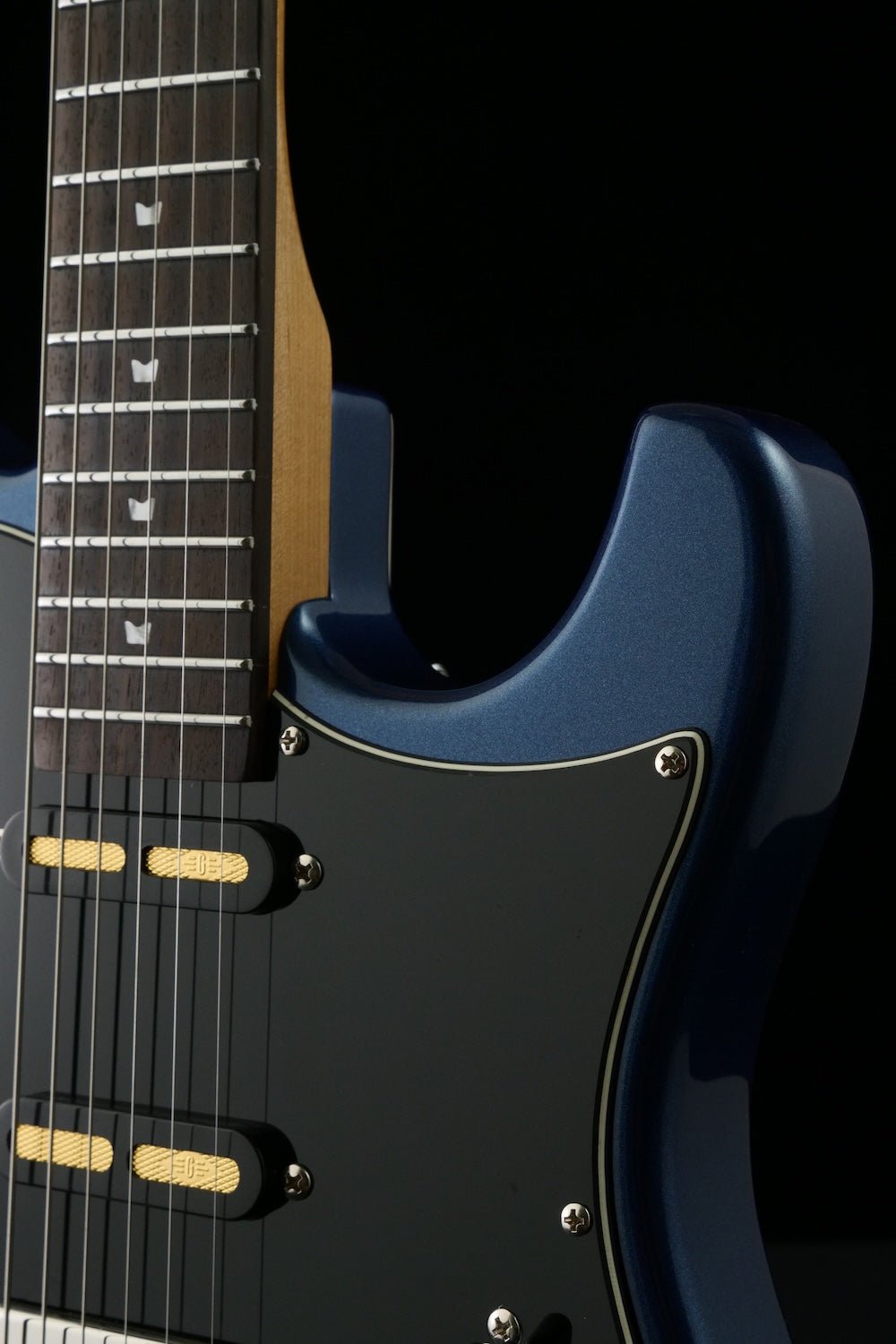
Baum's S-type electric guitar is the Celestor, built around Goldsound® Sonar single coils, a TrueTone™ 6-point tremolo and extended pickup wiring that offers neck plus bridge combinations most production S-type guitars don't provide. The mahogany body construction and roasted maple neck put the Celestor on Baum's standard platform, while the extended wiring and TrueTone™ system differentiate it from vintage-focused S-type interpretations. See more of Baum's S-type electric guitar options.
T-type electric guitars
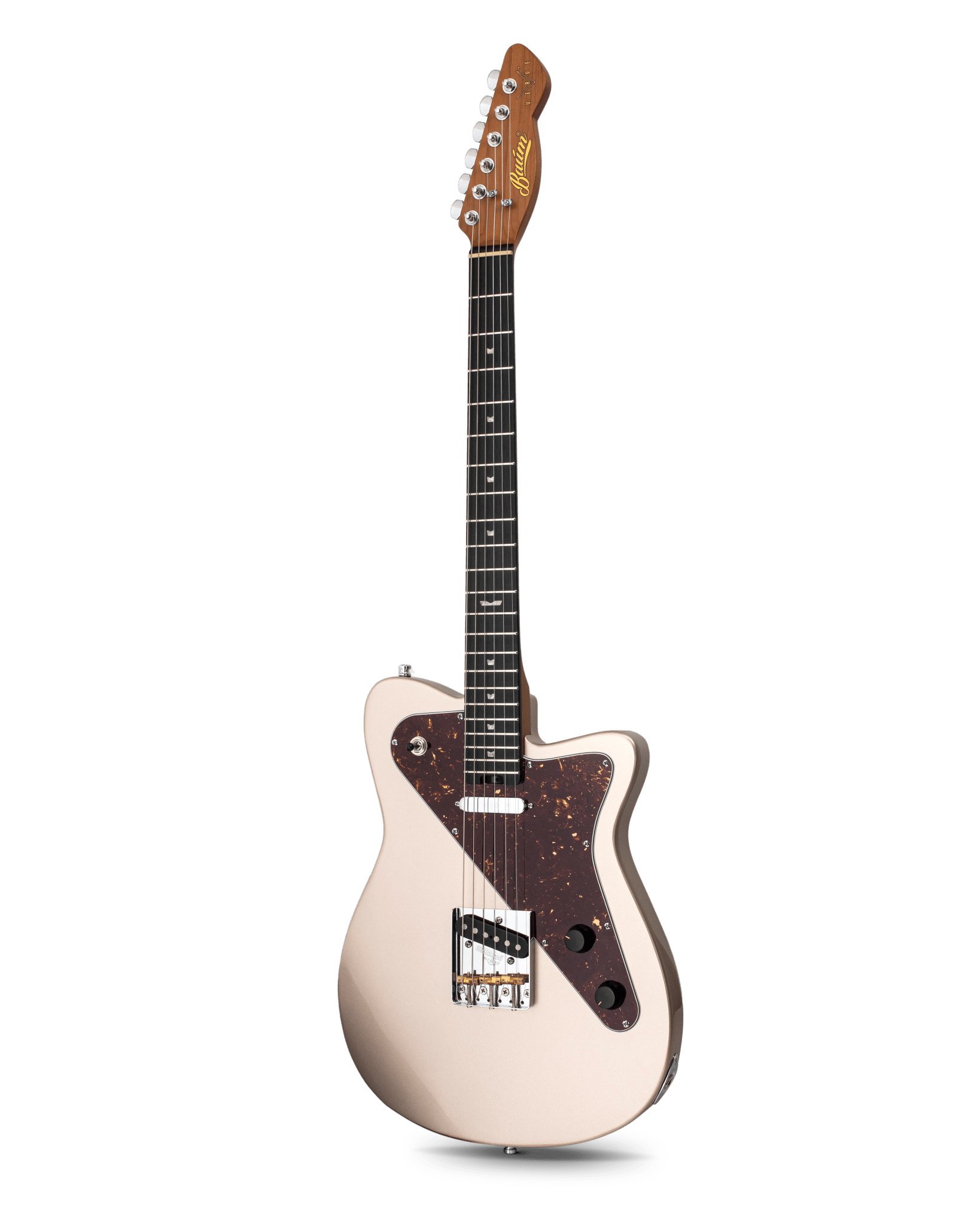
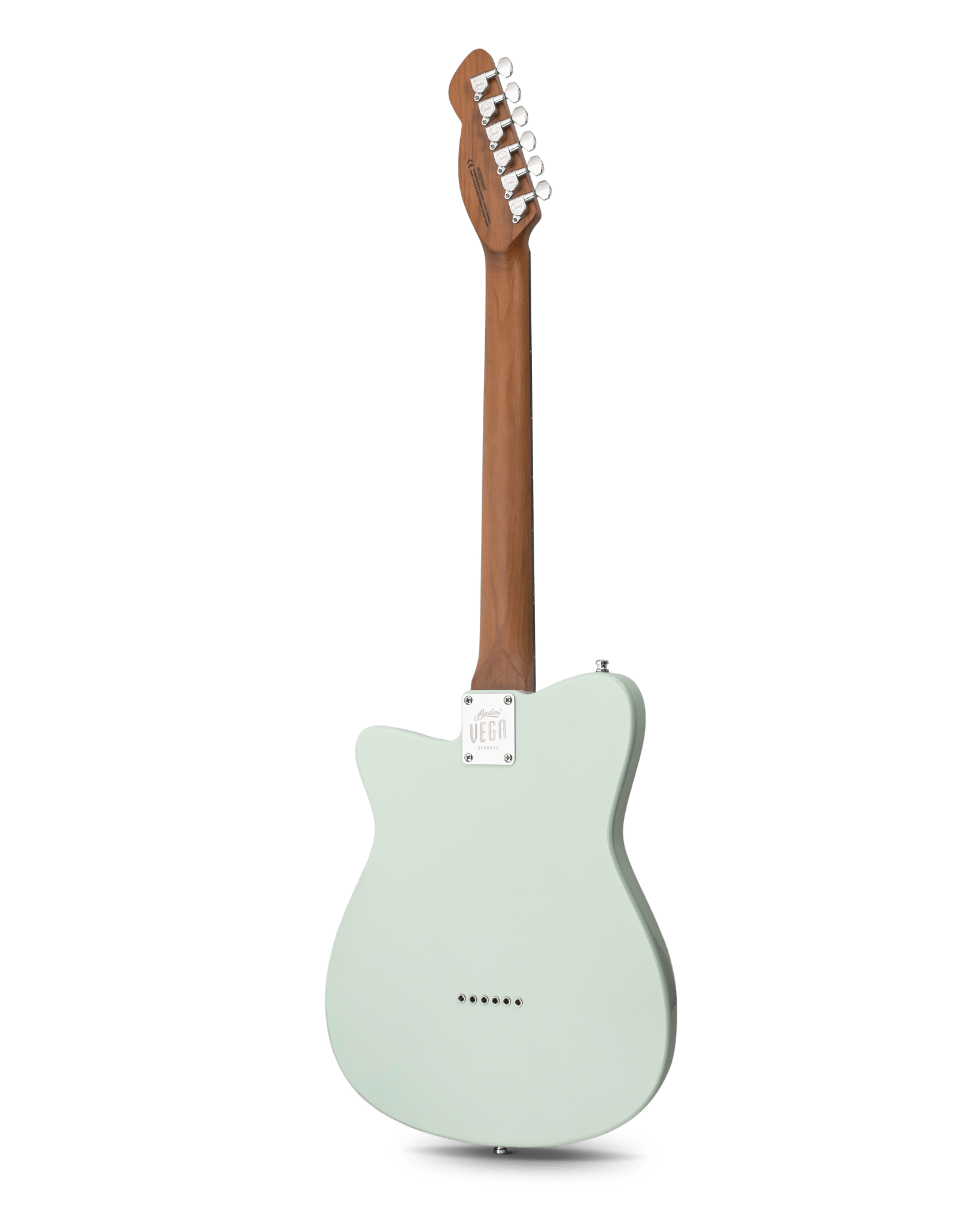
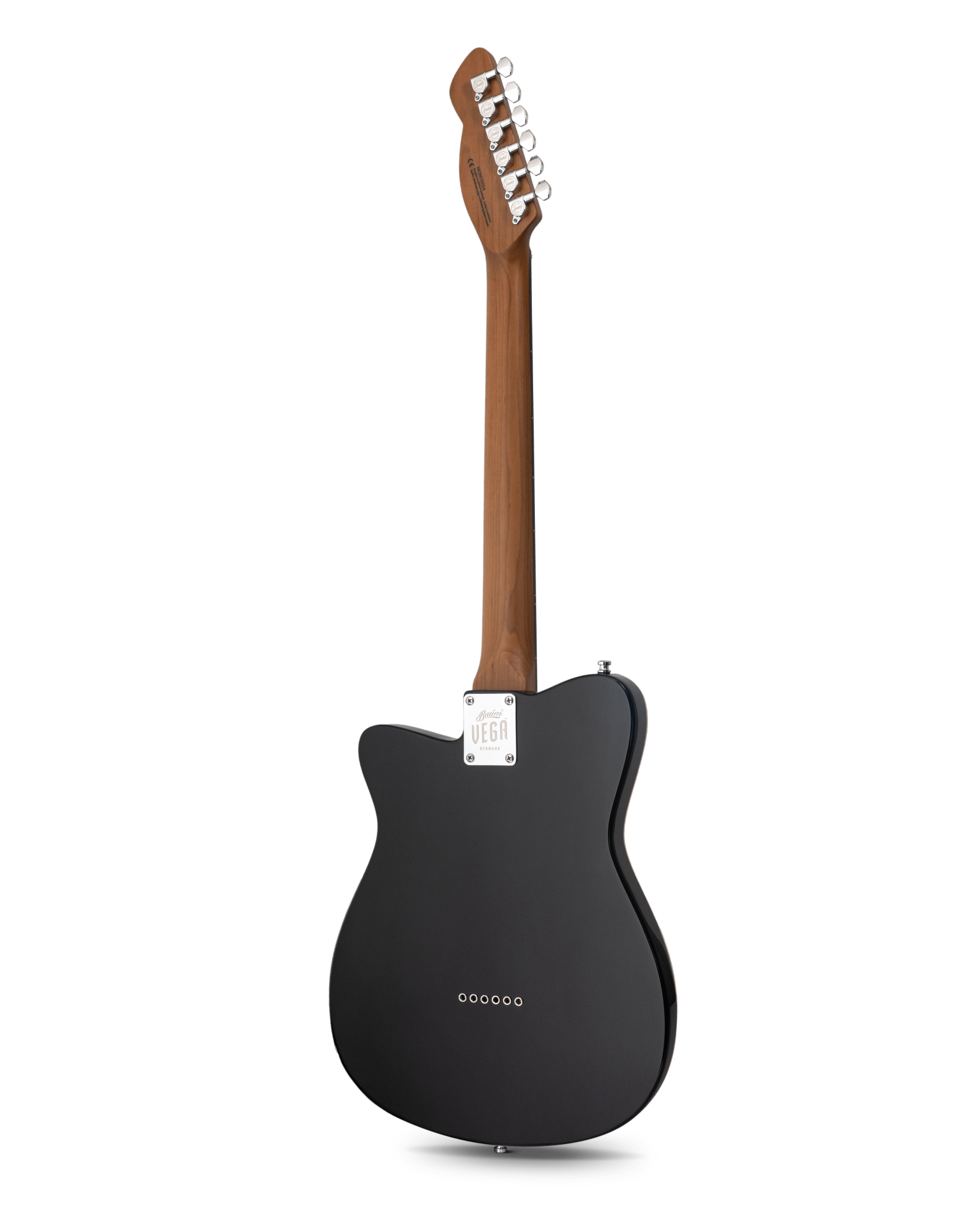
The T-type platform is the oldest solid body electric guitar design still in production, originating in 1950 and defining the single-cut solid body format ever since. Two single coil pickups, a bridge-anchored construction with a metal control plate, and a bright, articulate tonal character that has defined country, blues, blues-rock, punk and alternative rock playing for seven decades. T-type guitars typically use ash or alder body woods and produce a more focused, less warm tonal response than mahogany-based designs.
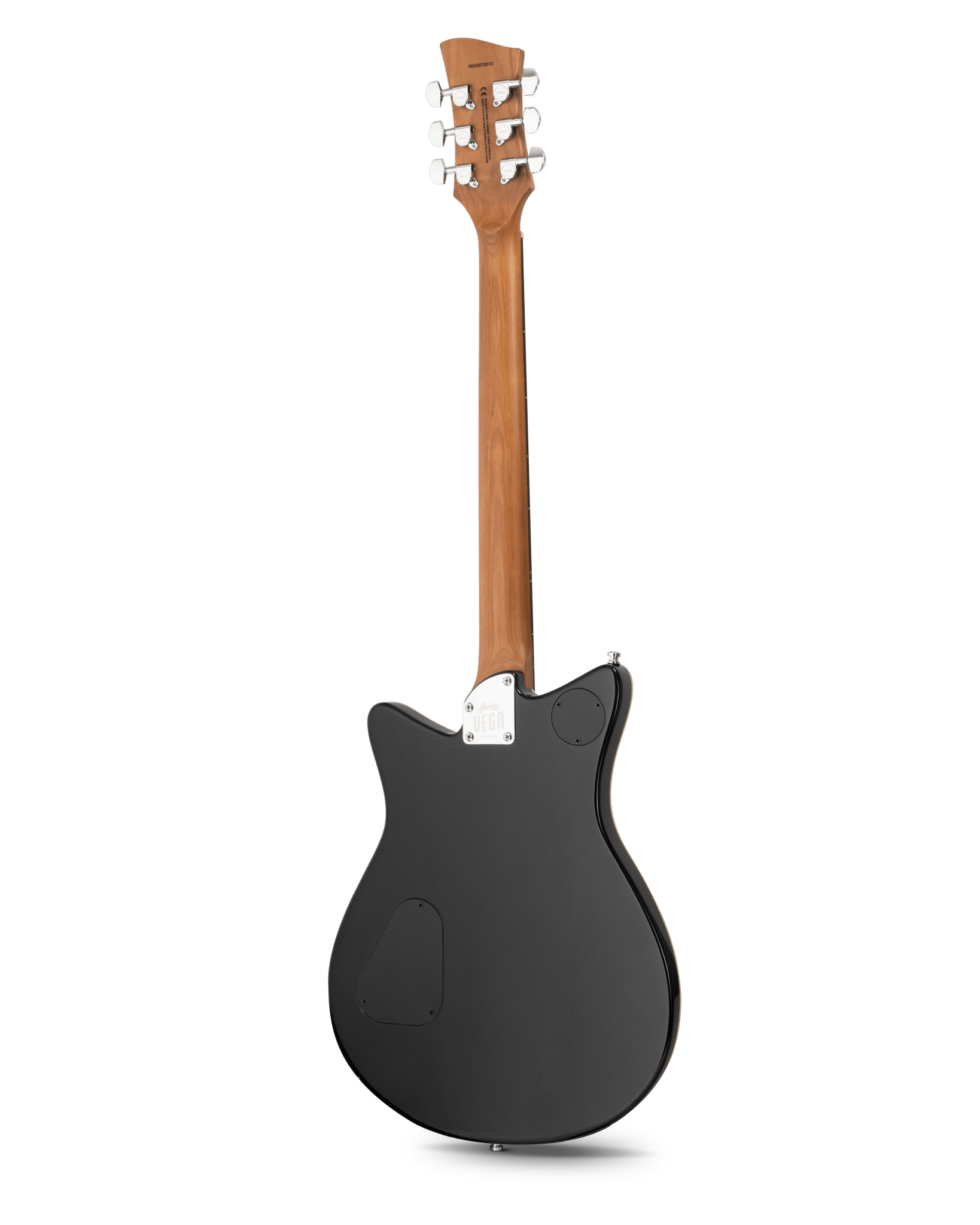
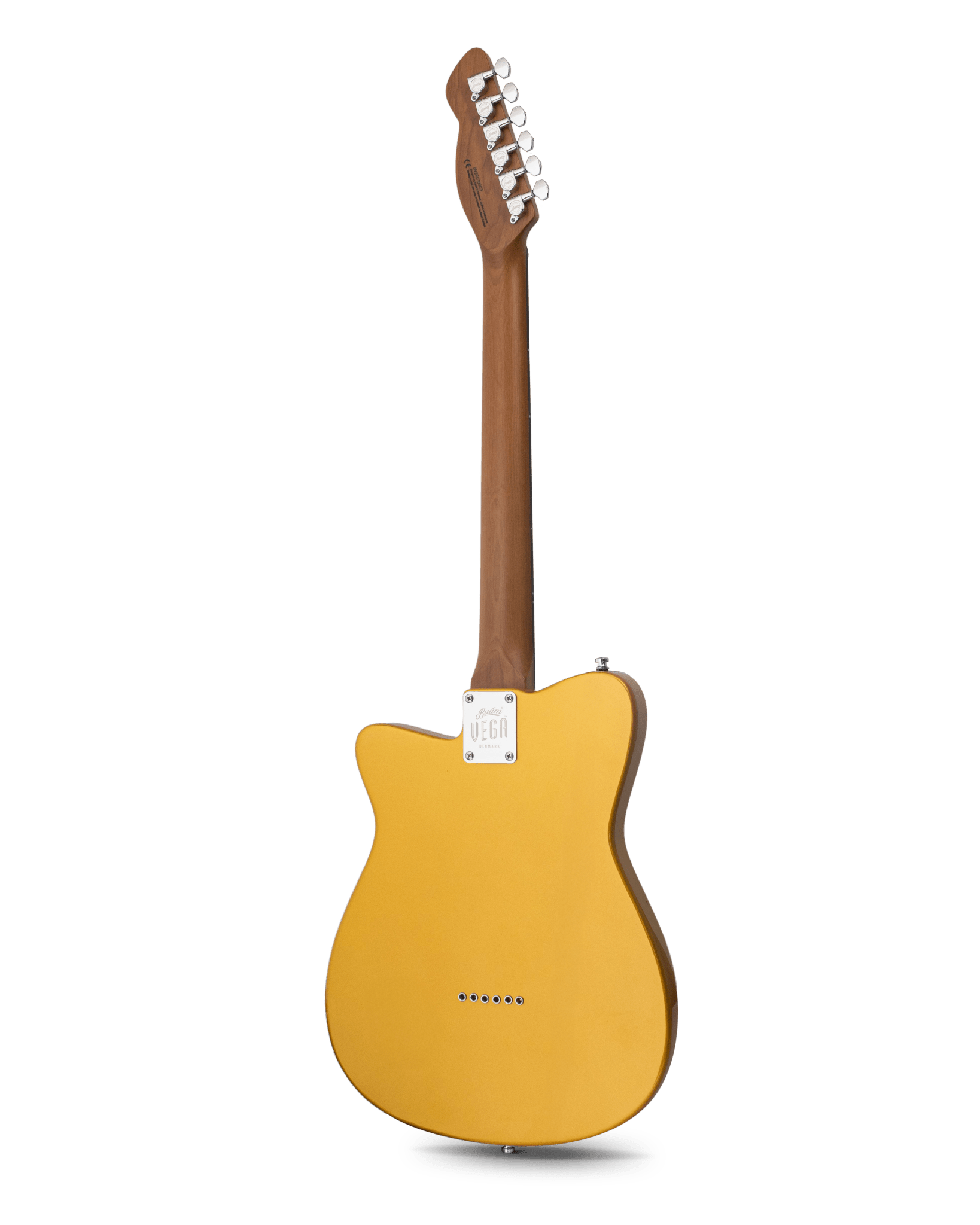
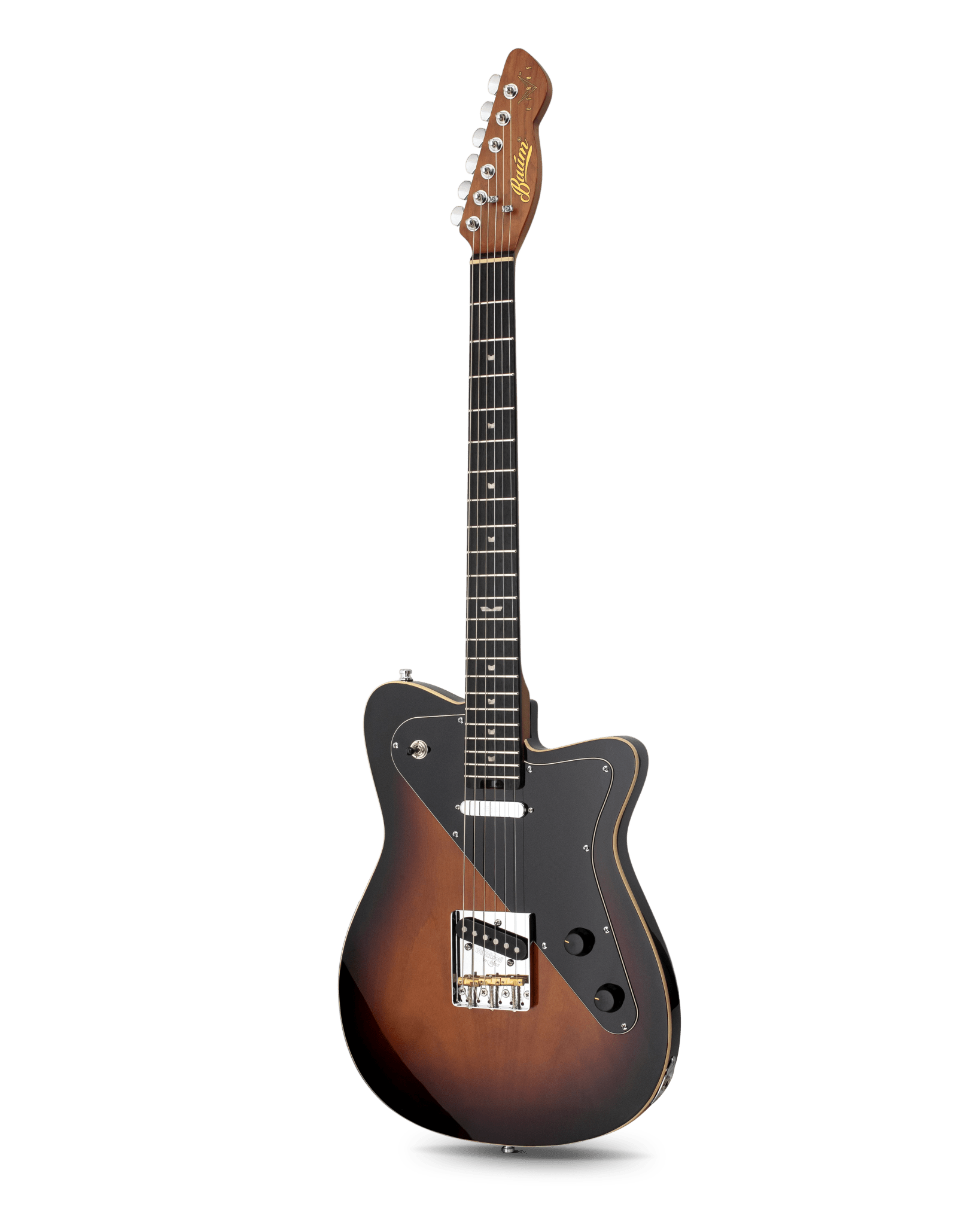
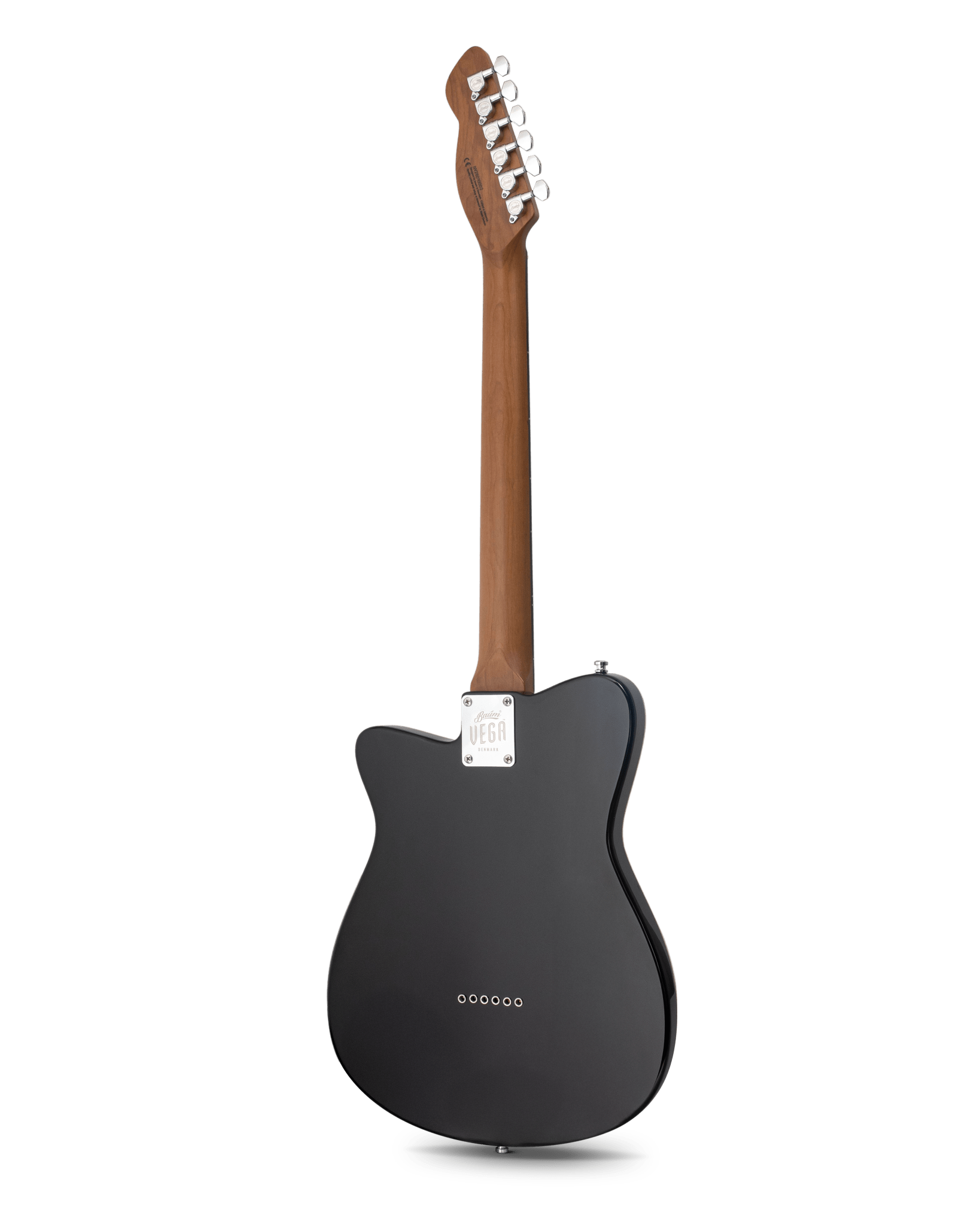
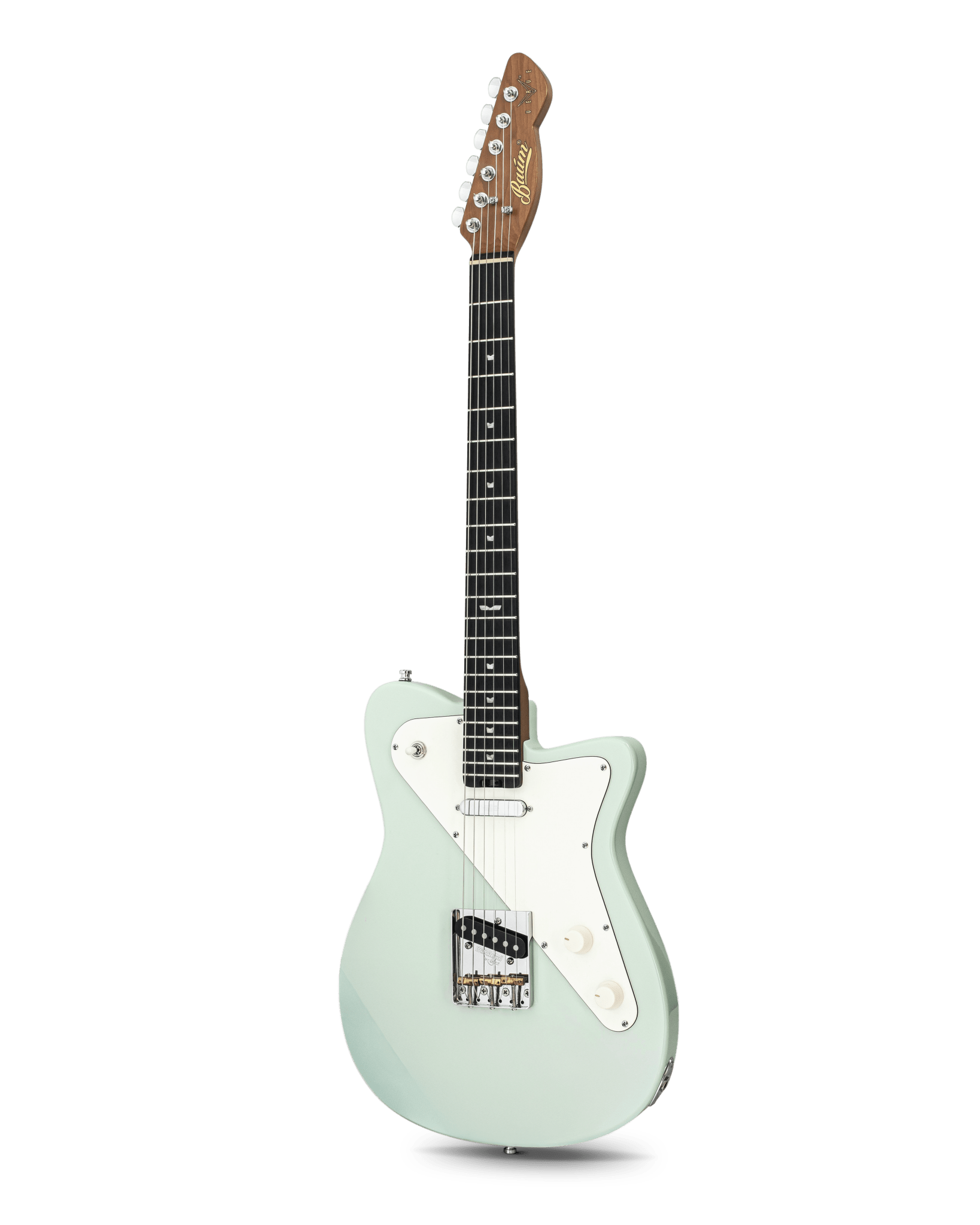
Baum's T-type electric guitar is the Verve, a modern interpretation of the format built on a mahogany body with ash veneer, Goldsound® Skylark™ T-style single coils and Wilkinson® WTB bridge with compensated brass saddles. The Verve is voiced for drive and modern playing rather than for classic clean T-style tones, which makes it a different instrument from vintage T-type reissues even though the platform underneath is recognisable. The Verve is the current entry in Baum's T-type electric guitar lineup.
Choosing between electric guitar styles
There is no universally correct choice between the different styles of electric guitar. The right platform depends on tonal preference, playing genre, ergonomic preferences and the amp and effects setup you plan to use it with. Solid body electric guitars work for players who want focused, direct tone with maximum sustain. Semi-hollow guitars suit players who want natural resonance and complex overtones. Offset guitars fit players who move on stage and want a different balance point. S-type electric guitars are the versatility choice across genres. T-type electric guitars are the platform for direct, bright tonal clarity with a specific tonal signature that other formats cannot replicate.
Baum's advantage across all five categories is consistency of construction philosophy. The same mahogany body approach, the same roasted maple neck construction, the same in-house pickup development. What changes between the styles is what the platform is optimised for, not the underlying quality of how it is built.
45 days to try any Baum guitar at home
Baum doesn't sell through retailers, so every guitar in the lineup ships direct from Denmark, set up by hand in Aarhus, with a 45-day home trial regardless of which body style you choose. That means you can test a solid body, semi-hollow, offset, S-type or T-type Baum in the environment you actually play in before committing.